
Flames of Discord: The Russia-Ukraine War
Russian Generals Accuse Mercenary Leader of Trying to Mount a Coup

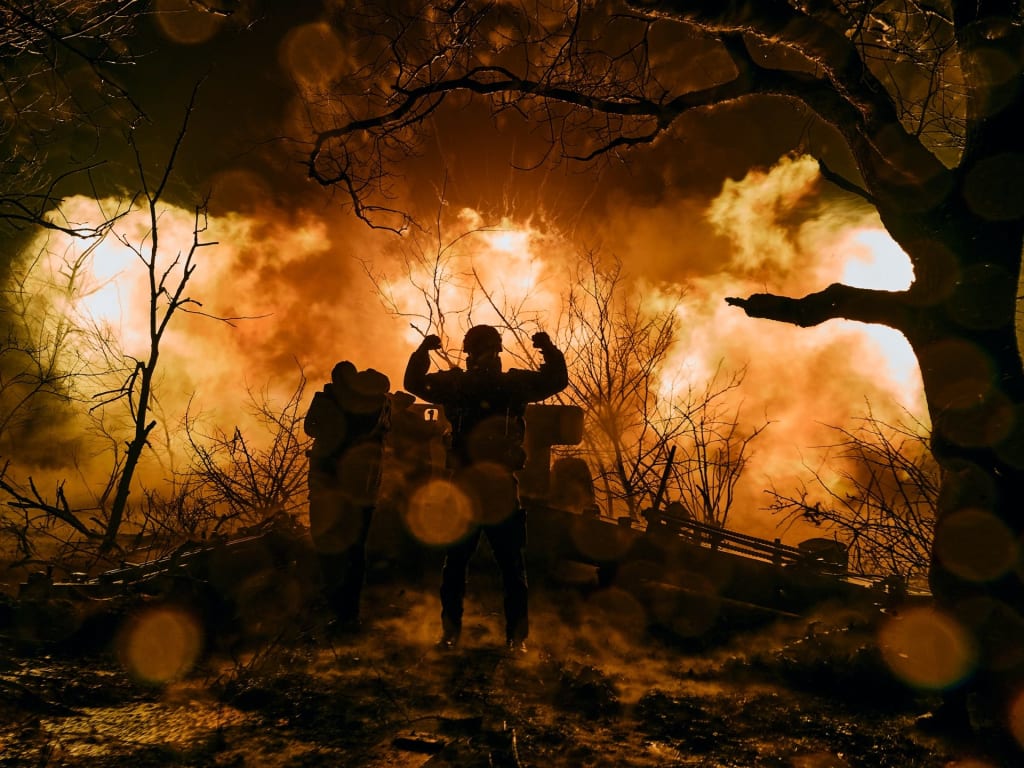
Once a fragile bond, the relationship between Russia and Ukraine deteriorated rapidly, leading to one of the most devastating conflicts in recent history. What began as political tensions soon escalated into a full-blown war, leaving a trail of destruction and human suffering in its wake.
The roots of the conflict can be traced back to Ukraine's desire for closer ties with the European Union. In 2013, protests erupted in Kyiv's Independence Square, known as the Maidan, as Ukrainians demanded democratic reforms and stronger integration with the West. Russia, fearing the encroachment of NATO and losing influence over its neighbor, viewed these developments with growing unease.
In February 2014, as tensions reached their peak, Russian forces swiftly occupied Crimea, a region with a significant ethnic Russian population and strategic importance due to its access to the Black Sea. The international community condemned Russia's actions, but Moscow remained defiant, justifying its actions as a response to protect the rights of ethnic Russians.
As the conflict escalated, the Ukrainian government launched military operations to regain control of the annexed Crimea. However, they faced formidable opposition from the Russian-backed separatist forces in the eastern regions of Donetsk and Luhansk. The separatists, armed and supported by Russia, sought independence from Ukraine, igniting a brutal and protracted conflict.
Both sides engaged in fierce battles, resulting in a staggering loss of life and immense suffering for civilians caught in the crossfire. The conflict took on a particularly brutal character, with allegations of human rights abuses, war crimes, and the use of banned weapons.
The international community responded with outrage and imposed economic sanctions on Russia, hoping to pressure Moscow into de-escalating the conflict. Diplomatic efforts were made to broker ceasefires and find a peaceful resolution, but they proved fruitless. The conflict had become deeply entrenched, with deep-seated animosity on both sides.
The war also revealed the vulnerability of Ukraine's infrastructure. Critical facilities such as power plants, water treatment plants, and hospitals fell victim to strategic attacks, exacerbating the humanitarian crisis. Thousands of people were displaced, seeking refuge both within Ukraine and in neighboring countries. The war had a devastating impact on the economy, with livelihoods destroyed and industries crippled.
As the conflict entered its fifth year, there were glimmers of hope. International peace talks, known as the Minsk agreements, were signed in 2014 and 2015, outlining a roadmap for a peaceful settlement. However, violations and sporadic escalations persisted, undermining the fragile peace.
The war also had wider geopolitical implications. It strained Russia's relations with the West, leading to increased tensions and a new era of Cold War-like hostility. The conflict redefined the security landscape in Europe and posed a challenge to the established order.
In the midst of the chaos, the resilience of the Ukrainian people shone through. Communities came together to provide aid and support to those affected by the war. Volunteers risked their lives to rescue civilians trapped in conflict zones, and humanitarian organizations worked tirelessly to alleviate suffering and provide essential supplies.
As the war raged on, a glimmer of hope emerged. The international community redoubled its efforts to find a peaceful resolution. Diplomats engaged in shuttle diplomacy, exploring avenues for dialogue and compromise. A renewed commitment to the ceasefire was observed, albeit with occasional breaches.
The war between Russia and Ukraine serves as a painful reminder of the consequences of political disputes escalating into armed conflicts. It is a stark illustration of the human cost of war and the urgent need for diplomacy, dialogue, and understanding to prevent such tragedies from unfolding.
The story of the Russia-Ukraine war will forever be etched in history as a harrowing reminder of the destructive power of conflict, and the imperative to pursue peaceful resolutions to geopolitical disputes.
Part 2: A Struggle for Sovereignty and Identity
As the war between Russia and Ukraine raged on, the conflict took on deeper dimensions, intertwining issues of sovereignty, identity, and regional power struggles.
For Ukraine, the war represented a fight to preserve its territorial integrity and sovereignty. The Ukrainian government saw the Russian annexation of Crimea and support for separatist movements in Donetsk and Luhansk as direct infringements on its national sovereignty. They refused to back down, determined to protect the unity of their nation.
In contrast, Russia justified its actions as safeguarding the rights of ethnic Russians and Russian-speaking populations in Ukraine. They claimed to be defending the interests of compatriots who felt threatened by the rise of Ukrainian nationalism. Moscow positioned itself as the guardian of Russian identity, invoking historical, cultural, and linguistic ties to support their intervention.
The conflict not only exacerbated existing cultural and linguistic divisions within Ukraine but also deepened the divide between pro-European and pro-Russian factions. Western-leaning regions, such as Kyiv and western Ukraine, strongly supported the government's pro-European integration policies. Meanwhile, the eastern regions, with their historical ties to Russia, expressed discontent with what they perceived as a neglect of their interests.
Propaganda and disinformation played a significant role in fueling the conflict. Both sides disseminated narratives that reinforced their respective positions and demonized their opponents. Media outlets became weapons in a battle for public opinion, intensifying divisions and eroding trust between communities.
The war also drew attention to the complex geopolitical dynamics at play. Russia's actions in Ukraine were seen by some as a strategic move to maintain its sphere of influence in the post-Soviet space. It was perceived as an attempt to prevent Ukraine's alignment with the West, and particularly NATO, which Moscow viewed as a threat to its own security.
The conflict reverberated beyond the borders of Ukraine. Western nations, particularly the United States and European Union, condemned Russia's aggression and supported Ukraine with political and economic assistance. They aimed to demonstrate solidarity with Ukraine and deter further Russian expansionism.
Meanwhile, neighboring countries, particularly those with sizable ethnic Russian populations, closely monitored the developments. They feared that the conflict could spill over and ignite similar tensions within their own borders. The war thus had a ripple effect, heightening regional anxieties and reshaping alliances in Eastern Europe.
Humanitarian organizations faced significant challenges in providing aid and support to affected populations. The ongoing hostilities hindered access to vulnerable communities, making it difficult to deliver essential supplies and medical assistance. The war's toll on civilian lives, infrastructure, and the environment was staggering, and the need for humanitarian assistance grew more urgent with each passing day.
Amidst the chaos, diplomatic efforts persisted. International organizations, such as the United Nations, worked tirelessly to facilitate negotiations and foster dialogue between the conflicting parties. Leaders from various countries engaged in shuttle diplomacy, seeking common ground and avenues for de-escalation.
However, achieving a lasting resolution remained elusive. Ceasefires were brokered, only to be violated shortly afterward. Peace talks faltered, and trust between the parties eroded further. The conflict appeared to be in a stalemate, with no clear path towards a sustainable peace.
The Russia-Ukraine war serves as a stark reminder of the complexity and volatility of regional conflicts. It demonstrates the delicate balance between national sovereignty, ethnic identity, and geopolitical interests. The human suffering endured by civilians caught in the crossfire underscores the urgent need for a peaceful resolution and the importance of international cooperation in preventing further escalation.
Ultimately, the war between Russia and Ukraine represents a painful chapter in recent history, one that continues to shape the geopolitical landscape of Eastern Europe. Its legacy serves as a call to action, urging global leaders to redouble their efforts to find a just and lasting solution and prevent such conflicts from repeating in the future
About the Creator
Keep reading
More stories from Gps Stories and writers in History and other communities.
Venezuela’s President Under Pressure: Arrest Calls, Indictments, and a Nation at a Crossroads
How the Arrest Narrative Began The idea of arresting Venezuela’s president did not appear out of nowhere. It stems from years of accusations that range from human-rights abuses to corruption and drug-related activities. U.S. authorities have filed formal charges against Nicolás Maduro, linking him to cocaine trafficking networks and large-scale financial misconduct. These cases place him among the few sitting leaders facing active international legal pressure.
By Muhammad Islam khan swati5 days ago in History
How I Learned That Aircraft Structures Are as Critical as Engines
When I first started studying aviation, I believed that engines and avionics defined an aircraft’s reliability. Over time, as I explored aerospace history and manufacturing records, I realized how incomplete that understanding was. Aircraft safety does not depend solely on thrust or navigation systems. It is deeply rooted in structural engineering, certified manufacturing, and the disciplined production of components that passengers never see.
By Beckett Dowhana day ago in History


Comments
There are no comments for this story
Be the first to respond and start the conversation.