
FC Barcelona’s Prime Era: The Golden Years of Football
OLD PRIME BARCA
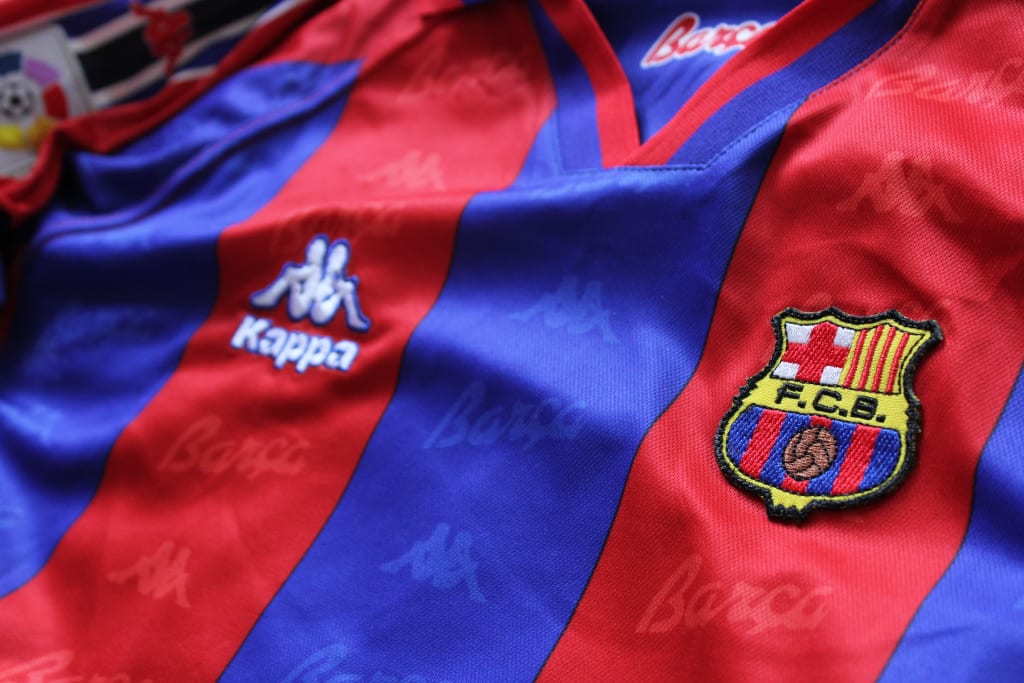
Few eras shine as brightly when discussing football dynasties as FC Barcelona under Pep Guardiola from 2008 to 2012. This time is widely regarded as the club's golden age because of the revolutionary style of play that reshaped modern football as well as the awards it won. Barcelona's fluid passing, relentless pressing, and positional play, also known as "Tiki-Taka," captivated fans, overwhelmed opponents, and left a legacy that is still admired and copied worldwide. The Foundation: La Masia and the Cruyff Philosophy
Barcelona’s golden era didn’t emerge overnight. Long-term planning, a strong footballing identity, and one of the world's best youth academies—La Masia—all contributed to it. Barcelona emphasized technical skills, spatial awareness, and intelligent movement from a young age, inspired by Johan Cruyff's "Total Football." Pep Guardiola was already deeply ingrained in this philosophy when he took over as manager in 2008. A former Barça player and student of Cruyff, Guardiola brought a bold vision: build a first team rooted in homegrown talent, play beautiful football, and dominate possession like never before.
The Rise: 2008–2009 Season
Guardiola’s debut season as head coach was historic. Barcelona won the treble—La Liga, Copa del Rey, and the UEFA Champions League—a feat never achieved by a Spanish club before.
During this time, important people included: Lionel Messi – Messi, who was already a rising star, became the team's focal point and one of history's greatest players. Xavi Hernandez is the midfield's metronome, setting the pace and directing play. Andrés Iniesta was both a playmaker and a big-game performer thanks to his eloquence and elegance. Sergio Busquets – The anchor in midfield, providing balance and exceptional football IQ.
Gerard Piqué and Carles Puyol are a formidable defensive duo who exhibit leadership and calm. In the 2009 Champions League final against Manchester United, Barcelona outclassed the English giants with a 2-0 win, despite being seen as underdogs. The beginning of Barcelona's dominance on the European stage was that match. Tiki-Taka: More Than a Style
Tiki-Taka, a game plan that emphasizes quick passes, movement, and keeping possession, was the driving force behind Barcelona's success. It wasn’t just about keeping the ball—it was about suffocating the opponent, forcing them to chase shadows while Barcelona carved them open with precision.
Key elements of Tiki-Taka included:
Positional Play (Juego de Posición): Players occupied specific zones to create numerical superiority and space.
Pressing and Counter-Pressing: The team worked in unison to win the ball back within seconds of losing it.
Patience and rhythm: Barcelona was able to complete dozens of passes before making a shot, waiting for the right opportunity. Guardiola’s meticulous tactics and ability to adapt in-game made the system unpredictable and effective against nearly every opponent.
2010–2011: The Pinnacle
While Barcelona had successful seasons in 2009 and 2010, the 2010–11 season is widely regarded as the peak of their powers.
In La Liga, Barça finished with 96 points and set a record by winning five consecutive El Clásicos against Real Madrid. But the true masterpiece came in the UEFA Champions League final at Wembley, where they once again faced Manchester United.
Barcelona produced one of the greatest team performances ever seen in a final. With 63% possession, 777 completed passes, and goals from Pedro, Messi, and Villa, they dismantled United 3-1. Sir Alex Ferguson later admitted it was the best team he had ever faced.
This version of Barcelona was more than a football team—it was a symphony of intelligence, technical excellence, and cohesion.
The End of an Era Between 2008 and 2012, Barcelona won:
3 La Liga titles (2009, 2010, 2011)
Two wins in the UEFA Champions League (2009 and 2011) 2 Copa del Reys
3 Spanish Super Cups
Two Super Cups of UEFA 2 FIFA Club World Cups
However, the legacy of this era extends far beyond the silverware: Youth Development: Guardiola built the team around academy graduates, proving that success doesn’t always require massive spending.
Global Influence: National teams like Spain (winners of Euro 2008, World Cup 2010, and Euro 2012) mirrored Barça’s style, using many of the same players.
Coaching Evolution: Managers all over the world, such as Jurgen Klopp, Mikel Arteta, and Julian Nagelsmann, have adopted and developed aspects of positional play and Tiki-Taka. Cultural Impact: Barcelona became synonymous with elegant football. “Mes que un club” (“More than a club”) was no longer just a motto—it was a reality.
Life After Guardiola
After four extremely successful seasons, Guardiola quit in 2012, citing exhaustion and the need for a break. While new managers at Barcelona continued to win titles, including another treble in 2015 under Luis Enrique, Guardiola's purity and control were never quite replicated. Lionel Messi continued to shine, and stars like Neymar and Luis Suárez brought a new attacking edge, but the identity had subtly shifted. The football was still stunning, but the orchestra's conductor and score had changed. Conclusion: A Standard That Still Inspires
From 2008 to 2012, Barcelona was more than just a dominant team; it was also a movement. It showed that football could be an art form, that discipline and freedom could coexist, and that a club could stay true to its values and still conquer the world.
The specter of Guardiola's Barcelona is never far away in this day and age, when young players are taught to pass and move, when clubs place an emphasis on positional play, or when fans debate footballing philosophies. It's a standard by which all great teams are measured—and a reminder that at its best, football is poetry in motion.
About the Creator
Keep reading
More stories from Kavin Gomes and writers in History and other communities.
The Origins of Basketball
Basketball was invented in December 1891 by Dr. James Naismith, a physical education instructor at the International YMCA Training School in Springfield, Massachusetts. Tasked with creating a new indoor game to keep his students active during the cold New England winter, Naismith nailed two peach baskets to the balcony of the gymnasium and used a soccer ball as the first basketball. The objective was simple: throw the ball into the opposing team’s basket. There were 13 original rules, and nine players on each team participated in the first game.
By Kavin Gomes9 months ago in History
When the Pyramids Learned to Breathe
The desert was silent in the way only ancient places can be—not empty, but listening. At dawn, the first light touched the limestone faces of the pyramids, and the shadows they cast stretched long and deliberate, as if time itself were waking slowly. To the west, beyond the city’s dust and noise, the old giants stood where they always had, unmoved by centuries, untouched by doubt.
By LUNA EDITH7 days ago in History
Talleyrand: The Master Survivor
Few figures in history embody strategic survival as perfectly as Charles-Maurice de Talleyrand-Périgord. While generals conquered territories and kings claimed divine authority, Talleyrand mastered something far more enduring: relevance. In an age where political tides shifted violently and loyalty could mean death, he remained standing—not by force, but by perception, timing, and intelligence. He did not dominate history. He outlasted it.
By Fred Bradfordabout 17 hours ago in History



Comments
There are no comments for this story
Be the first to respond and start the conversation.