
Failed Soviet Venus lander Kosmos 482 crashes to Earth after 53 years in orbit
Soviet Space Crash

After 53 years in orbit, the failed Soviet Venus lander Kosmos 482 crashes to Earth. In a striking reminder of the Cold War-era space race, a piece of Soviet history has made an unexpected reentry into Earth’s atmosphere. A portion of the failed Soviet Venus mission Kosmos 482 finally crashed to Earth in 2025, ending a 53-year journey that began with ambition and ended in failure after more than five decades in orbit.
A Fragment's Final Fall

What recently reentered the atmosphere in 2025 was not the entire spacecraft, but a heavy titanium capsule—believed to be part of Kosmos 482’s descent module. This component was built to survive the scorching atmosphere of Venus, making it rugged enough to endure reentry into Earth’s atmosphere even after decades in orbit.
According to reports from satellite tracking agencies, the capsule reentered Earth's atmosphere and crashed somewhere in rural Southeast Asia, with no reported damage or injuries. Its eventual fall had been predicted for years, with astronomers and satellite trackers watching its orbit slowly decay. Because of its dense construction, the capsule was one of the rare objects expected to survive reentry almost intact.
Cold War Echoes in Modern Skies

The demise of Kosmos 482 is more than just a technical footnote; it is also a time capsule from a time when superpower rivalry was at its height in space. The 1970s were a critical period in the space race. Both the United States and the Soviet Union were pushing the boundaries of planetary exploration, often in secret and at breakneck speed.
The Kosmos designation itself was part of that secrecy. To conceal their true purpose, Soviet missions that failed to leave Earth's orbit were frequently given the generic name "Kosmos." In the case of Kosmos 482, the goal of replicating Venera 7, the first spacecraft to transmit data from the surface of another planet, was only made abundantly clear later.
The Engineering Behind Its Longevity
Experts say the capsule's survival highlights the remarkable engineering of early space hardware. The descent module was designed to endure temperatures of over 900°F (475°C) and pressures over 90 times that of Earth’s atmosphere—conditions found on Venus. This durability made it particularly suited to survive an unplanned return to Earth.
The titanium alloy construction and spherical design also meant it could withstand the intense heat of reentry, much like other famous space artifacts, such as the early U.S. Mercury and Soviet Vostok capsules
What Comes Next?
The fate of the Kosmos 482 capsule is uncertain. If it is recovered, it may become a museum piece—an artifact of a bygone era of exploration and secrecy. Its fall has sparked renewed interest in the history of planetary missions and the legacy of the Soviet space program.
More importantly, the event serves as a reminder of the thousands of aging satellites and spacecraft still orbiting our planet. As space activity increases, so does the volume of space debris. While most of it eventually burns up in Earth’s atmos
A Legacy in the Sky

The story of Kosmos 482 is a strange and fascinating footnote in the history of space exploration. Though it never made it to Venus, it managed to orbit the Earth for more than half a century—longer than anyone involved in its launch could have imagined.
In the vast timeline of space history, Kosmos 482 stands as a symbol of both human ingenuity and the unpredictability of our ventures beyond Earth. It’s a reminder that while some missions succeed and others fail, every effort leaves a mark—sometimes, quite literally, back on Earth.
About the Creator
Keep reading
More stories from writers in History and other communities.
The Grand Old Station: The Perfect Place to Begin Your Train Journey
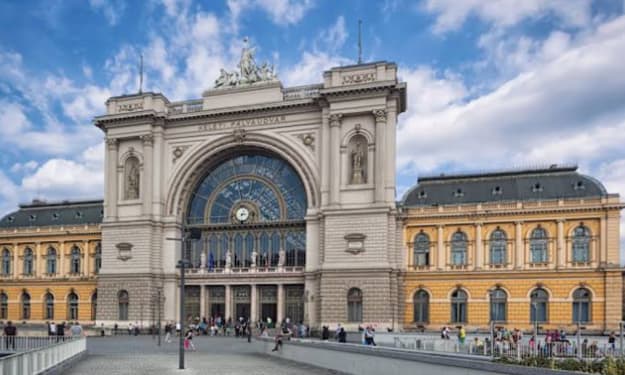
There’s something magical about stepping into a grand old train station. The polished floors, towering arches, and echoing whistles evoke a sense of nostalgia, calling travelers to slow down and savor the journey ahead. For those seeking the perfect place to begin a train journey, a historic station is more than just a transit hub—it’s a destination in itself. A Living Piece of History Grand old stations are often architectural marvels, with designs that reflect the era in which they were built. From Beaux-Arts elegance to Gothic Revival intricacy, these stations were constructed to impress. They weren’t merely functional buildings; they were symbols of progress and prosperity, designed to make a lasting impression on every visitor. Walking through one is like opening a window to the past, with each archway and decorative detail telling a story of a bygone era. Many of these stations have stood the test of time. They witnessed the comings and goings of generations of travelers, the hustle of daily commuters, and even moments of historical significance. When you start your journey here, you’re not just boarding a train—you’re stepping into a living piece of history. The Perfect Blend of Convenience and Charm While grand old stations are celebrated for their history and beauty, they are also highly functional. Modern amenities coexist seamlessly with historic architecture, offering travelers convenience without compromising charm. Ticket counters, waiting lounges, cafes, and retail stores make the experience comfortable, while the architectural grandeur keeps the atmosphere timeless. Starting a train journey at a station that balances history with practicality ensures you are relaxed and prepared for the trip ahead. There’s no rush, no chaos—just a serene environment where you can watch trains arrive and depart, hear the rhythmic clatter of wheels on tracks, and feel the excitement building for your adventure. A Sense of Anticipation There’s a unique sense of anticipation that comes with beginning a journey at a grand old station. Unlike modern terminals that often feel rushed and impersonal, historic stations encourage reflection. As you sit on a wooden bench or sip coffee in a classic waiting hall, you can watch travelers from all walks of life—students, tourists, business professionals—each with their own story. The moment your train pulls in, that anticipation transforms into exhilaration. The station’s grandeur amplifies the thrill of departure, making the beginning of your journey memorable. Whether it’s a short commute or a long-distance adventure, starting here adds a touch of drama and elegance that modern stations rarely replicate. Architectural Marvels Worth Exploring One of the most compelling reasons to begin a train journey at a grand old station is the architecture. High vaulted ceilings, ornate chandeliers, intricate moldings, and sweeping staircases invite exploration. Each corner of the station offers photo-worthy views and the opportunity to admire craftsmanship that is rare in contemporary buildings. Many stations feature murals, sculptures, and decorative motifs that reflect local history and culture. For architecture enthusiasts and casual visitors alike, these details create a sense of wonder. Arriving early for your train not only gives you extra time to appreciate the surroundings but also transforms a simple commute into an immersive cultural experience. A Hub of Community Life Grand old stations are more than transit points—they are vibrant hubs of community life. Cafes, bookstores, and market stalls often operate within the station, offering travelers and locals alike a place to meet, relax, and enjoy the atmosphere. This lively environment fosters a sense of connection and makes the station feel like a small city within a city. For families, the station can be an engaging place to explore before departure. Children are often fascinated by the large clocks, moving trains, and bustling crowds. Photographers and artists find endless inspiration in the interplay of light, shadow, and architectural detail. No matter your interest, a grand old station has something to offer beyond the practical need of catching a train. Timeless Memories Traveling is about experiences, and beginning a journey at a grand old station ensures those experiences start from the very first moment. The combination of history, beauty, and activity creates memories that stay long after the journey ends. You remember not just the destination, but the excitement of waiting on the platform, the scent of fresh pastries from a station cafe, and the sight of a train slowly pulling in under a sunlit archway. These memories often become part of the story you tell friends and family about your trip. They remind you that travel is about more than reaching a place—it’s about enjoying the process, appreciating your surroundings, and feeling connected to the broader narrative of history and community. Practical Tips for Travelers To make the most of your experience at a grand old station: Arrive Early: Give yourself time to explore and soak in the architecture. Grab a Coffee or Snack: Many stations house cafes with local treats. Look Up: Don’t forget to admire the ceilings, chandeliers, and murals. Take Photos: Capture the essence of the station for lasting memories. Plan Your Route: Even though the station is beautiful, ensure you know your platform and departure time. By blending practicality with exploration, you transform
By Aqib Hussain3 days ago in History
The Sowing of Comala: When the Earth Remembers Sins
In the region of Comala, where the sun beats down with the force of a bitter memory and the earth seems to have forgotten how to be fertile, desperation has a familiar taste: of dust, of salty sweat, of broken promises. Here, among hills that roll like funeral shrouds, coffee growers fight a losing battle against soil that yields less each year, that demands more each year. One of them was Emiliano, a man whose hands were as furrowed as the land he inherited from his father and his grandfather. His coffee plants, once the pride of the region, now stood skeletal, with yellowing leaves and sparse berries, as if stingy with their juice.
By diego michel6 days ago in History
The Angry Man in Your House
"If you grow up with an angry man in your house, there will always be an angry man in your house" This statement has caused plenty of controversy online, people say its a statement that blames victims while also undermining those who break traumatic cycles to form health relationships... but if I'm honest now that I'm in my 30s it makes more sense to me than ever, and I'd argue that its not just about fathers and uncles.
By S. A. Crawford7 days ago in Humans
Analyse this!
Wanna know how to improve your writing? There is a simple, quick, tried and tested method. Tried and tested by who? By me, as it happens, and I can guarantee that it will work for you. I know what I am talking about. Not always, of course, but certainly in this case.
By Raymond G. Taylor6 days ago in Writers



Comments
There are no comments for this story
Be the first to respond and start the conversation.