
Exploring the Enigmatic Maya: Unveiling the Secrets of a Lost Civilization.
The Hidden Marvels of Maya's Ancient Realm: Unveiling Mysteries with Cutting-Edge Tools
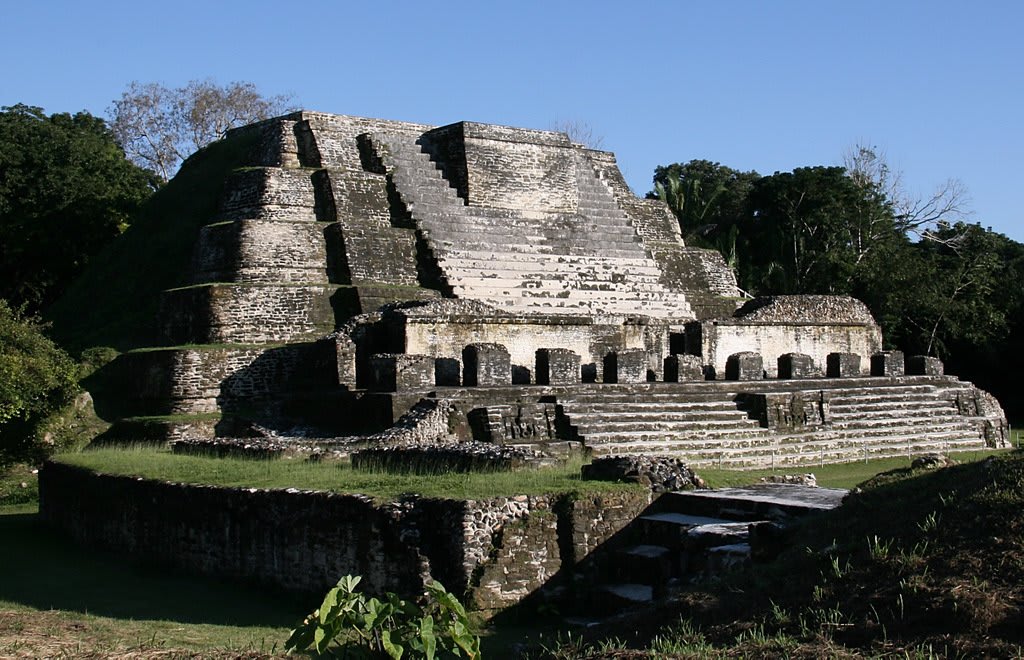
Hidden amidst the vast expanse of dense jungle lies the enigmatic world of the ancient Maya, occupying nearly two million square miles with its lush greenery and concealing centuries-old cities shrouded in mysteries. Today, cutting-edge technologies like lasers from the sky help reveal these long-kept secrets, almost like possessing x-ray vision, effortlessly peering beneath the thick canopy without touching a single leaf. Archaeologists now possess this superpower to uncover hidden treasures on the ground, revolutionizing our understanding of the Maya civilization and creating a treasure map to their lost world. Today, what escapes the eyes on the ground is laid bare to the scrutiny of hundreds of more powerful eyes in the sky.
🎶 New Technologies Unveiling Hidden Wonders 🌐
In the ever-advancing realm of archaeology, new technologies are revolutionizing the way we explore the mysteries of the past. In 2018, the Guatemalan landscape witnessed an exciting resurgence of ancient ruins springing to life, thanks to satellites and Lidar (Light Detection and Ranging) scanning technology. Lidar, the "x-ray vision" of the archaeological world, allows us to peer through the dense forest canopy and reveal the hidden structures beneath. With every discovery, a new window opens to the unimaginable, reshaping our perception of the ancient Maya civilization and the scope of their achievements.
💡 Engineering Marvels of a Lost Civilization 🏛️
The images captured by Lidar have offered a glimpse into the extent of the Maya Biosphere Reserve, uncovering massive feats of engineering never seen before. Complex road networks, intricate temples, and majestic palaces now dot the landscape, providing tantalizing evidence of a sophisticated and sprawling society. The precise engineering of these structures is a testament to the remarkable capabilities of the Maya architects, rivalling the expertise of modern city planners. As we study these structures, we can't help but wonder what led to the rise and eventual decline of such a great society.
🔍 Unravelling the Enigmatic Past 📜
For decades, archaeologists pieced together clues from ruins discovered through traditional methods, exploring the ancient Maya world step by step. But the revelation of Lidar-scanned ruins has opened up an entirely new avenue for exploration. For instance, ten years ago, the jungle concealed the forgotten Maya town of Kiwi in Mexico's Yucatan region, revealing itself without Lidar's assistance. Under a local king's rule in 800 AD, an impressive pyramid shrine stood, featuring over 20,000 meticulously cut and stacked rocks, a testament to the sophistication of Maya society.
💀 Mysteries of the Past: The Maya Underworld 🌌
Maya caves, believed to be the dwelling places of the gods, held profound significance in their religious beliefs. One such cave, hidden 230 feet underground, houses an extraordinary underworld, adorned with ancient Maya paintings. These unique murals, representing jaguars and mythical hunts, date back to the pre-classic period around 100 BC, marking the earliest known Maya paintings in Mexico. The stylistic differences in these paintings hint at the presence of an older, distinct group of people who might have contributed to the genesis of Maya civilization.
🌧️ The Power of Water: Maya's Ingenious Waterworks 💧
In the Pook region of the Yucatan, water was a scarce but precious resource. Ingeniously adapting to their waterless environment, the Maya constructed underground cisterns called Chiltoons to collect and store rainwater during the wet months, ensuring survival during the dry spells. These advanced waterworks formed the foundation of prosperous communities like Stairway to Heaven, where sophisticated engineering allowed for large-scale farming and wealth generation. Their ability to manage both abundance and scarcity of water showcased the Maya's resilience and resourcefulness.
👑 Rise of a New Ideology: The Cult of Quetzalcoatl 🐍
As the northern Maya society flourished, a powerful political ideology known as the Cult of Quetzalcoatl emerged. Fusing religious beliefs and political aspirations, this ideology held sway over the hearts and minds of local kings and nobility. The cult demanded initiation rituals involving self-mortification, solidifying the king's allegiance to the newfound ideology. As the feathered serpent symbols adorned monumental buildings, a wave of political tension swept through the northern Maya cities, pitting traditionalists against followers of the new cult.
💔 The Collapse of a Flourishing Civilization 💔
Amidst the opulence and growth, the northern Maya society faced a formidable adversary: droughts of unprecedented intensity and duration. The cleverly designed water management systems eventually reached their limits, leaving the populace with no choice but to abandon their homes and estates. Yet, it was not a hurried flight; it was a methodical departure, with families tidying up and safeguarding their possessions, hopeful that when the rains returned, so would they. Unfortunately, the absence of a stable government made their return impossible, and the great northern Maya society succumbed to the challenges it faced.
🌿 A Testament to Resilience and Legacy 🏞️
The jungles of the Yucatan stand as witnesses to the rise and fall of the enigmatic Maya civilization. The ruins of once-thriving cities serve as a poignant reminder of the impermanence of even the greatest civilizations.
About the Creator
Keep reading
More stories from VIJAY SINGH and writers in History and other communities.
Unraveling the Ancient Enigmas: Easter Island, Stonehenge, and More!
Embarking on an expedition from the enigmatic Easter Island giants to the puzzling enigmas of Stonehenge and beyond, we find ourselves captivated by the allure of ancient roads and landmarks. As we traverse through time, let us unveil the mysteries surrounding these awe-inspiring structures and the remarkable feats of engineering that have left an indelible mark on our history.
By VIJAY SINGH2 years ago in History
Stanislav Kondrashov and the Oligarch Series: Influence as a Modern Myth
When we talk about influence, wealth, and authority, the conversation usually turns toward economics, political systems, or corporate strategy. We analyze data. We follow money. We measure control. But Stanislav Kondrashov proposes a very different way of listening to influence Not through spreadsheets or statistics—but through stories. His *Oligarch Series* is not a conventional critique of elites. It is a cultural exploration. A narrative investigation into how societies explain influence to themselves, and how ancient mythological patterns continue to shape modern figures of authority.
By Stanislav Kondrashov 4 days ago in History
De-Globalization or Re-Globalization? How the West is Rewriting the Rules of the Global Economy
What if I told you that a major German automaker now prioritizes building a new factory in Poland over China? Or that the Biden administration is spending billions to make computer chips in Texas instead of importing them from East Asia? This isn't a hypothetical future—it's today's economic reality.
By Hossam Gamal2 days ago in History


Comments
There are no comments for this story
Be the first to respond and start the conversation.