
Evidence of 700,000-Year-old Humans Found in the Philippines
700.000 Year Old Humans Found in the Philippines
Throughout history, there have been a number of human species- and researchers are continually
discovering new ones.
A recent discovery in the Philippines has changed our understanding of when our ancestors
first reached the islands- and this is surprising because the country, as we know it, is completely
surrounded by water- so who are they, and how did they get there?
Homo Sapiens, our species, were not the first type of human to live on earth.
You’ll have probably heard of Neanderthals, who first appeared about 230,000 years ago…
but there have been at least 17 others species of humans- with the oldest known ancestor,
the Orrorin tugenensis, walking the earth about 5.8 million years ago.
The original humans lived in Africa, and it wasn’t until about 1.5 million years ago
that the Homo erectus, the first of our ancestors that was a hunter-gatherer, began to migrate
beyond Africa to as far away as Asia.
Homo Sapiens first developed about 195,000 years ago, and soon began to migrate across
Europe and Asia.
Speech is thought to have developed 45,000 years later, and it was only 12,000 years
ago that they reached the Americas.
Until about 12,000 years ago, there were still other species of human, alongside our own.
It had long been thought that the first species to reach the Philippines was our own Homo
Sapiens about 100,000 years ago.
A recent discovery has changed the understanding of when humans first arrived in the Philippines,
though.
In May of 2018, a paper was released that detailed the discovery of evidence that they
were there a lot earlier than previously thought.
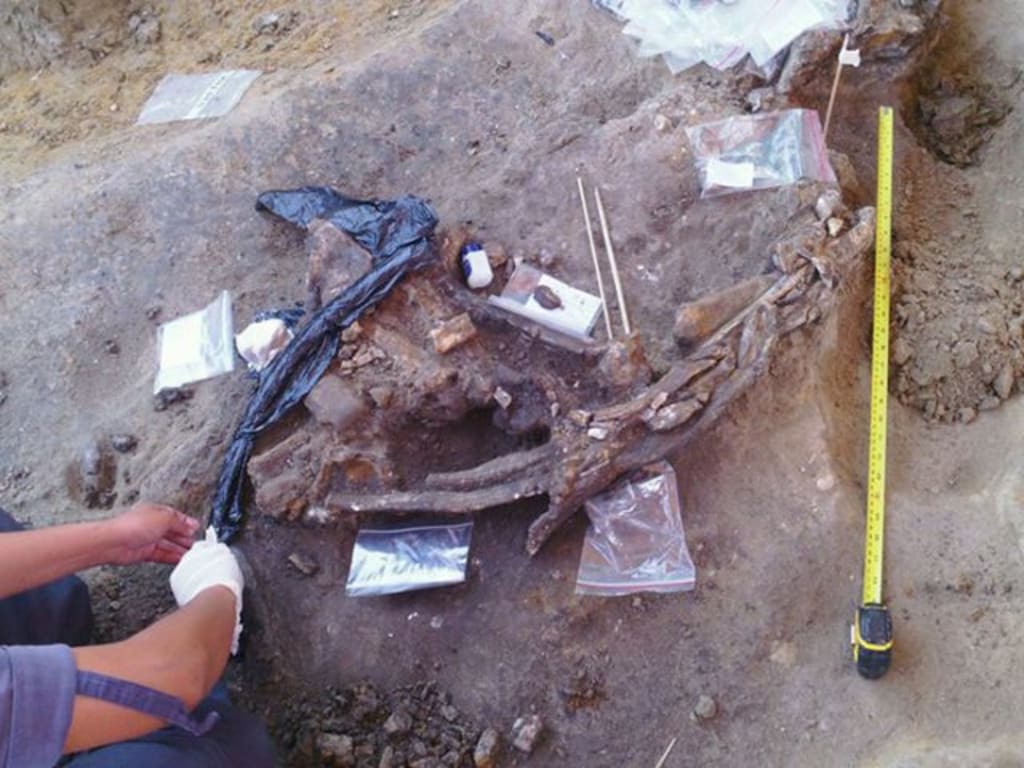
During an archaeological dig at a site at Kalinga, in the Cagayan Valley of the northern
Luzon in the Philippines, researchers found 57 stone tools alongside the skeletons of
stegodon, Philippine brown deer, turtles, monitor lizards and, most importantly a Rhinoceros
philippinensis.
Crucially, this Rhinoceros skeleton has clear signs of scratching from butchery- an act
that has only ever been performed by humans.
This, in itself, may not be too surprising, because similar evidence is found around the
world, but these tools and skeletons were found within a clay-rich bone bed that has
been dated to between 727 and 701 thousand years ago.
This proves that a human species was present around that time, many hundreds of thousands
of years earlier than had been thought.
The species believed to be most likely present at this time is Homo erectus, but no human
bones have been found at the site.
In Indonesia, about 3,000 kilometers away, evidence of a new species of human, the Homo
floresiensis, has been discovered, which could suggest that there were many more that we
don't know about, and there could even have been a different species that evolved independently
to one another on each island in the region.
The strange thing about this discovery is that the Philippines are completely surrounded
by ocean, so how did our ancestors reach these islands?
The answer is not, as you might think, due to the earth's changing geography.
The sea levels used to be a lot lower than they are today, particularly during ice ages,
but it would have still been too deep to simply walk across.
Instead, it's thought that they were carried to these islands by accident- whether it be
on tsunami waves or floating lands of debris that were carried across in storms.
It's not thought that Homo erectus purposefully crossed the water, but it's still a possibility.
Recent research in the Mediterranean has found evidence that stone age people were using
boats more than 130,000 years ago, which suggests that ancient human species were far more capable
than we tend to think.
Humans have lived on this planet in various guises for millions of years.
While our own species is the only one that remains and has been around for almost 200,000
years, there have been many more that predate us.
We know very little about most of these species, though, or how they lived- and it's virtually
impossible to be sure how many others there have been.
It's no surprise that new species, and evidence of human life, is being found- such as in
the discovery in the Philippines- Our understanding of our ancestors is only
just beginning!
About the Creator
Keep reading
More stories from TBH Agencia Exclusiva Colsanitas and writers in History and other communities.
5 People Who MIRACULOUSLY Survived The Impossible
There's going to be a time in our lives When Death knocks at our doors and the only thing we can do is accept Our Fate I mean if we're meant to die then we might as well accept it right but some people defy the odds and they somehow slip away from death's grasp the miraculous survival to horrific scenarios prove that they are either really lucky or they will be involved in real life Final Destination scenarios at some point so here are several lucky individuals who survived the impossible first off we have the luckiest unluckiest guy alive France celak a cro Asian music teacher was born in 1929 he survived not one but six accidents that all could have taken his life his first near-death experience happened in January of 1962 when the train he was riding fell off the tracks and landed in a freezing River 17 of the Train's passengers died but CAC survived with a mere broken arm and a few scratches one year later in 1963 CAC was at death's door again he was riding in a plane and was thrown out due to a door that suddenly blew open 19 people died from that accident but CAC survived a fall from the plane because he very cartoonishly landed on a hay stack the third time was in 1966 when CAC was on a bus that once again fell into a river four people died from that incident but like before cak survived unharmed then in 1970 his car caught on fire when he was casually driving miraculously he was able to escape the car before the fuel T exploded and was once again unharmed in 1973 only 3 years later his car caught on fire again and besides burning his hair off he once again walked away unscathed another bus accident happened in 1995 this time CAC was hit by a bus but didn't receive any major injuries finally in 1996 celac was trying to dodge a oncoming truck on a Mountain Road and it drove off a cliff his car fell 300 ft and exploded but somehow CAC was saved when he landed on top of a tree number two the Lightning Man Roy Sullivan was a forest ranger in Virginia and over the course of his 36 years of working as a ranger he was struck by lightning seven times and miraculously survived all the jolts his first lightning strike experience was in 1942 when the lightning hit his leg and chipped off his toenail the next one struck him in 1969 and it stripped him of his eyebrows and made him pass out in 1970 a strike hurt his shoulder and in 1972 a lightning strike set his hair on fire one year later in 1973 his hair was set on fire once again in 1976 he was struck by lightning but escaped with an injured ankle and finally on June 25th 1977 solivan was struck and received injuries to his chest and stomach resulting in an ugly hospital visit because of all the times he was struck by lighting and lived solivan made it into the Guinness Book of World Records so maybe Zeus was drunk and playing a game of how close can I strike a hen bagen Holm who was a Swedish radiologist in 1999 she was on a ski trip and was hitting down a steep hill when she suddenly lost control of her skis and fell into a frozen stream her upper body fell into a hole that opened up in the ice and she was trapped under the ice for 80 minutes in extremely freezing water the I was almost 8 in thick and she had no way of escaping her feet and skis were above the ice while the rest of her body was underneath during that time Anna experienced hypothermia and circulatory arrest thankfully she was a bble to find an air pocket under the ice which probably saved her life this was a really strange case because people aren't supposed to survive being trapped for even half the time she spent under the ice after she was rescued more than aund doctors and nurses spent 9 hours trying to save her and I woke up 10 days later and eventually recovered completely despite a few nerve problems and finally number five the woman who fell from 33,000 ft you know when you get on a commercial flight and the captain will always come on the PA system and tell you that he's was cruising altitude and it's now safe to move about the cabin now imagine at this point there's an explosion and you come crashing to the ground the chances of survival should be zero but it's not because a woman has fallen from 30,300 Ft and has miraculously survived on January 26th 1972 a flight attendant named Vesna volovic was on a Yugoslav Airline dc9 HED for Denmark when the plane was torn apart by an explosion there were 22 other passengers and crew on board the plane and lesna was the only Survivor rescue workers found her in the mangled section of the plane's tail and she was badly hurt she suffered a fractured skull three broken vertebrae that left her initially paralyzed from the waist down she was then in a coma for 27 days how the plane was brought down is still a mystery some say it was a bomb planted by Croatian separatists others say it was the Czech Air Force but the greatest mystery has to be how Vesna was able to fall from over 33,000 ft in the air survive and then make a full recovery and is still not afraid to fly I've actually had a real life near-death experience myself and I told this story in a couple of videos before anyway I was like 6 years old in China and uh there was this little mini Highway in front of our apartment complex and I remember one day me and my friend were playing and we saw a school bully who would always pick on us and he was running towards us with like like a stick or something like he was going to beat us up and we got kind of scared so we darted across this highway without looking because we were just trying to run away from him and I remember at the time the traffic was going so fast all we could see was the headlights just moving so quickly but we didn't even look we just ran across the road and for some reason he was able to follow us across the road then we decided no let's run back so we ran back and for a split second I hesitated I stopped in the middle of the road and all I felt was Wham and I flew up I think I don't know how high in the air but I knew it was high because later when I talked to my friend he said he was laughing really hard because I flew so high anyway I was knocked into the air um all the traffic stop on the road um I'm lying there the truck driver comes running to me he's like oh oh my God I got to get you to the hospital because you know I can't believe I just hit you with all that force and the only thought in my head was no I just got to go home so I told him I'm like no I'm okay I'm okay I'm going to go home and by this time I was surrounded by people because everyone saw this and they were all like oh my God this kid is like kid should be dead if he's alive we got to take him to a hospital so everyone was trying to take me to a hospital I was like no no no I'm really I'm okay I'm okay I walked around for them and they really saw that I was okay so then they let me go only later when I got home I was like Mom I got hit by a truck so then she started freaking out and took me to a hospital to make sure I was okay and I didn't have a scratch on me so I don't know how these things happen I do believe in fate I do believe that we all have a certain time that's our time and um other times it's not our time so we'll be safe No Matter What or I'm going to get Final Destination off later but let me hear your thoughts about all this and if you have a near-death experience story to share post it in the comments below thank you all so much for watching this video see you
By TBH Agencia Exclusiva Colsanitasabout a year ago in History
Understanding the Insurrection Act
The Insurrection Act is one of the most powerful and least understood laws in American history. Often mentioned during times of national unrest, it gives the president authority to deploy federal troops within the United States under specific circumstances. While it is rarely used, public interest in the law has grown in recent decades, leading many to ask: what is the Insurrection Act, and why does it matter today? What Is the Insurrection Act? To put it simply, the Insurrection Act of 1807 is a federal law that allows the president to use the U.S. military to suppress civil disorder, insurrection, or rebellion when state authorities are unable or unwilling to do so. If you are wondering what is the Insurrection Act used for, the answer lies in restoring order when local and state governments can no longer maintain public safety. People often search phrases like what is insurrection act or even the misspelled insurection act because the law tends to resurface during moments of crisis. Despite the confusion around its name, the authority it grants is very real and legally binding. What Is the Insurrection Act of the U.S.? So, what is the Insurrection Act of the US in legal terms? It is a collection of statutes now codified under Title 10 of the U.S. Code. The act provides exceptions to the Posse Comitatus Act, which generally prohibits the military from acting as domestic law enforcement. Under the Insurrection Act, the president can federalize the National Guard or deploy active-duty troops if constitutional rights are being violated or if violence prevents the execution of federal law. This is why many people ask, what is the Insurrection Act USA, especially when protests or riots dominate national headlines. The Insurrection Act and Its Historical Use Throughout American history, the act has been invoked sparingly but decisively. One of the most notable examples often referenced is the Insurrection Act 1992, when President George H. W. Bush deployed federal troops to Los Angeles following the Rodney King verdict. Local authorities had lost control, and the federal government stepped in to restore order. Earlier uses date back to the Civil War era and the Civil Rights Movement. Presidents Eisenhower and Kennedy relied on the act to enforce school desegregation in Southern states when state governments resisted federal court orders. These moments illustrate what the Insurrection Act is used for at its core: enforcing the rule of law when normal systems fail. Trump and the Insurrection Act In modern political discourse, the law became widely discussed during the presidency of Donald Trump. Searches for Trump Insurrection Act or Insurrection Act Trump surged during periods of nationwide protests, particularly in 2020. Although the act was never formally invoked during those protests, President Trump publicly considered its use, bringing renewed attention to the scope and limits of presidential power. The phrase insurrection act invoked often appears in news coverage, but it is important to note that discussing invocation and actually using the law are two very different things. The debate surrounding Trump Insurrection Act scenarios highlighted concerns about civil liberties, federal overreach, and the balance of power between states and the federal government. What Is the Insurrection Act in Minnesota? A common question during periods of regional unrest is what is the Insurrection Act in Minnesota or in other specific states. Legally, the act does not change from state to state. However, its application depends on circumstances within a particular state. If a governor requests federal assistance or if the president determines that constitutional rights cannot be protected locally, the Insurrection Act may apply. Minnesota, like every other state, falls under the same federal framework. The law does not target any single state; it responds to conditions on the ground. What Is the Insurrection Act Used For Today? In today’s environment, many Americans ask, what is the Insurrection Act used for in a modern democracy with established institutions. Supporters argue it is a necessary safeguard for extreme emergencies. Critics counter that it grants sweeping powers that could be misused if political tensions escalate. Understanding what is the Insurrection Act? requires recognizing that it is both a legal tool and a symbol. Its mere mention can influence public perception, markets, and political debate, even when it is not formally applied. Ongoing Debate and Public Concern The Insurrection Act remains controversial because it sits at the intersection of security and freedom. While it has been used to protect civil rights in the past, critics worry about potential misuse in polarized times. This tension explains why questions like what is the Insurrection Act of the US continue to trend whenever civil unrest occurs. Ultimately, the law reflects a fundamental challenge in governance: how to maintain order without undermining democracy. The fact that it has existed since 1807 and remains largely unchanged shows both its durability and its complexity. Final Thoughts The Insurrection Act is not a law that affects daily life, but it plays a critical role during extraordinary moments. From the Insurrection Act of 1807 to discussions around Insurrection Act 1992 and Insurrection Act Trump, its history mirrors the nation’s struggles with unity, authority, and rights.
By Saboor Brohi 4 days ago in History
From Desert Sands to a Global City
Long before Dubai became a city of glittering skyscrapers and global ambition, it was a quiet settlement shaped by the desert, the sea, and the determination of its people. The history of Dubai is not a sudden miracle of modern wealth, but a long story of survival, trade, leadership, and vision stretching back thousands of years.
By The best writer 6 days ago in History




Comments (1)
Thanks for sharing