
Escape from Alcatraz: The Great Prison Break of 1962
The Daring Escape that Still Leaves Questions Unanswered
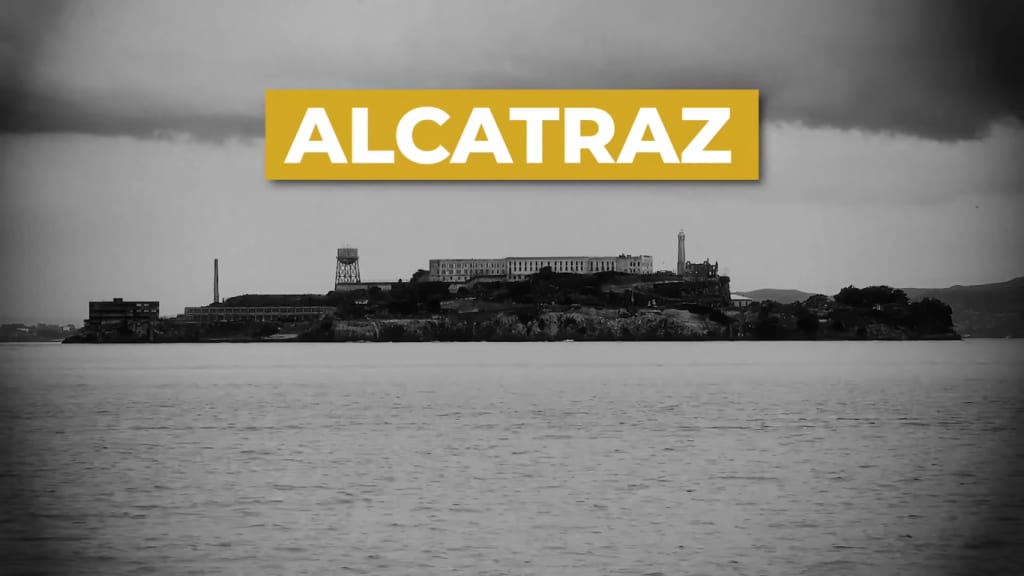
In 1934, President Roosevelt initiated a campaign against crime, which aimed to incarcerate some of the most dangerous criminals in Alcatraz Prison, officially known as "the Rock." This move, however, seemed contradictory given the prison's notorious reputation. Alcatraz Island wasn't a typical vacation destination; instead, it housed a 19th-century fortress that had been repurposed into a high-security prison. In 1934, it welcomed its first inmates.
Over its 29-year existence, Alcatraz housed notorious criminals like George "Machine Gun" Kelly, Al Capone, and Alvin "Creepy" Carpus. It also held prisoners deemed troublemakers, especially those likely to attempt escape. Alcatraz was considered America's most secure penitentiary, thanks to its location in San Francisco Bay with frigid waters, visiting sharks, and strong currents, making it seemingly escape-proof. Nevertheless, inmates attempted to break out, with 36 prisoners making 14 different escape attempts.
Three of these escapees—Frank Morris, John Anglin, and Clarence Anglin—managed to escape from Alcatraz in June 1962. This escape is considered one of the most impressive in history. The mastermiIn 1934, President Roosevelt initiated a campaign against crime, which aimed to incarcerate some of the most dangerous criminals in Alcatraz Prison, officially known as "the Rock." This move, however, seemed contradictory given the prison's notorious reputation. Alcatraz Island wasn't a typical vacation destination; instead, it housed a 19th-century fortress that had been repurposed into a high-security prison. In 1934, it welcomed its first inmates.
Over its 29-year existence, Alcatraz housed notorious criminals like George "Machine Gun" Kelly, Al Capone, and Alvin "Creepy" Carpus. It also held prisoners deemed troublemakers, especially those likely to attempt escape. Alcatraz was considered America's most secure penitentiary, thanks to its location in San Francisco Bay with frigid waters, visiting sharks, and strong currents, making it seemingly escape-proof. Nevertheless, inmates attempted to break out, with 36 prisoners making 14 different escape attempts.
Three of these escapees—Frank Morris, John Anglin, and Clarence Anglin—managed to escape from Alcatraz in June 1962. This escape is considered one of the most impressive in history. The mastermind behind the plan was likely Frank Morris, a career criminal with a high IQ who had previously escaped from another prison. Joining him were the Anglin brothers, known for their close bond and prior criminal activities.
The elaborate escape plan started with the manipulation of air vents in their cells. Using stolen tools and improvised devices, they widened the ventilation shafts, allowing them to access an unguarded utility corridor. Over six months, they constructed a rubber raft, life vests, and imitation human heads to conceal their absence during nightly bed checks.
The escapees' plan involved sailing across the bay rather than swimming, as the cold, choppy waters and strong currents made swimming impossible. To create the raft, they ingeniously used prison raincoats and vulcanized the seams using stolen materials. They even made a pump from a musical instrument to inflate the raft.
On the night of their escape, the men climbed to the roof, pried open a ventilator, and descended using pipes. They scaled two fences and launched their raft from a blind spot in the searchlights. However, one of the escapees, Allen West, was unable to get out of his cell due to a cement-reinforced vent cover.
The escapees' fate remains a mystery. The official story is that they likely drowned, but there have been numerous reported sightings and theories suggesting they may have survived. A photograph from 1975 and a letter received by the authorities in 2013 added to the intrigue. Nevertheless, despite these leads, the truth about their escape remains elusive.
In conclusion, the 1962 escape from Alcatraz by Frank Morris and the Anglin brothers is a remarkable tale of ingenuity and determination. Despite the official narrative of their likely demise, the mystery surrounding their fate continues to captivate and intrigue to this day.
Stretching this article to 600 words, we can delve deeper into the background of Alcatraz and its history as a high-security prison. Alcatraz Island itself has a rich history, beginning with its use as a military fortress in the 19th century. It served as a vital defensive position during the Civil War and the Spanish-American War. In the early 20th century, it was converted into a military prison, foreshadowing its future as a notorious penitentiary.
The decision to turn Alcatraz into a federal prison was a response to the rising crime rates during the Great Depression. President Roosevelt believed that by housing the most dangerous criminals in a remote and inhospitable location, they could be effectively isolated from society. Alcatraz's harsh conditions and isolated location were seen as a deterrent to any thoughts of escape.
The prison's reputation as a place of punishment and isolation grew over the years. Inmates were subjected to strict rules and regulations, and contact with the outside world was severely limited. The island's harsh environment, with its chilly waters and strong currents, added to the perception that escape from Alcatraz was nearly impossible.
Despite these challenges, Frank Morris and the Anglin brothers managed to devise an elaborate plan that involved not only breaking out of their cells but also creating a makeshift raft and life vests to navigate the treacherous waters of San Francisco Bay. Their meticulous planning and resourcefulness are a testament to the human spirit's determination to be free, even in the face of seemingly insurmountable odds.
The escape of Morris and the Anglin brothers captured the imagination of the public and became the subject of numerous books, documentaries, and even a Hollywood film. The enduring mystery of their fate continues to spark interest and debate among historians, amateur sleuths, and conspiracy theorists.
In recent years, advances in technology have led to new investigations into the case. Forensic experts have analyzed the available evidence, including the infamous "missing" prison records and the alleged photograph and letter from the escapees. While some believe that the trio may have successfully reached the mainland and started new lives, others remain convinced that they perished in the cold waters of the bay.
In conclusion, the escape from Alcatraz in 1962 is a captivating story that combines elements of ingenuity, daring, and mystery. It stands as a testament to the human spirit's resilience and the enduring allure of the unknown. Whether one believes that Frank Morris and the Anglin brothers survived their audacious escape or met a tragic end, their story will continue to be a source of fascination and intrigue for generations to come.
About the Creator
Keep reading
More stories from Perry Allen and writers in History and other communities.
Cosmic Catastrophe: Deciphering the Tunguska Event Mystery
Siberia is an immense region, so vast that if it were to declare independence from Russia, it would instantly become the largest country on Earth. Roughly one-third of this expansive wilderness is dominated by the taiga, an enormous forest that's about one and a half times the size of India. Deep within this endless expanse of trees lies the site of one of the most enigmatic natural disasters in modern history, which occurred a little over a century ago.
By Perry Allen2 years ago in History
The Quiet Name on Maple Street
Kim Jong-un was born into a world unlike almost any other—a world sealed by borders, ideology, and secrecy. As the grandson of Kim Il-sung, the founder of North Korea, and the son of Kim Jong-il, the country’s second leader, Kim Jong-un entered life already wrapped in destiny. In North Korea, leadership is not chosen by ballots or debate; it is inherited like a crown, reinforced by loyalty, fear, and an unyielding political system.
By The best writer 4 days ago in History



Comments
There are no comments for this story
Be the first to respond and start the conversation.