
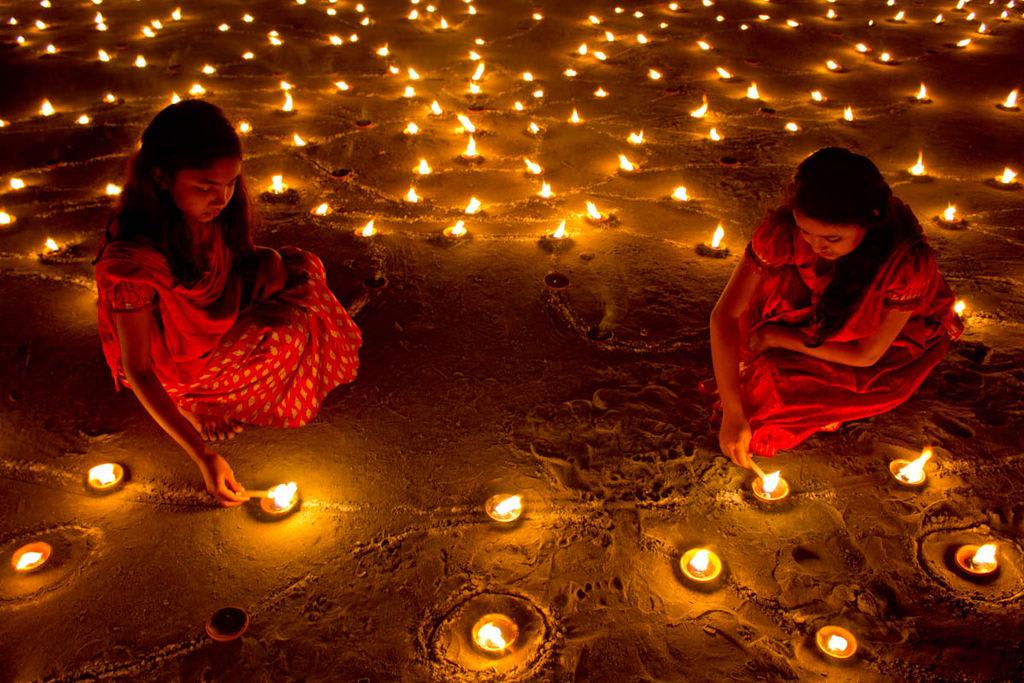
Diwali, also known as Deepavali, is one of the most widely celebrated festivals in India and by Indian communities around the world. It is a significant and colorful festival that holds both religious and cultural importance. Diwali typically lasts for five days and is marked by various rituals, prayers, feasts, and the lighting of lamps and candles.The five-day celebration of Diwali involves various rituals, including prayers to the goddess Lakshmi for prosperity, cleaning and decorating homes, the lighting of lamps, the creation of colorful rangolis, feasting, and the exchange of gifts. The festival culminates in a day of family gatherings, fireworks, and the symbolic act of lighting lamps to dispel darkness. Here are some key aspects of Diwali:
1.Festival of Lights: Diwali is often referred to as the "Festival of Lights." The lighting of lamps and candles symbolizes the victory of light over darkness and good over evil.
2.Religious Significance: The religious significance of Diwali varies among different communities and regions in India. For Hindus, it is often associated with the worship of the goddess Lakshmi, who is the goddess of wealth and prosperity. It is also celebrated as the return of Lord Rama to Ayodhya after defeating the demon king Ravana. For Jains, it marks the spiritual awakening of Lord Mahavira, the founder of Jainism. Sikhs commemorate the release of Guru Hargobind Ji from imprisonment, and Buddhists celebrate the conversion of the Indian Emperor Ashoka to Buddhism.
3.Preparations: In the weeks leading up to Diwali, people clean and decorate their homes, often with colorful rangoli patterns (intricate designs made with colored powders or flower petals). New clothes are purchased, and homes are adorned with oil lamps or diyas.
4.Prayers and Pujas: Diwali begins with prayers and pujas (religious rituals). Families visit temples and offer prayers to seek the blessings of deities, particularly the goddess Lakshmi.
5.Feasting: Special meals and sweets are prepared for Diwali. Families come together to share delicious food, snacks, and sweets. It's a time for culinary delights, with a wide variety of traditional dishes.
6.Fireworks and Crackers: Fireworks are an integral part of Diwali celebrations. People light fireworks and firecrackers to add to the festive atmosphere. However, there has been increasing awareness about the environmental and health impact of excessive fireworks, leading to efforts to promote eco-friendly Diwali celebrations.
7.Exchanging Gifts: It is a tradition to exchange gifts and sweets with family and friends during Diwali. This symbolizes love and goodwill and is a way of strengthening relationships.
8.New Year: For many communities in India, Diwali also marks the beginning of the new year. It is a time for setting new goals and resolutions.
9.Diwali Lamps and Decorations: The lighting of lamps and candles is a central ritual of Diwali. The streets, homes, and temples are adorned with glowing lamps, lanterns, and colorful decorations.
10.Community and Cultural Celebrations: Diwali is not just celebrated in individual homes but also in the wider community. Public events, cultural programs, and displays of art and music are organized in various parts of India and in Indian communities abroad.
The diversity of Diwali stories and traditions across different regions and communities in India reflects the rich tapestry of the country's cultural heritage. Each of these stories carries a common theme of the victory of virtue and the restoration of balance in the world.
Diwali is a time of joy, reflection, and the coming together of families and communities. It is a celebration of the triumph of light and goodness over darkness and evil. While it has religious roots, it has also become a secular and inclusive festival celebrated by people of various backgrounds, making it one of the most widely recognized and cherished festivals in India.
About the Creator
Simeran Bhela
Always exploring and learning.
Keep reading
More stories from Simeran Bhela and writers in History and other communities.
An unidentified female dynasty is revealed in a tomb with the biggest collection of beads in the world.
The Montelirio Tholos Tomb is a vaulted building located beneath the present-day town of Valencina de la Concepción in Southwestern Spain that has the remains of residents who lived there between 2875 and 2635 BCE.
By Francis Damiabout 18 hours ago in History



Comments
There are no comments for this story
Be the first to respond and start the conversation.