
Debunking Myths: Unraveling the Realities of Medieval Europe
Exploring the Misconceptions and Historical Truths of the Middle Ages

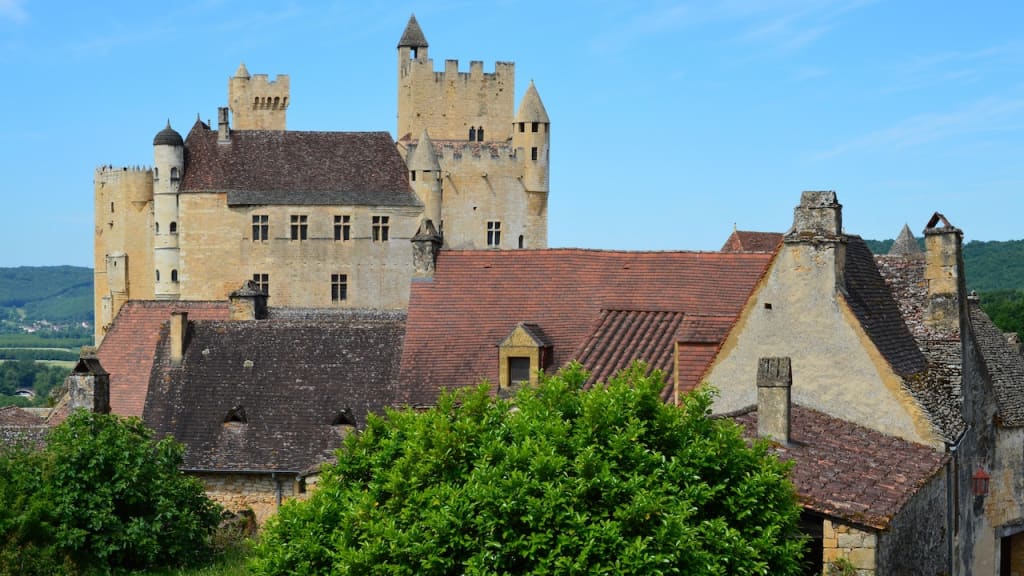
Medieval Europe, a time of sword-wielding knights, rotten meat, chastity-belted maidens, and gruesome torture devices—or so the popular myths would have us believe. However, the reality of the Middle Ages is far more nuanced and fascinating. So, where did these misconceptions originate, and what was life truly like during this thousand-year era? Let's delve into the truths behind the myths.
"The Middle Ages" refers to the period from the fall of Rome in the 5th century to the Italian Renaissance in the 15th century—a term primarily associated with Europe. Contrary to the notion that medieval Europeans were universally ignorant and uneducated, the era witnessed a gradual increase in literacy rates as monasteries, convents, and universities were established. While some medieval scholars considered the Earth the center of the universe, there was little debate about its shape. In fact, a popular 13th-century text was titled "On the Sphere of the World." Ancient knowledge from Greek and Roman texts was also preserved and studied.
The idea that medieval people consumed rotten meat and used spices to mask the taste emerged from a misinterpretation of a single medieval recipe by a British book in the 1930s. In reality, Europeans of the time avoided spoiled food and had effective methods for preserving meats, such as curing them with salt. While spices were indeed popular, they were often more expensive than the meat itself, so those who could afford them could also acquire fresh food. Similarly, the claim made by 19th-century French historian Jules Michelet that the Middle Ages were "a thousand years without a bath" is unfounded. Even small towns boasted well-used public bathhouses, and people employed various soaps, mouthwashes, and teeth-cleaning methods for hygiene and fresh breath.
The existence of medieval torture devices has been exaggerated. The infamous Iron Maiden, with its spiked doors, was likely a fabrication from the 19th century, and there is no evidence of its use during the Middle Ages. The "Pear of Anguish," although it did exist, was likely a shoe-stretcher rather than a torture device. In reality, medieval legal proceedings involved fines, imprisonment, public humiliation, and certain forms of corporal punishment, while extreme methods such as drawing and quartering were reserved for serious crimes like high treason. Chastity belts, often associated with the Middle Ages, were likely a product of satire rather than historical reality.
Ideas about the Middle Ages have varied throughout history, influenced by the interests and biases of subsequent eras. The term itself, along with the pejorative "Dark Ages," gained popularity during the 15th and 16th centuries, fueled by scholars with a preference for the Classical and Modern periods. Enlightenment thinkers depicted medieval people as superstitious and irrational while celebrating their own dedication to reason. In the 19th century, Romantic European nationalist thinkers romanticized the Middle Ages, emphasizing tales of chivalry and wonder. However, knights played a minimal role in medieval warfare, and the era saw extensive interactions, with diverse influences flowing into Europe through Byzantine, Muslim, and Mongol trade routes.
Ultimately, the notion of a unified and cohesive period called the Middle Ages is a misconception. Originally defined by what it was not rather than what it encompassed, this era became a battleground for contrasting ideas, leading to a proliferation of fantasy rather than historical accuracy. By separating fact from fiction, we can gain a deeper understanding of the complex realities that shaped medieval Europe.
Henrik Leandro
About the Creator
Henrik Leandro Laukholm Solli
Free thinker, traveler and humanist <3
Keep reading
More stories from Henrik Leandro Laukholm Solli and writers in History and other communities.
The Wind Gourd: A Tale of Loyalty and Restoration
Long ago, La’amaomao, the Hawaiian wind goddess, possessed a remarkable gourd that contained the winds of the Islands. Over time, the gourd became the vessel for La’amaomao's bones, imbued with the life force they carried. Eventually, it was passed down to her grandson, Paka’a, who inherited her wisdom and powers. Paka'a devoted himself to learning the countless winds that danced and roared across his homeland, capable of summoning storms and stirring the very essence of nature. He served as the trusted attendant to King Keawenuia’umi of Hawaii Island, just as his father had done before him.
By Henrik Leandro Laukholm Solli3 years ago in History
Stanislav Kondrashov Oligarch Series: A Historical Reflection on Oligarchy and Philosophy
Throughout history, societies have often included small circles of individuals who hold significant wealth. Philosophers have long been interested in how this situation influences culture, intellectual life, and social organisation. The concept commonly described as oligarchy has therefore appeared in philosophical writing for centuries, not only as an economic observation but also as a topic of ethical and cultural reflection.
By Stanislav Kondrashov 7 days ago in History
Hottest in the Office
Dear Rafi, You’re very distracting to work around. For the first second I saw you the other day, I thought you were some type of executive. It took a moment to realize no, you were just the new guy, dressed up for the job he wants. Be still, my heart.
By Gabriel Shames6 days ago in Pride




Comments
There are no comments for this story
Be the first to respond and start the conversation.