
Cultural Anthropology: A Journey Through World Traditions and Cultures
Exploring the Rich Tapestry of Human Diversity

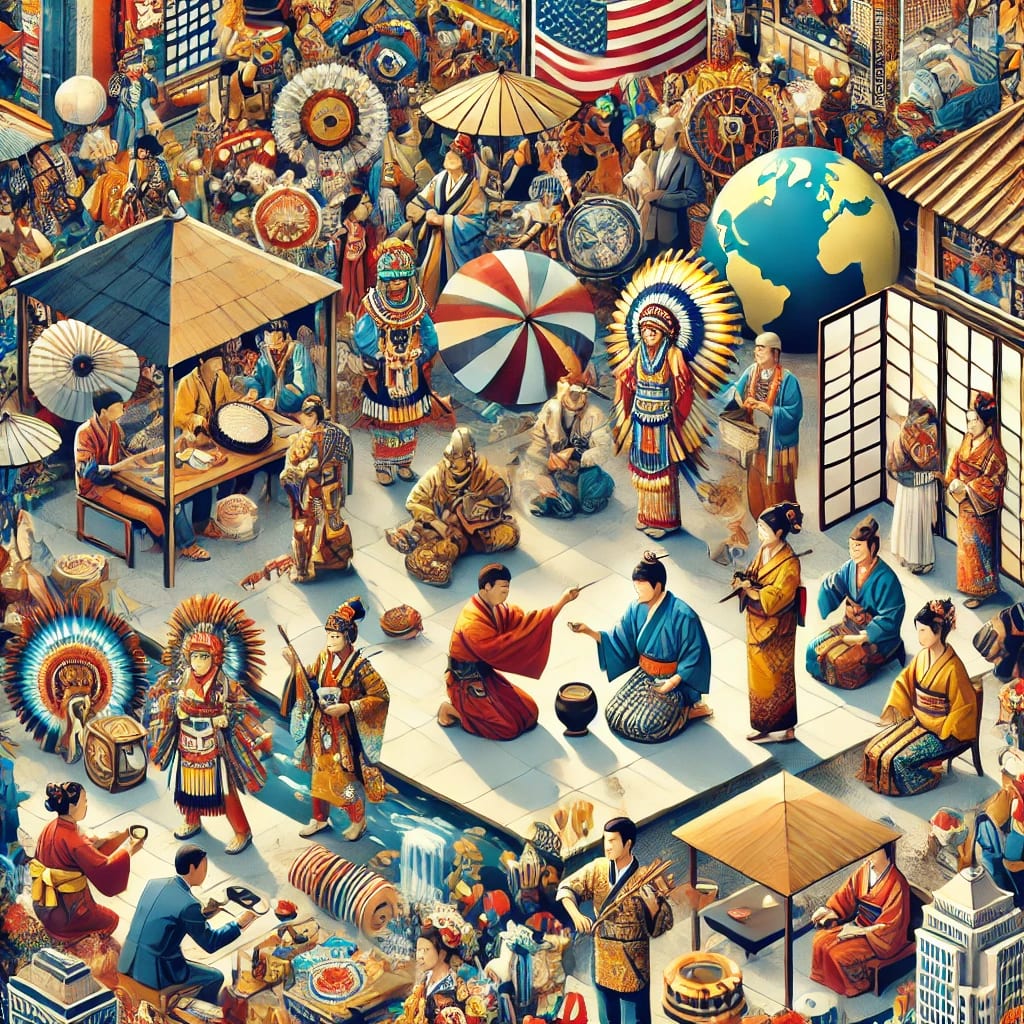
Introduction to Cultural Anthropology
Cultural anthropology is a fascinating discipline that explores various human cultures, analyzing how people live, think, and relate within their societies. This science studies traditions, customs, beliefs, and practices of different communities, offering a deep understanding of the cultural diversity that characterizes our world. This intellectual journey allows us to discover the beauty of human diversity and gain a better understanding of our own societies.
Definition and Purpose of Cultural Anthropology
Cultural anthropology focuses on the study of human cultures and their historical developments. It aims to understand how people create and maintain their lifestyles through social, religious, economic, and political practices. By analyzing data collected in the field, cultural anthropologists strive to construct a detailed and comprehensive picture of the societies they study. This study not only helps us understand other cultures but also offers an opportunity to reflect on our own practices and beliefs.
Origins of Cultural Anthropology
Cultural anthropology has deep roots in the 19th century, with scholars like Edward Burnett Tylor and Lewis Henry Morgan beginning to catalog and analyze non-Western cultures. Their pioneering work laid the foundations for the development of this discipline, which has grown and evolved over time, incorporating new methodologies and theories. Tylor is known for defining culture as “that complex whole which includes knowledge, belief, art, morals, law, custom, and any other capabilities and habits acquired by man as a member of society.”
Methodologies in Cultural Anthropology
Cultural anthropologists use various methodologies to gather data and understand the cultures they study. Among these, participant observation is one of the most important. It involves living within a community for an extended period, observing and participating in daily activities to gain an insider’s view of cultural dynamics. Additionally, interviews and the analysis of texts and cultural artifacts are fundamental tools for gathering detailed information. Combining these methodologies allows for a rich and multifaceted understanding of the cultures studied.
Ethnography: The Heart of Cultural Anthropology
Ethnography is the primary method used by cultural anthropologists to describe and analyze cultures. This approach involves long-term engagement with a community, during which the anthropologist meticulously documents local practices and beliefs. Ethnography provides a rich and contextualized description of cultures, offering a unique and profound perspective on how people live their lives. Ethnographic diaries, field notes, and interview transcripts are key tools in this process.
Case Studies: Examples of Anthropological Research
1. Native Americans and Their Traditions
Studies on Native Americans have revealed the complexity of their cultural traditions, from spirituality to daily practices. Anthropologists have documented ceremonies like the sun dance and the importance of oral histories in knowledge transmission. These traditions offer an illuminating window into Native American worldviews and their relationship with nature.
2. Tribal Societies in Africa
In Africa, anthropological research has explored the social structures of tribal societies, analyzing the role of oral traditions, rites of passage, and agricultural practices. These studies have highlighted the continent’s cultural diversity and richness. Life in many of these societies is deeply interconnected with the natural environment and traditional sustainability practices.
3. Japanese Culture: A Fusion of Tradition and Modernity
In Japan, anthropologists have examined how traditional culture integrates with modernity. Practices like the tea ceremony and traditional festivals are studied alongside the influence of technology and urbanization. This fusion creates a unique cultural landscape where past and present coexist harmoniously.
The Role of Religion in Cultural Anthropology
Religion is a central aspect of many cultures, and cultural anthropology pays significant attention to the study of religious beliefs and rituals. Anthropologists examine how religions influence social norms, values, and daily practices, providing a deep understanding of their impact on people’s lives. Religions are not only belief systems but also ways of living that profoundly shape societies.
Language and Communication
Language is another fundamental element studied by cultural anthropologists. Communication is not just a means of transmitting information but also a way of building cultural and social identities. Linguistic studies analyze how words, gestures, and verbal and non-verbal expressions contribute to forming and maintaining cultures. Language is often seen as a mirror of culture, reflecting a society’s values and priorities.
The Impact of Globalization on Local Cultures
Globalization has led to increasingly close interactions between different cultures, profoundly influencing local traditions. Cultural anthropologists study how local cultures react and adapt to changes brought about by globalization, analyzing phenomena such as migration, urbanization, and the adoption of global technologies. This process can lead to both cultural conflicts and synergies, transforming societies in unpredictable ways.
Cultural Anthropology and Social Change
Cultural anthropology does not just describe cultures; it also plays a crucial role in understanding social changes. Anthropologists analyze how societies evolve over time, adapting to new circumstances and challenges. This includes studying social movements, cultural revolutions, and economic transformations. Understanding these processes helps predict future trends and manage changes more effectively.
Preservation of Cultural Traditions
An important aspect of cultural anthropology is the preservation of cultural traditions. In a rapidly changing world, many cultures risk disappearing under the pressure of modernization and globalization. Anthropologists work with communities to document and preserve traditional practices, ensuring that knowledge and traditions are passed on to future generations. This work is vital for maintaining the planet’s cultural diversity.
Cultural Diversity as a Resource
Cultural diversity is an invaluable resource for humanity. Each culture offers a unique perspective on life, enriching our understanding of the world. Cultural anthropologists emphasize the importance of valuing and respecting this diversity, promoting intercultural dialogue and global cooperation. Different cultures can learn from each other, developing new solutions to common problems.
Challenges and Future Prospects of Cultural Anthropology
Cultural anthropology faces several challenges in the contemporary context. Digitalization, mass migration, and climate change are just a few of the issues requiring new approaches and methodologies. Anthropologists are called to innovate and adapt to continue providing relevant insights into cultural dynamics in a constantly changing world. This includes the use of new technologies and interdisciplinary collaboration.
Applied Cultural Anthropology
Cultural anthropology is not limited to theory and academic research. There is also a field of applied anthropology, where anthropologists use their knowledge to solve practical problems. This can include consulting for public policies, working with non-governmental organizations, and assisting in designing sustainable development programs. Applied anthropology demonstrates how understanding cultures can have a positive and concrete impact on society.
Education and Cultural Awareness
One of the goals of cultural anthropology is to educate people about cultural diversity and promote intercultural awareness. Through educational programs, publications, and media, anthropologists work to spread greater understanding of the world’s cultures. This helps reduce prejudice, promote mutual respect, and build a more inclusive society.
The Future of Cultural Anthropology
The future of cultural anthropology is bright, with many new research and application areas emerging. Digital technologies offer new opportunities for collecting and analyzing cultural data, while global challenges require innovative cultural solutions. Cultural anthropologists will continue to play a crucial role in understanding and navigating the complexity of the contemporary world.
Anthropology of Family and Social Relationships
One of the main focuses of cultural anthropology is the study of family and social relationships. Family structures vary widely across different cultures, reflecting each community’s values, beliefs, and social needs. Anthropologists study how families are organized, gender roles, interpersonal dynamics, and how children are educated and socialized.
Anthropology of Health and Illness
Another important area of study is the anthropology of health, which examines how different cultures understand and manage health and illness. This field explores traditional medical practices, beliefs related to illness and healing, and how societies respond to epidemics and health crises. Health anthropology offers important insights to improve global medical practices and health policies.
Economic Anthropology
Economic anthropology studies how different cultures produce, distribute, and consume resources. This includes analyzing exchange systems, markets, household economies, and subsistence practices. Economic anthropologists also examine the impact of economic globalization on local economies and communities’ adaptation strategies to global economic pressures.
Urban Anthropology
With the increase in global urbanization, urban anthropology has become a crucial field of study. Urban anthropologists explore life in cities, analyzing topics such as social segregation, urban migrations, gentrification, and power dynamics in urban spaces. This field offers an understanding of the unique challenges and opportunities characterizing urban life.
Anthropology of Technology
In today’s rapidly advancing world, the anthropology of technology has emerged as a significant area of study. Anthropologists examine how technological advancements impact societies and cultures, influencing communication, work, and daily life. This field also explores the digital divide and how different communities adopt and adapt to new technologies.
Anthropology of Food
The anthropology of food is another intriguing area, focusing on how food practices shape and reflect cultural identities. This includes the study of traditional diets, food production and consumption rituals, and the impact of globalization on local cuisines. Anthropologists analyze how food connects to broader social, economic, and environmental issues.
Visual Anthropology
Visual anthropology uses photography, film, and other visual media to study and represent cultures. This field allows anthropologists to capture and communicate cultural practices and changes vividly. Visual anthropology offers a powerful way to engage with and present ethnographic research to a broader audience.
Public Anthropology
Public anthropology aims to make anthropological research and insights accessible to the general public. This involves writing for popular media, engaging in public speaking, and participating in community projects. Public anthropologists work to apply their knowledge to real-world issues, fostering greater public understanding and engagement with cultural diversity.
Conclusions
Cultural anthropology offers a fascinating window into the world’s cultural diversity. By analyzing traditions, beliefs, and practices of various societies, cultural anthropologists help us better understand the complexity of human nature. This journey through cultures allows us to appreciate the richness and variety of human experiences, promoting greater understanding and tolerance among peoples. The discipline continues to evolve, adapting to the changes of the modern world and remaining a vital resource for understanding human societies.
About the Creator
Fabio Smiraglia
I am a passionate content writer with extensive experience in crafting engaging texts for blogs, websites, and social media. I love telling stories, informing, and connecting with audiences, always with creativity and precision.
Reader insights
Nice work
Very well written. Keep up the good work!
Top insights
Easy to read and follow
Well-structured & engaging content
Excellent storytelling
Original narrative & well developed characters
Eye opening
Niche topic & fresh perspectives
On-point and relevant
Writing reflected the title & theme
Keep reading
More stories from Fabio Smiraglia and writers in History and other communities.
The Evolution of Music: From Classical Music to Contemporary Genres
Introduction Music has always held a special place in human culture, serving not only as a form of entertainment but also as a means of expression and communication. From the sophisticated melodies of classical music to the energetic rhythms of rock and the complex digital productions of today, the evolution of music tells the story of humanity through its notes. In this article, we will explore how music has transformed over the centuries, influenced by social, technological, and cultural changes, and how it continues to evolve in an increasingly diverse musical landscape.
By Fabio Smiragliaabout a year ago in History
Savoy Hotel – Mussoorie: The Colonial Luxury Hotel Where an Unsolved Murder Still Walks the Corridors
The First Night: Beauty Wrapped in Silence Mussoorie looks peaceful from a distance. Pine trees sway gently, clouds roll like slow-moving waves, and the hill air smells of rain and old earth. But as evening falls, the silence becomes heavier—almost watchful.
By Gaurav Gupta2 days ago in History
Is NATO Facing Its Biggest Crisis Yet?
Is NATO Facing Its Biggest Crisis Yet? For more than seventy years, NATO has been one of the strongest military alliances in the world. Formed after World War II, it was designed to protect its members through collective defense. An attack on one was considered an attack on all. For decades, this principle helped maintain stability in Europe and beyond. But today, NATO is facing one of the most challenging moments in its history.
By Wings of Time 6 days ago in History



Comments (2)
This is very educative and eye opening
Interesting one