
Crunch, Chew, and Chronicles: 3 Xingyang Dishes That Tell a Story
Savoring Centuries of Flavor and Folklore in China's Heartland
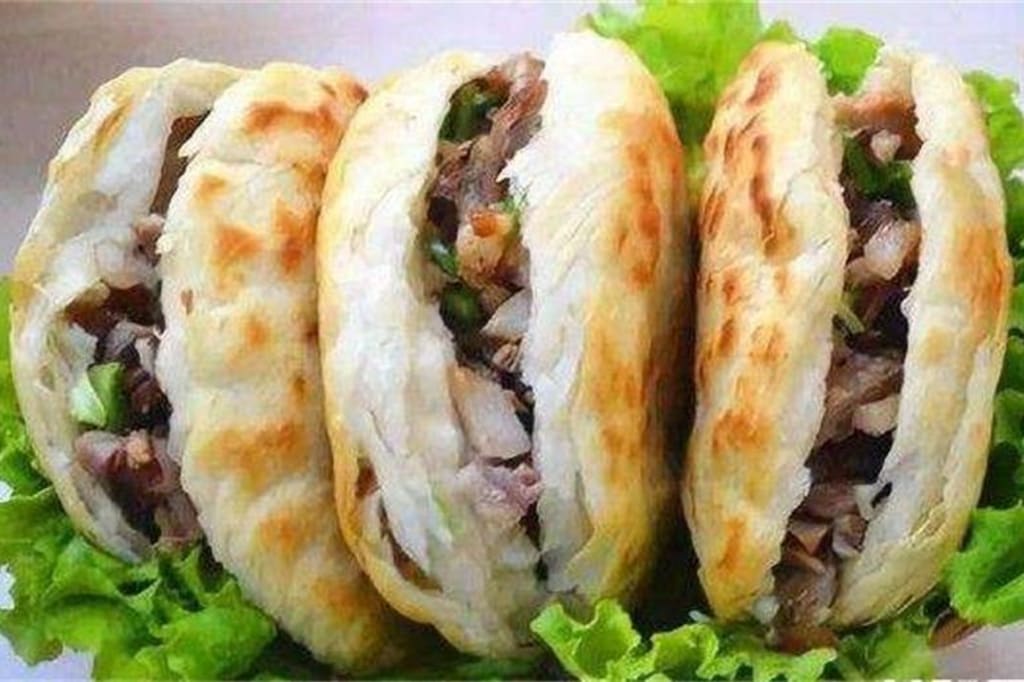
Stepping into Xingyang, an ancient Central Plains city soaked in millennia of history, the air carries an irresistible aroma. Each local dish here is a legend woven by time and craftsmanship, hiding in the street-side food stalls and engraved in generations' memories. These flavors don't just satisfy hunger—they tell stories of wars, innovations, and everyday life. Let's unwrap the fascinating histories of three Xingyang staples: Guangwu Starch Cake, Oil Swirl Buns, and Sishui Sesame Burger.

Guangwu Starch Cake: 600 Years of Chewy Perfection
Imagine a dish born from survival wisdom: during the late Yuan to early Ming dynasties (1300s-1400s), Guangwu villagers facing food shortages turned humble sweet potatoes into a culinary marvel. They boiled sweet potato noodles, mixed them with starch, minced meat, and five-spice powder (think Chinese five-spice as a warm, aromatic blend like cinnamon+clove), shaped the mixture into cakes, and steamed them for 45 minutes. The result? A firm yet slippery cake that, when fried, develops a crispy golden crust. Biting into it is like biting into history—chewy, savory, and subtly spiced, a perfect blend of peasant ingenuity and comfort food.Fun fact: Similar to European potato pancakes, but with a 600-year head start!

Oil Swirl Buns: 300 Years of Crusty Magic
Picture a palm-sized spiral bun, crispy on the outside, fluffy within—that's the Oil Swirl Bun, a Guangwu classic for 300+ years. The process is like a dance: knead wheat flour into dough, divide into 150g pieces, roll into thin strips, coat in fragrant oil, sprinkle with secret seasonings, then roll up and flatten. Baked in a special oven with periodic oil drizzles, the bun puffs up, forming a spiral pattern. The crust crackles like a potato chip, while the inside melts in your mouth—think of it as a savory croissant with a Chinese twist, crafted by masters who've perfected the art of fire and flour.

Sishui Sesame Burger: A 1,800-Year-Old Fast Food
This burger's story starts on a battlefield: during the Three Kingdoms period (220-280 AD), Liu Bei, Guan Yu, and Zhang Fei fought Lü Bu near Hulao Pass. When supplies ran low, Zhang Fei ordered soldiers to cook horse meat in big pots and bake dough on shield-shaped pans. They sandwiched meat between the bread—a primitive "battlefield burger."
Over time, pork replaced horse meat. In the Qing Dynasty (1644-1911), a chef added Chinese herbs and spices, making the meat fragrant yet not greasy. The bun got upgraded with sesame and sesame oil, becoming crispy outside, soft inside. In the 1950s-60s, it gained popularity; after 1978, it became a livelihood. Funny twist: due to scarcity, pig heads replaced pork—cheaper but equally tasty, keeping the tradition alive.
Modern parallel: Think of it as China's original hamburger, 1,600 years older than the American version!

Have these tales of Xingyang's ancient dishes made your taste buds tingle? From the chewy starch cake born out of necessity, to the crispy swirl buns crafted with generations of skill, and the battlefield-inspired sesame burger that evolved over centuries—each bite is a chapter of China's rich heritage.
But the story doesn't end here! We want to hear from you. Have you tried any Chinese street foods with equally amazing backstories? Or do these descriptions make you eager to explore Xingyang's culinary scene? Share your thoughts, questions, or food adventures in the comments below. Don't forget to follow for more deep dives into global cuisines and the history behind them—because every dish has a story, and every story deserves to be told. Let's keep this delicious conversation going!
About the Creator
Joker J
Joker, a 37-year-old Chinese writer. After a business failure, I turned to writing to make a living and share the charm of China.
Why Pastor Collar Shirts Are Essential for Modern Church Leaders
In today’s modern church, appearance matters just as much as message. Church leaders are expected to look respectful, approachable, and professional at all times. Clothing plays a big role in creating this image. Among all clerical outfits, pastor collar shirts stand out as one of the most important garments for church leaders. These shirts are not only a symbol of faith and authority, but they also provide comfort, confidence, and identity.
By Sameera eclergys7 days ago in History
Rachel Reviews: The Spiral Archive by Pieter Hendrik
It's difficult for me to know where to start with a review of this book as it was, for me, an entirely unique experience and one that I'll probably never have again. I don't want that to be interpreted as unenjoyable but it has left me scratching my head a little and ruminating on its content, its themes and its characters.
By Rachel Deeming4 days ago in BookClub



Comments
There are no comments for this story
Be the first to respond and start the conversation.