
Crimson Border
A Tale of Conflict, Courage, and the Cost of Division

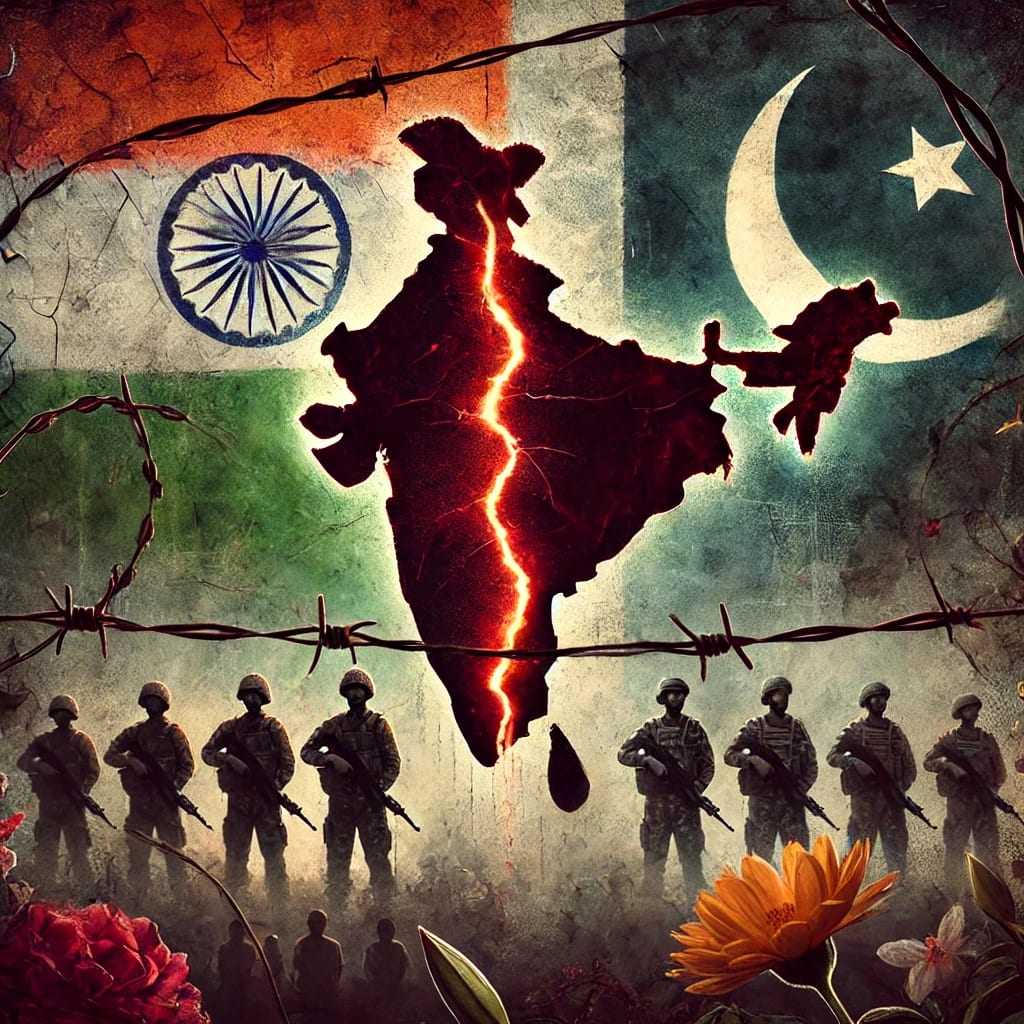
The night sky above the Line of Control was heavy with silence — the kind that only exists after the last bullet has been fired, but before the next command is given. Cold winds swept across the jagged terrain, carrying whispers of home, regret, and the ever-present hum of history.
On the Indian side of the border, Captain Arjun Mehra sat near a flickering fire, his eyes locked on a battered photo of his daughter. Just across the wire, on the Pakistani side, Lieutenant Aamir Shah adjusted the straps of his rifle, staring into the same darkness. Two men, two uniforms, two nations — divided by more than just land.
The latest skirmish had erupted after a controversial border incident — a drone had been shot down, each side blaming the other. In retaliation, patrols were doubled, orders sharpened, and tempers flared like dry grass near a flame. For both men, this was not their first posting at the border, but it felt different this time — more personal, more fragile.
What they didn’t know was that their lives had crossed long before this war zone.
Twenty-two years earlier, in a quiet town just outside Lahore, a boy named Aamir attended a summer camp organized by a peace foundation. That year, a special cross-border initiative had brought Indian children to Pakistan — under tight supervision and high hopes. Among them was a curious boy named Arjun.
For two weeks, they played cricket, shared meals, and told each other stories from across the divide — tales of cities with different names but similar smells, food with different spices but the same warmth. They were boys who hadn’t yet learned to hate.
On the final day of camp, the organizers held a small ceremony. Children exchanged small gifts. Aamir handed Arjun a compass. “So you never lose your way,” he joked. Arjun gave him a folded piece of paper — a sketch of the two of them under the same tree.
They promised to write, but borders aren’t kind to promises.
Now, years later, they sat just miles apart, unknowingly back beneath the same starlit sky.
A sudden sound — a rustle, a whisper, a misstep — echoed from the fence. Arjun rose, signaling his men. Aamir did the same on his side. Both squinted through their night scopes.
It was a child.
Somehow, in the middle of a mine-laced no-man’s-land, a young boy no older than ten had wandered close to the fence. His cries pierced the darkness, trembling with fear.
Neither soldier moved at first. Each waited for the other side to act, fingers twitching on triggers. The boy’s wail grew louder.
Then Arjun stepped out, slowly, hands raised. From the opposite side, so did Aamir.
They approached cautiously, guns slung behind their backs — not as enemies, but as fathers. Their men shouted, radios buzzed, but they ignored it all.
Arjun reached the child first and knelt. “Are you hurt?” he asked softly. The boy clung to him. Aamir arrived moments later, heart pounding.
They looked at each other.
Time didn’t freeze — it shattered.
Eyes locked, and memories broke through the years like a dam collapsing. A flicker of something familiar danced between them — recognition, confusion, disbelief.
Aamir reached into his pocket and slowly pulled out a worn sketch, creased and faded but intact. Arjun’s eyes widened. The same tree. The same faces. The same past.
“You kept it,” Arjun whispered.
“You too,” Aamir replied, tapping the compass that now hung from his neck like a talisman.
The boy, unaware of the history unfolding around him, sniffled and clutched a faded toy in his hand. “I just wanted to find my brother,” he mumbled. “I thought he went this way.”
Arjun stood, looking at Aamir. “We can’t let command see this. They’ll escalate.”
Aamir nodded. “Then we do what they never could — we trust.”
Together, they carried the child back to safety — not toward India or Pakistan, but toward a medical post near the neutral zone. No flags flew there, only white canvas and tired medics.
That night, under the cover of silence, two soldiers crossed not just a fence, but decades of distrust. They returned to their posts without a word to anyone. The boy was later found to be from a nearby border village. No one asked how he survived.
Weeks passed. The ceasefire held.
But in a file drawer somewhere in a high-security office, a classified report quietly noted: “Unidentified cross-border contact. No aggression. Civilian rescue. Disciplinary action: none.”
No medals were awarded. No headlines told the story.
Yet, the next time Captain Arjun looked at the crimson line on the map, he no longer saw an enemy on the other side. He saw a boy with a sketch and a man who had kept it.
And somewhere across that line, Lieutenant Aamir did the same.
Because sometimes, the unseen battles — the ones fought with compassion instead of commands — are the ones that change the war.
About the Creator
Basir khan
hello guy’s
Keep reading
More stories from Basir khan and writers in History and other communities.
A Heart That Listens
The sun dipped low in the sky, casting golden hues through the swaying branches of the old tamarind tree that stood at the edge of the village. Underneath it, a woman and her daughter sat close, their shadows stretching gently across the warm earth. The child, no older than seven, leaned her head on her mother’s lap, speaking softly about her day at school, the games she played, the scolding she received for not finishing her math. Her mother listened — not just with her ears, but with her whole heart.
By Basir khan9 months ago in Families
Historical Story
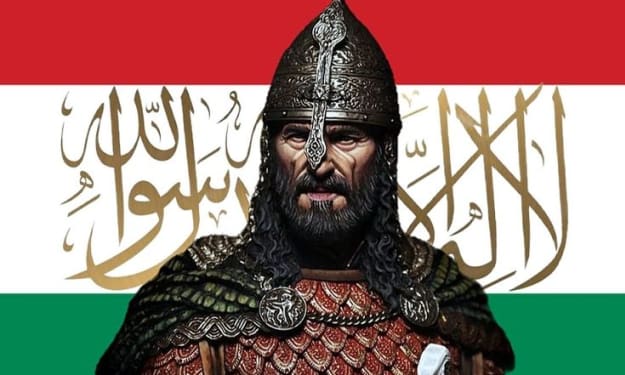
For many years, battles continued between Sultan Salahuddin Ayyubi and the Crusader warriors. Finally, after various military campaigns and confrontations, a battle took place that proved decisive in history—one that brought an end to the Christian Kingdom of Jerusalem in Palestine and sealed the fate of the Crusaders. This was the Battle of Hattin, which occurred on Saturday, 24 Rabi‘ al-Akhir 385 AH. In this battle, the Muslims achieved a decisive victory.
By Sudais Zakwan5 days ago in History
The Lost City of Dreams
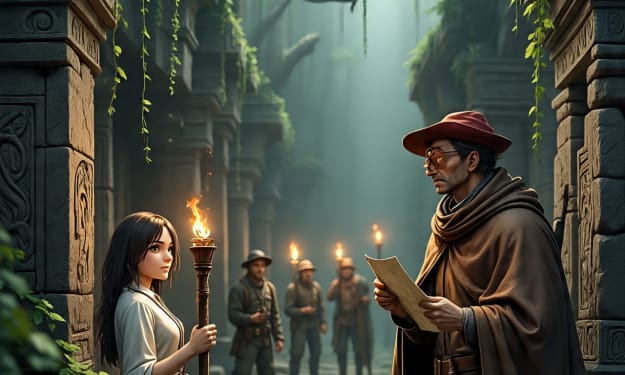
The Lost City of Dreams Aisha, Max, and Leo had always been the kind of friends who thrived on adventure. Growing up in the bustling city of Mumbai, they'd explored every nook and cranny, from the crowded streets of Old Delhi to the serene beaches of Goa. But nothing could have prepared them for the discovery that would change their lives forever.
By Talhamuhammad3 days ago in History


Comments
There are no comments for this story
Be the first to respond and start the conversation.