
Covid-19
A Global Pandemic That Changed the World

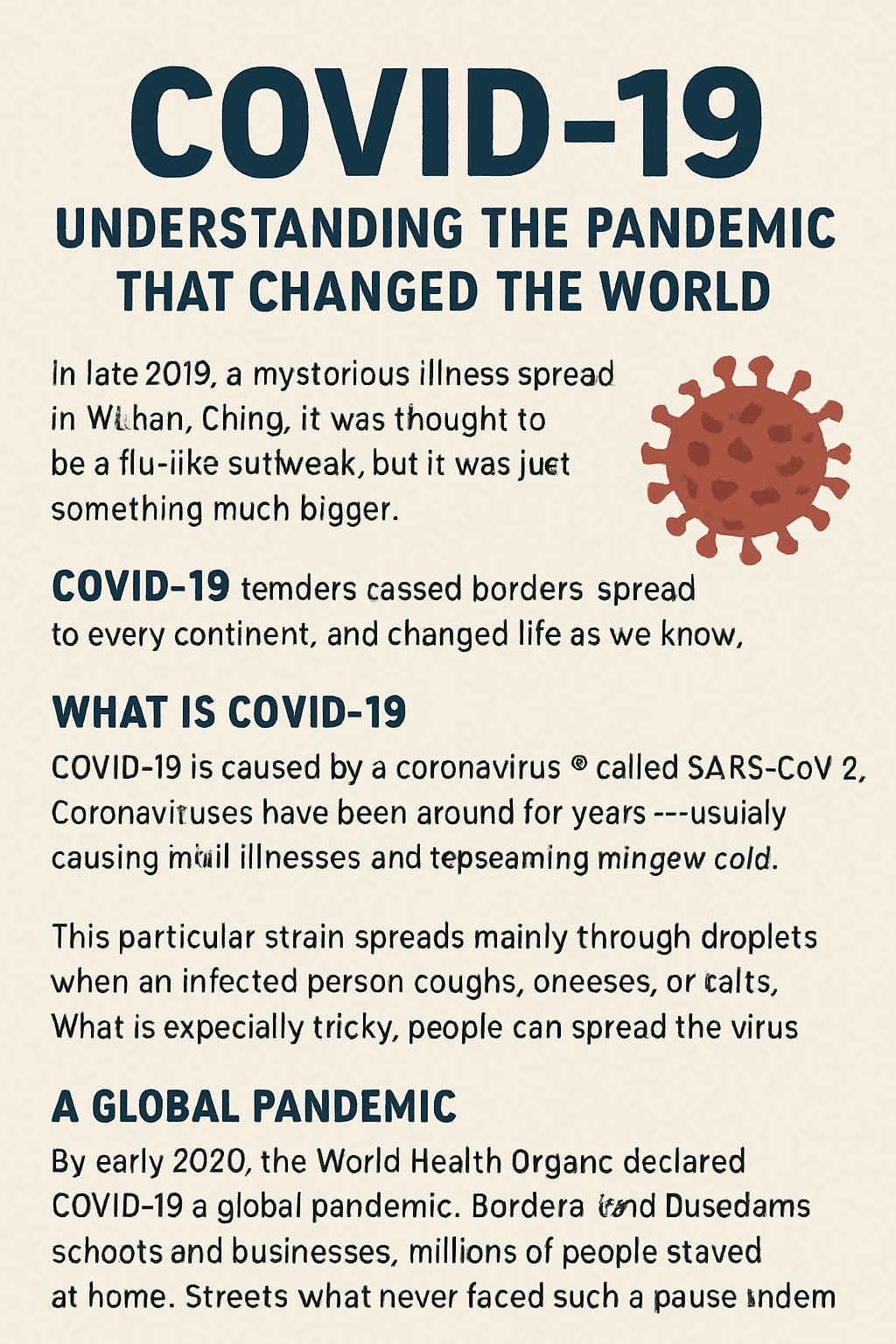
In late 2019, news of a novel coronavirus began circulating from Wuhan, China. Few imagined that this virus, later named COVID-19, would soon reshape the entire globe. Within months, countries closed their borders, cities fell silent, and millions of people were confined to their homes. What began as a localized outbreak quickly escalated into one of the most significant public health crises in modern history. COVID-19 was not just a medical emergency—it was a turning point that altered societies, economies, and individual lives in ways that will echo for generations.
The most immediate and devastating impact of the pandemic was the loss of human life. Millions around the world succumbed to the virus, and countless families were left grieving. Hospitals were overwhelmed, healthcare workers faced unimaginable stress, and governments scrambled to provide enough medical supplies. The vulnerability of global health systems was exposed, reminding the world that preparedness for pandemics is not optional but essential. Even in technologically advanced nations, the pandemic revealed gaps in infrastructure, coordination, and access to care.
Economically, COVID-19 created shocks unlike anything seen in decades. Businesses shut down, supply chains broke apart, and unemployment soared. Small businesses, in particular, suffered as foot traffic vanished and consumer spending plummeted. Entire industries—such as tourism, aviation, and hospitality—were brought to a near standstill. At the same time, the pandemic accelerated changes already underway. Remote work became a norm rather than an exception, digital platforms flourished, and e-commerce expanded rapidly. For many, working from home blurred the boundaries between personal and professional life, changing how people think about jobs and workplaces in the future.
Education also faced dramatic transformation. Schools and universities around the world closed their doors, forcing a sudden shift to online learning. While technology offered new possibilities, it also deepened inequalities. Students without access to stable internet connections or personal computers were left behind. Teachers struggled to adapt, and parents often had to balance their own work with supervising children’s education. Despite these challenges, the crisis revealed the resilience of educators and the potential of digital learning tools, which will likely remain important even after the pandemic.
On a social level, COVID-19 reshaped human relationships and daily life. Social distancing, lockdowns, and travel restrictions limited gatherings and separated families. Celebrations, traditions, and milestones—weddings, graduations, even funerals—were postponed or held virtually. For many, isolation took a toll on mental health, sparking a global conversation about anxiety, depression, and the importance of psychological well-being. At the same time, communities found creative ways to stay connected, from balcony concerts in Italy to virtual meetups across the world. In hardship, solidarity often emerged.
Perhaps one of the most remarkable achievements during the pandemic was the rapid development of vaccines. Scientists, governments, and pharmaceutical companies collaborated at unprecedented speed, producing effective vaccines in less than a year. This milestone not only saved millions of lives but also demonstrated the power of global cooperation and scientific innovation. However, unequal access to vaccines also highlighted persistent issues of inequality between wealthy and poorer nations.
The pandemic also forced individuals and societies to reconsider priorities. It revealed how interconnected the world truly is—how a virus in one city could spread across continents within weeks. It underscored the importance of trust in science, strong leadership, and collective responsibility. Wearing masks, practicing hygiene, and getting vaccinated became acts not just of self-protection but of care for others. These shifts reflected a growing awareness that global challenges require collective solutions.
As the world gradually recovers, the legacy of COVID-19 remains. It changed how people work, learn, travel, and interact. It accelerated technological reliance while deepening awareness of social and economic inequalities. Most of all, it reminded humanity of its vulnerability but also its capacity for resilience, adaptability, and innovation.
The pandemic may one day be seen not only as a tragedy but also as a turning point—a time when societies were forced to reflect, adapt, and rebuild. While scars remain, the lessons learned carry the potential to build stronger health systems, more flexible economies, and more compassionate communities.
COVID-19 was a global pandemic that changed the world. Its effects are still unfolding, but its imprint on history is undeniable.
About the Creator
Sheikh Suffyan
I share ideas, experiences, and reflections that spark curiosity and connection. Whether it’s diving into creativity, exploring life’s little details, my goal is to leave you inspired and thinking differently.
Keep reading
More stories from Sheikh Suffyan and writers in History and other communities.
A Relationship Difference
In today’s fast-paced world, relationships can be both rewarding and complicated. While many strive for meaningful connections, others find themselves trapped in “fake” relationships—connections that look perfect on the surface but lack substance underneath. Understanding the difference between a genuine adult relationship and a fake one is crucial for emotional health and personal growth.
By Sheikh Suffyan5 months ago in Humans
Guard Your Battery
Why are some people so attractive just by standing there? It’s not because they are "likable," but because they don’t need everyone to like them. I realized later that truly charismatic people allow themselves to be criticized, but they never criticize themselves. They never try to please the world; instead, the world stops to watch them.
By Emily Chan - Life and love sharinga day ago in Poets


Comments
There are no comments for this story
Be the first to respond and start the conversation.