
Contribution of Ikhtiyar Uddin Muhammad bin Bakhtiyar Khilji
The bangle History


Early Life:
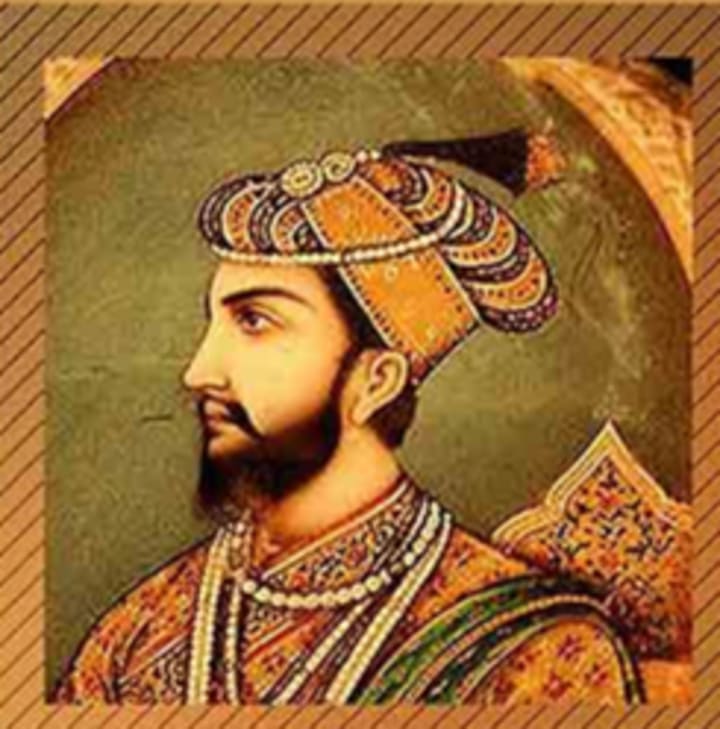
IIkhtiyar Uddin Khilji, a member of the Khilji tribe, a Turkic tribe long settled in what is now southern Afghanistan,was head of the military force that conquered much of eastern India at the end of the 12th Century.
Rise:
Khilji came from the town of Garmsir in southern Afghanistan. Tradition has it that Khilji's conquest of Bengal at the head of 18 horsemen was foretold. It is reported that he was of common birth, had long arms extending below his knees, a short physical stature and an unfavorable countenance. He was first appointed as the Dewan-i-Ard at Ghor. Then he approached India in about the year 1193 and tried to enter in the army of Qutb-al-Din, but was refused rank. Then he went further eastward and took a job under Maklik Hizbar al-Din, then in command of a platoon at Badayun in northern India. After a short period he went to Oudh where Malik Husam al-Din, recognized him for his worth. Husam gave him a landed estate in the south-eastern corner of modern Mirzapur district. Khilji gathered some Muslims under his banner and soon consolidated his position, carrying out raids into neighboring territories.
Conquests:
In 1190s, Khilji was also responsible for the destruction of Nalanda University, which was an ancient Buddhist University in Bihar, India, nearby to the stronghold of Bihar. He apparently also massacred the students. The main Persian source for this explains Khilji attacked the fortress unaware that it was a University.
Khilji's career took flight with a campaign which subjugated Bihar in 1203. This effort earned him political clout in the court at Delhi. In the same year he took his forces into Bengal. As he came upon the city of Nabadwip, it is said that he advanced so rapidly that only 18 horsemen from his army could keep up. Khilji went on to capture the capital Gaur and intruded into much of Bengal.
The Tale of Bakhtiyar Khilji: The Conqueror of Bengal
Long ago, in the late 12th century, a brave but ambitious soldier from the Khilji tribe arrived in northern India. His name was Ikhtiyar Uddin Muhammad bin Bakhtiyar Khilji. Though of humble beginnings and not given much attention by powerful rulers at first, Bakhtiyar had something rare—courage, speed, and a sharp military mind.
He joined the army of Muhammad Ghori, a powerful Sultan from the west, and slowly began to rise through the ranks. He wasn’t like other generals—he believed in swift, daring attacks. And soon, he would make history.
Bakhtiyar's first major conquest was in Bihar, where he led a small but fierce cavalry unit. In a lightning raid, he attacked the famous Nalanda University, a great seat of Buddhist learning. Though the destruction shocked many, it announced his arrival on the Indian political stage.
But Bakhtiyar wasn’t done yet.
In 1203 CE, he launched his boldest campaign: the conquest of Bengal. With only a handful of horsemen, he disguised himself and charged into the heart of the Sena dynasty’s capital, Nadia (Nabadwip). The king, Lakshman Sen, was caught completely off guard and fled. Bakhtiyar, with barely a fight, took over the city.
He then established his rule in Lakhnauti, making it the first center of Muslim power in Bengal. His swift victories earned him fame, but also enemies.
In 1206, during a failed expedition to Tibet, he fell ill. Some say he was betrayed and murdered by his own men.
Thus ended the life of Bakhtiyar Khilji—a man whose ambition reshaped the history of Bengal, leaving behind a legacy that still sparks debate and curiosity to this day.
Bakhtiyar Khilji’s legacy is complex. While he is remembered for establishing Muslim rule in Bengal, his destruction of ancient centers of learning like Nalanda has been heavily criticized. Nevertheless, his swift conquests significantly altered the political, religious, and cultural dynamics of eastern India, making him a key figure in the early history of Islamic expansion in the subcontinent.
About the Creator
Keep reading
More stories from Tanvirul Islam and writers in History and other communities.
More Than Just a Festival, Why Eid Fills Hearts With Joy Around the World?
Most famous festival in the world. Eid isn’t just a date on the calendar it’s a celebration of gratitude, unity, and spiritual victory. Eid comes as a reward after a month of fasting, reflection, and discipline during Ramadan. It is a jolt of happiness that covers friends, families, and entire communities. It is a time when generosity is abundant, smiles are brighter, and hearts are lighter. Every aspect of Eid is meaningful, from the early morning prayers to the delicious meals, from giving charity (Zakat al-Fitr) to dressing in your finest attire. It’s not just about food and fun; it’s about togetherness, renewal, and reminding ourselves of what truly matters. For many, Eid is a reminder that after every struggle comes ease and that’s a reason worth celebrating with joy.
By Tanvirul Islam 9 months ago in History
When the Pyramids Learned to Breathe
The desert was silent in the way only ancient places can be—not empty, but listening. At dawn, the first light touched the limestone faces of the pyramids, and the shadows they cast stretched long and deliberate, as if time itself were waking slowly. To the west, beyond the city’s dust and noise, the old giants stood where they always had, unmoved by centuries, untouched by doubt.
By LUNA EDITH7 days ago in History
Talleyrand: The Master Survivor
Few figures in history embody strategic survival as perfectly as Charles-Maurice de Talleyrand-Périgord. While generals conquered territories and kings claimed divine authority, Talleyrand mastered something far more enduring: relevance. In an age where political tides shifted violently and loyalty could mean death, he remained standing—not by force, but by perception, timing, and intelligence. He did not dominate history. He outlasted it.
By Fred Bradfordabout 23 hours ago in History



Comments (6)
I prefer it
very nice information
Keep it up
nice
Great history
That is very interesting story