
Commemorating the 80th Anniversary of D-Day
"Honoring the Bravery and Sacrifice of the D-Day Heroes: 80 Years of Remembrance"

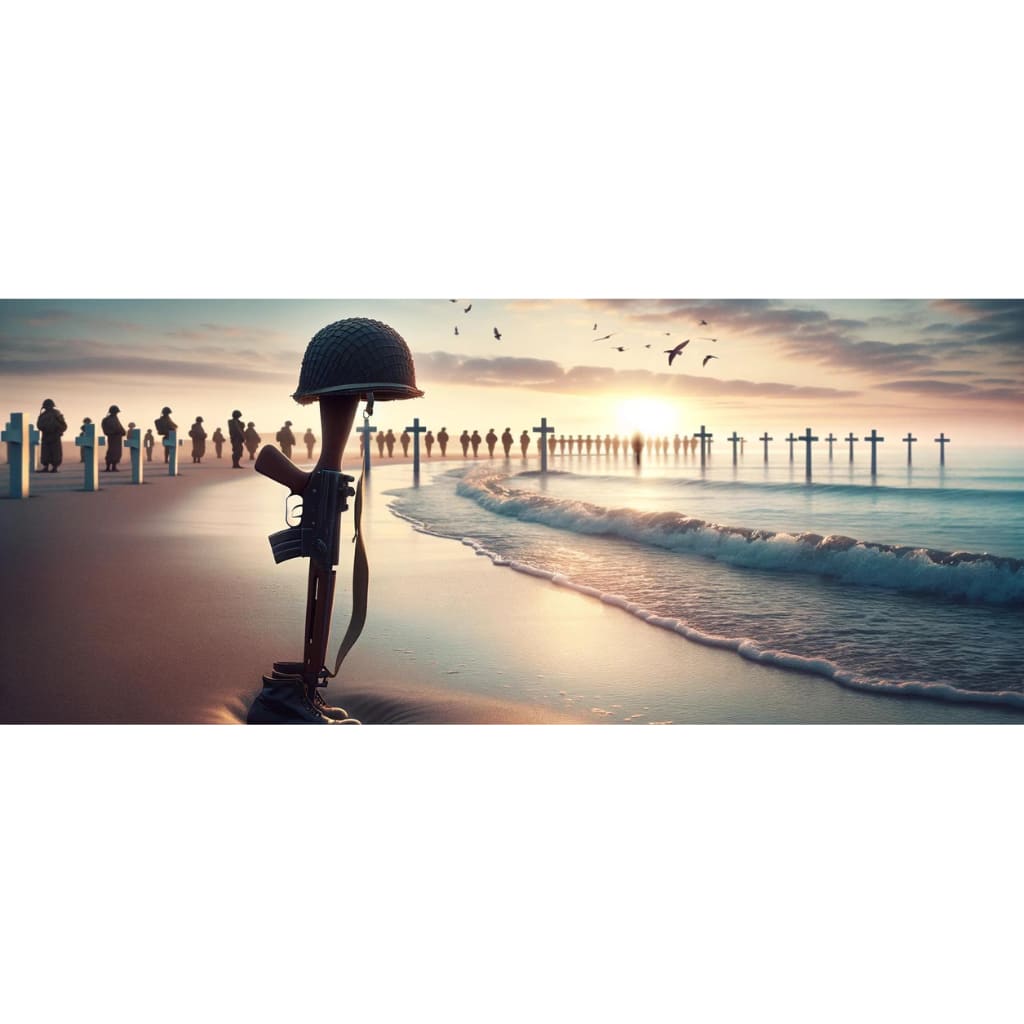
June 6 marks the 80th anniversary of the most important day of the Second World War. On 6 June 1944, in the invasion of Normandy, known as Operation Overlord and the beginning of Operation Neptune, the Allies launched one of the most momentous mobilisations of human effort in history. The D-Day landings heralded the end for Nazi occupation in Europe, a milestone in world history that is remembered and celebrated to this day for its valour and sacrifice, but above all for its strategic genius.
A Day of Remembrance and Reflection
With 156,000 troops from the United States, the United Kingdom, Canada and other nations of the Allied coalitions, the D-Day landings represent one of the greatest military operations in history. The men of the Allied armies faced down the Nazi-occupied Fortress Europe, backed by the Atlantic Wall heavily fortified with armored fortifications, mines, barbed wire, land and sea mines, and more than 13,000 coastal artillery and mortar batteries. Despite incurring almost 10,000 casualties (about 4,400 dead), the courage and sheer determination of the Allied armies led to the breach of Fortress Europe and ushered in the eventual liberation of the Nazi-occupied territories.
It was the largest amphibious invasion in world history – more than 7,000 ships and landing craft; almost 10,000 vehicles in total, to storm on to the beaches of Normandy. The unwavering courage of those fighting through heavy gunfire in difficult terrain is a testament to their commitment to ultimate ideals of liberty and justice.
Global Commemorations
Normandy, France:
Or Normandy, the epicentre of D-Day operations, where parts of the various events are conducted at the Normandy American Cemetery near the beach at Omaha and Colleville-sur-mer where nearly 9,400 US service members are buried. With a traffic exclusion zone and shuttle services for attendees, the day begins with two commemorative tributes (the H-Hour Remembrance Gathering and Wreath Laying Ceremony), visits by honour guards and military bands, and presentations by ‘living historians’ who portray wartime soldiers, ambulance drivers and GIs recalling their experiences on that day.
There’s nothing more touching about commemorations in Normandy than the sight of veterans brought back to see where they fought 70 years ago, often accompanied by their children and grandchildren, along with dignitaries and world leaders. The ceremonies in the Normandy American Cemetery, where so many young Americans died in one ferocious month in June 1944, are sublime in their pathos. Indeed, they cause even the most cynical and corrupted among us to appreciate once more just what a terrible price men and nations were willing to pay to win that conflict.
United Kingdom:
There are ceremonies in the UK, too, at the British Normandy Memorial in Ver-sur-Mer and the Bayeux War Cemetery in which 4,144 British and Commonwealth servicemen are buried, to mark the part played by veterans in the Normandy campaign and to commemorate those who paid the ultimate price. Every year the Ministry of Defence works to create opportunities for veterans – and the public – to remain engaged and reflect on the past.
Inaugurated by the French president Emmanuel Macron alongside the British prime minister Theresa May last June – the day before the 75th anniversary of D-Day – the British Normandy Memorial is now the centrepiece of commemorative events, a permanent memorial to ‘the courage and sacrifice’ of Britain’s and the Commonwealth’s D-Day soldiers whose graves can be found in the nearby Bayeux War Cemetery.
United States:
The museum is hosting a number of events as well, including both lectures and musical performances, and an exhibit relating the events of the day, to keep the public informed and honour those who served. It’s activities include the H-Hour Remembrance Gathering, the Dr Hal Baumgarten D-Day Commemoration Ceremony, and the Gen Raymond E Mason Jr Distinguished Lecture .
The museum’s goal to keep the veterans’ stories alive for future generations is vital to the remembrance of D-Day and a testament to the sacrifice of the men who stormed Omaha Beach to liberate Europe. The living history displays of the Living History Corps at the museum brings colour and life to the experiences of the soldiers who were on Omaha Beach that day.
Honoring the Legacy
And while this 80th anniversary of D-Day is the moment for reverence and remembrance, it’s also an occasion to recall and embrace the essential values embodied in the courage and steadfastness of those veterans: that there are no freedoms without sacrifice and there can be no security without resilience and resolve. Paying tribute to those who scaled those cliffs and stormed the beaches of Normandy is a way of reconfirming our commitment to the principles by which they fought and the meaning of the sacrifices they made. Let’s continue to move towards a day when we can vanquish the scourge of war, and allow that great generation to finally rest in peace.
But participate in local commemorations, visit a memorial, or pause for a quiet moment of reflection today to remember the generation of men and women who fought for the values we all defend.
Join in the conversation on D-Day and share any memories or comments you may have on ‘Feeling Inspired? A Day Like No Other #DDay80 #RememberingDday #WWIIHistory #HonoringTheBravery’.

About the Creator
JRod
I am passionate about keeping the community informed on the latest trends in technology, science, and health. Committed to sharing accurate, up-to-date information, I aim to empower and inspire curiosity, keeping everyone engaged.
My First Time Skiing and I Got Lost, Alone, in the French Alps
Looking back, I can trace some of my life’s biggest adventures to a simple action from my sister. She’d introduced me to Tommy (a very long time ago), a colleague of hers, who had overshared his penchant for Italian-looking women, and I ticked that box.
By Chantal Christie Weissa day ago in Humans



Comments (1)
Thanks for sharing it.