

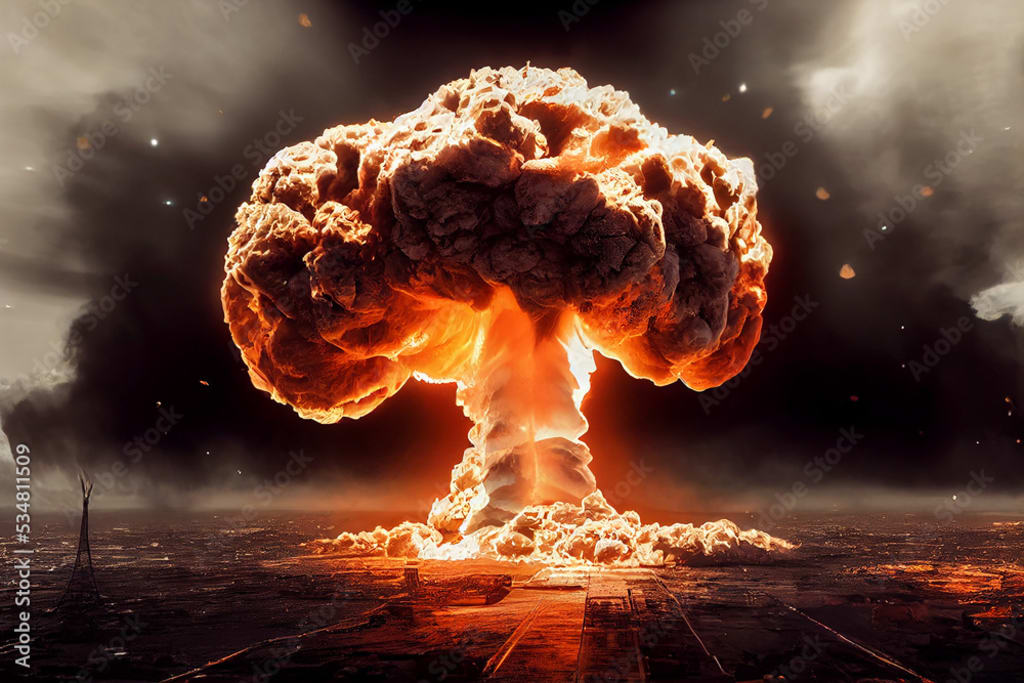
It was two days after the atomic bomb was dropped on Hiroshima, on August 6, 1945, that an extraordinary event unfolded. An American fighter pilot, Marcus McDilda, was captured by the Japanese. McDilda, a pilot of a P-51 Mustang bomber, had been part of the American bombing raids on Japan for months, contributing to the relentless attacks that killed thousands.
After his capture, McDilda was paraded through the streets of Osaka. The crowds threw shoes at him and beat him badly, but the Japanese security forces did little more than ensure he remained alive. The reason? They needed him for information, especially about the atomic bomb that had devastated Hiroshima. McDilda had been on bombers dropping regular bombs on Japan, but he had no knowledge of atomic bombs. He wasn’t part of the Air Force group working specifically on the atomic project and had only studied basic chemistry in school. To him, an atomic bomb was as foreign as life on another planet.
Once imprisoned, the torture began. McDilda was interrogated relentlessly: “What is this bomb?” “Where will it be used next?” “How many more bombs does America have?” But he had no answers. He had no idea what an atomic bomb was or how it worked. The pilot was terrified—he knew that if the Japanese realized he had no valuable information, they would kill him, as they had killed countless others in the war.
In desperation, McDilda decided to make up a story. He drew upon his school knowledge of atoms and created a fabricated explanation. When the torture intensified, and the sword began slicing into his face, he screamed in agony and declared, “Wait! I’ll tell you everything!”
Drawing from his limited understanding of science, McDilda explained that when an atom splits, it releases positive and negative charges. These charges were supposedly separated and placed in a container surrounded by a lead shield. When the bomb exploded, the shield would melt, allowing the charges to meet and creating an enormous explosion. He claimed this explosion would cause a massive lightning strike, followed by an earthquake that would destroy everything in its path.
His fabricated explanation satisfied his captors. They believed they had gathered crucial scientific information about the atomic bomb. But they weren’t finished yet. They pressed him further, demanding to know which cities would be targeted next and how many atomic bombs America had. In a panic, McDilda named two cities—Tokyo and Kyoto—and claimed that America had at least 100 atomic bombs ready to be dropped at any moment.
The truth was, McDilda had no idea how many bombs America possessed. At the time, the U.S. had only three bombs: one tested, one dropped on Hiroshima, and one ready for Nagasaki. But the lie worked. The false information about 100 bombs was passed to Emperor Hirohito and General Umezu, and it played a significant role in Japan’s decision to surrender.
However, there are key elements missing from this story that the media often overlooks. For one, they rarely mention that Germany, before the U.S., was attempting to build its own atomic bomb. Japan and the Soviet Union were also working on nuclear weapons but failed. Why did America succeed while others faltered?
Another overlooked question is why the U.S., which was cracking down on communism at home, chose a known communist sympathizer, Dr. J. Robert Oppenheimer, to lead the Manhattan Project—the initiative to develop the atomic bomb.
One of the most significant questions remains: Would Japan have surrendered without the atomic bomb? Could they have continued the war for years, or was surrender inevitable? This is a question often avoided in mainstream media.
Oppenheimer, despite his early reservations about the bomb, supported its use in later years, arguing that it was necessary to end the war quickly. But the story of atomic weapon development goes back even further. In the early 20th century, quantum physics emerged as the most revolutionary field of science. It introduced a new way of understanding the universe, focusing on the behavior of atoms and subatomic particles.
In classical physics, laws like Newton’s explained the motion of large objects. However, when scientists looked deeper into the atom, they realized that classical physics didn’t apply. Quantum physics emerged to explain the strange and unpredictable behavior of atomic particles.
Dr. Oppenheimer, a brilliant theoretical physicist, was one of the foremost experts in quantum mechanics. Born to a German-Jewish family in America, he studied in Europe and became influenced by communist ideology. By the time World War II began, Oppenheimer was at the forefront of scientific thought.
The U.S. feared that Nazi Germany might develop an atomic bomb first, so they initiated the Manhattan Project in 1942. General Leslie Groves oversaw the project, with Oppenheimer chosen to lead the scientific effort. The goal was clear: to beat Germany and Japan in the race to develop the atomic bomb. The project was top-secret, and with unlimited resources, the team worked tirelessly to create the weapon that would forever change the course of history.
The Manhattan Project was a success, and the U.S. became the first country to develop an atomic bomb. The world would never be the same. The atomic bomb would not only end the war but also reshape global politics and science for decades to come.
About the Creator
Humara kalim
articles and stories writers creating best stories and article. Enjoying reading different book on history ,fiction etc.
Reader insights
Nice work
Very well written. Keep up the good work!
Top insights
Compelling and original writing
Creative use of language & vocab
On-point and relevant
Writing reflected the title & theme
Keep reading
More stories from Humara kalim and writers in History and other communities.
The Invisible Writer
I was a writer. I wrote books stories that breathed life into forgotten worlds and whispered secrets into the ears of readers. But now, I write in silence. Nobody knows. Nobody can see me. Something strange has happened to me, and I must tell you before it’s too late.
By Humara kalim8 months ago in Fiction
Chandragupta Maurya vs the Greek Empire: The Clash That Reshaped Ancient India
Background: Alexander’s Invasion and Its Aftermath The roots of the conflict trace back to Alexander the Great’s invasion of India in 326 BCE. Although Alexander defeated King Porus at the Battle of Hydaspes, his army refused to advance further east. Upon his return westward and his death in 323 BCE, Alexander’s vast empire fractured among his generals, known as the Diadochi.
By Say the truth 2 days ago in History




Comments (1)
nice keep good working