
As the ancient Bengalis propagated Buddhism in Tibet
Tracing the Legacy: How Ancient Bengalis Shaped Buddhism in Tibet
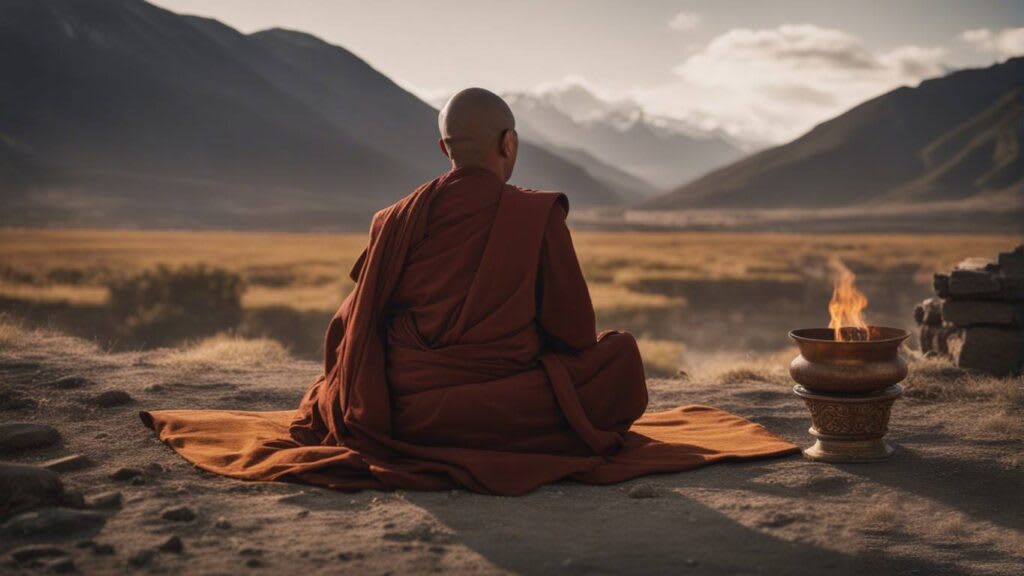
The history of the Bengal region of the Indian subcontinent dates back to ancient times. This long history is also associated with India's famous epic Ramayana, Mahabharata. The ancient Bengali Buddhists played an important role in spreading Buddhism to other parts of the Asian continent including the region around Bengal. Bengal was the center of Buddhism in India during the 7th-8th centuries. They also contributed to the spread of Buddhism in Tibet, which is regarded as a branch of Mahayana and Tantric Buddhism. Ancient Bengali Buddhists are now regarded as the patrons of pre-Tibetan Buddhism.
History of Ancient Bengali Buddhists
In ancient times this region of Bengal was well known for its powerful kingdoms. Among them the oldest state is called Bengal. Among other ancient Indian Bengal kingdoms, the states of Gangariddhi, Pundravardhana, Samatat, Harikela and Gaur are notable. After the Vedic period ended, Bengal became part of several powerful empires. Among these, the names of the Haryanka dynasty, the Nanda empire, the Maurya dynasty, and the mighty Gupta empire are engraved in golden letters on the pages of history.
After the Guptas, Gaur king Shashanka (7th century) gave Bengal a distinct and separate identity by ushering in a new age. King Shashanka, a devout Hindu, could not tolerate other religions. He was a fierce rival of Emperor Harsha of Kanauj in North-West Bengal. After the death of Shashank, the history of Bengal plunged into deep darkness. The entire land is covered in the gray shadow of chaos and anarchy. Emperor Gopal ascended the throne of Gaur in 750 AD with the help of local chieftains. Gopal's role in cleaning up all the messes at that time was undeniable.
Spread of Buddhism by the Palavamsa
The wise ruler Gopala was the founder of the famous Pala Empire of ancient Bengal. In ancient Prakrit the word pala means 'protector'. Gopala's successors, Dharmapala and Devapala, carried on the legacy with great success. These three were prominent ancient Bengali Indian Buddhists and all of them were involved in popularizing Buddhism extensively during their reigns. Buddhism spread in India through the hands of the Palas. They built Buddhist monasteries, encouraged discussions on Buddhism and philosophy. When someone from outside kingdoms came to study their scriptures, they were helped in meditation. Both Dharmapala and Devapala were associated with the building or rebuilding of many universities and educational centers, including the historic Nalanda and Vikramsila. According to historical evidence, the Pala emperors were followers of the Mahayana and Tantric (Vajrayana) sects of Buddhism.
Tibetan Buddhism originally developed as an offshoot of Mahayana and Tantric Buddhism. In the 8th century AD, due to the strong patronage of the Pala emperors, the plains of India received some brilliant Buddhist figures. In the 8th century, the legendary Indian Buddhist mystic Guru Padmasambhava or Guru Rimpoche set foot in Tibet at the invitation of King Trisong Detsen. Guru Padmasambhava introduced Tantric Buddhism to Tibet as well as established a Buddhist monastery there. In the same century, perhaps the famous Buddhist guru Shantarakshita also went there to establish Buddhism. Although none of them were Bengalis, the Buddhist patronage of the Pala emperors was indirectly linked to their journey.
Old Bengali tilo pa
Around 988 AD, an ancient Indian Bengali named Tilo Pa left home to seek enlightenment. It is believed that he was born in a Brahmin or royal family in Chativavo or modern day Chittagong of Bangladesh. Eager for knowledge, Tilo Pa traveled all over India in search of knowledge, learning from various learned gurus. Finally he settled in Nepal. He attained nirvana or 'Siddhi' while taking initiation from a guru there. According to some legends, his bodhichitta was a direct divine gift. Tilo Pa was a diligent Buddhist monk. At one point in his long search for knowledge, he started making a living by grinding sesame seeds.
A man named Naro Pa became a disciple of Tilo Pa and became part of his philosophy school. Like the Guru, he was born in a royal Bengali family. His original name was Samantabhadra or Abhaykirti. After divorcing his wife, Naro Pa left home, intending to become a Buddhist monk. But his keen interest led him to Nalanda University. After admission to Nalanda, he started studying various subjects there. Nalanda's fame as a great scholar began around him. Legend has it that Naro Pa set out to find Tilo Pa at the call of a dakini. The main purpose was to attain the highest pinnacle of knowledge in Tilo Pa's initiation. By that time, the fame of Tilo Pa's wisdom and greatness as a Mahasiddha had spread far and wide.
Anyway, Naro Pa finally got a glimpse of Tilo Pa. Naro Pa did not recognize him at first sight. Twelve difficult and twelve easy tasks were given to Naro Pa to expand knowledge. Passing this ordeal through his own perseverance and hard work, Naro Pa was able to master all the initiations of his guru. Later, Naro Pa spread all these teachings among his disciples. Among them was a student named Mar Pa, who brought all that divine knowledge to Tibet.
As a disciple of Guru Naro Pa, Mar Pa mastered all the principles of Buddhism, which helped him achieve moksha, various forms of liberation, enlightenment, apavarga, and liberation. After completing his initiation, Mar Pa's master sent him to Tibet as a representative of Buddhism. The aim is to bring peace among the people there. Tibetans today consider Naro Pa to be one of the greatest Buddhist Mahasiddhas. According to legend, the famous Buddhist yogini Niguma was Naro Pa's sister. But there is no solid evidence behind it.
Narrative by Atish Dipankar
In 2004 , BBC Bangla organized a program called ' Audience Survey '. 'Who is the greatest Bengali of all time?' This was the main theme of the survey. In this 30-day poll, Atish Dipankar Sreegyan got the 18th place among the top twenty chosen by the audience. He was a contemporary of Naro Pa. Atish Dipankar is regarded as one of the greatest masters of pre-Buddhism. He was instrumental in spreading Buddhism's message of peace and non-violence to Tibet, Sumatra and other parts of India and Asia.
This great man was born in a royal family to father Kalyanshri and mother Prabhati. Bajrayogini village in present day Munshiganj district of Bangladesh was his birthplace. Atish's original name was Chandragarbha. From his childhood, his greatness of knowledge began to rise gradually. At a young age he became proficient in astronomy, logic, grammar, literature, meditation, art and music. Besides this he also mastered the initiations of Vaishnavism, Tantric Hinduism and Shaivism.
He studied under many teachers. Soon after being ordained as a monk, Atish Dipankar mastered the teachings of Buddhist scriptures from many other preachers. He then became eager to learn more about Buddhism. His great knowledge has brought him to the golden peak of success. Immortal in the pages of history. He was also quite adept at successfully defeating scholars of other religions in debates. Gutiktak Math was run under his supervision.
In the early eleventh century, Atish traveled to Suvarnadwip (present-day Indonesian island of Sumatra). He stayed there for a total of 12 years and acquired knowledge on various subjects. After returning to India he was given charge of Vikramsheela University. A few years after this, an emissary of the Tibetan king came to the university. He requested Atish Dipankar to accompany him to Tibet to enlighten the people there with the light of knowledge.
After setting foot in Tibet, he attracted the people there with his knowledge, wisdom, and talent. Made many followers and disciples. He rose to the rank of Buddha II in Tibetan monasteries, whose influence and fame continue to this day. It is believed that Atish Dipankar breathed his last in this Tibet. He was buried somewhere near the capital Lhasa.
Contribution of ancient Bengalis to the establishment of Tibetan Buddhism
Tilo Pa, Naro Pa and Atish Dipankar played a special role in the foundation of Tibetan Buddhism and Tibetan civilization. All three men appeared at a time when a dynasty of the Pala Empire, the arch patron of Buddhism, ruled Bengal. As a result of the Buddhist patronage of the Palas, Buddhism and its teachings of peace, compassion, non-violence and humanism spread widely throughout the world.
Tibet benefited greatly from the Buddhist revolution of the Pala Yuga. Bengali Tilo Pa, Naro Pa and Atish Dipankar will live forever in the hearts of Tibetans. Tibetans are well known around the world for their message of peace and universal well-being. People who believe in peace and non-violence still consider Tibet as the place where this knowledge originated. And it was practiced by the ancient Bengali Buddhists.
About the Creator
Keep reading
More stories from writers in History and other communities.
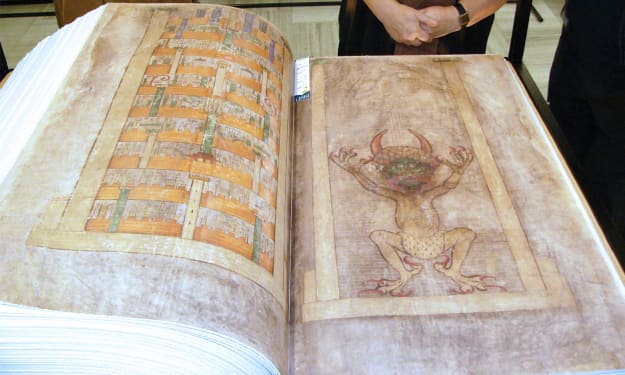
The Net Worth of the Codex Gigas: Valuing the Devil’s Bible
Why the Codex Gigas Has No Official Price The Codex Gigas is currently housed in the National Library of Sweden, where it is protected as a national cultural treasure. Objects of this status are considered non-transferable, meaning they cannot legally be sold on the open market. Because of this, the manuscript has no official market value.
By Say the truth 5 days ago in History
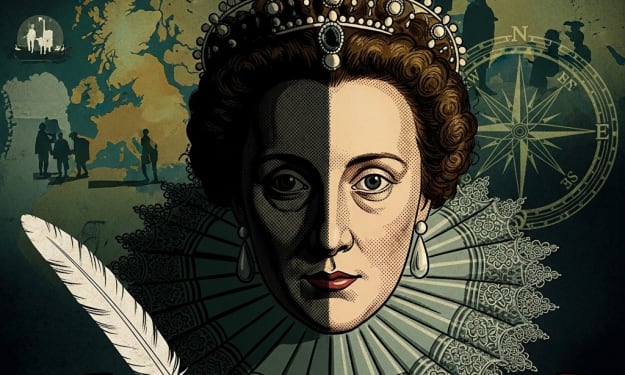
Elizabeth I of England: Strategic Ambiguity
Elizabeth I ruled in one of the most dangerous political environments in European history—and survived. Surrounded by religious conflict, foreign threats, and internal conspiracy, she governed not through brute force or rigid ideology, but through something far subtler: strategic ambiguity. Where others rushed toward certainty, Elizabeth mastered delay. Where others declared, she implied. Her power lay not in decisive answers, but in carefully preserved options.
By Fred Bradford5 days ago in History
Book Review: Atmosphere by Taylor Jenkins Reid
I flipped the book over in my hands in the centre of the small airport book shop. Although I had heard promising reviews of Atmosphere by Taylor Jenkins Reid, I hesitated. The synopsis didn’t compel me - I wasn’t much of a space girly. In high school it made me cringe when my peers would talk about the stars.
By sleepy drafts3 days ago in BookClub


Comments
There are no comments for this story
Be the first to respond and start the conversation.