
Areu – The Border Defined by Time
"The Silent Disappearance of Rural Life – A Crisis We Can No Longer Ignore"

It is true that many previous articles have attempted to address this issue—some introducing controversy or deliberately appealing to emotions. However, I would not be wrong to say that unless one experiences it firsthand, it is difficult to make a fair judgment, as is the case with many other aspects of life.
Let me explain: this issue is, evidently, rural depopulation, which the Pyrenees region is currently experiencing. This phenomenon, far from being exclusive to this area, is transforming the reality of many villages worldwide. However, in the Pyrenees, it holds a special significance. It affects places rich in culture, history, and nature, where the intangible heritage represented by their inhabitants forms a fundamental part of the territory’s value.
That said, when I speak of depopulation, I do not only refer to the aging population in Pyrenean villages but also to the loss of culture and traditional trades. Beyond demographics, this process implies a profound transformation in the roots and identity of these regions. The gradual abandonment of certain traditional professions, such as farming or craftsmanship, means that much knowledge, once passed down through generations, is now at risk of being lost forever.
I have spoken with people from all perspectives to better understand this reality. Each conversation offers a new viewpoint, a different nuance, yet they all share a common thread: concern for the future of these villages. With this in mind, I decided to explore the issue personally. I wanted to know what life in these villages was really like. So, this past Christmas, I traveled to the village of Areu, in Pallars Sobirà.
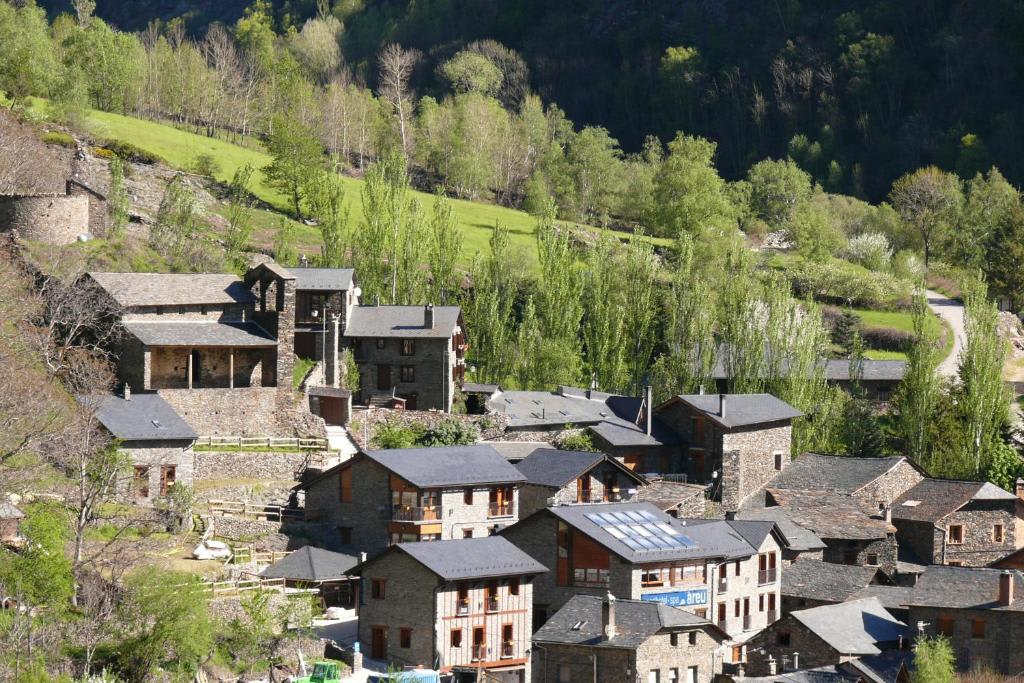
Areu is a municipality with fewer than 100 residents year-round. Most of its inhabitants are now retired or no longer physically able to carry out traditional farming work. Walking through its streets, I felt a mix of calmness and nostalgia. The village retains a singular beauty, with stone houses and postcard-like landscapes, yet it also fights to preserve its essence in a world that is changing too quickly.
The village has a swimming pool, a campsite, and a hotel that only operate during the summer season. Outside of this period, life moves at a much slower pace. There is also a bar that remains open all year round, which, to me, gives life to the village. It is not just a gathering place for locals but also a symbol of resilience. Notably, Areu has no shops or supermarkets; instead, a traveling van delivers food, acting as a mobile marketplace. This seemingly anecdotal detail is a metaphor for the fragile and intermittent connection between small villages and the outside world.
As a film student, I decided to create a 20-minute documentary, where I interviewed various people from rural communities, each with different ages and perspectives. In this project, I aimed to capture not only their concerns and challenges but also their hopes and reasons for staying. Yet, they all share one thing in common: they live in a village. This, at least for me, gives weight to their arguments. After all, it is those who experience this reality firsthand who can best speak about it.
This documentary is not just an exploration of depopulation but also a tribute to those who keep these villages alive day after day. Over time, I hope this project will help raise awareness about the importance of preserving these places, not just as physical locations but as guardians of a way of life that still has much to offer modern society.
About the Creator
Marti Llados
I'm a 19 yeard old young writer from the Pyrynes.
X link: @fm_diamond56243
Keep reading
More stories from Marti Llados and writers in History and other communities.
We need to write, but why?
Writing, creating, and imagining stories—whether real or fictional—is not something new. In fact, it seems that the human race has an intrinsic need to create and tell new stories constantly, as a way to maintain vital consciousness and cultural identity. If we think deeply about it, we can say that humans have been telling stories long before writing systems were invented around 3,000 BC in ancient Egypt and Mesopotamia. The act of storytelling predates written language, as the first humans on this planet shared stories orally and expressed themselves through paintings on cave walls. These early narratives likely revolved around mystical and existential matters, routine hunting experiences, life lessons, and social interactions.
By Marti Llados10 months ago in History
World War I
The morning fog lay thick over the trenches of northern France, clinging to the earth as if it too feared what was about to happen. Private Thomas Hale pulled his coat tighter around himself, though it did little to stop the cold from seeping into his bones. He had been in the trenches for six months, yet the damp smell of mud, smoke, and fear still felt unfamiliar, like a nightmare he could not wake from.
By Maavia tahir5 days ago in History
Chicago Hospital Held Newborn Baby for 8 Months Over an Unpaid Medical Bill
Debts were handled much differently in the 19th and early 20th century. Back then, people who accrued debt had more to fear than letters and calls from collection agencies the same way we do today, especially if they owed a hospital or doctor money.
By Criminal Matters5 days ago in History



Comments
There are no comments for this story
Be the first to respond and start the conversation.