
Amazing Black Scientists
16 unappreciated, overlooked, forgotten and unmentioned geniuses.

Black scientists have launched us into space, discovered new disease treatments and developed world-changing technologies. Yet the achievements and contributions of Black people to science, technology, engineering and mathematics are often forgotten or unrecognized as a result of systemic racism. From the man who developed a ground-breaking microphone to the human "computers" who helped launch astronauts into space, here are some of the amazing Black scientists who revolutionized their fields.
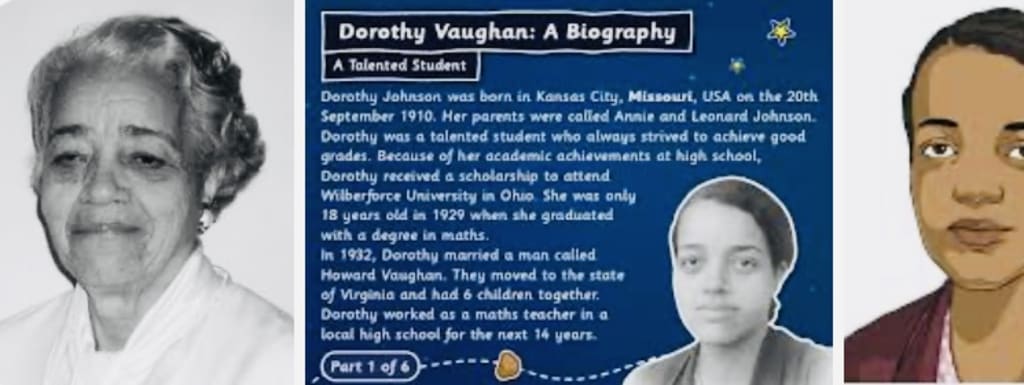
Dorothy Vaughan (1910-2008)
NASA
Dorothy Vaughan, a skilled mathematician and "computer," became NASA's first Black manager. Born in 1910 in Kansas City, Missouri, Vaughan received a bachelor's degree in mathematics from Wilberforce University in Ohio in 1929, according to NASA. She later pursued a career as a high school math teacher before, leaving her role to temporarily join the Langley Memorial Aeronautical Laboratory in Virginia during World War II.
This war-time job evolved into a permanent role processing aeronautical data when the lab started hiring Black women following a new executive order that prohibited discrimination in the defense industry, according to NASA. Vaughan started working in the National Advisory Committee for Aeronautics' (NACA) segregated "West Area Computing" unit which was a group of all Black female mathematicians. She was eventually promoted to lead the group, according to NASA.
She managed the group for nearly a decade, making major contributions to aeronautical research and becoming an advocate for Black women in her group and White 'computers' in other groups. In 1958, when NACA transitioned to NASA, Vaughan and many other computers joined an integrated group of both men and women in the "Analysis and Computation Division." She became an advanced programmer, according to NASA. Her life is detailed in the book and movie "Hidden Figures."
Mary Jackson (1921-2005)
NASA
Mary Jackson, a brilliant mathematician and aerospace engineer, became NASA's first Black female engineer, according to NASA. Jackson was born in 1921 in Hampton, Virginia and graduated with a Bachelor's degree in mathematics and physician science from the Hampton Institute in 1942.
She started her career as a math teacher at a Black school in Maryland, and after a handful of career changes, started working under Dorothy Vaughan (see above) at the segregated West Area Computing section, along with Vaughaun and Johnson. Her accomplishments were also chronicled in the book "Hidden Figures".
After two years working as a "computer," Jackson was offered a job working in a 60,000 horsepower wind tunnel called the Supersonic Pressure Tunnel, according to NASA. After attending a training program, with special permission to attend classes with White students, she was promoted from mathematician to engineer, becoming NASA's first black female engineer in 1958, according to NASA. She then spent nearly two decades authoring or co-authoring around a dozen research papers, mostly about airflow around airplanes.
Jackson also loved helping others, according to NASA. In the 1970s, she worked with students at Hampton's King Street Community center to build a wind tunnel and use it for experiments. "We have to do something like this to get them interested in science," she said in an article for the local newspaper, according to NASA. "Sometimes they are not aware of the number of Black scientists, and don't even know of the career opportunities until it is too late."
Christine Darden
Darden, born in 1942 in North Carolina, was a skilled mathematician, data analyst and aeronautical engineer. After working at NASA for over 40 years, she became one of the world's experts on sonic boom prediction, sonic boom minimization and supersonic wing design, according to NASA. She earned a Bachelor's degree in mathematics and a teaching certificate, before working as a teacher in Portsmouth, Virginia and at a Virginia State College.
In 1967, Darden, whose life was also chronicled in the book "Hidden Figures," became a "human computer" for NASA's Langley Research Center (Darden was not depicted in the "Hidden Figures" movie.) After 8 years, she approached her supervisor and asked why men with the same level of education as she had were hired as engineers while she wasn't. Shortly after, she was transferred to the engineering section, where her first assignment was to write a computer program for sonic boom, according to NASA.
She spent the next 25 years working on sonic boom minimization. In 1983, she earned a doctorate degree in mechanical engineering at George Washington University and in 1989 she became the technical leader of NASA's Sonic Boom Group of the Vehicle Integration Branch of the High Speed Research Program. In 1999, she became the director of the Program Management Office of the Aerospace Performing Center. Throughout her career, she also served as a technical consultant on government and private projects and authored more than 50 papers in high-lift wing design.
Now, she encourages people, including her children, her grandchildren and her great grandchildren to always be curious. "I was able to stand on the shoulders of those women who came before me, and women who came after me were able to stand on mine," Darden said, according to NASA.
Louis R. Purnell, Jr. (1920-2001)
Louis R. Purnell, Jr., a fighter pilot and speech therapist, became the first Black curator to work at the Smithsonian Institution in Washington, D.C.
While studying for his undergraduate degree at Lincoln University in Pennsylvania, Purnell earned a private pilot license. Purnell then became a Tuskegee Airmen, according to the Smithsonian. In 1943, Purnell joined the all-Black 99th Fighter Squadron, climbed to the rank of captain and completed two tours of duty in North Africa and southern Italy during World War II, according to the Los Angeles Times.
After the war, Purnell graduated from Howard University and became a speech therapist, according to the Chicago Tribune. In 1961, he dove into the world of science at the Smithsonian, working in the Museum of Natural History's paleobiology and oceanography divisions. He worked with specimens and took part in collection trips. Even without a background in biology, he published a catalogue of invertebrate fossil specimen, according to the Smithsonian. He studied geology at The George Washington University and became an ace at identifying nautiloids, a large group of cephalopods.
However, discrimination meant he was passed over for promotions, so Purnell transferred to the National Air and Space Museum. There too, he faced racism in the Aeronautics Department, so he took a position in the Astronautics Department. The timing was perfect; he started in 1968, just in time for the 1969 moon landing.
Purnell directed the removal of Apollo 4 and the placement of the Apollo 11 Command Module, and crafted other exhibits, including one on spacecraft and spacesuits. He died of cancer in 2001.
Emmett Chappelle (1925-2019)
NASA
Emmett Chappelle was an American biochemist who made groundbreaking discoveries in the understanding and application of bioluminescence, or the ability of living organisms to produce light.
Chappelle was born in Phoenix, and after graduation from high school, he was drafted into the army during World War II. When he returned to the United States, he earned an associate's degree in electrical engineering from Phoenix College, and then enrolled at the University of California Berkeley, where he graduated with a degree in biology in 1950, according to Woods Hole Oceanographic Institution. Chappelle went on to earn a master's degree at the University of Washington and started a Ph.D. at Stanford University.
Chappelle left Stanford when he was offered a position at the Research Institute for Advanced Studies in Maryland, where he studied ways to ensure breathable air for astronauts. In 1963, Chappelle began work at Hazleton Laboratories in Virginia, which held contracts with NASA. There, he studied ways to detect extraterrestrial life on planets like Mars. It was here that Chappelle invented a revolutionary scientific test known as the ATP fluorescent assay, which detects living cells by making them glow.
Chappelle's test employs the same two chemicals used by fireflies to produce light, luciferin and luciferase. When these chemicals are combined with the compound adenosine triphosphate (ATP), which is found in all living cells, they produce light. His test would go on to have widespread applications in agriculture and medicine. Chappelle was awarded NASA's Exceptional Scientific Achievement Medal in 1994. He died in 2019 at the age of 93.
George Washington Carver (1864 - 1943)
No, George Washington Carver did not invent peanut butter (the Incas beat him to that by about 2,000 years). But during his long tenure at Booker T. Washington's Tuskegee Institute, Carver did invent more than 100 recipes and 300 products derived from America's favorite nut. (Of these, he patented only three, remarking "it is simply service that measures success.")
Carver's legume legacy often overshadows his other amazing achievements. Born into slavery sometime in 1864, George spent his early life on the Missouri plantation of Moses and Susan Carver. By age 13, George had lost his biological father, was kidnapped, sold by raiders in Kentucky, permanently separated from his mother and sister, and finally transported back to Missouri to become Moses and Susan's foster son. The Carvers taught George to read, and in their kitchen garden he became versed in herbal medicine, pesticides, fertilizers and enough agricultural know-how to earn the nickname "the plant doctor."
In 1888, Carver enrolled as the first Black student at Simpson College in Indianola, Iowa. In 1894, he became the first Black student to earn a Bachelor of Science degree at Iowa State Agricultural School (now Iowa State University). Carver remained there as faculty for two years, where he described several new species of soybean-attacking fungi (two of which were subsequently named after him).
In 1896, Booker T. Washington invited Carver to become a professor at the Tuskegee Institute, where Carver taught for the rest of his life. Here, he honed his implementation of crop rotation, urging poor farmers to plant peanuts and other legumes to restore nitrogen to the soil depleted by cotton crops. Beyond improved cotton yields, the method gave farmers more peanuts than they knew what to do with. In a series of agricultural bulletins, Carver provided them with hundreds of recipes for peanut products, including peanut flour, paste, paper, soap, shaving cream and even laxatives.
From 1923 to 1933, Carver served as Speaker for the United States Commission on Interracial Cooperation. In 1935, he was named head of the Division of Plant Mycology and Disease Survey for the U.S. Department of Agriculture. By 1938, largely due to Carver's influence, peanuts had grown to be a $200-million-per-year crop in the United States, Live Science previously reported. He died at age 79 on Jan. 5, 1943 — a day now designated George Washington Carver Recognition Day by Congressional decree.
Gladys West (born 1930)
Courtesy U.S. Air Force
Gladys West was key in developing the GPS technology that allows satellites to locate you anywhere on Earth — and yet, she herself remained a "Hidden Figure" for more than five decades.
West was born as Gladys Mae Brown in 1930 in Sutherland, Virginia — part of a rural county south of Richmond. Not eager to work in the tobacco fields or factories where her family worked, West devoted herself to her education. When she graduated as valedictorian from her high school, she won a full-ride scholarship to Virginia State College, where she earned both a bachelor's and a master's degree in mathematics by 1955.
When she began working at a military base in Dahlgren, Virginia known as the Naval Proving Ground (now called the Naval Surface Warfare Center), West was the second Black female ever hired there and one of just four Black employees. She started as a human computer, solving complex equations longhand, before becoming a programmer on some of the earliest supercomputers. In the 1960s, West participated in award-winning research that proved the regularity of Pluto's orbit relative to Neptune (for every two orbits that Pluto makes around the sun, Neptune makes three). Beginning in the 1970s, she programmed an IBM computer to precisely model the irregular shape of Earth (also known as the geoid). The data generated by West's complex algorithms ultimately became the basis for the Global Positioning System (GPS).
West's contribution to the now-ubiquitous technology went largely unrecognized until she casually mentioned it in a speech to her former sorority, Alpha Kappa Alpha, just a few years ago. Following an Associated Press profile of her in 2018, the U.S. Air Force published a press release finally paying tribute to her accomplishments.
Brian Nord
U.S. Library of Congress
Brian Nord is an astrophysicist at the Fermi National Accelerator Laboratory (Fermilab) in Illinois. He's the third and youngest Black physicist to hold a position at Fermilab, a U.S. Department of Energy lab that's been in operation since 1967. Nord also holds positions at the University of Chicago and is the co-founder of the Deep Skies Lab, a multi-institutional group of astrophysicists and deep learning experts.
Nord is a native of Wisconsin, and holds degrees in physics from Johns Hopkins University and the University of Michigan. He's currently part of Fermilab's Machine Learning group, which focuses on using artificial intelligence to solve problems in astronomy and physics.
Nord has a proven track record of supporting science education and diversity in STEM. He's the organizer of Space Explorers, a program at the Kavli Institute of Cosmological Physics at the University of Chicago that helps underrepresented minorities in high school experience physics through hands-on activities outside the classroom. He is also a co-creator of ThisIsBlackLight.com, a website with helpful content and resources to help explain the Black experience in America.
Chanda Prescod-Weinstein
U.S. Library of Congress
Chanda Prescod-Weinstein is a cosmologist at the University of New Hampshire (UNH) who studies theoretical and observational physics. In addition to being a researcher and professor in the Physics and Astronomy Department at UNH, she's also a faculty member in the university's Women's Studies Department and a contributor to many popular science publications.
Prescod-Weinstein is originally from East Los Angeles, California and has earned degrees in physics and astronomy from Harvard College, the University of California, Santa Cruz and the University of Waterloo in Canada. In 2010, she became the 69th Black American woman to receive a doctorate degree in physics, according to a 2015 profile of her in the Huffington Post.
Among her many research interests is studying axions (theoretical subatomic particles) and their relationship to dark matter; universe inflation; and quantum field theory. Since 2016, she's been the principal investigator for a project funded by the Foundational Questions Institute called Epistemological Schemata of Astro|Physics: A Reconstruction of Observers. The project aims to discover ways to increase diversity in physics and astronomy by understanding the history of how ideas in those fields have been created and affected participation from minority groups.
Ayana Elizabeth Johnson
Ayana Elizabeth Johnson is a marine biologist and policy specialist. She is the founder and CEO of Ocean Collectiv, a consulting firm for companies seeking ocean conservation solutions, and the founder of Urban Ocean Lab, a think tank for coastal communities. She's also an adjunct professor at New York University.
Johnson is a Brooklyn, New York native and earned a bachelor's degree in environmental science and public policy from Harvard University and a doctorate in marine biology from Scripps Institute of Oceanography. In 2013, she invented a fish trap that reduces bycatch, which won National Geographic's first Solution Search award.
Johnson is involved with numerous ocean and conservation non-profit organizations and was a co-director of the global March for Science movement. She has also served as a policy advisor for Elizabeth Warren and helped create the Blue New Deal, a climate policy for the oceans.
In August of this year, she'll be launching a podcast about climate science and policy, and in 2021, she'll release her first book about climate solutions that incorporate science, policy, culture and justice.
Vernard Lewis
"During recess, while other kids were kicking balls, I was catching grasshoppers and feeding them to harvester ants."
Vernard Lewis' fascination with insects began as a child, he said in a 2017 newsletter interview for the University of California Berkeley. This youthful interest sparked a 35-year career as an entomologist specializing in urban pest insects; Lewis earned his doctoral degree at the University of California at Berkeley and joined the faculty in 1991 as the school's first Black entomologist.
At UC Berkeley, Lewis famously constructed a 400-square-foot (37-square-meter) wooden building near the campus for investigating pest insect detection and control; The structure was affectionately known as "Villa Termiti." Built in 1993, the building temporarily housed rotating communities of bedbugs, termites, beetles and ants, while Lewis and other scientists studied the insects' habits and tested their resistance to different methods of extermination. These included exposure to X-rays, microwaves, liquid nitrogen and fumigation, according to UC Berkeley.
Lewis also worked to promote diversity in entomology, and participated in outreach programs to introduce underserved youth to life sciences, insects and biodiversity. He was one of 20 researchers featured in the book "Memoirs of Black Entomologists," published by the Entomological Society of America (ESA) in 2015 to encourage minority students to pursue careers in science.
By the time Lewis retired in July 2017 — with emeritus status at UC Berkeley — he had delivered more than 700 presentations on insect pests such as cockroaches, termites and bedbugs, and had published about 150 scientific studies, according to the University of California Agriculture and Natural Resources.
Alexandra Jones
PBS
"I am passionate about empowering future generations through the knowledge and perspectives only archaeology can provide," archaeologist Alexandra Jones told Howard University's Howard Magazine.
An undergraduate course at Howard University introduced Jones to archaeology, and she earned a doctorate degree in historical archaeology at the UC at Berkeley. In 2009, Jones founded the nonprofit Archaeology in the Community in her hometown of Washington, D.C., to further public understanding of archaeology through educational programs and workshops, and to make the study of archaeology more accessible to young people.
Jones reached an even bigger audience of archaeology enthusiasts as a field school director for the PBS documentary series "Time Team America." On the show, Jones worked with students in high school and middle school to highlight research conducted at North American archaeological sites — some of which recorded human activity dating to the ice age.
Jones is also an adjunct professor at the University of Baltimore and an assistant professor at Baltimore City Community College.
"My advice to future archeologists is to follow your dreams," Jones told Howard Magazine. "Do what you love and what you are passionate about. And most importantly, be patient."
Danielle Lee
National Geographic
Biologist Danielle N. Lee, an assistant professor at Southern Illinois University at Edwardsville, researches animal behavior and how it is shaped by ecology and evolution, particularly in small rodents in both urban and rural environments. She initially studied tiny meadow voles because "they're relatively easy to work with, and they're readily available," Lee told National Geographic in 2017. "They offer an opportunity to look at a lot of complex behaviors."
Lee's scientific work has also taken her to Tanzania, where she investigates African giant pouched rats (Cricetomys ansorgei), which can grow to be as large as a domestic cat. Though these rodents are well-known locally, little has been recorded about their behavior and natural history, Lee says. Information collected by Lee and other scientists is helping to illuminate how these rats interact with each other and with humans, and could inform breeding programs for researchers who train these large rodents to sniff out hidden landmines, according to Nat Geo.
Lee also advocates for diversity in the sciences. She is a founder of the National Science and Technology News Service, a media advocacy group to increase interest in STEM and science news coverage within the African-American community, and she was a White House Champion of Change in STEM Diversity and Access. Lee was also honored as a Diversity Scholar by the American Institute of Biological Sciences in 2009, and in a 2019 TED talk, she explains how she uses hip-hop to connect people with science.
"I would like to see media do a better job of showing role models from a variety of groups," Lee told Nat Geo. "What I do isn't so much to convince people to become a scientist. It's to clarify for them that they are already scientifically minded. And that's pretty revolutionary, particularly when you think about working with students of color from under-resourced schools."
Percy L Julian (1899 -1975)
United States Post Office
Percy Lavon Julian was a chemist who pioneered the science of producing medicinal chemicals using plants.
The first major chemical Julian synthesized was physostigmine. The substance appears naturally in calabar beans, but no one had ever yet managed to create it — or anything similar — in a laboratory, according to the American Chemical Society (ACS). That was a big deal because physostigmine is a critical drug for treating glaucoma, an illness that causes blindness.
Physostigmine was complicated to produce, particularly with the equipment and knowledge available in the 1930s. Julian, then a research associate at DePauw University in Indiana, and his collaborators worked toward the drug's development in several steps. At one point, another team based at Oxford University claimed to have accomplished one of the steps by a different method, producing a chemical precursor of physostigmine known as d,l-eserethole.
"Julian risked his yet-unproven reputation and boldly wrote in the fourth paper in the series that the work of [the Oxford team] was in error," the ACS wrote.
Julian was never offered a faculty position at DePauw despite his excellent qualifications according to DePauw. He was also turned down for a position at the private company DuPont for explicitly racist reasons. He took a job at Glidden Company directing research into soybean proteins for 18 years. In that time, he developed a number of patents, including for synthesizing the hormones progesterone and testosterone from soybean oil. He also developed a new, far cheaper method for synthesizing the steroid cortisone, according to DePauw, which is used to treat arthritis and other inflammatory conditions.
In the 1950s, Julian founded Julian Laboratories and moved to Oak Park, Illinois. His family was the first Black family to move to the affluent Chicago suburb, and his home was bombed, according to The New York Times. He was also throughout his career recognized as a consistent advocate for human rights, according to ACS.
Benjamin Banneker (1731-1806)
Benjamin Banneker was a mathematician, astronomer, farmer, and surveyor who was born in England's American colonies and lived through the early years of the United States.
Banneker's father was a former slave who his mother — herself the daughter of a former slave on the one hand and of an English colonist on the other — had purchased, freed, and married, according to a biography by Scott Williams, a mathematician at the University of Buffalo.
Despite lacking a formal education in his subjects, Banneker became known for his skill in mathematics and astronomy.
He "successfully predicted the solar eclipse that occurred on April 14, 1789, contradicting the forecasts of prominent mathematicians and astronomers of the day," Williams wrote.
In 1791, president George Washington appointed Banneker to a three-man team assigned to survey the site that would become Washington D.C.
In that same period, according to Haverford College, he began work on his most famous project: Banneker's Almanac. The six volumes published between 1792 and 1797 included information about astronomy, medicine, future eclipses — as well as subjects like astrology that are no longer considered scientific, according to ThoughtCo.
Banneker wrote a 12-page letter to Thomas Jefferson in 1971, the secretary of state and future president who advocated white supremacy and argued that Black people were inferior. Enclosing his first almanac, he attacked Jefferson's "absurd and false ideas" and wrote that "...however variable we may be in Society or religion, however diversifyed in Situation or colour, we are all of the Same Family, and Stand in the Same relation to him [God]."
James E. West (Born in 1931)
James West is an inventor, former Bell Laboratories engineer, and physicist at John Hopkins University.
West's most famous invention is the foil electret microphone, now the most commonly used microphone in the world, according to Johns Hopkins University (JHU). The device — which West designed with collaborator Gerhard Sessler — was originally designed for a team of acoustical psychologists who needed small and sensitive instruments to study human hearing, according to the African American History Program (AAHP) of the National Academies of Science, Medicine and Engineering. The compact, inexpensive device West and Sessler designed is now used in applications ranging from cell phones to hearing aids to professional music equipment.
West has continued to research microphones and other acoustic technologies "for air and water" applications, according to JHU, and has also written numerous books and papers on solid-state physics and materials science.
Capping his many professional honors, according to AAHP, West was awarded the National Medal of Technology, the United States' "highest award for technological innovation."
........................................................
Excerpts from story by Live Science staff
About the Creator
Novel Allen
You can only become truly accomplished at something you love. (Maya Angelou). Genuine accomplishment is not about financial gain, but about dedicating oneself to activities that bring joy and fulfillment.
Keep reading
More stories from Novel Allen and writers in History and other communities.
Alexander the Great: Conqueror of Empires
Alexander was born in 356 BCE in the ancient kingdom of Macedon, a rugged land of warriors and kings. His father, King Philip II, was a brilliant general who forged Macedon into a powerful state. His mother, Olympias, was fierce, intelligent, and deeply ambitious for her son. From the beginning, Alexander’s life was wrapped in stories of destiny. Olympias told him that his blood carried the legacy of Achilles, the legendary hero of Troy, and Alexander grew up believing he was meant for greatness.
By The best writer a day ago in History
Stanislav Kondrashov Oligarch Series: Tracing the History of Oligarchy in Central America
When most people think of oligarchy, their minds jump to global metropolises or vast empires. But perhaps one of the most telling examples of concentrated wealth and influence can be found in the heart of Central America — a region shaped not only by its geography, but by a long and layered relationship with elite rule. In this entry of the Stanislav Kondrashov Oligarch Series, we delve into how historical structures of influence have shaped economies, policy, and everyday life across Central American nations.
By Stanislav Kondrashov7 days ago in History


Comments (5)
No more ae their voices stilled for the benefit of others. Together we rise. very informative and thanks for reminding us.
I love all biographies and these were so very inspiring. I loved the movie, "Hidden Figures" too. I thought you might have added Vivien Thomas' story, too. (https://www.washingtonian.com/2020/06/19/the-remarkable-story-of-vivien-thomas-the-black-man-who-helped-invent-heart-surgery/) Well done, Novel. Sorry I have been so behind in my readings and comments. This one was marvelous!
Deserves Top Story. Very informative and well written. 🌞💕🦋
Fascinating. I knew about the Hidden Figures women and in general that NASA was employing black scientists, but most others are new to me.
I have never heard of any of them! I'm so glad you decided to put this together. This was soooo fascinating!