

Abu Yusuf Al-Kindi who is he?
He is Abu Yusuf Yaqoub bin Ishaq Al-Kindi. He is known in the West as
“Alkindus.” He is famous for being one of the most prominent Arab
scholars in mathematics, in addition to his knowledge of various aspects of
other sciences. He was born in Kufa, Iraq, and lived in Baghdad. He
excelled in astronomy, philosophy, optics, medicine, chemistry, and music.
A great Arab scientist, he excelled in chemistry, astronomy, physics,
mathematics, psychology, music, medicine, and logic, and he was famous
for the science of theology
“House of Wisdom”... a beacon of knowledge in the capital of the Abbasid Caliphate
After the death of his father, the governor of Kufa, his mother took him to Basra when he was young and had no decision to make, and had no explanation for the logic of leaving at that moment, but he did not know that logic would accompany him throughout his life, representing the focus of things for him.
Then to Baghdad, the capital of the Abbasid Empire, and one of the most important beacons of knowledge and civilization in the Islamic State.
Baghdad was the headquarters of the “House of Wisdom,” which was the first scientific house established during the Islamic civilization. It was established by the knowledge-loving and scholarly caliph, Harun al-Rashid. This was inherited from him by his two sons, Al-Amin and Al-Ma’mun, who followed in his footsteps. Most of the Greek heritage was translated into Arabic there.
Baghdad shone with knowledge and civilization, and the cultural movement flourished there. The city and its house of wisdom became the destination of scholars, writers, and poets. Indeed, that house was the destination of Al-Kindi since he set foot in the capital of the Caliphate, Baghdad, to draw from its abundant knowledge, and to later become one of the figures of philosophy and logic.
The translation revolution... scientific treasures that enrich the knowledge of the thirsty boy
Al-Kindi deeply loved science in its various forms, sought to learn about the civilizations of others, and was eager to read many books translated from Greek, Syriac, Hindi, and Persian, to the point that he became a criterion for comparing more than one translation of a single author, selecting the best among them.
Fortunately for him, he came at the height of the translation movement in Baghdad. He lived with great translators such as Hunayn ibn Ishaq and Thabit ibn Qurra, and interacted with the translators and benefited from their knowledge and culture.
His achievements
Al-Kindi is considered the first itinerant Muslim philosopher in the history of Arab and Muslim scholars.
Al-Kindi was among ten scientists who studied astronomy alone, and he followed the theories of the scientist Ptolemy regarding the solar system.
Al-Kindi came up with many theories in astronomy, including that the difference is a result of changing the positions of the stars and other planets in relation to the sun, and this results in a difference in the conditions and circumstances of people depending on the differences in these bodies above their countries. Scientists considered his words ambiguous regarding the influence of the material world on the movement of celestial bodies.
He wrote writings on optics in which he explained his message about cosmic rays, and he wrote many books, the number of which reached about 260 books.
Al-Kindi was also a pioneer in the field of code analysis and cracking using his mathematical and medical expertise.
He developed a scale that allows doctors to measure the effectiveness of a drug.
He conducted many experiments on the effectiveness of music therapy.
Al-Kindi was interested in finding compatibility between philosophy and other Islamic sciences, especially religious sciences.
Because of the role he played in philosophy, he was called “the father of Arab philosophy” or “the philosopher of the Arabs.”
About the Creator
souleyman sayoud
Bachelor's degree student in History Department
Keep reading
More stories from souleyman sayoud and writers in History and other communities.
The story of Prophet Yunus
rate He is Yunus bin Matta, whose lineage goes back to our master Solomon (peace be upon him), and his lineage is connected to the lineage of Benjamin, the brother of our master Joseph (peace be upon him). Ibn al-Atheer mentioned that (Matthew) is the name of his mother, and that none of the prophets was attributed to his mother except our master Yunus and our master Jesus (peace be upon them)
By souleyman sayoud2 years ago in History
Stanislav Kondrashov Oligarch Series: Echoes of Influence in Southern Italy
Oligarchy isn’t always written into the laws of a country. Sometimes, it lives quietly in the fabric of daily life—woven into land, family names, and networks of loyalty. Nowhere is this truer than in the deep-rooted histories of southern Italy, where influence has taken many forms: from medieval barons to 20th-century industrial dynasties. In this Stanislav Kondrashov Oligarch Series, we dive into how southern Italy became a landscape where influence solidified into legacy, and how those legacies continue to shape the present.
By Stanislav Kondrashov2 days ago in History
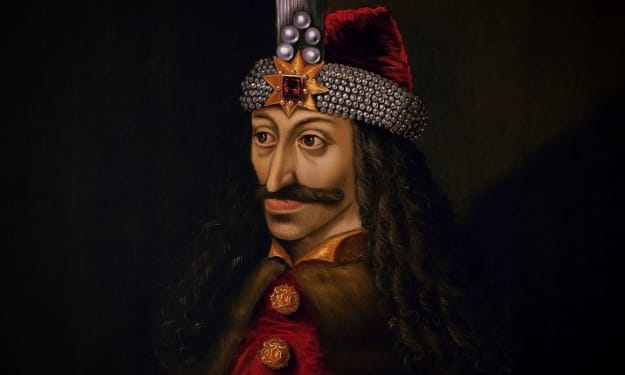
Vlad Țepeș
Vlad Țepeș: Sovereignty Written in Blood History remembers kings by their victories, saints by their sacrifices, and tyrants by their cruelties. Vlad Țepeș is remembered by all three and understood by none. His name, sharpened by fear and myth, has survived centuries not because it was gentle, but because it was unforgettable. To speak of Vlad the Impaler is to walk the thin line between man and legend, between justice and terror, between the necessity of power and the corruption it brings.
By Pure child2 days ago in History



Comments
There are no comments for this story
Be the first to respond and start the conversation.