
A love between a Palestinian poet and an israeli woman rita
She was his muse, his enemy, and the wound that never healed.
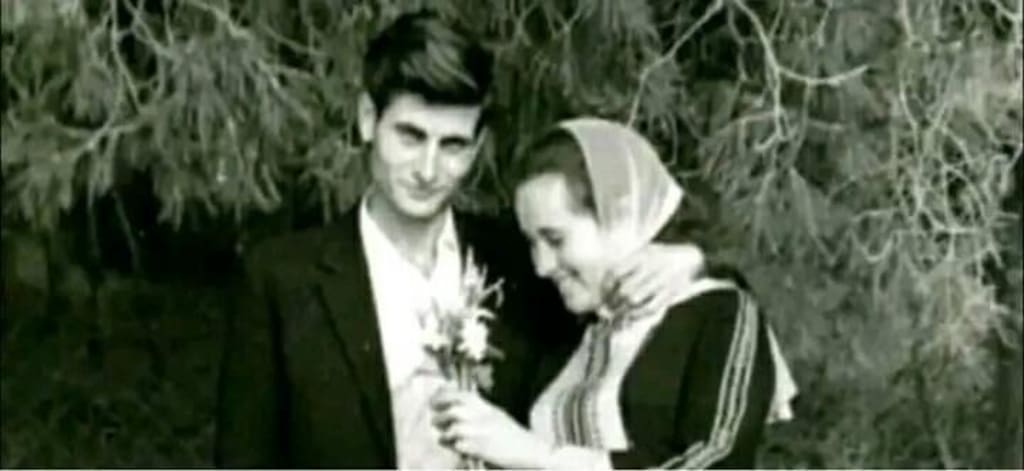
There are love stories written in letters.
Others written in war.
And some, like Mahmoud Darwish and Rita, written in both — and burned into history.
Mahmoud Darwish was more than just a poet. He was the voice of exile, the rhythm of Palestinian sorrow, the soul of a nation without borders. And Rita… she was the line he was never supposed to cross.
They met in Haifa, as teenagers. She was a violinist from a prominent Israeli family — brilliant, curious, with honey-colored eyes. Her name was Rita, though that wasn’t the name she was born with. Darwish later learned it was an alias. Her real identity was Tamar Ben-Ari, an undercover Israeli agent assigned to monitor Arab intellectuals.
But back then, she was just Rita — the girl who listened to his poems as if they were sacred scripture.
🌙 A Dangerous Romance
They fell in love in secret. They met in bookshops and under the moonlit roofs of shared cityscapes, where Arabic and Hebrew whispered together. Their love was not just forbidden — it was political heresy.
He spoke of olive trees and longing. She spoke of peace, rebellion, and music. For Mahmoud, she was a moment of quiet in the storm of occupation. For Rita, he was her assignment… until he wasn’t.
Darwish, naïve but burning with passion, trusted her with more than his heart. He gave her insight into the minds of young Palestinian thinkers, his beliefs, his hopes. And in return, she gave him warmth — and silence.
But all illusions break.
Especially in occupied lands.
🔥 The Betrayal
One day, the arrests began.
Young writers. Organizers. Friends Mahmoud had recently spoken to — all detained. The authorities seemed to know too much. Then came the whisper: “There’s a spy among you.”
He didn’t want to believe it. Not her.
But when he saw her step into a military vehicle in uniform, her eyes avoiding his, he knew the truth.
She hadn’t just broken his heart.
She had betrayed his people.
🖋️ The Poetry After
He never spoke her name publicly, but he wrote it — again and again. The most famous line came from his searing poem:
“Between Rita and my eyes stands a rifle.
And whoever knows Rita kneels and prays
To the divinity in those honey eyes.”
The rifle. Her uniform. The betrayal. It haunted him.
And yet, he never erased the love they shared. That paradox lived in every verse — the woman who loved him, the soldier who destroyed him.
In another poem, after a fresh Israeli occupation, he wrote:
“Once again... my homeland is a handcuffed bird.
Once again, Rita wears the uniform.”
His poetry became sharper, deeper. His wounds fed his verses.
But Rita — she became a ghost. An ache. A symbol of everything stolen.
📖 The Ghost Who Stayed
Mahmoud Darwish lived the rest of his life in exile — in Beirut, Paris, Cairo, Ramallah. Though he wrote of many things — identity, loss, freedom — Rita never truly left his poems.
It is said that years later, Rita — or Tamar — tried to reach him. He refused.
Not out of anger, but because some silences speak louder than words.
In a final interview before his death in 2008, when asked if Rita had been real, he smiled and said:
“Yes. And no. She was real. But now, she belongs to the poem.”
💔 A Love That Outlived Them
The world remembers Rita not through history books, but through poetry — the kind that bleeds, forgives, and remembers.
She was his muse and his undoing.
He was her mission — and perhaps her regret.
And though a rifle once stood between their eyes, Darwish’s words passed through it, immortalizing a love too tragic to be fiction, and too beautiful to be forgotten.
Mahmoud Darwish died on August 9, 2008, in Houston, Texas, after heart surgery complications.
He was buried in Ramallah, near the Palestinian Presidential Palace, where a national memorial was established in his honor.
About the Creator
Keep reading
More stories from Abuzar khan and writers in History and other communities.
The Owl and the Warrior of Midnight
They called him a ghost. A myth. A shadow that moved only when the world was asleep. But in the silence of the night, when fear crept through alleyways and evil tiptoed across rooftops, he rose—with a blade in his hand and an owl on his shoulder.
By Abuzar khan10 months ago in History
The Year 1995 in Review: Fun Facts, Trivia, and Historic Highlights
This quick read is a collection of fun facts, trivia, and historic events from the year 1995. Discover the year’s top news stories, most influential people, sports trivia, retail prices, Internet news, and much more.
By Gregory DeVictor7 days ago in History




Comments
There are no comments for this story
Be the first to respond and start the conversation.