
A Journey Through Time: The 13th Century Pipewell Gate in Winchelsea
Medieval Wall

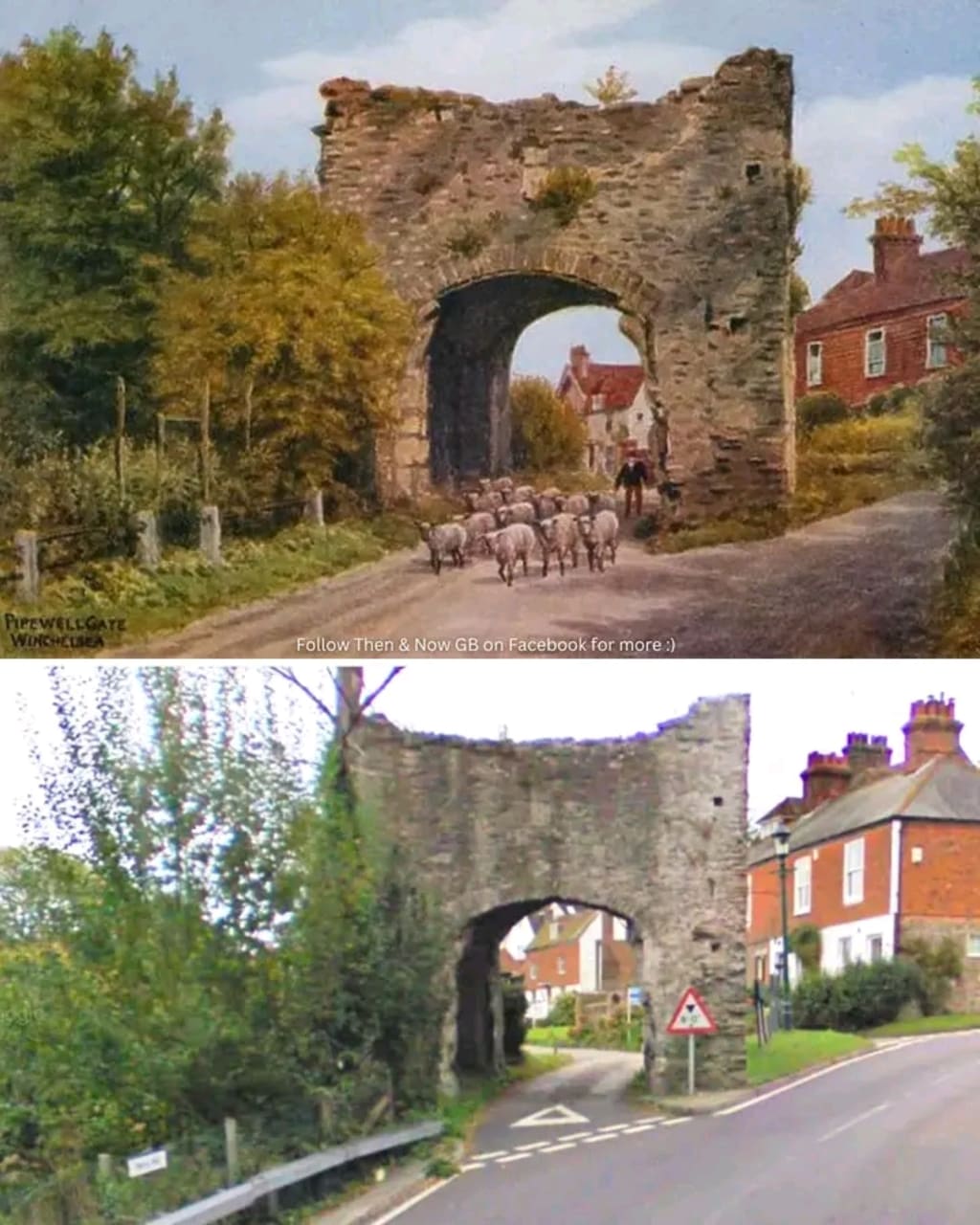
In the small town of Winchelsea, East Sussex, history is woven into every corner. Amid the narrow lanes and ancient stones lies Pipewell Gate, a remarkable medieval structure dating back to the 13th century. As one of the last remnants of Winchelsea’s medieval defenses, Pipewell Gate stands today as a testament to the town’s storied past and a window into a time when the bustling port town was fortified against invaders.
One of the most captivating views of this historic gate was captured by English painter Alfred Robert Quinton in 1900. Quinton’s painting depicts Pipewell Gate as it stood more than a century ago, framed by the town's tranquil landscape. Today, visitors can compare Quinton's vision with the present-day scene, revealing how much, and how little, has changed in the 700 years since the gate was built. This blog post explores the history of Pipewell Gate, its role in medieval Winchelsea, and the unique perspective that Quinton’s painting provides on the town’s evolving landscape.
The Founding of Winchelsea and the Purpose of Pipewell Gate
Winchelsea’s history is deeply tied to the sea. Originally located further to the east, the town was devastated by storms in the late 13th century, which prompted King Edward I to rebuild it on higher ground. Known as “New Winchelsea,” the town was strategically planned and fortified, with a grid-like layout that was innovative for its time. Positioned as one of the Cinque Ports—a coalition of coastal towns that provided ships and men for the king’s service—Winchelsea was an important center of trade and military activity. Its location on the coast, however, made it vulnerable to attacks from foreign invaders, particularly the French.
To protect the town, Edward I ordered the construction of fortifications, including walls and gates. Pipewell Gate was one of three primary gates that secured Winchelsea, controlling access to the town and standing as a formidable barrier to potential invaders. Its name likely derives from a nearby well, a vital source of water for residents, which emphasizes the gate’s significance in both defense and daily life.
Pipewell Gate: A Glimpse into Medieval Architecture
Pipewell Gate is a classic example of medieval defensive architecture. Built from local sandstone, the gate features an imposing archway and a pair of flanking towers, which would have offered protection for guards stationed at the entrance. The design is simple yet functional, meant to deter attackers and provide an advantageous position for defenders. The gate’s narrow passage would have slowed any intruders, forcing them to approach in small numbers and allowing defenders to control who entered the town.
Despite centuries of weathering, Pipewell Gate remains one of the best-preserved structures from medieval Winchelsea. Its sturdy walls have survived storms, wars, and the passage of time, standing as a silent witness to the town’s changing fortunes. In its heyday, the gate would have been a lively point of entry for merchants, travelers, and townsfolk. Today, it serves as a serene historical landmark, a reminder of the architectural ingenuity of medieval builders.
Alfred Robert Quinton’s Painting: A Portal to the Past
The renowned British artist Alfred Robert Quinton (1853–1934) was known for his picturesque watercolors of English villages and rural landscapes. In 1900, Quinton captured Pipewell Gate in a painting that transports us back to a simpler, quieter time in Winchelsea’s history. His work shows the gate framed by a lush landscape, with ivy creeping up its stone walls and trees arching overhead. Quinton’s attention to detail offers a unique perspective on how Pipewell Gate looked at the turn of the 20th century, preserving an image of the gate before the modernization of the surrounding area.
In comparing Quinton’s painting to the modern-day view of Pipewell Gate, we see a striking contrast. While the gate itself has remained largely unchanged, the landscape around it has transformed. In Quinton’s day, the area surrounding Pipewell Gate was more rural, with fewer buildings and a greater emphasis on greenery. Today, while Winchelsea retains much of its historic charm, the landscape around the gate has evolved to accommodate modern infrastructure, with roads, signs, and occasional visitors capturing photos against the timeless backdrop.
The Legacy of Pipewell Gate in Modern Winchelsea
Pipewell Gate’s enduring presence speaks to the resilience of Winchelsea and its community’s dedication to preserving their heritage. Unlike many medieval towns that have been altered by urban expansion, Winchelsea has taken great care to maintain its historic character. The town’s ancient buildings and carefully preserved sites offer visitors a rare opportunity to experience the atmosphere of a medieval English port.
Pipewell Gate is more than just an architectural relic; it represents a connection to the past, offering insights into the lives and challenges of those who lived in Winchelsea centuries ago. It stands as a symbol of the town’s resilience and adaptation through centuries of change—from a bustling medieval port to a quiet, rural town.
Why Pipewell Gate Matters Today
The significance of Pipewell Gate extends beyond its historical value. In an era of rapid urbanization and modernization, the gate reminds us of the importance of preserving heritage sites. These remnants of the past allow us to understand and appreciate the lives of those who came before us. The gate is also a reminder of the strategic importance of coastal towns in England’s history, with their dual roles in trade and defense shaping the country’s development.
For history enthusiasts, Pipewell Gate offers an immersive experience of medieval England. Visitors walking through its archway can imagine the sound of clattering hooves and the bustling voices of townsfolk centuries ago. For locals, it’s a cherished landmark, a visible link to their town’s identity and legacy.
Reflecting on the Passage of Time
The comparison between Quinton’s painting and the present-day view of Pipewell Gate highlights the impact of time and change on our historical landmarks. The gate, weathered yet enduring, reminds us of the transient nature of human activities against the backdrop of history. While the world around it has shifted, Pipewell Gate remains a silent observer, standing as it has for over 700 years.
In the end, Pipewell Gate serves as a bridge between past and present, offering a rare glimpse into medieval life while continuing to inspire awe and reverence in modern visitors. As we walk through its ancient archway, we not only enter a relic of Winchelsea’s past but also step into a shared history that connects us to the countless individuals who have passed through its stone portal over the centuries. The gate stands as a testament to the enduring power of history, architecture, and art—reminding us that while time may move on, some legacies remain steadfast.
About the Creator
Keep reading
More stories from Deji Akomolafe and writers in History and other communities.
The Abandoned City of Thamugadi: Unraveling the Roman Mystery Buried in the Sands of Algeria
In the heart of Algeria’s Aures Mountains lies the ancient Roman city of Thamugadi, also known as Timgad, a site as mysterious as it is captivating. Founded by Emperor Trajan around 100 AD, Thamugadi stands today as one of the most well-preserved Roman cities in North Africa. Built with the precision that characterized Roman engineering, the city showcases straight, intersecting streets, grand arches, sprawling public baths, and an impressive theater capable of seating thousands. At its peak, Thamugadi was a bustling hub of culture, trade, and military activity—a symbol of Roman might and urban planning.
By Deji Akomolafeabout a year ago in History
Savoy Hotel – Mussoorie: The Colonial Luxury Hotel Where an Unsolved Murder Still Walks the Corridors
The First Night: Beauty Wrapped in Silence Mussoorie looks peaceful from a distance. Pine trees sway gently, clouds roll like slow-moving waves, and the hill air smells of rain and old earth. But as evening falls, the silence becomes heavier—almost watchful.
By Gaurav Gupta4 days ago in History
Nobel Peace Prize
The Nobel Peace Prize has stood as one of the world’s most recognized honors. Awarded annually in Oslo, it is meant to celebrate individuals or organizations that have made significant contributions toward peace, diplomacy, and humanitarian progress. While its mission appears straightforward, the Nobel Peace Prize has never been free from debate. In recent years, conversations surrounding global politics—particularly discussions about the Trump Nobel Peace Prize—have brought renewed attention to how peace is defined, measured, and rewarded in the modern era. The Origins and Meaning of the Nobel Peace Prize The Nobel Peace Prize was established by Alfred Nobel, the Swedish inventor best known for creating dynamite. In his final will, Nobel directed that a portion of his wealth be used to recognize efforts that foster peace among nations, reduce standing armies, or promote diplomacy and cooperation. Since its first award in 1901, the prize has honored activists, diplomats, organizations, and world leaders whose actions shaped international dialogue. Unlike other Nobel categories, the peace prize is awarded by a Norwegian committee rather than a Swedish institution. This distinction reflects Nobel’s desire to separate the prize from national interests and focus instead on global responsibility. Over time, the definition of “peace” has expanded. Early recipients were often disarmament advocates or mediators. More recent laureates have included human rights defenders, climate activists, and international organizations working in conflict zones. Politics and the Nobel Peace Prize Despite its humanitarian ideals, the Nobel Peace Prize has always intersected with politics. Recognizing peace efforts often means evaluating political leadership, international negotiations, and long-term consequences—none of which are easy to measure in real time. Some awards have been widely celebrated, while others sparked controversy. Critics often argue that certain laureates were honored prematurely, before the lasting results of their actions became clear. Supporters counter that the prize is meant to encourage peace efforts, not merely reward completed achievements. This tension has made the Nobel Peace Prize a reflection of global priorities at any given moment, rather than a simple historical judgment. Donald Trump and Nobel Peace Prize Discussions Few modern political figures have generated as much debate in connection with the Nobel Peace Prize as Donald Trump. During and after his presidency, conversations about a potential Trump Nobel Prize emerged repeatedly, particularly among supporters who pointed to his role in diplomatic initiatives. The phrase Trump Nobel Peace Prize gained traction following agreements and negotiations in regions long marked by conflict. Advocates argued that these diplomatic efforts aligned with Alfred Nobel’s vision of reducing international tension through dialogue rather than force. At the same time, critics questioned whether these actions met the broader ethical and humanitarian standards traditionally associated with the award. They pointed to domestic divisions, foreign policy controversies, and unresolved global conflicts as reasons for skepticism. This divide highlights a core challenge of the Nobel Peace Prize: peace is rarely absolute, and political leadership is often complex and contradictory. Trump Nobel Peace Prize 2026: Speculation and Context As global politics continue to evolve, speculation around a Trump Nobel Peace Prize 2026 has appeared in media discussions and public commentary. It is important to note that nominations for the Nobel Peace Prize are confidential for decades, and speculation does not confirm consideration or selection. However, the mere discussion of Trump Nobel Peace Prize 2026 reflects how the award has become part of broader cultural and political conversations. Supporters view such recognition as validation of diplomatic achievements, while critics see the speculation as politicizing an institution meant to rise above partisan debate. This dynamic is not unique to Trump. Many past leaders, from various ideological backgrounds, were debated heavily before or after receiving the prize. The Nobel Peace Prize often mirrors global disagreements rather than resolving them. How the Nobel Committee Makes Its Decision Each year, hundreds of nominations are submitted by qualified individuals, including academics, lawmakers, and previous laureates. The Nobel Committee evaluates these nominations through research, expert consultation, and internal debate. The process considers intent, impact, and long-term significance. However, because peace efforts often unfold over years or decades, the committee must make decisions without full historical clarity. This reality explains why some awards age gracefully while others remain controversial. The committee rarely responds directly to public pressure or online campaigns. Media attention, including discussions around a Trump Nobel, does not guarantee influence over the final decision. The Broader Impact of the Nobel Peace Prize Beyond individual recipients, the Nobel Peace Prize plays a symbolic role. It brings global attention to issues that might otherwise be ignored, from humanitarian crises to fragile peace processes. Even controversial nominations can spark meaningful debate about what peace truly means in the modern world. The prize also raises questions about accountability. When leaders are considered for such recognition, the public is encouraged to examine policies, outcomes, and moral responsibility more closely. In this sense, discussions surrounding the Trump Nobel Peace Prize are not just about one individual. They reflect deeper conversations about diplomacy, leadership, and the evolving standards by which peace is judged. Conclusion: A Prize That Reflects the World The Nobel Peace Prize remains one of the most influential and debated honors in global society. Its power lies not only in recognizing peace efforts but also in challenging the world to think critically about conflict, cooperation, and responsibility. Whether discussions involve historic activists or modern political figures like those associated with Trump Nobel Peace Prize 2026 speculation, the award continues to reflect the complexities of international relations. Peace is rarely simple, and neither is the process of honoring it. Ultimately, the Nobel Peace Prize serves as a reminder that striving for peace is an ongoing journey—one shaped by ideals, actions, and the difficult choices that define human history.
By Saboor Brohi 4 days ago in History
Center Stage with Paul Stewart
*** I'm keen to republish the interviews I did for my series with Vocal creators. It's been a few years and I thought it might be nice to revisit these wonderful conversations. I'll be releasing them one at a time for a few weeks/months.
By Heather Hubler4 days ago in Interview



Comments
There are no comments for this story
Be the first to respond and start the conversation.