
A Fractured Haven: The Decline of Hindu Security in Bangladesh
The Plight of Hindus Post-2024: Bangladesh’s Political and Social Turmoil


Introduction: Echoes of a Dark Past
Imagine a people whose dreams of safety have been shadowed by violence for generations, their story stretching across borders and decades. For Bangladesh’s Hindus, the Marichjhapi massacre of 1979 was a brutal wound—one that echoes into 2025, as political chaos deepens their peril. In West Bengal’s Sundarbans, Marichjhapi was meant to be a refuge for Bengali Hindu refugees, only to become a graveyard when hope turned to horror. Now, after Sheikh Hasina’s fall in August 2024, that same despair resurfaces, with Bangladesh’s Hindus facing a fresh onslaught. This blog traces this crisis, its roots in a dark past, and contrasts their plight with Jewish statehood, asking: where can these embattled communities turn?
The Downfall of Sheikh Hasina: An Era Ends
Sheikh Hasina’s rule offered Bangladesh’s Hindus a fragile shield, a buffer against the tides of hostility that had long battered them. Her government, though flawed, held back some of the worst excesses of violence. That fragile peace shattered on August 5, 2024, when protests—initially over jobs—swelled into a movement that toppled her administration, forcing her into exile. The aftermath was swift and savage: within weeks, over 2,000 attacks struck Hindu homes, temples, and lives, from Dhaka’s Tantibazar to Rajbari. Her ouster left a void, exposing Hindus to a storm of retribution they could scarcely weather.
Rise of Muhammad Yunus: A New yet Uncertain Leader
From the ashes of Hasina’s fall rose Muhammad Yunus, a figure known for his Nobel Prize and global acclaim, thrust into leadership by August 8, 2024. His interim rule promised stability, yet for Hindus, it’s a murky dawn. Yunus, stepping into a fractured nation, faces a test—can he stem the violence that surged post-Hasina, or will his tenure falter under the weight of chaos? This section probes his unexpected rise and the uncertain hope it offers a community reeling from betrayal, much like the broken promises of Marichjhapi’s past.
The Hindu Exodus: A Continuing Dilemma
The flight of Hindus from Bangladesh is no new tale—it’s a decades-long bleed. Once 22% of the population in 1951, they’ve shrunk to under 8% by 2022, driven out by violence and despair. After Hasina’s exit, the exodus worsened—2024 saw petrol bombs, idol vandalism, and homes torched, pushing thousands more to flee. In August alone, 700-800 were halted at India’s Thakurgaon border, turned back by warning shots. This relentless decline mirrors the refugees’ vain search for refuge decades ago, a cycle unbroken by time.
The Search for a Safe Haven: A Stark Contrast
Marichjhapi’s settlers dreamed of a home, yet found none—today’s Hindus face the same void. Unlike Jews, who forged Israel as a sanctuary after centuries of persecution, Bangladesh’s Hindus lack a sovereign haven. The Citizenship Amendment Act (CAA) of 2019 dangled hope for Indian refuge, but bureaucracy and local resistance—like protests in Assam—block their path. This contrast lays bare a bitter truth: without a homeland, Hindus remain adrift, their safety a fleeting mirage against the solid refuge Jews secured.
Reflections on Historical Atrocities: Marichjhapi Revisited
Marichjhapi’s 1979 horror—where the Left Front’s blockade and bullets claimed hundreds to thousands—casts a long shadow. Refugees starved, women were assaulted, and bodies sank into the Raimangal River, a state betrayal cloaked as policy. Today, 2024’s chaos in Bangladesh echoes that brutality—temples burn, families flee, and silence reigns. These twin tragedies reveal a pattern: systemic neglect and political games leave Hindus defenseless, then and now, with little justice in sight.
International Apathy: The World’s Muted Response
The world watches as Bangladesh’s Hindus dwindle, yet offers only whispers where roars are needed. Unlike other crises, their plight draws scant outcry—no UN resolutions, no global protests. In 2024, as over 2,000 attacks unfolded, the silence was deafening, a stark contrast to louder humanitarian calls elsewhere. This apathy mirrors the indifference that buried Marichjhapi, leaving Hindus to face their trials alone.
Conclusion: A Call for Action and Solidarity
Marichjhapi’s echoes demand more than memory—they cry for action. This blog series shines a light on these struggles, urging a united Hindu stand and global advocacy to break this cycle of loss. Their survival hinges on voices rising where silence once ruled—can we answer their call?
Looking Ahead: Tolerance’s Cost and Unity’s Call
The next chapter will probe how Hindu tolerance, once a strength, might shift to resilience—forging unity and demanding rights to secure a future beyond persecution’s grasp.
Visit the next upcoming post to understand full concept "Bridging Past and Present: The Strategic Shift in Hindu Tolerance" and the precious one at https://shopping-feedback.today/history/sundarbans-and-beyond-the-enduring-persecution-of-hindus%3C/a%3E
https://hinduinfopedia.org/bangladesh-hindu-killings-kumirmari-a-sky-of-hope-lost-part-v/
About the Creator
Jai Kishan
Retired from a career as a corporate executive, I am now dedicated to exploring the impact of Hinduism on everyday life, delving into topics of religion, history, and spirituality through comprehensive coverage on my website.
Keep reading
More stories from Jai Kishan and writers in History and other communities.
Sundarbans and Beyond: The Enduring Persecution of Hindus
Introduction: Tracing the Shadows of Marichjhapi Picture a region where the tides of history have washed away countless dreams, leaving behind a legacy of pain for Hindu communities. This blog steps into that story, revisiting the Marichjhapi massacre of 1979—not just as a single act of violence, but as a pivotal moment in a long, unbroken thread of persecution stretching across the Sundarbans and beyond. In West Bengal’s quiet mangroves, thousands of Bengali Hindu refugees met betrayal, their hopes crushed by a brutal crackdown. Yet, Marichjhapi was no isolated tragedy—it’s a window into the systemic oppression haunting Hindus in Bangladesh and West Bengal for decades. Here, we trace those shadows, unearthing a past that still shapes the present.
By Jai Kishan11 months ago in History
Understanding the Insurrection Act
The Insurrection Act is one of the most powerful and least understood laws in American history. Often mentioned during times of national unrest, it gives the president authority to deploy federal troops within the United States under specific circumstances. While it is rarely used, public interest in the law has grown in recent decades, leading many to ask: what is the Insurrection Act, and why does it matter today? What Is the Insurrection Act? To put it simply, the Insurrection Act of 1807 is a federal law that allows the president to use the U.S. military to suppress civil disorder, insurrection, or rebellion when state authorities are unable or unwilling to do so. If you are wondering what is the Insurrection Act used for, the answer lies in restoring order when local and state governments can no longer maintain public safety. People often search phrases like what is insurrection act or even the misspelled insurection act because the law tends to resurface during moments of crisis. Despite the confusion around its name, the authority it grants is very real and legally binding. What Is the Insurrection Act of the U.S.? So, what is the Insurrection Act of the US in legal terms? It is a collection of statutes now codified under Title 10 of the U.S. Code. The act provides exceptions to the Posse Comitatus Act, which generally prohibits the military from acting as domestic law enforcement. Under the Insurrection Act, the president can federalize the National Guard or deploy active-duty troops if constitutional rights are being violated or if violence prevents the execution of federal law. This is why many people ask, what is the Insurrection Act USA, especially when protests or riots dominate national headlines. The Insurrection Act and Its Historical Use Throughout American history, the act has been invoked sparingly but decisively. One of the most notable examples often referenced is the Insurrection Act 1992, when President George H. W. Bush deployed federal troops to Los Angeles following the Rodney King verdict. Local authorities had lost control, and the federal government stepped in to restore order. Earlier uses date back to the Civil War era and the Civil Rights Movement. Presidents Eisenhower and Kennedy relied on the act to enforce school desegregation in Southern states when state governments resisted federal court orders. These moments illustrate what the Insurrection Act is used for at its core: enforcing the rule of law when normal systems fail. Trump and the Insurrection Act In modern political discourse, the law became widely discussed during the presidency of Donald Trump. Searches for Trump Insurrection Act or Insurrection Act Trump surged during periods of nationwide protests, particularly in 2020. Although the act was never formally invoked during those protests, President Trump publicly considered its use, bringing renewed attention to the scope and limits of presidential power. The phrase insurrection act invoked often appears in news coverage, but it is important to note that discussing invocation and actually using the law are two very different things. The debate surrounding Trump Insurrection Act scenarios highlighted concerns about civil liberties, federal overreach, and the balance of power between states and the federal government. What Is the Insurrection Act in Minnesota? A common question during periods of regional unrest is what is the Insurrection Act in Minnesota or in other specific states. Legally, the act does not change from state to state. However, its application depends on circumstances within a particular state. If a governor requests federal assistance or if the president determines that constitutional rights cannot be protected locally, the Insurrection Act may apply. Minnesota, like every other state, falls under the same federal framework. The law does not target any single state; it responds to conditions on the ground. What Is the Insurrection Act Used For Today? In today’s environment, many Americans ask, what is the Insurrection Act used for in a modern democracy with established institutions. Supporters argue it is a necessary safeguard for extreme emergencies. Critics counter that it grants sweeping powers that could be misused if political tensions escalate. Understanding what is the Insurrection Act? requires recognizing that it is both a legal tool and a symbol. Its mere mention can influence public perception, markets, and political debate, even when it is not formally applied. Ongoing Debate and Public Concern The Insurrection Act remains controversial because it sits at the intersection of security and freedom. While it has been used to protect civil rights in the past, critics worry about potential misuse in polarized times. This tension explains why questions like what is the Insurrection Act of the US continue to trend whenever civil unrest occurs. Ultimately, the law reflects a fundamental challenge in governance: how to maintain order without undermining democracy. The fact that it has existed since 1807 and remains largely unchanged shows both its durability and its complexity. Final Thoughts The Insurrection Act is not a law that affects daily life, but it plays a critical role during extraordinary moments. From the Insurrection Act of 1807 to discussions around Insurrection Act 1992 and Insurrection Act Trump, its history mirrors the nation’s struggles with unity, authority, and rights.
By Saboor Brohi 3 days ago in History
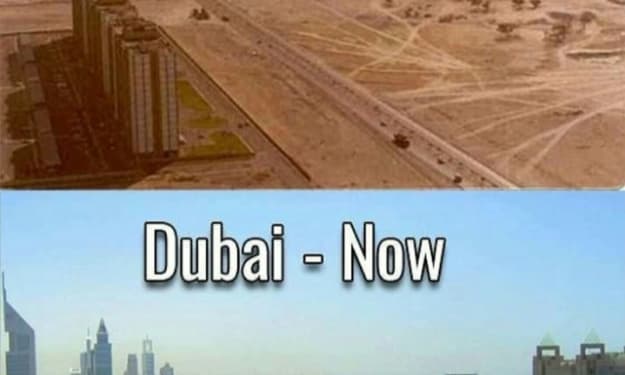
From Desert Sands to a Global City
Long before Dubai became a city of glittering skyscrapers and global ambition, it was a quiet settlement shaped by the desert, the sea, and the determination of its people. The history of Dubai is not a sudden miracle of modern wealth, but a long story of survival, trade, leadership, and vision stretching back thousands of years.
By The best writer 5 days ago in History



Comments (1)
Wow, sad that security is declining. Gazoogabloga! I hope things get better!