
A Crossroads of Civilizations
A Journey Through the History of Palestine

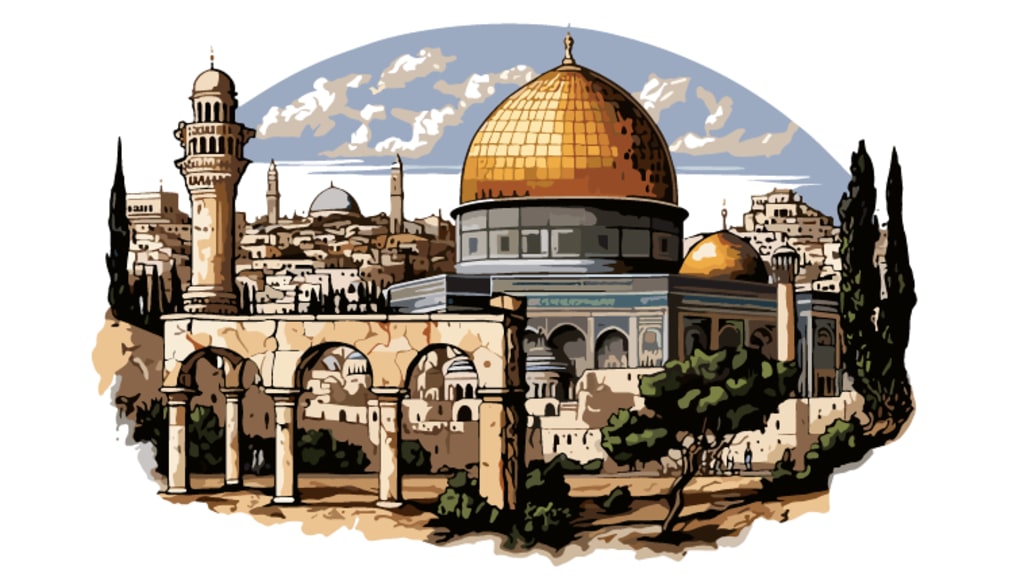
Palestine
Palestine, a land cradled between the azure waters of the Mediterranean and the golden sands of the Arabian Desert, boasts a history as rich and vibrant as its diverse landscapes. It is a region where ancient empires rose and fell, where monotheistic faiths were born, and where civilizations thrived for millennia. This intricate tapestry, woven with threads of conquest, resilience, and cultural exchange, paints a remarkable portrait of a land that has served as a crossroads of civilizations for centuries.
Ancient Beginnings: From Canaanites to Israelites
Our journey begins in the mists of prehistory, around 3,500 BCE, when the Canaanites established thriving city-states along the fertile coastal plain. These skilled traders and farmers laid the foundation for a dynamic region known as Canaan, a land coveted for its strategic location and agricultural bounty.
Around 1800 BCE, the arrival of the Israelites marked a turning point in Palestinian history. These nomadic tribes, fleeing famine and persecution in Egypt, settled in the highlands, establishing the ancient kingdoms of Israel and Judah. Their monotheistic beliefs, enshrined in the Torah, would have a profound impact on the religious landscape of the region and beyond.
The following centuries witnessed a period of prosperity and conflict. Powerful empires like the Assyrians, Babylonians, and Persians swept through the land, leaving their mark on Palestinian art, architecture, and governance. Yet, throughout these conquests, the distinct Israelite identity and their connection to the land endured.
From Hellenism to Roman Rule: A Crucible of Cultures
The conquests of Alexander the Great in the 4th century BCE ushered in a new era of cultural exchange. Greek influences permeated Palestinian society, giving rise to the Hellenistic period. Cities like Alexandria and Jerusalem flourished as centers of learning and commerce, blending Greek philosophies with Jewish traditions.
However, Roman ambitions soon cast a shadow over the region. In 63 BCE, Judea became a Roman province, sparking tensions between the Jewish population and their imperial overlords. The First Jewish-Roman War (66-73 CE) culminated in the destruction of the Second Temple in Jerusalem, a pivotal moment in Jewish history that marked the beginning of the Jewish diaspora.
Byzantine Era and the Rise of Islam
The fall of the Roman Empire in the 5th century CE saw Palestine come under the rule of the Byzantine Empire. During this period, Christianity flourished, with Jerusalem becoming a major pilgrimage center. Byzantine rule, however, was not without its challenges, as religious disputes and economic hardships fueled social unrest.
The 7th century CE witnessed a momentous shift with the rise of Islam. Arab Muslim forces swept through the region, conquering Palestine in 638 CE. Under Islamic rule, Palestine experienced a period of cultural and intellectual ferment. Jerusalem became a holy city for Muslims, with the construction of the Dome of the Rock and the Al-Aqsa Mosque.
Centuries of Change: From Crusaders to Ottomans
The following centuries saw Palestine become a pawn in the struggle for power between various empires. The Crusades (1096-1291 CE) brought waves of European Christians to the region, vying for control of the Holy Land. The Mamluks, a powerful Muslim dynasty, eventually repelled the Crusaders and reasserted Islamic rule in the 13th century.
The Ottoman Empire's conquest of Palestine in 1516 ushered in another long period of rule. For over four centuries, the Ottomans administered the region, leaving a lasting mark on its architecture, cuisine, and language. However, their decline in the late 19th century paved the way for the emergence of new forces that would shape the future of Palestine.
Colonialism, Conflict, and the Quest for Statehood
The beginning of the 20th century saw Palestine become embroiled in the complex geopolitical climate of the Middle East. The rise of Zionism, a movement advocating for a Jewish homeland in Palestine, coincided with the decline of the Ottoman Empire. This confluence of events led to a period of increasing tensions and ultimately, conflict.
The British Mandate, established after World War I, promised self-determination for both Arabs and Jews but ultimately proved untenable. The 1947 UN Partition Plan aimed to divide Palestine into two independent states, one Jewish and one Arab. However, the plan
About the Creator
Hmid Abderrahmane
Abderrahman hmid, 23, a skilled content writer with translation expertise. Experienced in journalistic translation across fields. Owns a collection of unpublished fiction and creative stories awaiting an online debut. Thanks!
Keep reading
More stories from Hmid Abderrahmane and writers in History and other communities.
The Ottoman Empire
The Ottoman Empire The Ottoman Empire was a vast and powerful empire that lasted for over 600 years. It was founded in 1299 by Osman I, a Turkish warlord, and reached its peak in the 16th century under Suleiman the Magnificent. The empire controlled territory in Europe, Asia, and Africa, and its influence extended to the Americas.
By Hmid Abderrahmane2 years ago in History
Could Israel Ever Collapse? Understanding the Realities of Modern Geopolitics
Could Israel Ever Collapse? Understanding the Realities of Modern Geopolitics In discussions about the Middle East, some people ask dramatic questions such as whether Israel could ever face collapse or “the end.” These questions often appear during periods of intense conflict in the region. However, understanding this issue requires looking carefully at political realities, military power, international alliances, and regional dynamics rather than focusing only on emotional reactions during crises.
By Wings of Time 5 days ago in History


Comments
There are no comments for this story
Be the first to respond and start the conversation.