
5,000 Years of Firaon of Egypt
From Divine Kings to Doomed Legacies — The Rise and Fall of Egypt’s God-Pharaohs

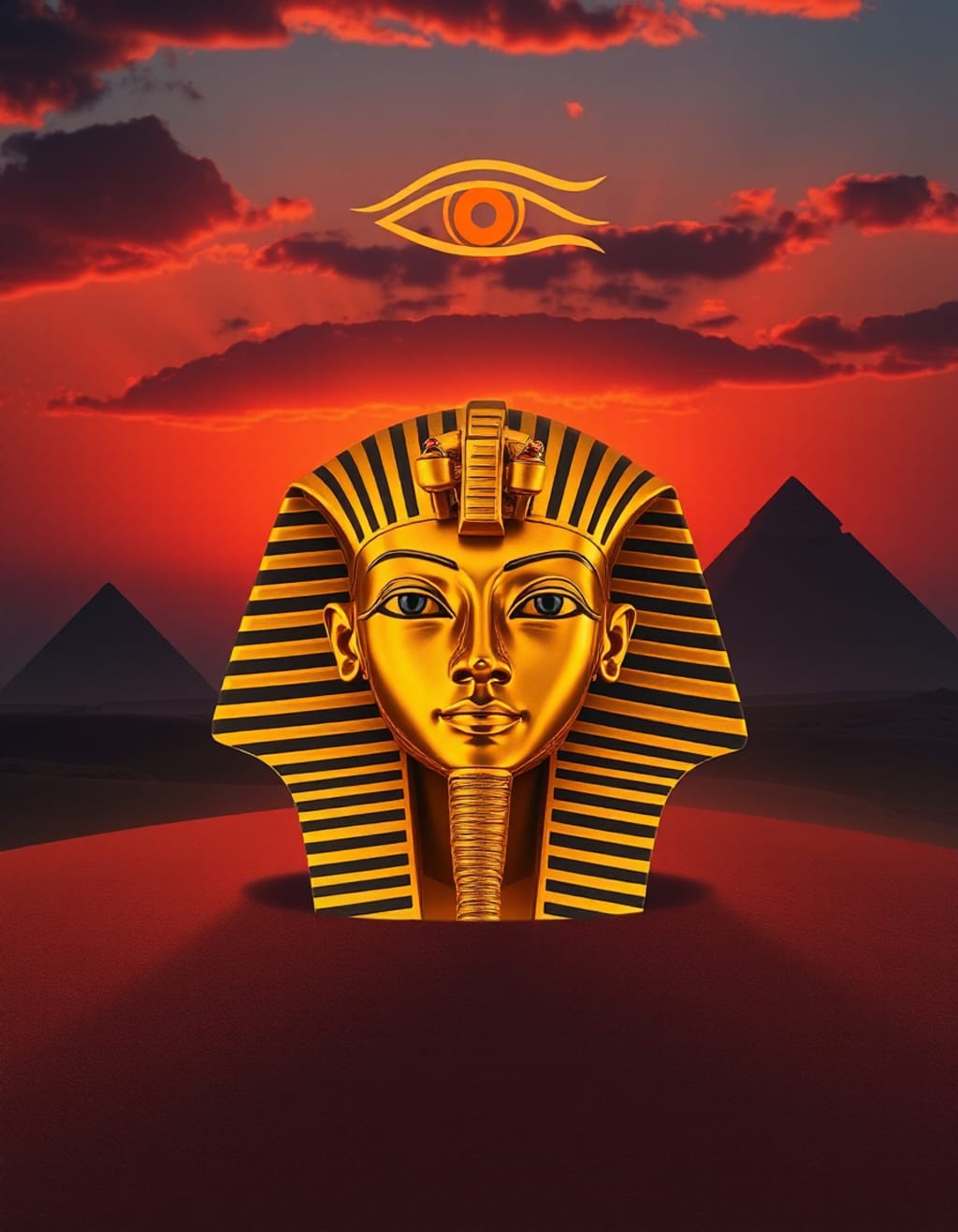
Introduction
For over 5,000 years, the land along the Nile River whispered the same name across centuries—Firaon, or Pharaoh. To some, it meant king. To others, god. To many, tyrant. But no matter the interpretation, the Pharaohs of Egypt held a grip on time itself, constructing legacies so vast that even in their dust, they still breathe.
This is the story of how a desert civilization rose to eternal greatness, how its kings became gods, and how its last whispers still echo through tombs, stones, and legends.
I. The Birth of Divine Kingship (c. 3100 BCE)
The unification of Upper and Lower Egypt under Narmer (or Menes) around 3100 BCE marked the beginning of the Pharaohs. These weren’t just rulers—they were seen as living gods, the children of the sun god Ra, tasked with maintaining Ma’at, the divine balance of the universe.
In these early days, the Pharaoh was not merely a man. He was the bridge between heaven and earth, capable of controlling floods, dictating agricultural cycles, and preserving cosmic harmony. His every breath was sacred.
Their reigns were immortalized not through books—but through stone, sand, and star-aligned monuments.
II. The Pyramid Age: Engineering the Afterlife
The Old Kingdom (c. 2686–2181 BCE) gave birth to Egypt's most iconic legacy—the pyramids. Pharaoh Djoser, under the visionary architect Imhotep, constructed the Step Pyramid at Saqqara, humanity’s first colossal stone building.
But it was during the reign of Khufu (Cheops) that the Great Pyramid of Giza emerged—a structure so precise that even modern engineers debate its secrets. It was not merely a tomb—it was a staircase to the stars, a vessel to eternal life.
Every grain of sand carried a whisper: “The Pharaoh is forever.”
III. The Golden Age: Wealth, Wisdom, and War
The Middle and New Kingdoms (c. 2055–1070 BCE) brought unprecedented wealth, military power, and art. Pharaohs like Thutmose III expanded Egypt’s reach across Africa and the Levant. Hatshepsut, the most successful female Pharaoh, ruled with a blend of diplomacy and grandeur.
But none dazzled the world like Ramses II, also known as Ramses the Great. His temples at Abu Simbel were carved into cliffs to command both nature and awe. He signed the first known peace treaty in human history with the Hittites—etched forever in cuneiform and stone.
Under these Pharaohs, Egypt was the world’s superpower, its capital Thebes gleaming with gold, incense, and song.
IV. The Heretic King and the God of the Sun
Among the hundreds of Pharaohs, one dared to rewrite the cosmos.
Akhenaten, husband of Nefertiti, shattered tradition by declaring that there was only one god — Aten, the sun disk. He moved the capital to Amarna and erased the names of old gods, calling for monotheism centuries before Abrahamic faiths.
But his dream was short-lived. After his death, his successor — a young, fragile boy — was placed on the throne.
That boy was Tutankhamun.
Though his reign was brief, his tomb’s discovery in 1922 by Howard Carter would become the most famous archaeological find in history. Gold, mystery, and a so-called curse would make “King Tut” the face of ancient Egypt.
V. The Twilight of the Pharaohs
As centuries passed, Egypt was no longer invincible. Foreign powers—Libyans, Nubians, Assyrians, Persians—slowly chipped away at its divine walls.
And then came the Greeks.
Alexander the Great marched into Egypt in 332 BCE and was welcomed as a liberator. The Macedonian general claimed the title of Pharaoh, founding the city of Alexandria, which would later become a beacon of knowledge and science.
The final royal to wear the double crown of Egypt was Cleopatra VII, a brilliant queen who spoke multiple languages, allied with Julius Caesar and later Mark Antony, and fought to keep Egypt independent.
Her suicide in 30 BCE after defeat by Octavian (later Augustus Caesar) marked the end of the Pharaohs and the dawn of Roman Egypt.
The gods were silent. The crown was lost.
VI. Pharaohs in the Eyes of the World
For millennia, stories of the Pharaohs remained buried under desert sands—until archaeologists, adventurers, and thieves began unearthing mummies, statues, and scrolls.
The world was once again mesmerized. Pharaohs became icons in museums, symbols in movies, and mysteries in textbooks.
But beyond the gold masks and hieroglyphs lay something deeper: a civilization that believed death was only a doorway, and memory was the true kingdom.
Even today, their names survive: Khufu. Hatshepsut. Akhenaten. Tutankhamun. Ramses. Cleopatra.
VII. Lessons from the Land of the Pharaohs
What do 5,000 years of Pharaohs teach us?
That absolute power comes with divine responsibility. That even god-kings fall. That stone can outlive words. And that history, no matter how ancient, can still speak.
The Pharaohs ruled from the Nile, but their legacy flows through human imagination, cultural memory, and the eternal hunger for immortality.
✦ Closing Line
When you walk through the ruins of Luxor, when you touch the glyphs on a temple wall, when you stare into the eyes of a mummified king behind museum glass—remember: they were never meant to be forgotten.
They were gods. They were rulers.
They were the Firaon of Egypt.
About the Creator
rayyan
🌟 Love stories that stir the soul? ✨
Subscribe now for exclusive tales, early access, and hidden gems delivered straight to your inbox! 💌
Join the journey—one click, endless imagination. 🚀📚 #SubscribeNow
Rajendra Chola I and the Conquest of the Ganga: A Monumental Feat in Indian History
Known as the “Gangaikonda Chola” (the Chola who conquered the Ganga), Rajendra transformed a South Indian maritime empire into a pan-Indian power whose influence stretched from the Indian Ocean to the heart of the subcontinent. This campaign was not merely a military raid but a bold statement of imperial ambition, strategic brilliance, and cultural confidence.
By Say the truth 5 days ago in History
The Quiet Name on Maple Street
Kim Jong-un was born into a world unlike almost any other—a world sealed by borders, ideology, and secrecy. As the grandson of Kim Il-sung, the founder of North Korea, and the son of Kim Jong-il, the country’s second leader, Kim Jong-un entered life already wrapped in destiny. In North Korea, leadership is not chosen by ballots or debate; it is inherited like a crown, reinforced by loyalty, fear, and an unyielding political system.
By The best writer a day ago in History



Comments
There are no comments for this story
Be the first to respond and start the conversation.