
10 Interesting Unknown Facts About Jaipur, Rajasthan
Lessor known facts about Jaipur city, India
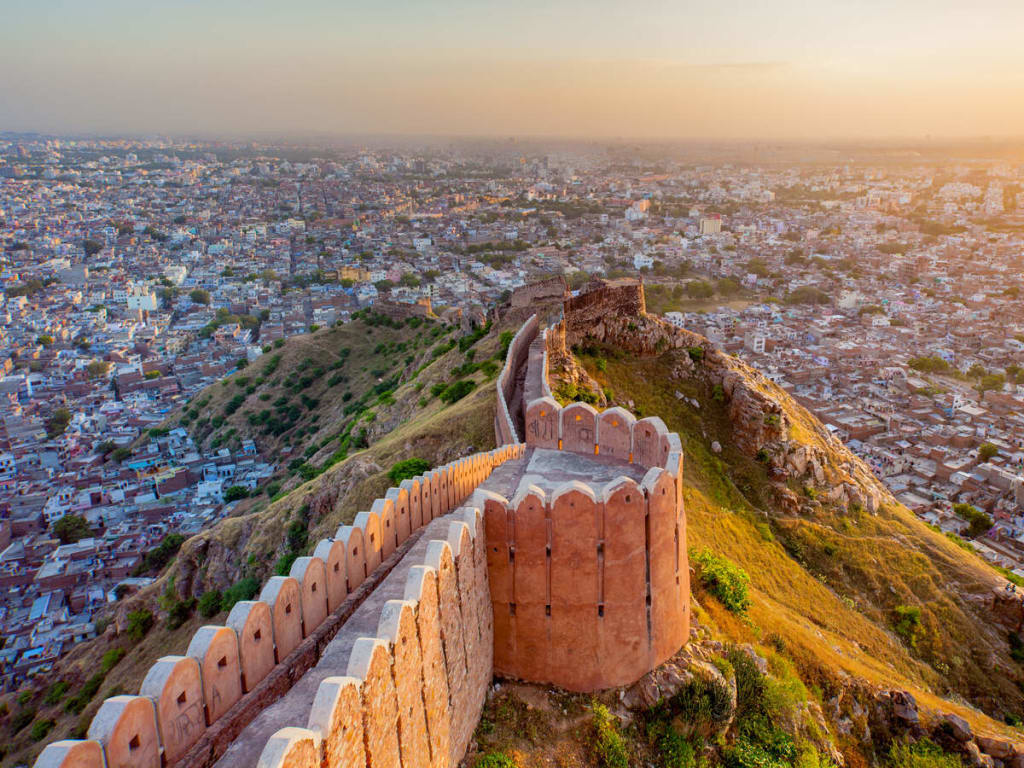
Jaipur, the capital of Rajasthan, is often referred to as the "Pink City" because of its distinctive pink-hued buildings. With a rich cultural heritage, majestic palaces, and ancient forts, it attracts millions of tourists every year. However, beneath its popular tourist spots lies a treasure trove of hidden gems and lesser-known facts. Here are 10 interesting, lesser-known facts about Jaipur that will make you look at this royal city from a fresh perspective:
1. Jaipur’s Unique Architecture Was Influenced by Vastu Shastra
While the city of Jaipur is widely recognized for its stunning palaces and forts, few people know that its architecture was planned with precision according to the principles of Vastu Shastra, the ancient Indian science of architecture. Maharaja Jai Singh II, the founder of Jaipur, hired expert architects and scholars to design the city in a way that harmonized with natural elements. The layout of Jaipur, with its distinct grid pattern, was designed to ensure proper airflow and sunlight, making it one of the most scientifically-planned cities in India.
2. The City Was Built in Just 4 Years
It is remarkable that the city of Jaipur was constructed in a mere four years (1727-1731). Jai Singh II envisioned a grand city to match his growing influence as a ruler and wanted to move away from the overcrowded Amber Fort. A team of architects and craftsmen worked tirelessly to bring the king’s dream to life, creating a city that still stands as one of India’s most meticulously planned urban centers.
3. The City’s Pink Color is a Symbol of Hospitality
The iconic pink color of Jaipur’s buildings is not just an aesthetic choice but holds symbolic significance. The tradition of painting buildings in terracotta pink began in 1876 when Maharaja Ram Singh decided to paint the entire city in pink to welcome the Prince of Wales (Edward VII) during his visit. Pink, being a color associated with warmth and hospitality, was chosen to represent the city’s spirit of welcome, a tradition that continues today.
4. Jaipur is Home to the World’s Largest Sun Dial
Jaipur houses one of the most significant astronomical instruments in the world, the Jantar Mantar observatory. This observatory, built by Maharaja Jai Singh II in the 18th century, features several large-scale instruments, including the Samrat Yantra, the world’s largest stone sundial. The Jantar Mantar is a UNESCO World Heritage site and continues to be a fascinating testament to the advanced astronomical knowledge of the time.
5. The Pink City Has Its Own Climate
Did you know that Jaipur has a micro-climate of its own? Due to its location in the semi-arid region of Rajasthan, Jaipur experiences extreme temperatures. However, the city’s elevated position in the Aravalli Range helps it maintain a slightly cooler atmosphere compared to the surrounding desert regions. The architecture, designed to facilitate airflow, helps mitigate the intense summer heat.
6. Jaipur Has a Hidden Tunnel to Amber Fort
Jaipur’s Amber Fort, one of the most visited historical sites in India, has a secret tunnel that connects it to the City Palace. The tunnel, which is not often open to the public, was used as an escape route in times of invasion. It’s a fascinating piece of history that many visitors are unaware of, adding a layer of mystery to the already majestic fort.
7. The City is Home to India’s Only Floating Palace
The Jal Mahal, or "Water Palace," located in the center of the Man Sagar Lake, is one of the most picturesque sites in Jaipur. The palace appears to float on water, and while it is not accessible to the public, it is an architectural marvel. The palace was originally a retreat for kings and royal families, but now it serves as an iconic landmark of the city.
8. Jaipur is Famous for its World-Class Gemstone Industry
While Jaipur is known for its royal history, it is also a global hub for gemstones and jewelry. The city is home to some of the finest jewelry craftsmen in the world, specializing in precious stones like rubies, sapphires, and emeralds. The Johari Bazaar in Jaipur is a popular marketplace for visitors looking to purchase exquisite gemstones and jewelry, many of which are crafted using ancient techniques passed down through generations.
9. Jaipur Has Its Own Bizarre "Monkey Temple"
The Galta Ji Temple, often called the Monkey Temple, is one of the lesser-known, yet fascinating sites in Jaipur. Located about 10 kilometers away from the city center, this temple complex is dedicated to Lord Hanuman, the monkey god. The temple is home to hundreds of monkeys who roam freely around the temple grounds. The temple is also known for its natural spring water that feeds several sacred ponds, which attract pilgrims seeking to bathe in its holy waters.
10. Jaipur Hosts an Annual Elephant Festival
Jaipur hosts one of the most unique and colorful festivals in India—the Elephant Festival. Held during the time of Holi, the festival is a grand celebration of elephants. These majestic animals are decorated in vibrant colors and adorned with intricate jewelry, and participate in various events like races, polo matches, and tug-of-war games. The Elephant Festival in Jaipur offers an opportunity to witness the cultural significance of elephants in Rajasthani heritage.
Conclusion
Jaipur, Rajasthan, is much more than just its popular palaces, forts, and vibrant bazaars. The city holds numerous hidden treasures, from architectural marvels to cultural traditions and fascinating facts that many people are unaware of. Exploring these lesser-known aspects of Jaipur will add a layer of depth to your experience of this royal city, leaving you with unforgettable memories and a greater appreciation of its rich heritage.
About the Creator
Keep reading
More stories from Ashley Robinson and writers in History and other communities.
What Happens to Your Mutual Funds in Case of Market Crash?
A market crash can be unsettling for investors, especially those who are new to the world of investing. The Indian stock market, like most global markets, experiences periods of extreme volatility, where stock prices drop drastically over a short period. In such scenarios, investors often wonder what happens to their mutual fund investments and how they should respond.
By Ashley Robinson8 months ago in Journal
Can Global Peace Exist Without a Global Authority?
Can Global Peace Exist Without a Global Authority? The idea of global peace without a global authority sounds appealing to some people. In theory, nations could manage their own affairs, respect each other’s borders, and resolve disputes peacefully without an overarching institution telling them what to do. Supporters of this view argue that global bodies are slow, biased, and often ineffective. But history and current events raise a difficult question: can lasting global peace truly exist without a central authority to guide it?
By Wings of Time 2 days ago in History



Comments
There are no comments for this story
Be the first to respond and start the conversation.