
Will AI apps take over the human workload in 2025?
predicting trends, and even creative work

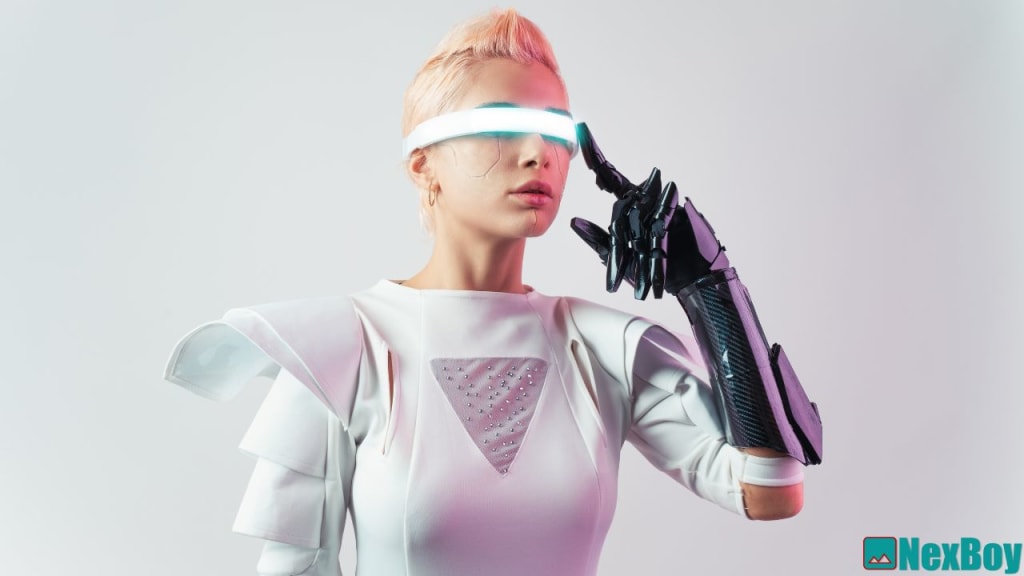
Will AI apps take over the human workload in 2025? The Changing Landscape of Human Work AI is advancing fast. It’s no longer limited to just tasks like scheduling or organizing data. In 2025, AI apps could go beyond supporting human tasks and start taking on major roles in the workforce.
Businesses are already testing AI systems for complex tasks, like analyzing vast data, predicting trends, and even creative work.
But with these advancements, questions are rising: will AI apps replace humans entirely, or will they work alongside us? The answer lies in understanding the possibilities, benefits, and challenges.
Automation and Efficiency
AI apps are built for efficiency. They work around the clock, need no breaks, and don’t get tired or distracted. Many industries, like manufacturing and logistics, have already benefited from AI-driven automation. In 2025, this will likely expand further, affecting sectors like customer service, retail, and data management.
AI's speed and accuracy in processing and analyzing data can make many human roles more efficient or, in some cases, even unnecessary.
Customer service bots are a prime example of this shift. Today, they can handle basic queries, provide recommendations, and even resolve complaints.
In 2025, these bots might manage more complex issues, with some AI systems potentially handling entire customer interactions. As AI becomes more “human” in tone and understanding, it could take on roles that traditionally needed human empathy and judgment.
Also Read:Will You Spend More On Generative AI In 2025 ?
Roles Most Likely to Be Affected
Certain roles are more susceptible to AI takeover due to their repetitive or data-heavy nature. Administrative jobs, data entry, and financial processing are at the top of the list.
AI apps can perform these tasks faster and more accurately than humans. Even some creative roles, like content creation and design, might see a shift as AI tools become more sophisticated.
In fields like medicine and law, AI could take on responsibilities previously handled by highly trained professionals. AI systems are already capable of reading medical images and scanning legal documents.
By 2025, doctors and lawyers may rely on AI for quick assessments and analyses. Although the AI won't replace their expertise, it could change the way these professionals work, allowing them to focus on cases that need deeper human insight.
Collaboration Over Competition
While some fear AI will eliminate jobs, others believe it will create new forms of collaboration.
Rather than replacing workers, AI could empower them. In marketing, for instance, AI tools can analyze customer behavior and recommend strategies, leaving marketers more time for creative, strategic decisions.
This kind of collaboration is likely to expand across industries, encouraging a balance where AI handles the “heavy lifting” and humans handle the nuanced, judgment-based aspects of work.
In education, teachers could use AI to personalize learning, while healthcare professionals might rely on AI to monitor patients and suggest preventive care options. The idea is not to replace professionals but to make their work more effective, using AI to enhance the human touch rather than remove it.
AI’s Impact on Creativity
AI’s ability to create music, art, and even literature has sparked debates. Some artists and writers see AI as a tool that enhances creativity, while others view it as a threat.
AI-generated content is expected to be more mainstream in 2025, making it easier for people with little experience to create art or music.
However, true creativity may still remain a uniquely human trait.
In design and content creation, AI can handle repetitive tasks like resizing images or suggesting headlines, freeing up creative professionals to focus on ideas and vision.
But there’s an argument that too much AI involvement could lead to “generic” outputs. Creativity thrives on personal experience, emotion, and cultural nuances, aspects that AI struggles to fully grasp.
So, while AI will support the creative industry, it’s unlikely to take over entirely.
Ethical and Social Implications
As AI becomes more integral to the workforce, ethical questions arise.
Who is responsible if an AI app makes a mistake that affects someone’s health or livelihood? How should companies handle layoffs if AI takes over roles previously filled by humans? In 2025, we may see more regulations and policies around AI usage, addressing concerns about accountability, data privacy, and fair employment practices.
The social implications are equally significant. If AI replaces jobs, there will be a need for retraining programs to help workers transition to new roles. Governments and organizations might invest in upskilling initiatives to prepare people for a future where digital literacy and adaptability are essential.
This shift could also bring discussions on universal basic income and other support systems for those affected by AI-driven unemployment.
Skills for the AI-Enhanced Workforce
To thrive in an AI-dominated world, workers will need to adapt.
Skills like problem-solving, emotional intelligence, and critical thinking are likely to be highly valued, as these are areas where humans still outperform AI.
In 2025, industries may prioritize hiring workers who can oversee, guide, and enhance AI processes rather than perform tasks that AI could easily manage.
New job roles could emerge, focusing on AI maintenance, ethics, and oversight. People who understand both the technical and ethical aspects of AI will be in demand.
For instance, companies might need AI ethics officers to ensure fair and transparent use of technology. This shift will encourage a more interdisciplinary approach to education, blending technical skills with social sciences and ethics.
Will AI Replace Humans Completely?
Despite the rapid advancements, it’s unlikely that AI will replace humans entirely. There are still many areas where human intuition, creativity, and empathy are irreplaceable.
AI excels at repetitive and data-driven tasks, but it struggles with complex decision-making that requires a deep understanding of context and emotion.
AI might redefine jobs rather than replace them. In 2025, we could see a workforce where AI handles routine, time-consuming tasks, while humans focus on strategic, judgment-based responsibilities.
This balance could lead to a more efficient, satisfying work environment where AI serves as a tool for progress, not a threat to livelihoods.
Preparing for the AI Future
The key to thriving in an AI-driven world is preparation. Schools, businesses, and governments will need to work together to prepare for this shift.
Education systems might emphasize skills that AI cannot easily replicate, like critical thinking and interpersonal skills. Employers may focus on creating a flexible workforce that can adapt as technology evolves.
In the workplace, companies can prepare by fostering a culture of continuous learning. Workers will need to embrace change, learning how to work with AI tools and develop new skills as the technology progresses.
Support from leaders and policies will be crucial to ease this transition, ensuring that AI benefits both organizations and their employees.
Conclusion: An AI-Enhanced Future, Not an AI-Replaced One
AI apps are poised to make big changes in the workforce by 2025. They’ll bring efficiency, create new opportunities, and reshape existing roles. However, AI isn’t here to replace humans entirely but to transform the way we work.
By adapting, upskilling, and embracing collaboration with AI, humans can thrive in an AI-enhanced future that values both human and technological strengths.
This path forward may allow society to benefit from AI’s potential while preserving the uniquely human aspects of work.
About the Creator
Mr Smart
I am a gsm software engineer also a full time content creator.
The Politics of Playing Dress-Up
Well, to start off I'd like to say a happy world book day to all who celebrate. I know I haven't really posted anything on my socials about it but I'm not a jubilant kind of person. I lay low most of the time. Let's start off with a popular anecdote from the vaults...
By Annie Kapur2 days ago in Geeks


Comments
There are no comments for this story
Be the first to respond and start the conversation.