
Why Was Haymitch’s Family Killed?
The Hunger Games’ Most Personal Punishment
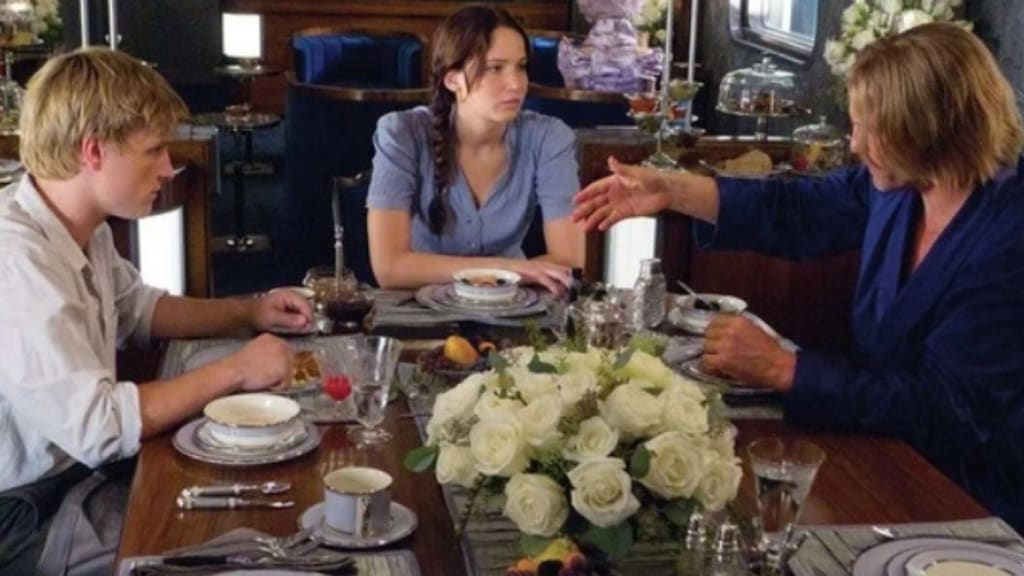
In the ruthless world of The Hunger Games, survival doesn’t always mean safety. For Haymitch Abernathy, victory in the 50th Hunger Games — the Second Quarter Quell — came at an unimaginable price. After outsmarting the Capitol with a brilliant but unexpected maneuver, Haymitch returned home not to celebration, but to heartbreak. His mother, younger brother, and girlfriend were murdered. But why?
To understand the Capitol’s horrifying response, we have to revisit Haymitch’s controversial win — and what it revealed about the regime's obsession with control and vengeance.
The Second Quarter Quell: More Tributes, More Blood
Every 25 years, the Capitol introduced a “Quarter Quell,” a twisted variation on the traditional Games designed to inflict even more psychological damage on the districts. In the Second Quarter Quell, each district was forced to send double the number of tributes — 48 children in total, doubling the death toll and amplifying the spectacle.
Sixteen-year-old Haymitch Abernathy from District 12 wasn’t expected to make it far. Known more for his wit than brute strength, he seemed like easy prey in a larger, more brutal arena. But what happened during those Games would etch his name into Panem’s history — and trigger one of the most brutal acts of retaliation the Capitol ever carried out.
The Force Field That Changed Everything
Haymitch’s victory wasn’t just about staying alive. He used his mind — and that’s what made him dangerous in the eyes of the Capitol.
As the Games neared their conclusion, Haymitch discovered the arena was surrounded by an invisible force field. During the final fight, his last remaining opponent hurled an axe at him. Haymitch ducked, and the weapon bounced off the force field and struck her instead, killing her instantly.
It was a clever move — one that should’ve earned him praise. But in Panem, outsmarting the Capitol is the ultimate insult.
Haymitch’s use of the force field exposed a flaw in the Capitol’s carefully designed arena. It embarrassed the Gamemakers and, most importantly, President Snow, who saw Haymitch’s victory as a public humiliation. The Capitol’s power lies in its ability to control — and when Haymitch bent the arena to his will, even if only briefly, he shattered their illusion of dominance.
President Snow’s Revenge: A Message of Fear
The Capitol couldn’t undo Haymitch’s win — but they could destroy what he cared about. In an act of cold-blooded vengeance, President Snow ordered the execution of Haymitch’s loved ones. His mother, his younger brother, and his girlfriend were all murdered — not for any crime, but simply as a punishment for Haymitch's defiance.
This wasn’t just about Haymitch. It was a strategic message to all of Panem: even the winners are not safe. The Capitol demanded more than compliance — it demanded submission. Haymitch had made them look weak, and the price of that was unbearable loss.
This brutal form of retaliation became a chilling symbol of how far the Capitol would go to maintain control. Killing Haymitch’s family wasn't just an act of cruelty — it was a political statement.
A Victor in Name Only: The Fallout of Trauma
When we meet Haymitch in The Hunger Games, he’s a broken man. Jaded, sarcastic, and perpetually drunk, he seems like a shell of the young tribute who once survived against impossible odds. But once you know what happened after the Games, it becomes clear why he turned out that way.
The trauma of losing his entire family, combined with the constant pressure of mentoring new tributes year after year, wore him down. Every time he returned to the Capitol to escort two new teenagers into the arena, he was forced to relive the horror of what he’d lost — and what he could never protect.
Unlike later victors who became Capitol celebrities, Haymitch was isolated and bitter, often ridiculed and largely forgotten by the nation. But his suffering was proof that even victory in Panem came with no guarantee of peace.
How Haymitch’s Story Returns in Sunrise on the Reaping
The upcoming Hunger Games prequel film, Sunrise on the Reaping, finally brings Haymitch’s untold story to life. Joseph Zada has been cast as young Haymitch Abernathy, and fans are eager to see how the film portrays the Second Quarter Quell and its devastating aftermath.
This prequel gives audiences a chance to witness not just how Haymitch won the Games, but how he lost everything else. It promises to deepen our understanding of a character who, until now, has largely been seen through the lens of sarcasm and survival. With a renewed focus on his tragic backstory, the film has the potential to show why Haymitch remains one of the most complex and compelling figures in the entire Hunger Games franchise.
Conclusion
So, why was Haymitch’s family killed? Because he did the one thing the Capitol could never tolerate — he exposed their weakness. His victory may have earned him a crown, but it also cost him everything he loved. In a system built on fear, control, and spectacle, Haymitch Abernathy’s story serves as a chilling reminder: even survival can be punished.
About the Creator
Keep reading
More stories from Sangita Nandi and writers in Geeks and other communities.
Hunger Games Prequel Sunrise on the Reaping — Cast, Plot, Book Connection Explained
The world of Panem is expanding once again. With Lionsgate’s announcement of the latest Hunger Games installment — Sunrise on the Reaping — fans are gearing up to return to the dystopian universe that first captivated audiences over a decade ago. But this isn’t just another tale of rebellion or survival. This time, the story steps back 24 years before Katniss Everdeen ever volunteered as tribute, placing a long-overdue spotlight on Haymitch Abernathy — the sardonic, enigmatic mentor whose own Hunger Games have only been hinted at in past films.
By Sangita Nandi11 months ago in Geeks
Dante's Peak (1997) - A Movie Review
We need to escape now before the volcano erupts! Dante’s Peak is a 1997 film. Harry Dalton, a volcanologist, arrives in a small town where there have been signs of an active volcano. As he scopes the town, he discovers a dormant volcano that isn’t long until it awakens.
By Marielle Sabbag4 days ago in Geeks



Comments
There are no comments for this story
Be the first to respond and start the conversation.