
Why "hurry up and wait" can be so exhausting
A theatre major's perspective on why theatre can be so exhausting, even when you're not doing much

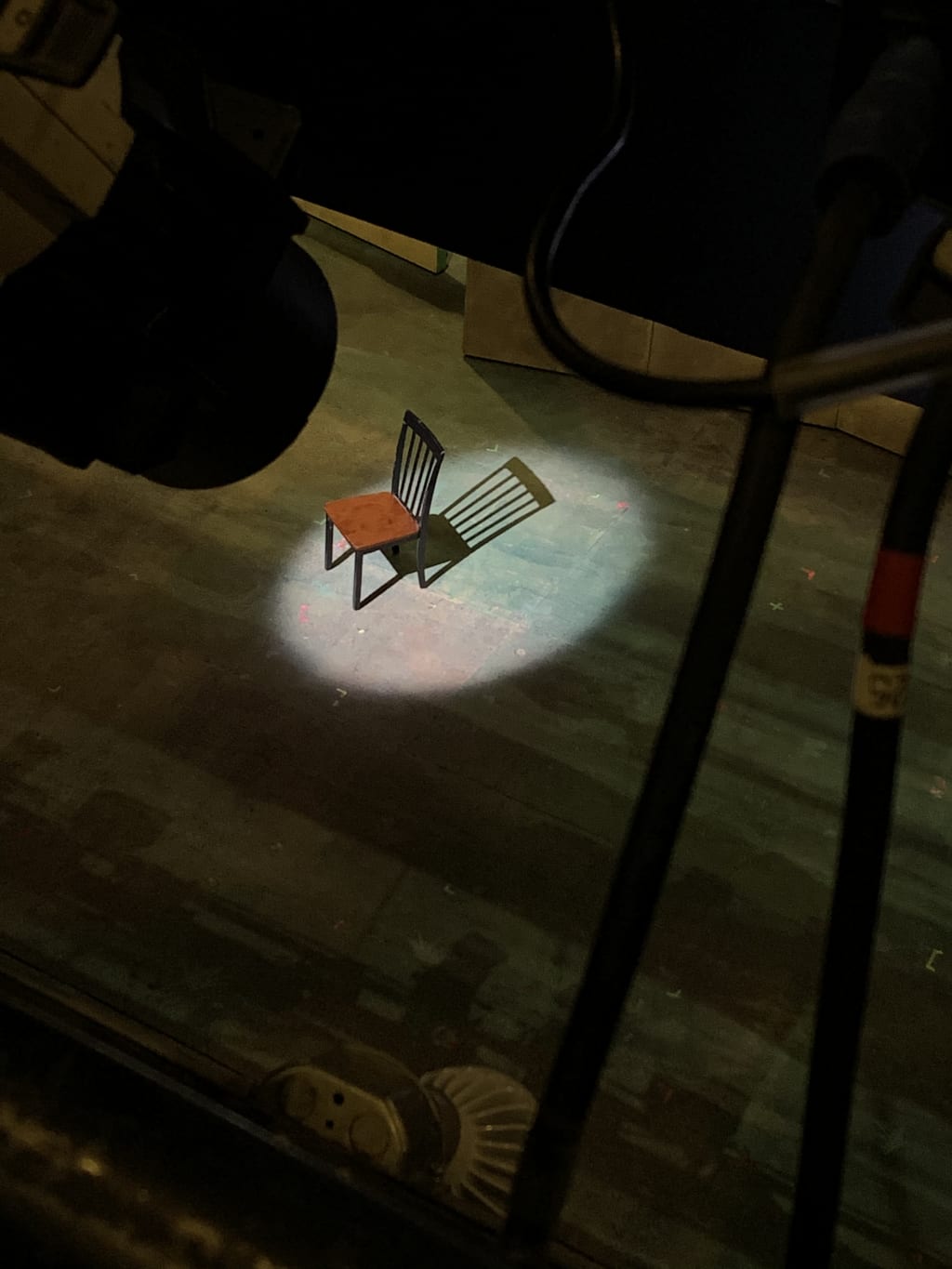
If you have ever worked in theatre, the saying "hurry up and wait" is probably not anything new for you. For those of you who may not have heard it before, it means that in theatre, you're generally in a hurry to get to your cue and once it's done, you're waiting for your next cue, and the cycle restarts.
Just yesterday I was on my way to rehearsal and I hurried to the stage door from my car at 6:32 because I thought my call was 6:30 when it was really 6:45. Then I sat and waited until the stage manager started a little after 7 to head to my spotlight and get started.
Another popular theatre saying: "early is on time, on time is late, and late is unacceptable." But I digress.
Especially if you're one of the more basic stage hands, you may spend much of a rehearsal sitting, watching, and waiting, so why is that so exhausting?
Well for one thing, those of us not lucky enough to have a seat available nearby, just standing, or even finding a comfortable spot on the ground, in a safe place out of the way, is pretty tiring.
Many stage managers understand how boring it can be during the early rehearsals, and approve bringing in a book to read (or if you're doing school theatre like me, you also work on an essay). However, while you're finding ways to entertain yourself, your brain is still keeping an ear tuned on the rehearsal for your next cue. You have to "multitask" between listening out for the cue and paying to what's in front of you, which is why some stage managers prefer you do not read during rehearsals (though personally, I think it depends on how tech intense the rehearsal is, but alas I am only an aspiring stage manager so take my opinion as you will).
When you are wearing a headset, there's even more going on you are trying sort through mentally, or maybe even ignore to focus. The last show I was a part of was the Nevada Conservatory Theatre's recorded production of The Human Comedy. We ran the same scenes many, many times over to get a good take. My spotlight cues were few and far between, so I spent much of the rehearsals doing homework or reading a book, while trying to both tune out what was happening over the com, while also keep an ear out for when it got close to my next cue.
As I write this, I can feel myself cringing over admitting that I don't completely pay attention to a rehearsal, but in some shows, I think it really is warranted. Many people in theatre are familiar with having an outside job, or school, or even another commitment to balance with theatre, and when you're sitting there watching a scene for what feels like the millionth time, and all that's going through your head is the laundry list of other things you need to get done, you can find ways to make the most of your time.
Even for the stage hands who pay attention to everything they can during rehearsal, there is a lot of stuff happening backstage, and on a headset if you're wearing one. And many times you can be backstage or the catwalk and you can't even hear what's happening on stage to pay attention to the show, so if you want to try and actually see or hear any of it, that's not an easy feat either.
Watching and waiting also takes a lot out of you, when you're paying attention to the calls for your next cue. You're waiting in anticipation for way longer than you're actually doing any work, but you're brain is still waiting and waiting for that next cue.
To all aspiring or professional theatre makers out there, no matter if you're busy every second of rehearsal or waiting for your next cue, it's exhausting to make theatre, but at the end of the day, it's a very fulfilling and enjoyable process.
About the Creator
RJ Fortier
I'm a technical theatre student, finding ways to express myself through writing and art. I hope you enjoy!
Keep reading
More stories from RJ Fortier and writers in Geeks and other communities.
Medical Cannabis and Pharmaceuticals
What if we had a solution the opioid epidemic? What if we had a solution to drug overdose? According to the Center for Disease Control, in 2014, nearly 2 million in the US abused or were dependent on prescription opioids. I am not a medical professional, but here is some of the research I've done into replacing medications with the more natural option of cannabis. Cannabis is a plant that can be used to replace opioids, as well as anti-seizure medication, anti-depressants, and anti-anxiety medication. Rx drug overdose in 2014 was up nearly four times what it was in 1999 (National Institute on Drug Abuse). With statistics like those, I think it is best to replace pharmaceuticals with cannabis whenever possible.
By RJ Fortier5 years ago in Potent
A Knight of the Seven Kingdoms Series Review (Season 1)
As one of the biggest properties in fantasy, A Song of Ice and Fire remains immensely popular with audiences. After reaching far into the past with House of the Dragon, a second spin-off was on the cards. A Knight of the Seven Kingdoms serves up a bite-sized slice of action and drama, but it still claims a spot among the best small-screen titles.
By Robert Cain3 days ago in Geeks
Spongebob Review
The episode “Valentine’s Day” opens with a bright, sugar‑spun carnival setting that immediately signals the festive intent of the story, and the animators spare no effort in embedding every booth, ride, and cotton‑candy stall with heart‑shaped motifs that pulse with a playful, romantic optimism. SpongeBob, ever the eager romantic, is armed with a meticulously handcrafted valentine that he intends to deliver to Patrick, hoping to cement their friendship in a tradition that feels both sincere and mischievously earnest. Sandy, whose scientific pragmatism is juxtaposed against the sheer silliness of the holiday, offers a technologically enhanced “gift‑launcher” that can propel the valentine across the midway without the risk of accidental crushing by a rogue clown. The episode’s opening scenes are a masterclass in setting tone: the shimmering lights, the muffled carnival music, and the subtle background chatter of other sea‑creature patrons combine to immerse the viewer in a world that is simultaneously familiar and whimsically exaggerated.
By Forest Green3 days ago in Geeks
Tatt~Master
— Assembly Line Tatt Machine ~ Impressions to Impress — As I begin to understand more about the Tattoo Phenomenon. I've written silly, yet verbatim, dating site anecdotes in 'Frazzled.' So let me ask you: Would you be More attracted to someone slathered with tattoos, or Less?
By Jay Kantor2 days ago in Humor



Comments
There are no comments for this story
Be the first to respond and start the conversation.