
Where Childhood Meets Shadows: How "Harry Potter and the Prisoner of Azkaban" Reshapes the Magical World
A review of my favorite Harry Potter story ever


The Harry Potter series is a literary landscape, spanning seven sprawling novels that trace the wizarding world's darkest corners and its brightest hopes. But amongst them, "Harry Potter and the Prisoner of Azkaban" gleams with a distinct, melancholic luminescence. It's a book that marks a poignant turning point, where childhood wonder surrenders to the unsettling whispers of adolescence, and the cozy castle walls of Hogwarts crack open to reveal the chilling realities beyond. Here, amidst dementors and time-loops, Harry stumbles not just into danger, but into the painful complexities of identity, betrayal, and the ever-present struggle between good and evil.
J.K. Rowling skillfully orchestrates this shift in tone. Gone are the playful Quidditch matches and whimsical feasts; "Azkaban" is cloaked in an unsettling fog, punctuated by the soul-sucking chill of Dementors and the ever-present shadow of Sirius Black, a convicted murderer and alleged escapee from Azkaban prison. The whimsical child's-eye view is replaced by Harry's growing awareness of his parents' tragic past, the fragility of innocence, and the precariousness of trust.
This thematic shift is perhaps most profoundly embodied in the revelation of Sirius Black's innocence. This betrayal by a perceived surrogate father shatters Harry's already bruised sense of security. His world, once defined by loyalty and love, is thrust into a whirlwind of doubt and suspicion. The pain is palpable, echoing the loss of his parents and further eroding his childhood naivety.
Yet, within this darkness, Harry's resilience shines ever brighter. He doesn't succumb to bitterness or despair. Instead, he channels his hurt into action, determined to clear Sirius' name and protect him from harm. This unwavering commitment to doing good, even in the face of personal anguish, is the true heart of the book. Harry's loyalty to his friends, particularly Ron and Hermione, remains steadfast, a beacon of hope in the encroaching shadows.
"Azkaban" delves deeper into the emotional complexities of its characters. We see Snape's vulnerability amidst his harsh exterior, Dumbledore's wisdom tinged with grief, and Lupin's struggle with his dual nature. These nuanced portrayals lend depth and emotional resonance to the story, making the characters more than mere archetypes. They are flawed, vulnerable, and deeply human, allowing the reader to truly connect with their struggles and triumphs.
Time travel, a powerful narrative tool employed in this book, further strengthens its thematic exploration. By venturing into the past, Harry grapples with the ghosts of his parents' death and witnesses their unwavering love for him. This journey through time isn't simply a fantastical plot device; it's a poignant exploration of grief, forgiveness, and the enduring power of love that transcends even death.
"Harry Potter and the Prisoner of Azkaban" is a masterfully crafted narrative. It doesn't shy away from tackling complex emotions, challenging its readers to confront the pain of loss and betrayal alongside its protagonist. Yet, it never loses sight of the core values of the series: unwavering friendship, the power of good, and the enduring strength of the human spirit. It's a book that continues to resonate with readers of all ages, reminding us that even in the darkest of times, hope and love can illuminate the path ahead.
This book is more than just a stepping stone towards the epic battles and grand revelations of the later installments. It's a story that stands on its own, a testament to Rowling's ability to explore the intricate workings of the human heart within the fantastical framework of the wizarding world. It's a book that, like the Time-Turner itself, allows us to revisit our own paths, reminding us of the bittersweet moments that shape who we become, and the unwavering light that, even in the face of darkness, remains eternally within us.
About the Creator
Keep reading
More stories from WIME (World In My Eyes) and writers in Geeks and other communities.
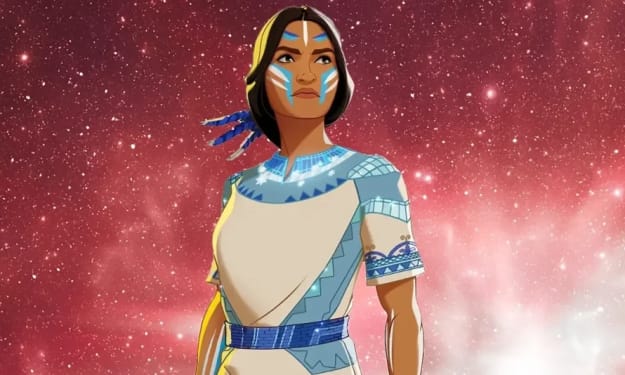
Kahhori: From Tesseract's Touch to a Star of the MCU's Multiverse
The multiverse exploded with color and chaos in December 2023, as Marvel's What If…? season 2 unleashed a kaleidoscope of alternate realities and a brand-new hero unlike any we've seen before. Kahhori, a Mohawk woman born from the fertile imagination of Marvel Studios itself, emerged not just as a powerful addition to the animated landscape, but as a potential game-changer for the entire MCU.
By WIME (World In My Eyes)2 years ago in Geeks
PTA Wrote to X Three Times Seeking Closure of Imran Khan’s X Account Over the Past 3.5 Years
Pakistan’s digital governance has once again come into the spotlight following revelations that the Pakistan Telecommunication Authority (PTA) contacted X (formerly Twitter) multiple times over the past three and a half years, seeking the closure of former Prime Minister Imran Khan’s X account. The disclosure has sparked renewed debate about freedom of expression, political speech, and the regulation of social media platforms in Pakistan. As social media continues to shape political narratives, the issue highlights the growing tension between state regulation and digital rights. Background of the Requests According to official sources, the PTA wrote to X three separate times over the last 3.5 years, requesting action against Imran Khan’s verified account. The communications reportedly cited concerns related to content guidelines, misinformation, and public order. Imran Khan, leader of the Pakistan Tehreek-e-Insaf (PTI), has remained one of the most influential political voices on social media, even during periods of political uncertainty and legal challenges. His X account has been used to: Share political statements and policy positions Address supporters directly Comment on national and international developments This influence has made his digital presence a highly sensitive issue for regulators and authorities. PTA’s Role in Digital Regulation The Pakistan Telecommunication Authority is responsible for monitoring and regulating telecommunications and internet services in the country. Over the years, PTA has taken action against: Content deemed unlawful Accounts accused of spreading misinformation Platforms that allegedly violate Pakistan’s digital laws Officials argue that their requests to X were made under existing legal frameworks, emphasizing the need to maintain public order and prevent the spread of harmful or misleading content. However, critics say the repeated requests raise concerns about selective enforcement and political pressure. X’s Response and Platform Policy X, like other global social media platforms, operates under its own content moderation policies, which are applied worldwide. While the company may comply with local laws in some cases, it also balances: Free speech principles User rights International standards on expression There has been no public confirmation that X agreed to permanently suspend or close Imran Khan’s account following PTA’s requests. In fact, his account has remained active for most of the period in question, suggesting that X either rejected or limited compliance with the requests. This reflects the broader challenge faced by governments when dealing with international tech platforms that are not fully subject to domestic control. Political and Public Reactions News of the PTA’s repeated letters has drawn strong reactions from various quarters. Supporters of Imran Khan PTI supporters view the requests as an attempt to silence political opposition. They argue that: Social media remains one of the few platforms for uncensored political expression Restricting accounts undermines democratic discourse Digital spaces should remain open for debate and dissent Government and Regulatory Perspective On the other hand, supporters of regulation stress that: No individual should be above the law Social media content can influence public order Authorities have a responsibility to act when content crosses legal limits This divide reflects Pakistan’s deeply polarized political environment, where digital platforms play a central role. Freedom of Expression vs. Regulation The case has reignited a broader conversation about freedom of expression in the digital age. Social media has become a powerful political tool, but it also raises concerns about: Fake news and misinformation Incitement and hate speech National security implications Human rights advocates argue that account closures should be a last resort, used only in extreme cases and through transparent legal processes. They warn that repeated requests without clear public justification could lead to self-censorship and erosion of democratic values. The Global Context Pakistan is not alone in facing these challenges. Governments around the world have struggled to regulate social media platforms while respecting free speech. Similar disputes have emerged in: India Turkey Brazil Several European countries These cases highlight a global trend where states seek greater control over digital narratives, while tech companies resist blanket censorship. What This Means for Pakistan’s Digital Future The disclosure that PTA contacted X three times over several years points to an ongoing struggle over digital authority. Key implications include: Increased scrutiny of political speech online Pressure on social media companies to comply with local demands Growing public awareness of digital rights Possible legal reforms related to online regulation As Pakistan’s population becomes increasingly connected, the outcome of such disputes may shape how politics, activism, and expression function online. Conclusion The revelation that the PTA sought the closure of Imran Khan’s X account three times over 3.5 years underscores the evolving battle between state authority and digital freedom. While regulators insist they are acting within the law, critics warn that repeated attempts to restrict a major political voice risk undermining democratic principles. As social media continues to influence public opinion and political engagement, Pakistan faces a critical question: How can it balance regulation with the right to free expression in an increasingly digital society? The answer will likely define the country’s online landscape for years to come.
By Fiaz Ahmed 6 days ago in Geeks



Comments
There are no comments for this story
Be the first to respond and start the conversation.