
“What’s In the Box?”: Analyzing the Mystery Box
Explaining the popular screenwriting device

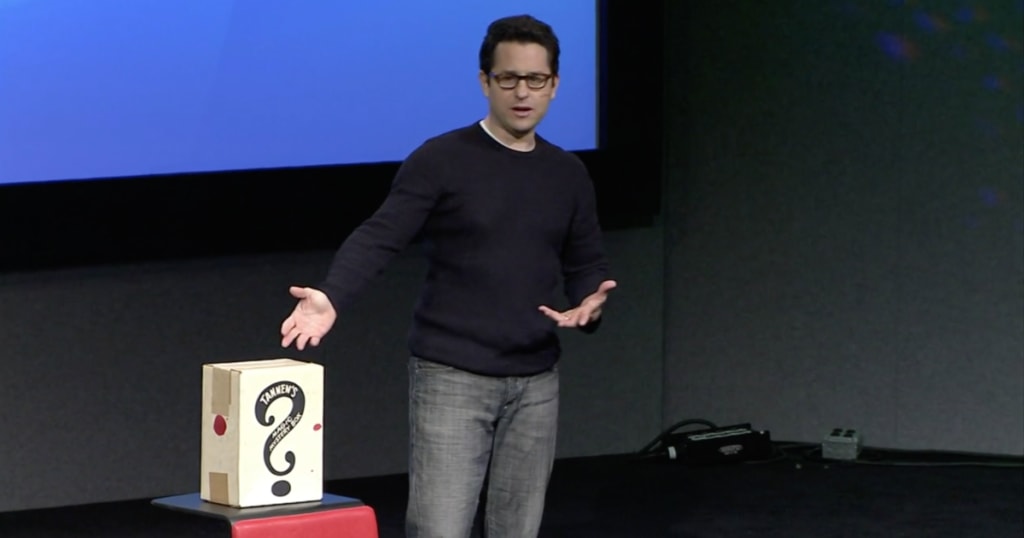
The biggest challenge for any movie is getting the audience to care. You have to draw the audience into the story and the lives of the characters before the film can have any real meaning. This doesn’t mean that the audience has to love or even like the characters, but they have to be invested or inquisitive about the characters and their world. An easy way to draw people in is to raise a question about the world, or, to open a mystery box.
What is a Mystery Box?
A mystery box is a lightsaber. Or a cardboard box. Or a big red button. A mystery box can be virtually anything, even a character or an intangible detail about them. A mystery box, in simplified terms, is a story object or idea that is meant to grab the audience’s attention via the withholding of information. More or less, it’s a promise that you see X but that you don’t know what X exactly or why it’s so important, but the story will fill you in on those details later.
Mystery Box vs MacGuffin
Before jumping further into the often chaotic world of mystery boxes, let’s take a moment to differentiate them from the word “MacGuffin“. I often see this word tossed around like it’s a filthy object that is only indicative of “bad” stories. This couldn’t be further from the truth. The fact of the matter is that most stories with a plot have a MacGuffin. Simply put, a MacGuffin is an object that jump-starts the plot. To put it in slightly more abstract terms, but terms better put, take Alfred Hitchcock‘s definition of it:
It might be a Scottish name, taken from a story about two men on a train. One man says, ‘What’s that package up there in the baggage rack?’ And the other answers, ‘Oh, that’s a MacGuffin’. The first one asks, ‘What’s a MacGuffin?’ ‘Well,’ the other man says, ‘it’s an apparatus for trapping lions in the Scottish Highlands.’ The first man says, ‘But there are no lions in the Scottish Highlands,’ and the other one answers, ‘Well then, that’s no MacGuffin!’ So you see that a MacGuffin is actually nothing at all.
Famous MacGuffins
Still not sure what a MacGuffin is? Here’s a list of some popular ones.
- The Literal Box at the end of Se7en
- The Maltese Falcon
- The Lost Ark
- The Tesseract (Or any of the other 5 Infinity Stones)
- The Horcruxes
- R2-D2
- Marcellus Wallace’s Briefcase in Pulp Fiction
- The Briefcase in Fargo
- The Briefcase in — you know what? — pretty much any briefcase that appears in a movie…
Further Defining MacGuffins
The key difference between a MacGuffin and a Mystery Box is that the MacGuffin is extremely consequential to the plot but often inconsequential to the story. In other words, the MacGuffin triggers external changes instead of internal changes. While Mystery Boxes can alter the plot at certain points, they aren’t the crux of the whole affair. Different writers and directors will disagree upon how much the audience or the characters should invest in the MacGuffin, but its role remains the same. A MacGuffin drives the plot forward.
When to Use a Mystery Box
Whereas MacGuffins help center and shift the plot, Mystery Boxes can be an effective way to signal changes within the character and force them to make choices. Take the One Ring, for example. At first thought, it’s easy to look at the One Ring as a MacGuffin. It’s the thing that Sauron and the Fellowship are after, right? Wrong.
The true MacGuffin of The Lord of the Rings is the fires in Mt. Doom. Frodo and co are after the destruction of something they already have. The Ring instead acts as a mystery box, constantly letting slip secrets of its own and unraveling the desires of Boromir, Frodo, Sam, and Gollum’s hearts. Whenever the ring is on screen, it causes one of the characters to confront someone or, most often, something within themselves.
Or take the cardboard box at the end of Se7en for example. Right before the climax, we’re introduced to a mysterious package. This package has had no influence on the story so far, yet its appearance changes everything. When the box is opened, Detective Mills is faced with his most difficult choice and he is definitively changed as a character. The plot doesn’t change; Mills is still after John Doe, but his’ motivation is now changed entirely.
Same as MacGuffins, Mystery Boxes are not inherently evil. To understand how they can be used for good and for bad, I’m going to dive into two directors who use Mystery Boxes very prominently, Christopher Nolan and J.J. Abrams.
...
READ THE REST OF THE ARTICLE ON OUR WEBSITE: https://moviebabble.com/2020/08/02/whats-in-the-box-analyzing-the-mystery-box/
About the Creator
MovieBabble
The Casual Way to Discuss Movies! Head over to moviebabble.com to see all our content!
Keep reading
More stories from MovieBabble and writers in Geeks and other communities.
‘Yes, God, Yes’ is a Thoughtful and Often Hilarious Interrogation of Blind Faith
I grew up in a Catholic household, went to Catholic high school, and went to church every Sunday. So yes, Catholic guilt is coursing through my body every waking moment. Seriously, the amount of guilt I randomly feel while tending to everyday tasks probably isn’t okay, but that’s a conversation for another time (preferably a time when a therapist is around.) Needless to say, upon seeing Natalia Dyer’s Alice struggle with the most inoffensive of curiosities in Yes, God, Yes, I immediately felt a kinship with her.
By MovieBabble6 years ago in Geeks
The Politics of Playing Dress-Up
Well, to start off I'd like to say a happy world book day to all who celebrate. I know I haven't really posted anything on my socials about it but I'm not a jubilant kind of person. I lay low most of the time. Let's start off with a popular anecdote from the vaults...
By Annie Kapur4 days ago in Geeks
Book Review: "Word Watching" by Julian Burnside
There's something about words that takes me into a whole new world. I love the idea of pouring over a word's meaning, etymology and how it came to be used - the more obscure the better. Our narrator describes himself as an 'amateur philologist' and yet, goes into fanatastic depth about individual words and phrases, showing us the backstories of how they've been used socially and culturally, as idioms and in their true forms. With the insertion of the OED and Dr Samuel Johnson's dictionary plus many more, he manages to show us how words have been defined differently over time. There is a lot in language to take issue with therefore. If you've read the book then you'll understand why I wrote 'issue' in italics.
By Annie Kapur7 days ago in Geeks



Comments
There are no comments for this story
Be the first to respond and start the conversation.