
What If Comics Had Never Existed?
Silent Panels, Imagined Worlds That Vanish

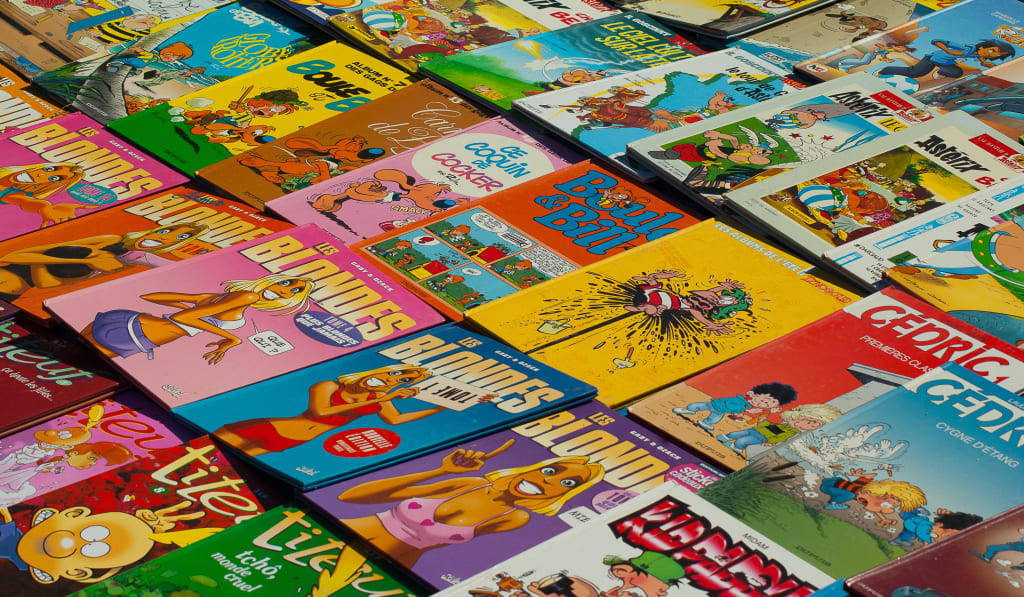
Imagining a world without comics is more than an exercise in cultural nostalgia; it is an opportunity to examine how a single form of expression shaped cognition, culture, and social life. Comics sit at the intersection of image and language, asking readers to perform mental leaps between static frames. Without that particular way of combining pictures and words, many familiar cultural practices and social tools would look different — sometimes subtly, sometimes radically.
At the level of cognition, comics teach a mode of thinking that is distinct from both prose and film. Reading a comic requires active construction: the reader interprets visual cues, infers transitions across gutters, and assembles a temporal sequence from discrete moments. This practice builds skills in causal reasoning, narrative inference, and multimodal integration. If comics had never developed as a medium, educators and communicators would likely have leaned more heavily on other approaches — sequential photography, film strips, or text-heavy expositions — to accomplish what comics do cheaply and accessibly. Some of these alternatives could approximate the cognitive benefits, but the mixture of economy and intimacy that comics provide would be missing for many learners, particularly those who benefit from visual scaffolding.
In education and public communication, the absence of comics would reshape strategies for outreach. Graphic formats have been effective for teaching complex subjects, from basic literacy to public health information. Their ability to condense explanation and model perspective-taking has made them a go-to method where clarity and engagement matter. Without comics, campaigns aimed at low-literacy populations, multilingual communities, or neurodivergent learners would have fewer tailored tools. Other media—animated videos, illustrated pamphlets, or live demonstrations—could fill some gaps, but they often require more resources and infrastructure, reducing scalability and immediacy.
Culturally, comics have functioned as a democratizing platform for voices outside mainstream publishing. The low barriers to entry historically afforded by zines, webcomics, and small presses enabled marginalized creators to tell personal and political stories that might otherwise remain unheard. Without this channel, some narratives would either remain untold or find homes in forms that are less visually immediate, potentially limiting their reach. Documentary film and memoir could absorb some of this expression, but cost and distribution constraints would likely mean fewer diverse stories circulating in public discourse.
The ripple effects extend into popular culture. Superheroes, long-form serialized storytelling, manga’s global influence, and the distinctive visual grammars of bandes dessinées have all fed into cinema, television, and gaming. Many blockbuster films, streaming series, and transmedia franchises originate in or borrow heavily from graphic narratives. Absent comics, the shape of contemporary blockbuster storytelling might have skewed differently — perhaps privileging cinematic and literary traditions without the dense, panel-driven visual motifs that comics contributed. Iconic character archetypes and symbolic visual shorthand might have evolved via other forms, but the specific aesthetic economy of comics — the way a single panel can convey backstory, tone, and action simultaneously — would be less prominent.
Politics and dissent would also lose a nimble ally. Throughout modern history, illustrated satire, underground comics, and protest posters have communicated subversive ideas quickly and memorably, often slipping past censorship or galvanizing movements through striking imagery. In a comics-less world, activists might rely more on photography, slogans, or oral culture. These can be powerful, yet they offer different affordances: photographs tend to assert realism in ways that can be constrained by evidentiary standards, while comics’ capacity for allegory and controlled exaggeration lets creators explore taboo subjects with protective distance.
Therapeutically and clinically, the absence of comics would subtract a unique medium for processing trauma and illness. Graphic memoirs and comics-based interventions allow people to externalize painful experiences in a concrete, visual way that can circumvent defenses and make internal states communicable. While narrative therapy and expressive arts modalities could still operate, the distinct concatenation of panels and text — which permits both sequential re-enactment and symbolic compression — would be harder to replicate. Patients and practitioners might rely on narrative journals, narrative film, or collage art, but these alternatives offer different pacing and afford different templates for self-representation.
Technologically, the rise of webcomics catalyzed new forms of creator-audience interaction and distribution. Without a tradition of sequential art migrating to the web, social media’s visual meme culture might have developed along alternative lines, perhaps emphasizing photographic memes or short-form video earlier and more intensely. The modern economy of independent digital creators would look different; many artists who found audiences through serialized online comics might have pursued illustration, animation, or blogging instead, changing the contours of internet subcultures and the kinds of micro-communities that form around serialized narratives.
Economically, the publishing industry would have a different topology. Comic shops, conventions, and the merchandising ecosystem that grew around comics and their adaptations contribute substantial cultural and commercial value. Without comics, some of that commerce would shift into neighboring industries—novels, cinema tie-ins, or toy lines derived from other sources—but the particular economies built on serialized, collectible issues and fan communities would be diminished. Conventions might still exist around other fandoms, but the rituals and economies specifically shaped by comic book culture — cosplay rooted in panel designs, fanzines inspired by visual storytelling — would be altered.
Yet it is important to acknowledge human adaptability. People have long combined images and text in many ways: illuminated manuscripts, political cartoons, illustrated novels, and picture books all attest to a persistent drive to merge modalities. If comics had never emerged as a distinct form, alternative hybrid formats might have developed to fill unmet needs. The vacuum left by absent comics would likely be occupied by other visual-narrative practices, though their trajectories would depend on technological, economic, and cultural factors unique to each context.
Finally, consider the symbolic and imaginative deficit. Comics do more than teach or persuade; they cultivate a particular species of imagination. They invite readers to inhabit fractured time, to practice closure, and to enjoy the compact drama of juxtaposed images. That habit of mind has shaped creators and audiences alike, contributing to creative industries, educational practices, and forms of empathy that ripple outward. Without comics, some paths of aesthetic development and personal discovery would be less trodden.
In sum, a world without comics would not be bereft of stories, images, or humor; humans would still find ways to narrate and illustrate. But the specific cognitive practices, cultural avenues for marginalized voices, modes of political critique, therapeutic tools, and stylistic innovations that flowed from the existence of comics would be significantly different. The medium’s absence would result in a cultural landscape that is recognizable in many ways but missing certain textures — the snapped tension between panels, the quietness of a speechless moment, the small ritual of following a serialized page each week. Those textures matter. They have shaped not just entertainment, but how communities form, how ideas spread, and how individuals learn to see one another.
About the Creator
Ben Alley
Noodle obsessed. Books lover. Cinema fan.
A Knight of the Seven Kingdoms Series Review (Season 1)
As one of the biggest properties in fantasy, A Song of Ice and Fire remains immensely popular with audiences. After reaching far into the past with House of the Dragon, a second spin-off was on the cards. A Knight of the Seven Kingdoms serves up a bite-sized slice of action and drama, but it still claims a spot among the best small-screen titles.
By Robert Cain4 days ago in Geeks
Squatty Potty
How a small footstool sparked a global conversation about posture, digestion, and modern health In the world of wellness products, few items have sparked as much curiosity as the Squatty Potty. At first glance, it looks like a simple plastic or bamboo stool designed to fit around the base of a toilet. But behind that straightforward design lies a broader conversation about posture, digestive health, and how modern lifestyles have changed even the most basic human habits. While it may seem like an unconventional topic, bathroom posture has become a legitimate subject of interest in health circles. The Squatty Potty positioned itself not as a gimmick, but as a tool rooted in anatomy. The Idea Behind the Design The concept is based on the natural squatting position humans historically used for bowel movements. In many parts of the world, squat toilets remain common. Advocates of this posture argue that squatting straightens the rectum and reduces strain. Modern Western toilets, however, place the body in a seated position, which can create an angle that may require more effort during elimination. The Squatty Potty elevates the feet while sitting, mimicking a squatting posture without requiring a complete change in toilet style. Supporters suggest that this position can: Reduce straining Promote more complete elimination Help with occasional constipation Decrease pressure associated with hemorrhoids Though experiences vary, many users report improved comfort after adjusting their posture. From Household Product to Cultural Phenomenon The Squatty Potty gained widespread attention after appearing on the television show Shark Tank. Its founders presented the product as a simple yet practical solution to a universal problem. The appearance helped introduce the brand to a national audience and significantly boosted sales. Later, a humorous viral marketing campaign featuring a unicorn further propelled the product into mainstream conversation. The advertisement combined comedy with anatomical explanation, making an otherwise awkward topic more approachable. What set the Squatty Potty apart was its willingness to address a topic that many people are uncomfortable discussing. By combining lighthearted branding with educational messaging, the company turned a bathroom accessory into a widely recognized name. The Science Behind Squatting Medical professionals have long understood that body positioning affects bowel movements. When squatting, the puborectalis muscle relaxes more fully, potentially straightening the pathway for elimination. In a seated posture, this muscle may create a slight bend, requiring additional effort. While some studies suggest that squatting can reduce strain and time spent on the toilet, it’s important to note that results are individual. The Squatty Potty does not treat medical conditions, and people experiencing chronic digestive issues should consult healthcare providers. That said, posture adjustments are a low-risk lifestyle change. For many, it represents a simple experiment in comfort rather than a medical intervention. Why Bathroom Habits Matter Digestive health plays a central role in overall well-being. Constipation and straining are common concerns, often influenced by diet, hydration, stress, and physical activity. While fiber intake and water consumption remain foundational solutions, posture can be another factor. In recent years, there has been a growing openness about gut health. Conversations once considered private are now part of broader wellness discussions. Products like the Squatty Potty reflect this cultural shift—acknowledging that digestive comfort deserves attention without embarrassment. Practical Considerations Before Buying For those considering a Squatty Potty, several versions are available, including adjustable models and materials ranging from plastic to bamboo. The core function remains the same: elevating the feet to achieve a more natural angle. Before purchasing, consumers may want to consider: Bathroom space and storage Adjustable height preferences Ease of cleaning Household usage needs Some people choose to replicate the concept temporarily using a small step stool to determine whether the posture feels beneficial before investing in a branded product. Addressing Common Misconceptions One misconception is that a footstool alone will resolve all digestive issues. In reality, bowel health is multifaceted. Diet, hydration, exercise, stress levels, and underlying conditions all contribute to regularity. Another misconception is that using such a product is unnecessary or exaggerated. For some individuals, it may indeed feel unnecessary. For others, it can significantly improve comfort. Like many wellness tools, its effectiveness depends on personal experience. Importantly, there is no harm in adjusting posture in a safe and stable manner. The key is to use a sturdy platform and avoid instability. Cultural Perspectives on Squatting Globally, squatting is far from unusual. In many countries across Asia, Africa, and parts of Europe, squat toilets remain standard. In those contexts, the body’s natural posture is maintained without additional accessories. The popularity of the Squatty Potty in Western markets highlights how modern infrastructure sometimes diverges from traditional human movement patterns. It also reflects how innovation can bridge that gap without requiring structural changes. Rather than replacing existing toilets, the product adapts to them—offering a compromise between modern convenience and anatomical alignment. A Broader Reflection on Everyday Design The success of the Squatty Potty underscores how everyday objects can influence health and comfort. Often, the most impactful innovations are not complex technologies but simple design adjustments. By rethinking posture in one of life’s most routine moments, the product opened a conversation about how design shapes daily experiences. Whether one chooses to use it or not, the discussion itself has encouraged greater awareness of digestive health. In a culture increasingly focused on wellness, even small changes can feel meaningful. The Squatty Potty may not be revolutionary in appearance, but its message is clear: comfort and function matter—even in the bathroom. Ultimately, the decision to use a footstool comes down to personal preference. For some, it’s a helpful addition. For others, it’s unnecessary. What remains consistent is the reminder that health sometimes begins with the simplest adjustments.
By Saboor Brohi 6 days ago in Geeks


Comments
There are no comments for this story
Be the first to respond and start the conversation.