
What Does Outer Space Smell Like?
Aromatic journey through the cosmos

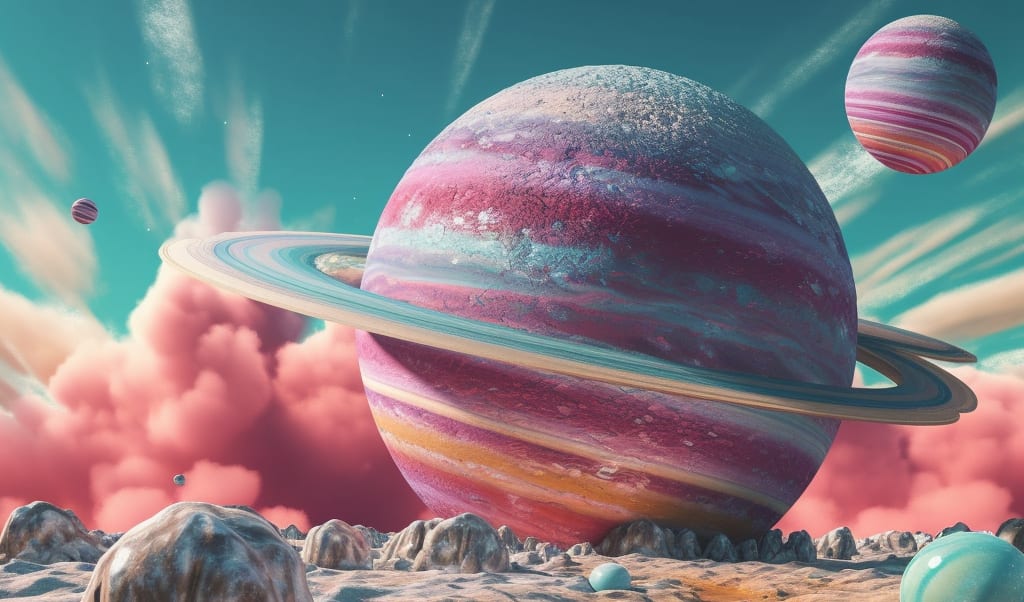
Have you ever wondered what the universe smells like?
It's a question that might seem outlandish at first, but believe it or not, the vacuum of space has a distinct scent. While we often associate smells with things we encounter on Earth, such as flowers or freshly baked cookies, the idea of scent in the vastness of space might seem puzzling. However, astronauts who have ventured outside the confines of our planet have reported unique olfactory experiences upon their return. So, let's embark on an aromatic journey through the cosmos and uncover the fascinating world of outer space scents.
The Moon's Mysterious Gunpowder Stink
One intriguing example of celestial scent is the moon's distinctive smell. During the Apollo missions, astronauts reported that the moon's odor resembled that of spent gunpowder. This description was puzzling because the composition of lunar dust, known as regolith, is quite different from gunpowder. Regolith primarily consists of silicon dioxide glass, created through billions of years of meteor impacts, along with iron, calcium, and magnesium. Gunpowder, on the other hand, is a mixture of nitrocellulose and nitroglycerin.
The exact reason for this similarity in smell remains unknown, but it could suggest that moon dust is chemically active. Various theories attempt to explain how the smell occurs. One hypothesis is the "desert rain effect," which attributes the smell to molecules trapped in the dry moon dust being activated when they come into contact with the moist air inside the lunar module. Another theory suggests that solar winds, carrying hydrogen, helium, and other ions, dislodge particles from the moon's surface, and when these particles come in contact with the warm air inside the module, they evaporate, creating the distinct aroma.
Planetary Aromas: Exploring the Solar System
As we venture deeper into our olfactory tour of the solar system, we arrive at Uranus, a planet known for its unusual scent. While its upper atmosphere, predominantly composed of hydrogen, is odorless, things take a smelly turn as we approach its surface. The presence of hydrogen sulfide becomes more pronounced, giving rise to the unmistakable stench of rotten eggs.
The reason behind Uranus's pungent aroma lies in the composition of its cloud tops. Hydrogen sulfide, the gas responsible for the foul smell of rotten eggs and human flatulence, is prevalent in this region. As one descends through the planet's atmosphere, the levels of methane and ammonia also increase, contributing to a scent that might be reminiscent of a public restroom.
Moving farther from the sun, we reach Neptune, the eighth and farthest planet in our solar system. Neptune's atmosphere, which is about 17 times the mass of Earth, consists mainly of hydrogen and helium. Unlike its fragrant counterpart, Uranus, Neptune doesn't possess a strong odor. With most compounds frozen in its atmosphere, the predominant elements present are hydrogen and helium, both of which are odorless.
While the planets offer an olfactory adventure, it's worth mentioning a few other intriguing scents in our cosmic exploration. Dwarf planet Pluto, with its near-vacuum environment, contains nitrogen, methane, and carbon monoxide. Although deadly, these compounds do not produce any discernible odor. One of Saturn's moons, Enceladus, covered in ice, harbors an underground ocean of liquid saltwater. Recent discoveries indicate that plumes of methanol are ejected from its surface, suggesting a potential martini-like aroma.
In the vast expanse of space, celestial bodies such as asteroids often contain formaldehyde and cyanide. While these compounds may not sound appealing, their presence could give rise to scents reminiscent of pickles and marzipan, creating an unexpected juxtaposition between the celestial and the culinary.
Beyond our solar system, the center of our galaxy harbors a dust cloud known as Sagittarius B2. Scientists have identified a substance called ethyl formate within this cloud, responsible for the flavor of raspberries and the smell of rum. It's fascinating to imagine the cosmic bouquet that exists within the vast reaches of space.
Conclusion
As we conclude our aromatic journey through the solar system, we've discovered that the universe is not only a visual spectacle but also a fragrant one. Each celestial body possesses its own unique scent, from the moon's gunpowder stink to the putrid odor of Uranus. Whether it's the result of chemical interactions or the presence of specific compounds, the scents of the cosmos add another layer of intrigue to our exploration of space.
So, the next time you gaze up at the night sky, remember that the universe is not only a feast for the eyes but also a symphony of smells waiting to be experienced. From the salty gunpowder of Mercury to the burnt match and rotten egg aroma of Venus, the olfactory delights of our solar system remind us of the incredible diversity and complexity of the cosmos.
About the Creator
The Rachels - 2025
Much to my surprise, I have kept a list of the films I‘ve seen this year. I daresay it isn’t complete. There will be films that snuck in on a late night in front of the TV that I would’ve forgotten to note. Or others, that I went to watch at the cinema, but then had a red wine and promptly forgotten about. But it’s not a bad approximation of the films I’ve seen this year. In total, there are 53 films listed, so an average of one a week and one for good luck.
By Rachel Robbins25 days ago in Geeks
28 Years Later: The Bone Temple Review
The Bone Temple Review: A Wild, Gruesome, Surprisingly Solid Sequel Well… That Was Not What I Expected Twist my eyebrows and mail me to Alaska, because The Bone Temple was absolutely not the experience I thought I was walking into.
By Bella Anderson5 days ago in Geeks


Comments
There are no comments for this story
Be the first to respond and start the conversation.