
What are feedback musical instruments?
Extending the traditional musical instruments

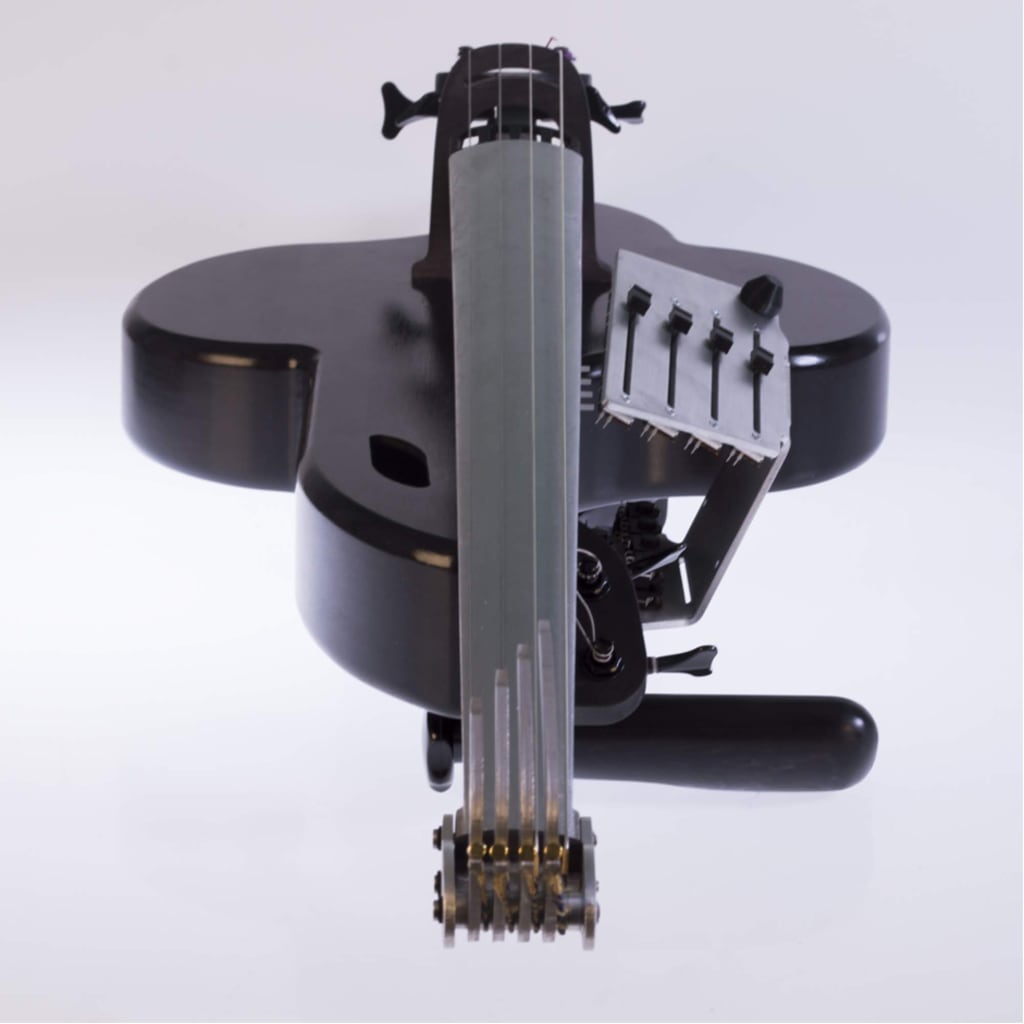
What are feedback musical instruments?
Feedback musical instruments are a fascinating category of musical instruments that offer a unique and interactive playing experience. In this blog post, we will explore what feedback musical instruments are, how they work, and their significance in music creation.
Feedback occurs when sound from an amplifier or speaker is picked up by a microphone, creating a loop of sound that is continuously amplified and fed back into the system. Feedback can be an unwanted occurrence in traditional audio setups, but in the context of feedback musical instruments, it becomes a deliberate and creative technique.
In recent years, feedback instruments have captured the imagination of musicians and composers alike. They offer a captivating and dynamic playing experience, where the instrument itself takes on a life of its own, exhibiting stimulating uncontrollability and maximum dynamic complexity (Kiefer et al., 2020).
The development of feedback instruments has revolutionized the way we engage with musical design and musicianship. These instruments transcend the boundaries of traditional sound production, pushing the limits of sonic exploration. By harnessing the power of feedback loops, performers can manipulate and shape the instrument's output in real-time, blurring the lines between performer and instrument.
The challenge lies in finding the delicate balance between control and chaos. Keeping the instrument within the optimum zone of dynamic complexity without crossing into saturated feedback requires skill and finesse. Researchers and instrument designers have devoted considerable efforts to strike this balance, ensuring that feedback instruments remain playable and musically expressive (Kiefer et al., 2020).
The concept of feedback on musical instruments emerged after the exploration of actuated musical instruments, which blur the boundaries between the physical and virtual elements of musical interfaces. These instruments combine the tactile qualities of physical instruments with the real-time control of computer systems, providing a unique and tangible musical experience (Overholt et al., 2011).
Feedback instruments have found their place across various musical genres and contexts. From experimental and avant-garde music to contemporary classical compositions and electronic music, these instruments have pushed the boundaries of sonic possibilities. They enable musicians and composers to challenge conventions, explore new sonic territories, and create immersive and captivating musical experiences.
Beyond their artistic value, feedback instruments have significant implications for the study of music perception and acoustics. They shed light on the intricate interactions between the performer, instrument, and sound, offering insights into the complex nature of musical experiences. By examining these relationships, researchers gain a deeper understanding of how we perceive and engage with music (Berdahl et al., 2012).
Historical Overview
The 1960s marked a significant turning point in the realm of feedback systems, as they gained momentum alongside the burgeoning fields of cybernetics and system theory. These epistemological approaches, which originated in the 1940s, provided a conceptual framework for understanding and harnessing feedback as a powerful tool in music (Sanfilippo & Valle, 2013). Feedback, once considered an unwanted occurrence in traditional audio setups, began to be recognized as a deliberate and creative technique in the context of musical instruments.
In the 1980s, the introduction of the Musical Instrument Digital Interface (MIDI) propelled feedback-controlled acoustic musical instruments to new heights (Berdahl et al., 2012). MIDI revolutionized the integration of digital and analog technologies, opening up vast possibilities for incorporating feedback systems into traditional acoustic instruments. This breakthrough enabled musicians to explore novel sound manipulation techniques, expand their sonic palette, and delve into the realm of interactive and responsive musical performances.
The convergence of cybernetics, system theory, and MIDI technology laid the foundation for groundbreaking approaches to instrument design and performance. It gave rise to a vibrant landscape of feedback-controlled acoustic instruments that have since become an integral part of various musical genres and contexts. These instruments push the boundaries of traditional musical expression, offering musicians unparalleled control and exploration of sound.
The development of feedback instruments has sparked a reimagining of instrument design and a new dimension of musicianship. These instruments possess a unique autonomy and an invigorating sense of unpredictability, taking on a "life of their own" (Kiefer et al., 2020). The most captivating musical qualities of these instruments emerge when they achieve maximum dynamic complexity without succumbing to saturated feedback. Maintaining this delicate balance is a significant challenge, prompting extensive research to manage and preserve this behavior, ensuring that feedback instruments remain playable and musically expressive.
The journey of feedback instruments has not only advanced the realm of musical creation and performance but also offered valuable insights into the intricate relationships between performers, instruments, and sound. These instruments have transcended their artistic value and have become a subject of study in music perception and acoustics. They shed light on the complex interplay that shapes our musical experiences, providing researchers with deeper understanding and new perspectives.
Unleashing the Creative Potential
The advent of feedback control systems has revolutionized the way musical instruments are controlled, granting musicians a new level of creative agency as the system itself drives and influences the instrument's behavior (Berdahl et al., 2012). This innovative approach has unlocked fresh possibilities for sonic exploration and opened doors to uncharted musical territories.
The quest for feedback on musical instruments was born out of a comprehensive exploration of "actuated musical instruments" that blur the boundaries between physical and virtual elements of musical interfaces (Overholt et al., 2011). These instruments embody the virtual qualities of physical instruments but are controlled in real-time by a computer, resulting in tangible yet digitally augmented musical experiences. This merging of the physical and virtual realms has given rise to a rich landscape of feedback instruments that captivate musicians and audiences alike.
Feedback instruments have found their place across a wide array of genres and musical contexts, spanning from the experimental and avant-garde to contemporary classical compositions and electronic music. They provide musicians and composers with a powerful platform to challenge conventions, push boundaries, and embark on sonic explorations that defy traditional musical norms. By embracing the unique capabilities of feedback, artists can create immersive sonic landscapes and forge entirely new sonic vocabularies.
In addition to their artistic value, feedback instruments offer valuable insights into the study of music perception and acoustics. They illuminate the intricate interactions among performers, instruments, and sound, shedding light on the complex relationship that shapes our musical experiences. Through their distinct characteristics and behaviors, feedback instruments contribute to the ever-evolving landscape of musical exploration and innovation, inspiring researchers and musicians to delve deeper into the mysteries of musical expression.
Advantages of Digital Musical Instruments
Digital musical instruments (DMIs) have revolutionized the music industry, offering musicians a myriad of advantages that have contributed to their widespread use and popularity in modern music production and performance. Let's explore the key benefits of digital musical instruments:
1. Limitless Versatility: DMIs provide musicians with unparalleled versatility and flexibility in sound generation. With a vast library of sounds and presets at their fingertips, musicians can create an extensive range of tones, timbres, and textures. Furthermore, the ability to program and customize sounds according to individual preferences empowers artists to shape their sonic identity (Berdahl et al., 2012).
2. Enhanced Portability: Digital musical instruments excel in portability, offering a lightweight and compact alternative to their acoustic counterparts. Musicians can effortlessly transport their instruments to performances, rehearsals, or studio sessions, facilitating seamless creativity on the go (Berdahl et al., 2012).
3. Seamless Integration with Technology: DMIs seamlessly integrate with modern technology, forging a powerful alliance between musicians and their digital tools. Through connections to computers, MIDI controllers, synthesizers, and digital audio workstations (DAWs), musicians can unlock a world of possibilities for recording, editing, and manipulating sounds. This integration also enables seamless collaboration with other software and hardware devices, expanding the horizons of creative expression (Berdahl et al., 2012).
4. Boundless Sound Manipulation and Effects: DMIs come equipped with built-in effects processors and sound manipulation tools, granting musicians the freedom to experiment with an array of audio effects. From reverb and delay to modulation and pitch-shifting, artists can embark on captivating sound design journeys and sonic explorations (Berdahl et al., 2012).
5. Effortless Recording and Sampling: Many digital instruments boast built-in recording and sampling capabilities, simplifying the process of capturing performances and musical ideas directly within the instrument. This eliminates the need for external recording equipment and streamlines the creation of loops for captivating live performances (Berdahl et al., 2012).
6. Accessibility and Affordability: Digital musical instruments offer enhanced accessibility and affordability compared to their acoustic counterparts. With a wide range of price points, DMIs cater to musicians with diverse budgets, making professional-quality instruments more attainable. Additionally, the availability of educational resources, tutorials, and online communities fosters learning and skill development, nurturing a vibrant community of digital musicians (Berdahl et al., 2012).
7. Performance Enhancements: DMIs elevate expressivity and playability, providing musicians with performance-enhancing features. Velocity sensitivity, aftertouch capabilities, and assignable controls allow artists to infuse their performances with nuanced dynamics, mirroring the subtleties of acoustic instruments. These enhancements enable musicians to deliver captivating and emotive performances (Berdahl et al., 2012).
8. Seamless Storage and Organization: Digital instruments offer effortless storage and organization of sounds, presets, and settings. Musicians can save and recall their preferred configurations, facilitating swift transitions between different setups or recalling specific sounds for performances or recordings. This streamlined workflow enhances efficiency and creativity (Berdahl et al., 2012).
Exploring the Spectrum: Types of Feedback in Sound
In the realm of sound, various types of feedback can manifest, each with its distinct characteristics and implications. Let's delve into some common types:
1. Acoustic Feedback: Acoustic feedback, also known as audio feedback, arises when sound from a loudspeaker is captured by a microphone, subsequently re-amplified, and fed back into the system. This loop can result in an undesirable high-pitched, squealing noise. Techniques such as adjusting microphone and speaker placement or utilizing feedback suppression methods are employed to control and mitigate this type of feedback.
2. Musical Feedback: Musicians intentionally harness musical feedback to shape and transform the sound of their instruments or vocals. By strategically positioning their instruments near amplifiers or loudspeakers, a loop is created, where the sound from the speaker is captured, re-amplified, and yields distinctive, sometimes unpredictable sonic effects.
3. Delay/Reverb Feedback: Delay and reverb effects can generate feedback-like sounds when the delayed or reverberated sound is captured and processed repeatedly. This results in cascading echoes or a sustained ambient soundscape. This creative technique adds depth and texture to audio productions.
4. Distortion/Overdrive Feedback: In electric guitars and other instruments utilizing distortion or overdrive effects, pushing the signal to its limits generates feedback-like tones. This technique produces harmonic overtones and sustained feedback sounds, epitomizing expressive and dynamic elements in genres like rock and blues.
5. Microphone Feedback: Microphone feedback occurs when the sound emitted by a loudspeaker is captured by a microphone, initiating a loop that manifests as a shrill, screeching noise. This unintentional occurrence can be mitigated by adjusting microphone positioning, implementing sound isolation methods, or utilizing feedback suppressors.
6. Software-Based Feedback: In the realm of digital audio production, software-based feedback can be simulated using plugins and effects. These tools enable musicians and producers to generate artificial feedback-like sounds, manipulate them, and seamlessly incorporate them into their compositions.
7. Environmental Feedback: Environmental feedback encompasses the interplay between sound and the surrounding environment. It encompasses natural echoes, reverberation, and other acoustic phenomena that emerge within specific spaces.
It's important to acknowledge that while some forms of feedback can be intentionally employed for artistic purposes, others may prove undesirable or problematic in specific contexts. Skillful management and control of feedback are crucial to ensure a desirable and controlled sound experience.
Furthermore, within the realm of musical instruments, feedback can be categorized into two types: desirable feedback and unwanted feedback. Desirable feedback contributes desirable characteristics to the instrument's sound, such as intriguing and unpredictable musical dynamics. On the other hand, unwanted feedback diminishes instrument responsiveness, often accompanied by dominant resonant frequencies and harmonics (Kiefer et al., 2020).
Exploring the World of Feedback Instruments
In the realm of feedback instruments, numerous innovative creations have emerged from labs dedicated to their design and development. Some examples include the Halldorophone, the Feedback Cello, the Threnoscope, the Feedback Double Bass, the Feral Cello, the Overtone Fiddle, Cymbals with a Handheld Feedback Device, the Thranaphone, the Feedback Tuba, the Mouthpiece Microphone, the Feedback Lapsteel, the Feedback Resonance Guitar, the Electromagnetically Prepared Piano, and the Electromagnetically Sustained Rhodes Piano. In this section, we will delve into a selection of significant feedback musical instruments that have made a notable impact on the world of music and sonic experimentation.
1. Hallodorophone

The Halldorophone is an innovative electroacoustic string instrument created by Halldór Úlfarsson. It employs positive feedback as a crucial component in its sound generation process. The instrument utilizes a microphone to capture sound, which is then transmitted to a speaker and subsequently re-detected by the microphone. This feedback loop creates a unique sonic environment and allows for the exploration of rich and complex textures.
By implementing positive feedback, the Halldorophone offers musicians a means to interact with and shape the instrument's sound in real-time. The feedback loop amplifies and sustains certain frequencies while attenuating others, resulting in dynamic and evolving tones. This creates a distinctive character and opens up possibilities for experimental and improvisational performances.
The Halldorophone's design demonstrates an innovative approach to incorporating feedback as an integral part of the instrument's sonic palette. It pushes the boundaries of traditional string instruments, offering musicians new avenues for sonic exploration and self-expression. The instrument's unique feedback-based sound generation process contributes to its distinctive and captivating sound, making it a compelling choice for experimental musicians and sound artists (Úlfarsson, 2018).
2. Feedback Cello
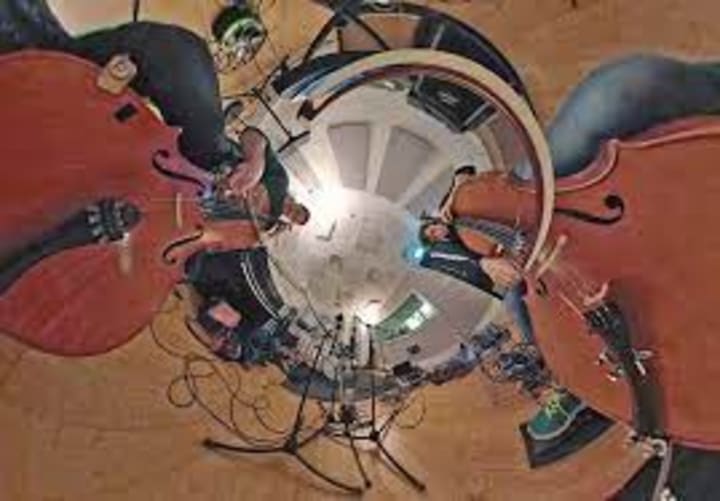
The Feedback Cello is an electroacoustic instrument that emerged from a collaboration between Alice Eldridge, Halldór Úlfarsson, and Chris Kiefer, building upon the design principles of the Halldorophone. It is an augmentation of the traditional acoustic cello, incorporating feedback techniques to create a unique sonic experience.
The Feedback Cello retains the physical characteristics and playing techniques of a typical acoustic cello but incorporates additional components such as speakers, transducers, and analog/digital processing. These modifications transform the cello into a self-resonating feedback system, allowing for dynamic control over each individual string. Unlike traditional cello playing, the feedback cello is played by activating resonant forces within the instrument itself.
The instrument relies on the use of pickups to capture the sound from the strings, which is then processed and sent to a speaker and transducers distributed throughout the cello's body. This process creates a feedback loop that generates rich and complex sounds, often characterized by sustained tones, harmonics, and controlled feedback.
The Feedback Cello offers musicians a unique and experimental approach to cello performance, expanding the sonic possibilities beyond traditional acoustic sounds. The instrument allows for real-time manipulation of feedback, enabling performers to explore a wide range of timbres and textures. The website provided offers detailed instructions and information for those interested in constructing their own feedback cello, providing a comprehensive guide to the required components and assembly process (What’s Happening in the World of Feedback Instruments? — Emute Lab, n.d.; Eldridge & Kiefer, n.d., FEEDBACK CELL, n.d.)
3. Feedback Double Bass
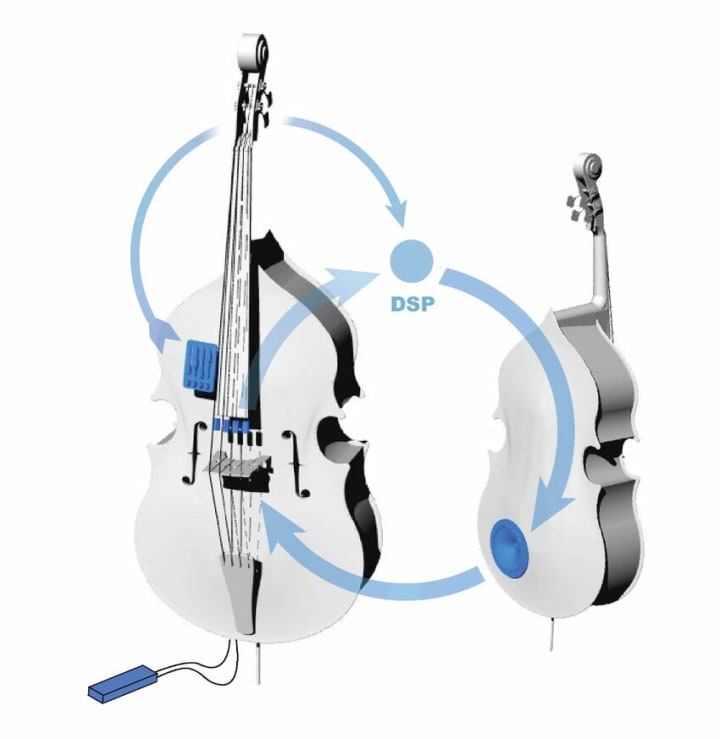
The Feedback Double Bass is an innovative instrument that builds upon the traditional acoustic double bass by integrating positive feedback as a central element. Developed by Halldór Úlfarsson in collaboration with Adam Pultz, this instrument expands the sonic capabilities of the double bass and introduces new possibilities for musical expression.
By utilizing positive feedback, the Feedback Double Bass creates a self-sustaining sound system that enhances and transforms the acoustic properties of the instrument. The exact details of the design and implementation of the Feedback Double Bass may vary, but the core principle involves capturing and amplifying the sound produced by the double bass through a combination of pickups, speakers, and signal processing.
The positive feedback loop is established when the sound captured by the pickups is fed back into the instrument through the speakers, generating a continuous cycle of sound reinforcement. This process allows the musician to explore a wide range of tonal colors and textures, as the feedback interactions create resonances, harmonics, and sustained tones that can be manipulated and controlled.
The Feedback Double Bass opens up new avenues for creative expression and experimentation for double bass players. It offers a unique sonic palette that goes beyond the conventional acoustic sound of the instrument, enabling musicians to explore unconventional timbres and push the boundaries of traditional double bass performance. The integration of positive feedback transforms the double bass into a dynamic and responsive instrument, creating an immersive and engaging musical experience for both the performer and the audience (Dec 17/Jan 18, n.d.)
4. The Feral Cello

The Feral Cello, designed by Tom Davis and Laura Reid, is a unique feedback instrument that combines elements of traditional cello playing with digital signal processing (DSP) and interactive performance. The instrument features an exciter and pickup system that captures the sound produced by the cellist and feeds it into a laptop for real-time processing and manipulation.
The exciter, which can be attached to various parts of the cello, creates vibrations that interact with the instrument's body and strings, generating unique acoustic resonances and feedback responses. These acoustic signals are then picked up by the instrument's pickups and routed to a laptop for further processing.
Through DSP processing, the captured cello sound can be transformed, modified, and augmented in real time. The laptopist, who controls the processing algorithms and effects, engages in an interactive performance with the cellist, responding to their playing and exploring sonic possibilities in collaboration.
The Feral Cello blurs the boundaries between acoustic and electronic sound, allowing the cellist to delve into new sonic territories while maintaining the expressive capabilities of the cello. The combination of traditional cello techniques and real-time digital processing opens up a world of sonic exploration and improvisation, creating a dynamic and engaging musical experience for both performers and listeners.
The interactive nature of the Feral Cello performance, with the cellist and laptopist engaging in a musical dialogue, adds an element of spontaneity and improvisation, making each performance unique and unpredictable. It represents a fusion of acoustic and digital technologies, pushing the boundaries of traditional cello playing and expanding the sonic possibilities of the instrument. (What’s Happening in the World of Feedback Instruments? — Emute Lab, n.d.)
5. Overtone Fiddle

The Overtone Fiddle, developed by Dan Overholt, is a unique instrument that combines elements of a traditional violin with electronic sensors, integrated digital signal processing (DSP), and physical actuation of the acoustic body. It offers a wide range of sonic possibilities and allows for the exploration of both traditional and extended violin techniques.
One of the key features of the Overtone Fiddle is its use of feedback via DSP filter-banks. By setting up the filter-banks to emulate an additional bank of resonant strings, the instrument can create complex and variable feedback resonances, reminiscent of the setup found in the "Hardanger fiddle." This enables the performer to access a broader range of resonant frequencies and harmonics, expanding the sonic palette of the instrument.
The integration of electronic sensors and DSP in the Overtone Fiddle allows for shared control between the performer and the instrument itself. This means that traditional violin techniques can be applied, but the instrument's response can also be influenced and shaped in real-time through interaction with the sensors and DSP algorithms. This opens up possibilities for exploring new sounds and extended techniques that go beyond the limitations of a traditional acoustic violin.
The physical actuation of the acoustic body adds another layer of interaction and control. By manipulating the physical properties of the instrument, such as bow pressure or finger pressure on the strings, the performer can further shape the sound and create expressive nuances.
The Overtone Fiddle represents a fusion of acoustic and electronic elements, offering a unique platform for musical exploration and expression. It combines the familiarity of traditional violin playing techniques with the possibilities of electronic manipulation and extended techniques. The instrument allows for a dynamic and interactive performance experience, blurring the boundaries between the acoustic and electronic domains and pushing the boundaries of violin performance (Overholt, 2022).
6. Feedback Lap Steel
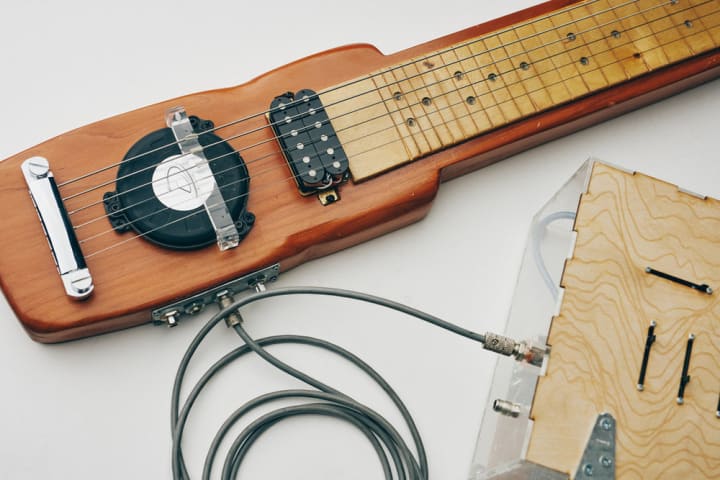
The Feedback Lap Steel is an innovative extension of the traditional 6-string lap steel guitar, designed to explore new sonic possibilities and combine acoustic and computer-generated sounds. The instrument utilizes the mechanical vibrations of its bridge to excite the strings, generating unique timbres and textures.
One of the notable features of the Feedback Lap Steel is its versatility in terms of playing techniques. It can be played in the traditional manner, following the established lap steel guitar technique, allowing musicians to produce familiar sounds and melodies. This makes it accessible to lap steel guitarists who can seamlessly transition to playing the Feedback Lap Steel without needing to alter their playing technique.
Additionally, the Feedback Lap Steel offers a platform for creating new sounds by integrating acoustic and computer-generated and controlled sounds. By combining the natural resonance of the instrument with electronic manipulation, performers can delve into experimental and exploratory sonic territories. This opens up opportunities for improvisation, sound manipulation, and the creation of unique timbral landscapes.
The instrument's ability to generate feedback through the mechanical vibrations of the bridge contributes to its distinctive character. The feedback phenomena add an element of unpredictability and responsiveness to the sound, allowing performers to interact dynamically with the instrument and shape the sonic output in real-time.
The Feedback Lap Steel provides a bridge between traditional lap steel guitar playing and experimental sound exploration. It offers musicians the flexibility to create both familiar and unconventional sounds, blending acoustic and electronic elements. By incorporating feedback and embracing the possibilities of computer-generated sounds, the Feedback Lap Steel expands the sonic palette and invites musicians to push the boundaries of their creativity. (Harriman, 2015).
In conclusion, feedback musical instruments offer a unique and interactive playing experience, exploiting the loop of sound created by amplification and microphone pickup. These instruments allow performers to generate expressive and unpredictable sonic textures, shaping the resulting sounds through manipulation and control of feedback. They provide a level of interactivity and improvisation not found in traditional instruments, resulting in music characterized by its experimental nature and exploration of sonic possibilities. The development of feedback instruments has opened new avenues for instrument design and musicianship, challenging conventional boundaries and offering exciting possibilities for controlling and interacting with musical instruments. These instruments have found their place in various musical genres and contexts, pushing boundaries and offering new sonic territories for musicians and composers to explore. Furthermore, feedback instruments contribute to the study of music perception and acoustics, offering insights into the complex relationship between performer, instrument, and sound. Overall, feedback musical instruments hold great significance in music creation, artistic expression, and the understanding of musical experiences.
References
Berdahl, E., Smith, J. O., & Niemeyer, G. (2012). Feedback control of acoustic musical instruments: Collocated control using physical analogs. The Journal of the Acoustical Society of America, 131(1), 963–973. https://doi.org/10.1121/1.3651091
Dec 17/Jan 18: Feedback Double Bass Augmentation — Thanos Polymeneas — Liontiris. (n.d.). Retrieved April 16, 2022, from http://thanospl.net/?p=620
Eldridge, A., & Kiefer, C. (n.d.). The Self-resonating Feedback Cello: Interfacing gestural and generative processes in improvised performance. 5.
FEEDBACK CELL. (n.d.). Feedback Cell. Retrieved April 16, 2022, from https://www.feedbackcell.info//index.html
Harriman, J. (2015). Feedback Lap Steel: Exploring Tactile Transducers as String Actuators. 2.
Kiefer, C., Overholt, D., & Eldridge, A. C. (2020). Shaping the behaviour of feedback instruments with complexity-controlled gain dynamics. Undefined. https://www.semanticscholar.org/paper/Shaping-the-behaviour-of-feedback-instruments-with-Kiefer-Overholt/4f93f513ae973f1c9e466183ad485904543ed609
Overholt, D. (2022). The Overtone Fiddle: An Actuated Acoustic Instrument.
Overholt, D., Berdahl, E., & Hamilton, R. (2011). Advancements in Actuated Musical Instruments. Organised Sound, 16(2), 154–165. https://doi.org/10.1017/S1355771811000100
Sanfilippo, D., & Valle, A. (2013). Feedback Systems: An Analytical Framework. Computer Music Journal, 37(2), 12–27. https://doi.org/10.1162/COMJ_a_00176
Úlfarsson, H. (2018). The halldorophone: The ongoing innovation of a cello-like drone instrument. NIME.
What’s Happening in the World of Feedback Instruments? — Emute Lab. (n.d.). Retrieved April 16, 2022, from http://www.emutelab.org/blog/feedback_insts
About the Creator
Anthi Georgiadou
BSc in Sound Technology, in interactive music systems. Master's at Goldsmith's. Passionate about immersive soundscapes, applying for PhDs in music psychology exploring music, technology, and psychology for innovative auditory experiences.
Keep reading
More stories from Anthi Georgiadou and writers in Geeks and other communities.
The Night Sydney Sweeney Decorated the Hollywood Sign with Bras
They say Hollywood is built on dreams, ambition, and the occasional extremely questionable publicity stunt. But nobody warned the city what would happen when Sydney Sweeney decided that the most iconic hillside in Los Angeles needed… lingerie.
By Shahjehan Khan 2 days ago in Geeks




Comments
There are no comments for this story
Be the first to respond and start the conversation.