
Unveiling the Unseen
Christopher Nolan's Artistic Silence in "Oppenheimer


In the vast expanse of cinematic storytelling, few names carry the weight and anticipation that Christopher Nolan does. Known for his enigmatic narratives and visually stunning spectacles, Nolan has embarked on a cinematic odyssey that challenges both the mind and the heart. His upcoming project, "Oppenheimer," has stirred not only excitement but also sparked curiosity and controversy. In a recent revelation, Nolan broke his silence on the conspicuous absence of visuals depicting the atomic bombings of Hiroshima and Nagasaki, stating, "It was as much about what I don't show as what I show."
The anticipation for "Oppenheimer" has been palpable, fueled not only by Nolan's reputation but also by the subject matter—the life of J. Robert Oppenheimer, the brilliant yet conflicted physicist who played a pivotal role in the development of the atomic bomb. However, what caught the attention of many was the omission of explicit visuals depicting the devastation caused by the bombings in 1945. In an era where filmmakers often grapple with the balance between artistic expression and historical responsibility, Nolan's choice to abstain from showcasing the horrors of Hiroshima and Nagasaki is a deliberate and calculated one. The director, known for his meticulous attention to detail and narrative precision, spoke candidly about his decision in an exclusive interview. "It's about respecting the profound weight of history without succumbing to gratuitous imagery. The bombings of Hiroshima and Nagasaki are etched in the collective consciousness, a scar on humanity's soul. I felt a responsibility to convey the emotional aftermath, the repercussions, without necessarily subjecting the audience to explicit depictions of horror," Nolan explained.
In a world inundated with visual stimuli, where shock and awe often overshadow nuance, Nolan's approach is a poignant reminder that sometimes, the most powerful stories are told through restraint. "Oppenheimer" becomes a canvas where the absence of certain visuals becomes as significant as the images that grace the screen. It prompts viewers to confront the gravity of history, forcing them to engage with the emotional and ethical dimensions of the narrative. Nolan's decision to focus on the aftermath rather than the act itself serves a dual purpose—it pays homage to the countless lives affected by the bombings while challenging audiences to confront the haunting specter of nuclear devastation. The director acknowledged the delicate balance required to navigate such historical minefields, stating, "It's about finding the human story within the grand tapestry of history, acknowledging the immense suffering without exploiting it for shock value." The notion that what is left unseen can be as evocative as what is presented on screen is not novel. It echoes the sentiments of renowned filmmakers who, throughout cinematic history, have harnessed the power of suggestion to stimulate the imagination and, by extension, the emotions of their audience. Alfred Hitchcock, a master of suspense, famously said, "There is no terror in the bang, only in the anticipation of it." Nolan seems to have adopted a similar philosophy in "Oppenheimer," where the anticipation of the unseen horrors becomes a visceral experience in itself.
The decision to break from cinematic conventions and focus on the aftermath aligns with Nolan's commitment to pushing the boundaries of storytelling. It challenges audiences to actively participate in the narrative, filling the void of explicit visuals with their own reflections and emotions. "Oppenheimer" becomes a dialogue between the director and the audience, an immersive experience that transcends the screen. Moreover, Nolan's emphasis on the emotional aftermath of historical events aligns with a broader trend in cinema—an increasing recognition of the ethical responsibility that comes with portraying real-world tragedies. Filmmakers are navigating a delicate balance between historical accuracy and the potential harm caused by graphic depictions. In an age where information is readily accessible, the impact of visual storytelling extends beyond the theater, influencing perceptions and shaping collective memory.
As audiences anticipate the release of "Oppenheimer," Nolan's artistic choice serves as a catalyst for reflection on the ethical considerations inherent in depicting historical trauma. The film becomes not only a biographical exploration of J. Robert Oppenheimer but also a meditation on the responsibility of storytellers to navigate the moral complexities of their craft. In the realm of cinema, where every frame is a brushstroke on the canvas of human experience, Christopher Nolan's deliberate silence on the visuals of Hiroshima and Nagasaki in "Oppenheimer" becomes a resonant note in the symphony of storytelling. It invites audiences to witness history through a lens of empathy and contemplation, proving that sometimes, the most powerful stories are not in the images we see but in the emotions they evoke and the questions they leave behind.
About the Creator
david dung
Immerse yourself in riveting narratives, thought-provoking insights, and a tapestry of ideas that transcend conventional boundaries. From the profound to the whimsical, every piece is a testament to the power of words
Keep reading
More stories from david dung and writers in Geeks and other communities.
Harvesting Gratitude
As autumn paints the landscape with hues of amber and gold, families across the United States prepare for a time-honored tradition that transcends centuries – Thanksgiving. This annual celebration, marked by a feast of gratitude and familial warmth, has roots that delve deep into the annals of history, revealing captivating tales of resilience, unity, and the enduring spirit of humanity. At the heart of the Thanksgiving narrative lies the story of the Pilgrims, a group of English Separatists seeking religious freedom who embarked on the Mayflower in 1620. Landing in the harsh wilderness of present-day Massachusetts, they faced a brutal winter that claimed many lives. In the spring of 1621, the survivors forged an alliance with the Wampanoag, an indigenous people who taught them vital agricultural skills, including the cultivation of maize (corn). This newfound knowledge proved pivotal, leading to a bountiful harvest that set the stage for the first Thanksgiving feast.
By david dung2 years ago in Families
The Politics of Playing Dress-Up
Well, to start off I'd like to say a happy world book day to all who celebrate. I know I haven't really posted anything on my socials about it but I'm not a jubilant kind of person. I lay low most of the time. Let's start off with a popular anecdote from the vaults...
By Annie Kapur8 days ago in Geeks
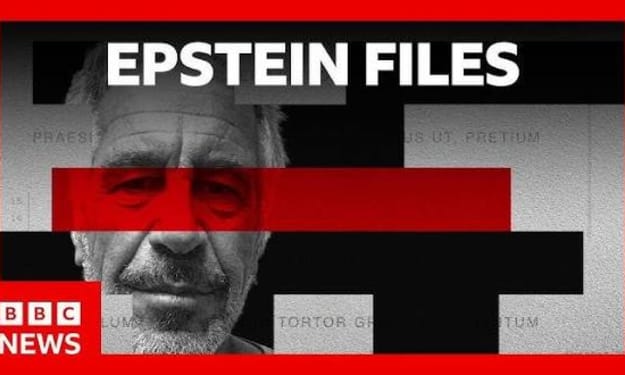
The Ongoing Implications of the Epstein Files in 2026
The Jeffrey Epstein case continues to shape global discussions about power, justice, and accountability. Years after Epstein’s death in 2019, the release of millions of investigation documents—commonly called the “Epstein Files”—has reignited public debate. In 2025 and 2026, new laws and investigations forced U.S. authorities to release a massive archive of documents related to Epstein’s trafficking network. These files include witness statements, emails, flight logs, photographs, and investigative reports.
By shaoor afridi6 days ago in Geeks



Comments
There are no comments for this story
Be the first to respond and start the conversation.