
Tyler Perry Faces Second Sexual Assault Lawsuit as Actor Alleges Years of Unwanted Advances
An aspiring actor says the entertainment mogul abused his influence, naming both Perry and Lionsgate in the civil complaint
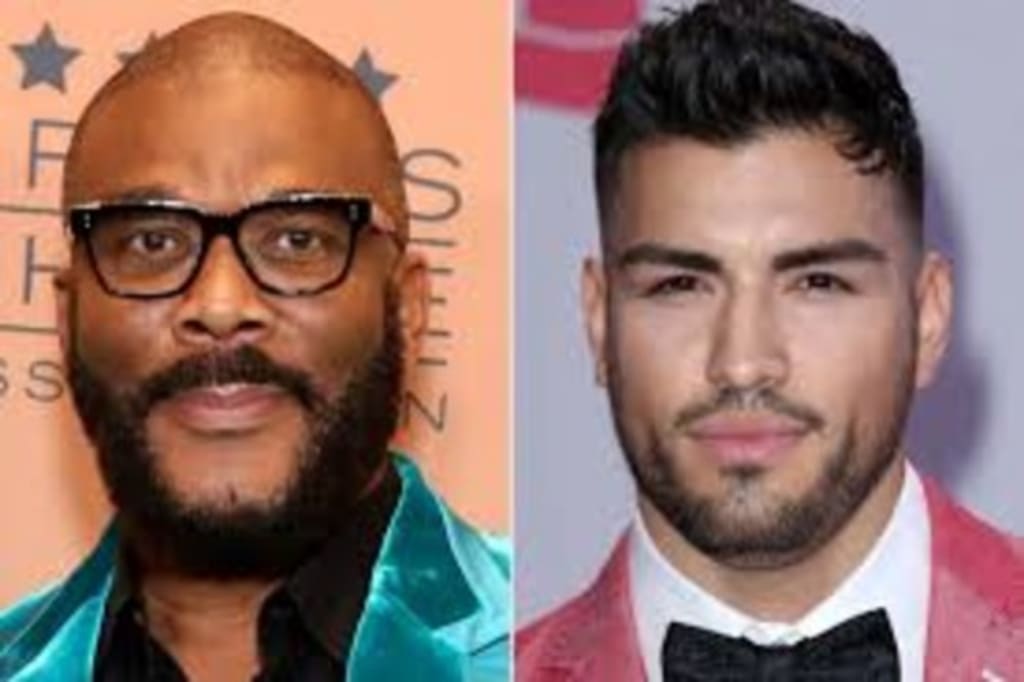
Hollywood filmmaker Tyler Perry — one of the most influential figures in modern entertainment — is once again at the center of a high-profile legal battle, this time involving fresh allegations of sexual assault. On December 26, 2025, actor and model Mario Rodriguez filed a lawsuit in California state court that accuses Perry of repeatedly subjecting him to unwanted sexual advances over several years, including incidents that allegedly occurred during and after Rodriguez’s work on Perry’s 2016 film Boo! A Madea Halloween.
Rodriguez’s complaint is the second of its kind against Perry in 2025. Earlier this year, another actor, Derek Dixon, filed a lawsuit alleging sexual harassment and assault while working on Perry’s television projects. That lawsuit sought approximately $260 million in damages and highlighted alleged misconduct on the sets of the BET series The Oval and Ruthless.
In his newest complaint, Rodriguez is seeking at least $77 million in damages, claiming that Perry leveraged his influence in the film industry to coerce, harass and assault him under the pretense of career opportunities. Rodriguez claims in court documents that Perry first approached him in 2014 via an intermediary at a Los Angeles gym to inquire about an acting role. Soon after, Perry encouraged him to audition for Boo! A Madea Halloween.
Once Rodriguez was cast in a small role — identified in public reports as “Frat Guy #10” — the lawsuit claims that Perry began to use social and professional situations to make unwanted advances. One described encounter took place at Perry’s Los Angeles home, where they reportedly watched a movie together. According to the complaint, Perry placed his hands on Rodriguez inappropriately and made comments suggesting that compliance could lead to sustained career support.
The lawsuit describes a number of alleged incidents that occurred over a number of years, including 2018 and 2019 episodes. In one instance, Perry allegedly attempted to unbuckle Rodriguez’s pants while they were in a private setting, and on another occasion, he allegedly placed Rodriguez’s hand on his genitals, all while making explicit remarks. Rodriguez claims that after each encounter, Perry gave him money — at least $5,000 on multiple occasions — which the plaintiff interprets as attempts to silence or compensate him.
Rodriguez’s attorney, Jonathan J. Delshad, also represents Derek Dixon. Delshad has asserted that Rodriguez’s claims are supported by text messages and other evidentiary material that show Perry’s alleged patterns of behavior. Additionally, Lionsgate, the Boo! distributor, is named in the lawsuit. A Madea Halloween, which claimed that the studio was aware of Perry's behavior but did not take action. Perry’s legal team strongly denies the allegations. In statements to media outlets, Perry’s attorney described both lawsuits as meritless and financially motivated — framing them as “failed money grabs” rather than legitimate claims of wrongdoing. The defense has asserted that the accusations lack substantiation and emphasized Perry’s right to the presumption of innocence.
For his part, Rodriguez has publicly said that he hoped his lawsuit would hold Perry accountable and encourage others who may have faced similar behavior to come forward. He said in statements that were posted on social media that coming forward was difficult but necessary because of the alleged severity and persistence of the incidents that had been reported. Legal professionals point out that filing a second lawsuit may have significant repercussions.
Even though neither case has reached trial or resulted in criminal charges, multiple civil suits raise serious questions about patterns of behavior and industry power dynamics. According to observers, the outcomes will be heavily influenced by the evidence presented and the courts' interpretation of the claims of retaliation, unwanted advances, and coercion. Civil litigation like this does not require the same burden of proof as criminal cases — a lower standard known as “preponderance of the evidence” rather than “beyond a reasonable doubt.”
These developments have thrust Perry — a filmmaker known for his immense creative output and contributions to film and television — into uncharted and potentially career-defining legal territory. From opening Tyler Perry Studios in Atlanta to producing numerous films and television shows that highlight Black talent and stories, Perry's influence spans decades. Yet, these latest lawsuits bring renewed scrutiny to issues of power imbalance and alleged exploitation in Hollywood.
Lionsgate has not publicly commented on the lawsuit naming it as a co-defendant. As the cases proceed through the legal system, the entertainment industry and public alike will be watching closely. Some advocates argue that lawsuits like these may encourage greater transparency and accountability in an industry historically marked by secrecy and imbalance between established creators and aspiring performers.
Whether or not the allegations in either lawsuit are substantiated, their existence marks a significant moment in discussions about conduct, consent and justice in Hollywood. As both lawsuits move forward, they will likely shape how studios, creators and performers navigate power dynamics in years to come — a development that stretches far beyond the individuals involved.
About the Creator
Keep reading
More stories from Raviha Imran and writers in Geeks and other communities.
Big Brother Star Mickey Lee Dies at 35 After Flu Complications and Multiple Cardiac Arrests
When the world was celebrating Christmas Day on December 25, 2025, friends, family and fans of reality television were instead met with heartbreaking news: Mickey Lee, the charismatic season-27 contestant from CBS’s Big Brother, had died at just 35 years old after a severe medical crisis that began with complications from the flu.
By Raviha Imran16 days ago in Geeks
The Rachels - 2025
Much to my surprise, I have kept a list of the films I‘ve seen this year. I daresay it isn’t complete. There will be films that snuck in on a late night in front of the TV that I would’ve forgotten to note. Or others, that I went to watch at the cinema, but then had a red wine and promptly forgotten about. But it’s not a bad approximation of the films I’ve seen this year. In total, there are 53 films listed, so an average of one a week and one for good luck.
By Rachel Robbins16 days ago in Geeks


Comments
There are no comments for this story
Be the first to respond and start the conversation.