
'Toy Story': Old Methods and New Beginnings
An analysis of one of the most beloved films of all-time by tackling the thematic underpinnings of this achievement in 3D animation.

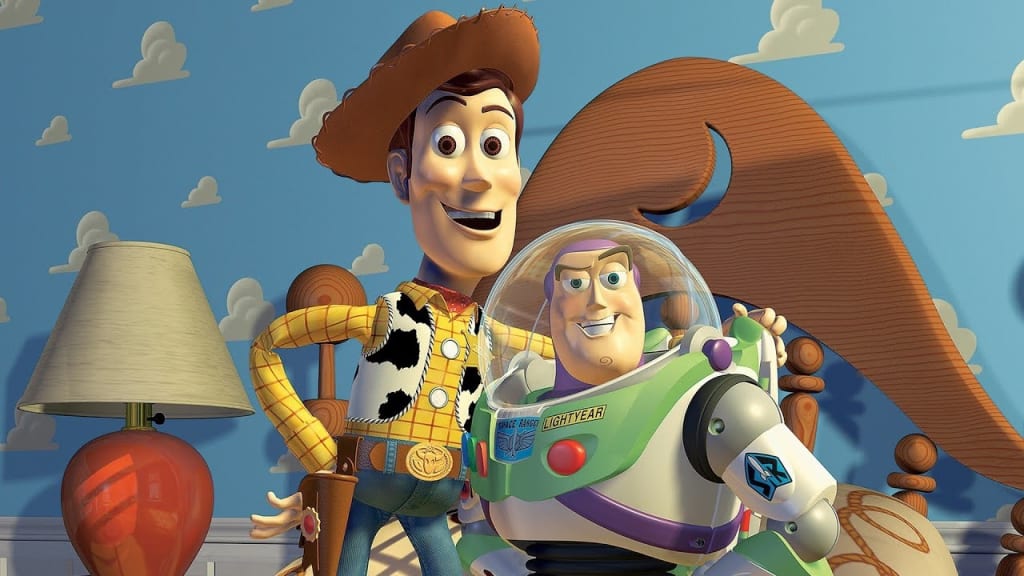
In 1995, Pixar would make their feature length debut with Toy Story. A film led by the talents of Tom Hanks and Tim Allen as sentient toys that come alive when humans aren’t looking. It would be the first ever fully rendered 3-D animated film, a soon-to-be classic, a staple for the medium of animation, and a cultural touchstone of film-making.
Before John Lasseter was assigned to direct the inauguration of Pixar’s reign, Lasseter was all over Hollywood. He started as an animator for The Walt Disney Company, moved on to work with CG-Animation for Lucasfilm, and when that department evolved into Pixar in the late 80s, Lasseter began to oversee all of Pixar’s work, and was associated with most of them as an executive producer. Due to the luxury of hindsight, Lasseter has become less of an inspiring icon for the realm of animation because of past events that have transpired into public consciousness, but his first work on Toy Story still remains as the masterpiece it has for the past two and a half decades.
Whereas most animated films today seem to give less of an effort to integrate touching themes to get the older audience members more involved, Toy Story still remains as one of the most highly revered animated films because of this. Not only is it not afraid to slide in a few innuendos or beer jokes, but the way it tackles its thematic pinnings without drawing deep attention to them is truly outstanding, and wildly creative.
As a lifelong fan of the film and my enjoyment stemming from the antics that Buzz and Woody find themselves in, upon re-watching the film in preparation for Toy Story 4, my enjoyment has evolved beyond the basic antics from scene to scene. Rather now, where my endless and upbeat enjoyment comes from being completely enveloped in it’s world and within the characters. Of course Woody and Buzz get the most attention, but this film works on so many levels because of its supporting cast of a slinky dog, a potato man, and a not-so-terrifying dinosaur assisting the narrative in adding the dot to the exclamation of the themes.

When the film begins it starts with a simple story straight from the mind of the toys' owner, Andy. It’s endearing, delightful, and imaginative as any child could envision. We quickly find out that it’s Andy’s birthday party and that company will be over shortly, and the stage is set. When the toys spring up from their sprawled out posture on the ground, we quickly become aware of the toys’ fears and conflict for the rest of the film. Andy, his mother, and his baby sister Molly are currently in the process of moving to a new home and this proves to be a major dilemma for the toys. They have to find moving buddies to join each other on the move to make sure no toy is left behind for Andy to forget about. This proves to be Woody’s hubris throughout the entirety of the saga, but I’m not ready to get into that just yet. What’s most important about the film’s first 10 minutes is that it begins to conjure up what it is I want to tackle in my analysis of the film.
On the topic of “Old” and “New”, the arrival of Buzz Lightyear becomes the physical embodiment of “New”, and Woody resembles the “Old”. When the film begins, Woody has things kept in order and he is essentially the leader of the toys. He basically has an outline of procedures to follow, he seems to have a grip on Andy’s room, and a perspective of what a toy’s role should be in a child’s life. This move for the toys is a level of change for the toys that have never experienced a move before, and the concept of “Old” and “New” rings soundly between the toys and their owner. With Andy’s birthday comes the arrival of “New” toys. As they listen through a Playskool walkie, the toys are fearful of what could come out of the wrapping next. This leans into the fear of having to become accustomed to new beginnings, and concerned with the potential loss of the old methods.
The surprise of Buzz Lightyear (the hottest toy on the market) taking Woody’s spot on the bed begins the transition of out with the old and in with the new. As Buzz’s presence, bells and whistles proves to be complex and exciting compared to Woody’s silly string on his back, this paints a clear picture as to what is also going on in Andy’s life. As Andy is preparing for the new house and inevitable move, his decision to replace the Wild West and Cowboy posters with Buzz Lightyear merchandise works as a visual aid to Andy accepting the upcoming move. Andy is ready to move on, but is Woody?

Of course, Woody isn’t ready because Buzz threw a wrench in his plans, but Woody’s acceptance comes much later in the film after he and Buzz have to travel together. Through the middle of the film, Buzz and Woody discover the best characteristics about each other and they realize the benefits of each other’s presence and role in their lives. For Buzz, he is a toy that is introduced as a figure that takes himself too seriously and he believes he’s a real Space Ranger. Woody is a toy who is latched on to the past and can’t accept the inevitability of growth, change, and development. Through humility and bonding as the past and the oncoming future, Buzz and Woody uncover the power of friendship and growth that comes with acceptance in the present.
It’s when Buzz is tightly strapped to a working rocket ship that he’s desired the entire film when they share that moment of realizing how well Andy treated them. How their owner gives them a happy life and the significance of being present for Andy’s growth as a being. When Buzz and Woody disappear from Andy’s room, Andy stalls and becomes concerned for the move. Instead of moving he’d rather stay behind and wait for them to come back, and this directly speaks to that unfortunate middle ground that Andy has found himself in. He’s ready to embrace the new home, but he’s clung to the past that his toys have given him and isn’t ready to move on without them. In a weird way, Andy sort of represents Woody and Buzz as a unification of ideas and thematic value.
When Andy and his family leave for the move to the new home, time starts running out for Buzz and Woody to get back to Andy, but thankfully Sid’s rocketship proves to be their saving grace. Upon waiting for the rocket to blow up, Buzz releases his wings and he begins to fly with Woody in hand towards Andy’s car. In this moment we hear Buzz harken back to one of the film’s first scenes, and it showcases the growth that Buzz has faced as a toy. Where “Falling with style” was originally a wry remark from Woody to comment on the fact that Buzz takes himself too seriously, Buzz’s release of self-seriousness spins that term on its head to be a line made up of acceptance and realization of being a toy. Buzz has experienced growth, but what about Woody?

As mentioned previously, Woody was a character that clung to the old method, but as the story progresses, Woody finds worth in someone that can benefit his hubris. It’s mildly selfish if you think about it any deeper than I’ve just presented, but if Woody’s hubris is to be present for a child’s life no matter the circumstances, no matter the owner, then why not be open to taking a look at what every toy in Andy’s toy box has to offer? Buzz resembles allegiance, and Woody has always been allegiant to the flag of Andy, but some of that became lost when he discounted the worth of Buzz. Where he initially saw him as an obstacle, he came to find him as a comrade, a brother in arms, and this developed into Woody’s embracement of change, development, and discovery of worth in the “New”.
Toy Story isn’t saying “out with the old and in with the new.” It’s rather saying that to embrace the future, a part of ourselves needs to ponder the past, to make the present the stepping stones into new beginnings. This a special franchise and it all started here and has lasted and grown better than I could have imagined as a toddler. The jokes still hit, processing the animation for that time is still mind-blowing, and the story has just as much relevance now as it did so many years ago. To see where these films take these characters is enlightening and full of so much rich material, dramatic irony, stunning animation, and thematically deeper than I initially thought.
About the Creator
Roman Arbisi
An aspiring film critic/journalist. I've been writing movie reviews as a hobby since July 2015 in hopes of one day finally being known as a professional film critic. You can find all of my movie reviews at the Showtime w/ Roman blog.
Keep reading
More stories from Roman Arbisi and writers in Geeks and other communities.
We Should Take the Golden Globes Seriously
Sunday’s 76th Golden Globes had one of the most interesting slate of winners yet. Between Alfonso Cuaron’s win as Best Director for Roma, Olivia Colman’s big win as Best Actress in The Favourite, and Lady Gaga and Bradley Cooper’s "Shallow" pulling away with Best Original Song, the Golden Globes really put into perspective how the rest of awards season could go. Unless the trends from past years hold true, and the Globes end up being “the constantly drunk Uncle” of awards shows and aren’t actually indicative of the big winners for the PGA Awards (Producers Guild of America) and the Oscars.
By Roman Arbisi7 years ago in Geeks
A Knight of the Seven Kingdoms Series Review (Season 1)
As one of the biggest properties in fantasy, A Song of Ice and Fire remains immensely popular with audiences. After reaching far into the past with House of the Dragon, a second spin-off was on the cards. A Knight of the Seven Kingdoms serves up a bite-sized slice of action and drama, but it still claims a spot among the best small-screen titles.
By Robert Cain7 days ago in Geeks
Bomb Scare
It was 2027, and the world never thought it would happen. A missle hit the United States, but it wasn't where they had anticipated. A little town in the northeast was hit by a missile strike, they didn't know why, and they didn't know exactly where it hit, but they did know it was a coastal community, somewhere between Maine and Delaware.
By Gregory Paytonabout 15 hours ago in Fiction




Comments
There are no comments for this story
Be the first to respond and start the conversation.