
Top 10 war movies in the charts, worth watching.
There are many kinds of movies, and one of them is war movies. It is a time of peace, but the war years of the past cannot be easily forgotten. Through war movies, we can look back on the great years of the past and cherish the present life more.
1. Saving Private Ryan
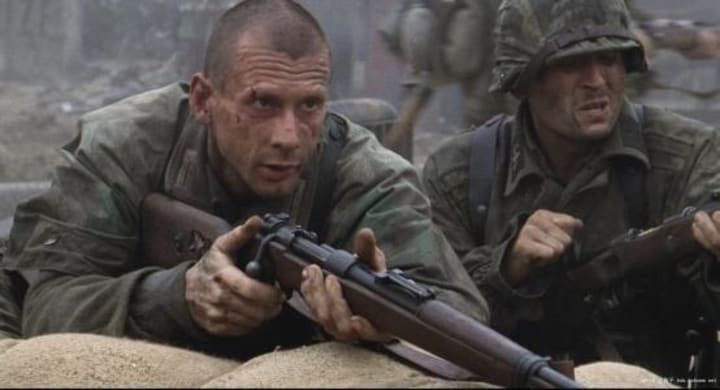
After the Normandy landings, three of the four sons of the Ryan family who fought on the front line have been killed in action over the course of two weeks, except for Private James Ryan, the youngest son of the 101st Airborne Division, who is still unaccounted for. On 17 December 2014, the film was selected as one of America's National Treasure Films of 2014. .
It's not for nothing that it's number one on the top ten list of war movies. The film is considered to be one of the most realistic war films ever made, with the American Film Institute classifying it as an "extremely violent film about war". However, many World War II veterans have given the film high marks, calling it "the most realistic film about World War II". In particular, the 26-minute reenactment of the Normandy landings has been hailed by fans, military buffs and enthusiasts alike as a treasure trove.
2. Glorious Battles
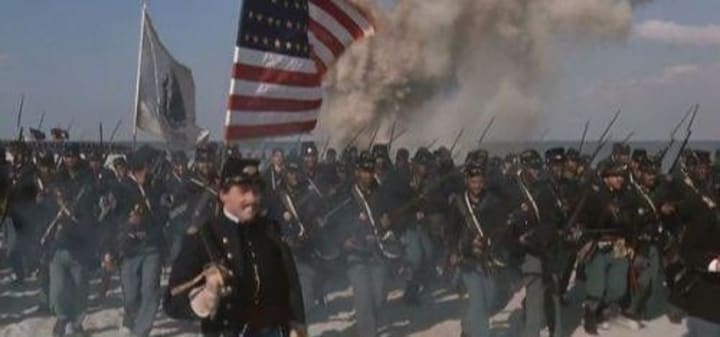
In 1990, the film was nominated for Best Picture and Best Director at the 47th Golden Globe Awards. Denzel Washington won an Academy Award and a Golden Globe for Best Supporting Actor for the film.
The American Civil War was one of the most brutal wars in American history, and the most complex due to the many moral and racial tensions involved. Glorious is based on the letters of Colonel Robert G. Shaw, a participant in the war, and depicts the heroic story of a black regiment under his command that fought in the blood. The director succeeded in bringing to the big screen the heroism of this particular fighting column of soldiers fighting for what they believed in and for their freedom. It is also one of the finest depictions of this civil war through its meticulous characterisation, majestic scenes and realistic war scenes, and is number two in the top ten list of war films.
3. Soldiers at the City
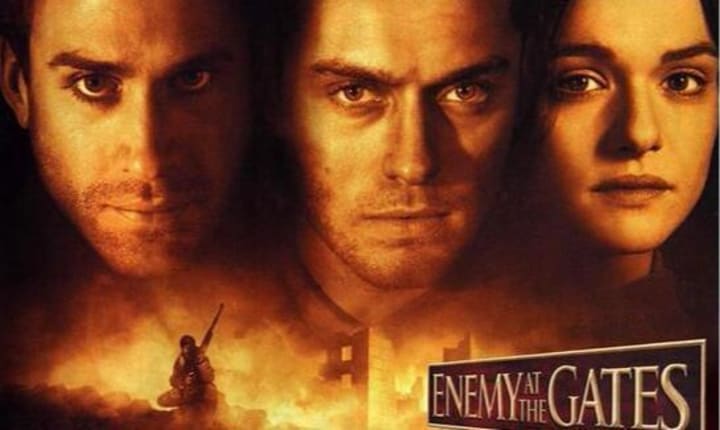
During the Battle of Stalingrad, Vasily was a sharpshooter who was a force to be reckoned with. His good shooting was so good that the enemy was frightened of him. To boost morale and set an example, Vasily's comrade, Danilov, an officer in the Soviet Army's propaganda department, published a lot of his heroic deeds in the newspapers, making Vasily's image even bigger.
However, the appearance of Tania makes both Vasily and Danilov obsessed with this valiant female soldier. But it is Vassili that Tania likes, and this makes Danilov jealous. On the other hand, the Germans send their sniper Connie, who is also a sharpshooter, to counter Vassili. On the smouldering battlefield, Vasily and Connie begin a duel of wits and bravery.
With a series of opening war scenes that could be compared to Saving Private Ryan, Jean-Jacques Annaud's Underworld proves once again that war is brutal, set against a backdrop of stirring themes that mark an important turning point in twentieth century history. -But all the energy that made the actors "bleed" for it was poor dialogue and mediocre directing.
4. General Patton
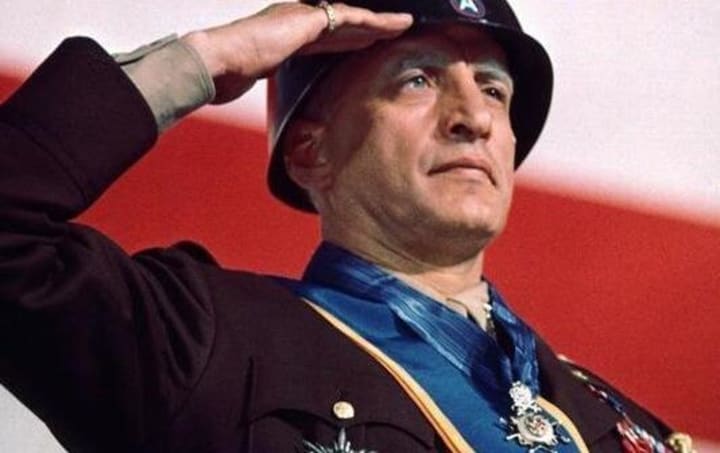
The film focuses on the story of a massive battle in North Africa in 1943, when British and American Allied forces are countered by German troops led by Field Marshal Rommel, nicknamed "The Desert Fox", resulting in a crushing defeat for the American forces. The film was released in 1970 and won seven Academy Awards, including Best Picture, Best Screenplay and Best Director, at the 43rd Academy Awards.
The film is an epic biopic of General Patton's life, with the beauty of nature and the atmosphere of war woven into a visually striking picture. The film is a classic account of General Patton's illustrious life, and features a superb performance by actor George C. Scott as Patton, who portrays the unruly, majestic and arrogant legendary general with aplomb. He brings to life on screen the image of General Patton as a paragon of American military might.
5. Schindler's List
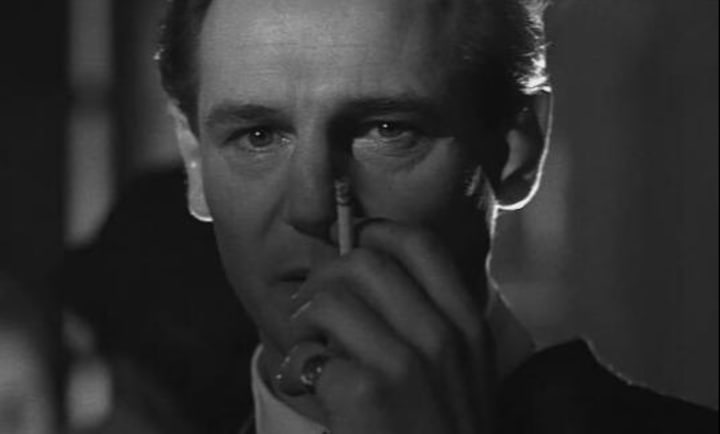
The film recreates the true story of German entrepreneur Oskar Schindler and his wife Emilie Schindler, who gave their family money to protect over 1,200 Jews from fascism during the Second World War. The film won seven major awards at the 66th Academy Awards and seven awards at the 51st Golden Globe Awards.
Schindler's List is a classic in the history of cinema and was premiered in Frankfurt, Germany, on 1 March 1994, in the presence of the German President. US President Bill Clinton saw it and was so impressed that he exclaimed at a press conference, "I urgently ask you to see this film." What makes it so powerful and so profoundly and painfully artistic is Spielberg's Jewish blood and his childhood experience of discrimination against Jews, the fact that 17 members of his family of Ukrainian origin were murdered in Nazi concentration camps in Poland, and his deep-seated feelings for Schindler, a great benefactor of the Jews. -The inescapable fact that 17 members of his family from the Ukraine were murdered in the Nazi camps in Poland and his deepest feelings of reverence and gratitude to Schindler, the great benefactor of the Jews, are inseparable.
6. Hunt for the Red October
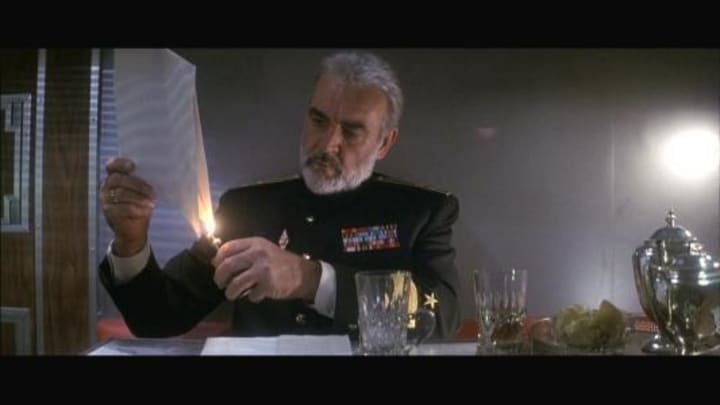
A masterpiece of submarine films with accurate pacing and character take. The Hunt for the Red October is a drama film directed by John McTiernan and starring Sean Connery and Alec Baldwin. The film tells the story of the Red October, a nuclear submarine whose sudden change of course on its first voyage leads the Soviet Union and the United States to track or hunt it down, respectively.
It is well known that although the US and the Soviet Union did not engage in a direct military cold war, the two superpowers were constantly competing and sidelining each other. In particular, the development of high-tech military equipment, especially nuclear weapons, was the main means by which they sought to contain and defeat each other. The "Red October" in the film is a tool and product of this "cold war".
7. The Wind Whisperer
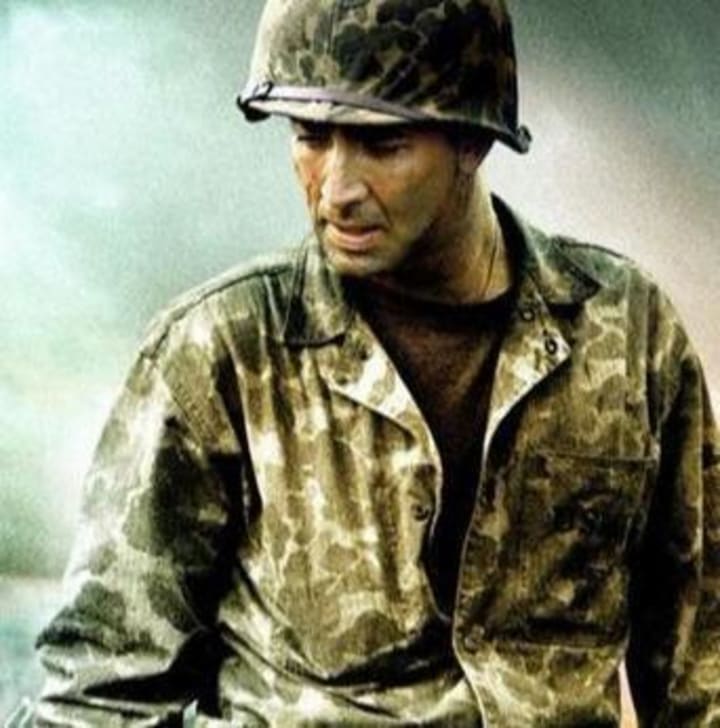
The Windtalkers is a 2000 action war film directed by Chinese-American director John Woo, starring American actor Nicolas Cage and others in the title role. The film tells the story of Joe, a naval officer who is ordered to protect Adam, a Navajo cryptographer, although if necessary (if Adam is captured alive by the Japanese), in order to protect the coded information from being leaked, then Joe can shoot Adam, developing in a constant collision between the two, from disagreement and fighting to life and death together.
Set against the backdrop of real history, the film depicts the delicate relationship between the Windtalkers and their guardians on a brutal battlefield, and the dilemma of choosing between carrying out military orders and cherishing friendship is what makes the film so compelling. It is fair to say that this World War II film, set against the backdrop of real life events and with a focus on characterisation, was a challenge for John Woo.
8、Gui River Bridge
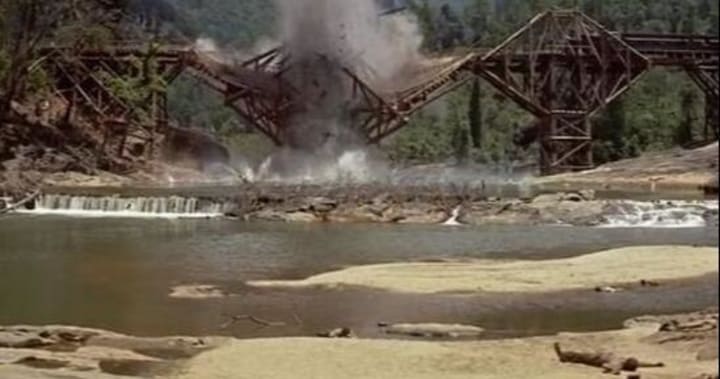
The film, which was released in the UK on 2 October 1957, won the 30th Academy Award for Best Picture and the 15th Golden Globe Award for Best Picture in the Drama category in 1958.
Bridge on the River Kwai is a classic in cinema history. The director's unique approach shows the sorrows and joys of each character in the context of the times, but also their thoughts on the war, influenced by the thinking of their respective national cultures. In the film, the stories of the three soldiers form the structure of the whole film, thus highlighting the distinctive national identity of each man, but at the same time the film does not forget to portray the unique personality of each character. The film's plot is cleverly designed and structurally the whole story consists of two threads, the intertwining of Colonel Nicholson and the others in the POW camp and the escape of American Private Hills, which together bring the story to its climax.
9. Rage
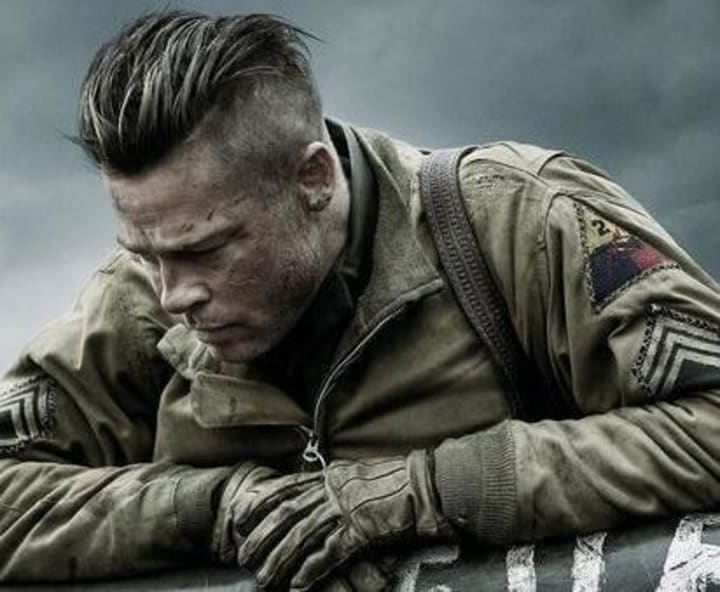
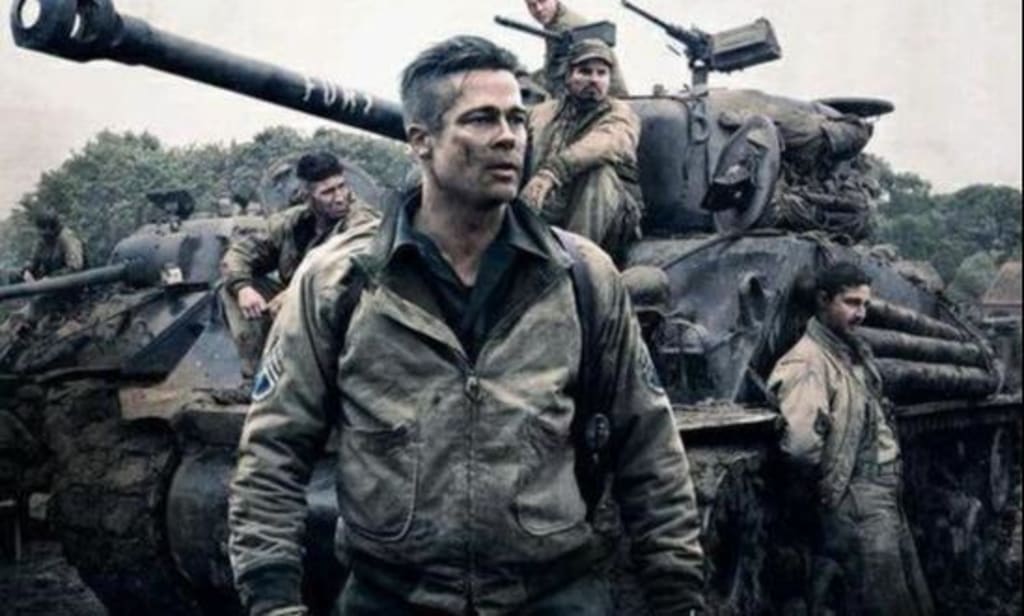
The film follows the Allied armies as they prepare for a final onslaught in Europe in 1945, just as the smoke of World War II is fading. Outnumbered and outgunned, a few tank crews from Sherman's tanks go on a deadly mission deep into the heart of Nazi Germany.
Fury's atmospheric battle scenes have really earned their praise. The opening scene is crisp and clean to begin with, and surprisingly restrained in not giving a background introduction but going straight into battle, giving no time for preparation at all. A few tank scenes are also overwhelming: four tanks advancing in parallel, fierce artillery fire suppressing the enemy forces, bullet effects like lasers, together with the constant roar of artillery fire in the ears, the war atmosphere is overwhelming, igniting hormones in a minute.
10. Modern Apocalypse
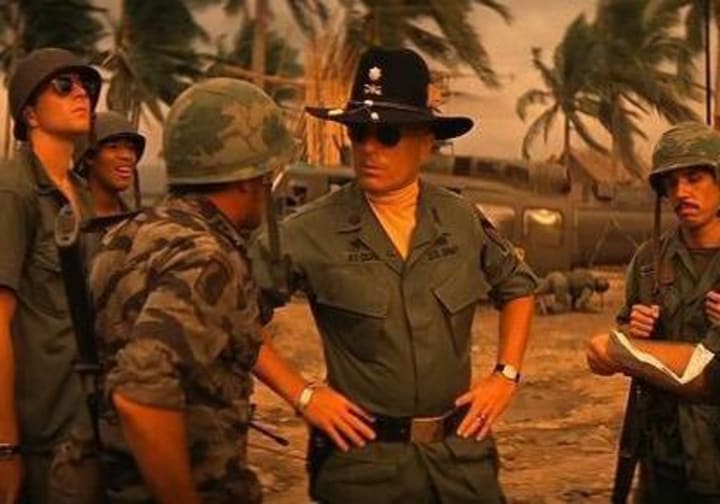
Apocalypse Now is a film set in the Vietnam War, directed by Francis Ford Coppola and starring Martin Sheen, Marlon Brando and Robert Duvall. The film was released in the United States on August 15, 1979. The film tells the story of Captain Wilder, a U.S. Army intelligence officer who is ordered to get rid of Colonel Kurtz during the Vietnam War. After receiving the order, Wilder leads a small team and ventures into Cambodia by dinghy.
The film is ostensibly about the Vietnam War, but of all the famous war films it is probably the most 'subliminal'. It could be applied to any war, or even, more broadly, to any life experience. While the film is not without its positive portrayal of war, its essence is its portrayal of the darkness in human nature, and it is no wonder that it is not based on the Vietnam War record, but on the classic Heart of Darkness by British novelist Conrad.
About the Creator
Keep reading
More stories from writers in Geeks and other communities.
Mitch McConnell
Few figures in modern American politics have wielded as much behind-the-scenes influence as Mitch McConnell. For decades, the Kentucky Republican has been a central force in the U.S. Senate, shaping legislation, judicial appointments, and party strategy with a methodical and disciplined approach. Whether admired for his political skill or criticized for his tactics, McConnell’s impact on American governance is undeniable.
By Saboor Brohi 8 days ago in Geeks
Rachel Reviews: Lunch Tales: Teagan by Lucille Guarino
Well, I did enjoy this! Sometimes, all you need is just great storytelling and this is what Lucille Guarino delivers here. There's no big message to this book; it's just about folks and families, living their lives and coping with everything that's being thrown at them and finding their way. But when it's done well, like it is here, then you have characters to whom you can relate, tension which leaves you rooting for a better outcome, attraction which has your heart racing and an urge, as a reader, to see the characters happy with the people with whom they belong.
By Rachel Deeming4 days ago in BookClub


Comments
There are no comments for this story
Be the first to respond and start the conversation.