
To Kill a Watchman: Jean Louise is the problem, not Atticus
Revisiting and Reviewing: To Kill a Mockingbird and Go Set a Watchman

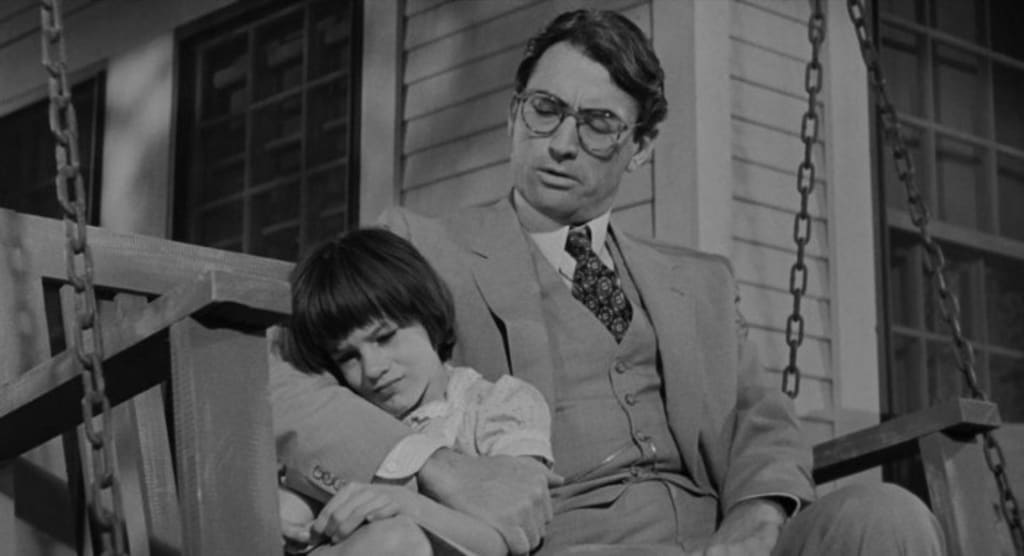
I realize I am a bit late to the game with it being seven years since the release of Harper Lee’s criticized novel, Go Set a Watchman. But better late than never…and truly better late. My six-years-ago-self would have thought quite differently about the book than my present-self, just as I think differently now of Lee’s first book compared to my thoughts when reading the novel as a child. I also believe that the essence of both books is more relevant now than ever given our current social climate.
I have to first express my newfound love for Watchman’s predecessor. I had the uncommon delight of experiencing more intimately the deceptive nature of To Kill a Mockingbird in which the narrative of racially turbulent, gossiping Southern town is veiled by the ignorance of a child’s eyes. As a kid, I found myself reading through Scout’s eyes as, of course, it is literally written from her perspective. But as an adventurous tomboy too, it was easy for me to relate to her frustrations of wanting to fit in with the exploring, bold boys whom she enjoyed spending more time with than the judgy, boring girls. I felt I was reading about my own adventures, only they happened in that sleepy town in the 1930s instead of early 2000s suburbia Arizona. The deeply rooted theme of putting one’s self in another’s shoes did not necessarily go over my head, however, I was definitely more focused on finding my own tire to roll down the street in than what it meant for Scout to stand on Boo Radley’s front porch.
I have only just now, more than a decade later, returned to the beloved novel, and now too its shadowed sequel. I think that because I had such a large gap between my sittings with the novel that I fell prey to the guile. I feel luckier for it; reading and re-reading the story with a lapse of time has shown me my own growth even more than Jean Louise realizes her maturation in Go Set a Watchman (more on this later). I can now clearly distinguish how deliberately Lee crafted her tale through a child’s lens’, not quite biased by adult perspective but with it in mind. This is part of the point of the story where the world is much simpler and expected to be much fairer through a child’s eyes (see: Dill’s complete upset at the results of the Robinson trial).
I realize this revelation is delayed and most would respond to my enlightenment with, “Well, duh.” But I suppose re-reading the novel for me was like realizing what someone meant when they said something to you long ago. Something impactful that you realize has stuck with you unconsciously guiding all these years and one day you realized the connection, a latent memory that has a whole new meaning now that you are experienced.
After internalizing my renewed outlook from re-reading To Kill a Mockingbird, I worried about picking up its so-called sequel. Like many others, I did not want the ideal father-figure image of Atticus to be tainted. When I came to find that Go Set a Watchman was supposedly an unpublished draft, I thought I could justify any of Atticus’ foretold racism and hate with the excuse that “he never ended up being that way in the real thing.” So, I reluctantly opened its pages.
Unlike To Kill a Mockingbird, I could not get absorbed into the world of the story. I found myself reading fewer and fewer pages with each sitting and the sittings were getting farther and farther apart. I was only drawn in briefly with the few childhood stories that could have easily made it into the first novel. Perhaps I was longing for the reminiscence I enjoyed in the first book and feared the coming-of-age Jean Louise was about to have.
It was clear to me that Go Set a Watchman was indeed a draft. Messy plot aside, the words on the page were difficult on the eyes, particularly when it was clear that the perspective was not yet decided with confidence. I could go on about these technicalities, but that sounds more discouraging than how I felt having to endure it.
A draft it was, but not for To Kill a Mockingbird; I believe there is merit in labeling the piece a sequel. Despite the above issues persisting throughout the entire manuscript, my tune about it all changed once I began the back half of the book where most of the controversy lay. I took a deep breath before plunging into the hollowness of learning Atticus’s latent racism and hate. But as I held my breath waiting for an atrocity to slip Atticus’ mouth, I found that it never really came. I kept expecting Dr. Jekyll to turn into Mr. Hyde as this vulgar side to Atticus had been alluded to in so many of the reviews. Instead, what I found was a misunderstood man.
---
“‘Bigot,’” [Jean Louise] read. “‘Noun. One obstinately or intolerably devoted to his own church, party, belief, or opinion.’”
Well, I’ll be damned if we aren’t all bigots in some aspect. Who isn’t confident to a fault in at least some of their beliefs? Is there not a hill we each die on?
Uncle Jack expands, “…What does a bigot do when he meets someone who challenges his opinions? He doesn’t give. He stays rigid. Doesn’t even try to listen, just lashes out.”
By this assessment, Atticus is rather far from being a bigot. The man went to a Klan meeting, yes. However, he does not attend because he shared a deep loathing, but because, as described by Hank to Jean Louise, “…all the Klan was then was a political force, there wasn’t any cross-burning, but your daddy did and still does get mighty uncomfortable around folks who cover up their faces. He had to know who he’d be fighting if the time ever came to.” Atticus was trying to learn and understand a threat instead of throwing up fists at a first inclination.
Hank continues, “I’m only trying to make you see beyond men’s acts to their motives. A man can appear to be a part of something not-so-good on its face, but don’t take it upon yourself to judge him unless you know his motives as well. A man can be boiling inside, but he knows a mild answer works better than showing his rage. A man can condemn his enemies, but it’s wiser to know them.”
Does this not sound like something Atticus would say to young Scout? Why then have so many ridiculed the venerable man?
It would take a whole book in itself to answer this and to do what Hank suggests, that is, taking the “not-so-good” and trying to understand Atticus’ motives. Instead, I will link to a few articles below that already speak eloquently on how Watchman Atticus is the same beloved Mockingbird Atticus. And I will briefly remark on Atticus’ loyalty to antiquated Southern ideals and to the law:
Uncle Jack explains, “Look at the rest of the country. It’s long since gone by the South in its thinking. The time-honored, common-law concept of property — a man’s interest in and duties to that property — has become almost extinct. People’s attitudes toward the duties of a government have changed. The have-nots have risen and have demanded and received their due — sometimes more than their due. The haves are restricted from getting more. You are protected from the winter winds of old age, not by yourself voluntarily, but by a government that says we do not trust you to provide for yourself, therefore we will make you save. All kinds of strange little things like that have become part and parcel of this country’s government. America’s a brave new Atomic world and the South’s just beginning its Industrial Revolution.”
Uncle Jack and Atticus understand that this sentiment is fading, but they are concerned by the pace at which necessary systemic change is occurring. “Men like me and my brother are obsolete and we’ve got to go, but it’s a pity we’ll carry with us the meaningful things of this society.”
“The only thing I’m afraid of about this country is that its government will someday become so monstrous that the smallest person in it will be trampled underfoot, and then it wouldn’t be worth living in. The only thing in America that is still unique in this tired world is that a man can go as far as his brains will take him or he can go to hell if he wants to, but it won’t be that way much longer.”
Again, it would take a dissertation to unravel all of this. I think I will just leave it as these quotes where perhaps one can begin to think for themselves about the true motives and fears of an old-fashioned but still honorable man.
Never once does Atticus disrespect a black person. Never does he use a disgusting slur against them (Jean Louise does though, I will note). He has always admired Calpurnia as a mother-figure to Scout and Jem. He previously defended Tom Robinson, a black individual wrongly accused of rape. He agrees to defend Calpurnia’s grandson who kills someone while drunk driving. I will judge the man based on his actions which tell me that he is not full of hate. Instead, he is dedicated to “equal rights for all, special privileges for none.” He understands that changes need to occur for this to be true, for everyone to have equal rights. But he is concerned that it will be at the sacrifice of other salient liberties.
I find it humorous those who claim how To Kill a Mockingbird is an American classic, but then turn right around and act against the open-minded theme of the novel by deeming one of its characters as inhuman without diving deeper into the complexities of the era and the characters. But I must remind myself, as Atticus points out, “Hypocrites have just as much right to live in this world as anybody.”
---
So instead of mourning the loss of Atticus like I thought I would, I found myself absolutely bewildered with Jean Louise. She is the bigot of the story. “Not a big one, just an ordinary turnip-sized bigot,” Uncle Jack specifies to her.
As soon as she finds Atticus at the citizens’ council, she crossed her arms, stomped her foot, and stuck her tongue out. Never have I read such a childish adult. She was absolutely narrow-minded and quick to jump to conclusions. I was disgusted with her chosen ignorance and every time she threw her nose up at her lover or uncle or father instead of having an actual conversation to understand.
You can imagine this was a bit saddening to someone who once (and even still) identified with Scout in To Kill a Mockingbird. I am still stubborn as ever, but I like to think that I have learned to listen and be open-minded. All the Scout that I saw in myself and all of myself that I saw in Scout seems gone in Jean Louise. It was as if Scout was my watchman, my guide for keeping headstrong and adventurous, for absorbing the world around me. Scout was wasted by this brat of an adult that did not grow as I did. Growing up is hard. Taking off the rose-colored glasses is hard. And at the end of it all, Jean Louise did not even really embrace it. Her uncle had to smack some sense into her, and her narrow-mindedness persisted still.
I admire Uncle Jack’s patience (and ultimate loss of it). “The novel must tell a story,” he utters exasperatedly.
---
I returned to the reviews that had scared me away from the novel for so long (see a couple of them below). I am saddened to see so many people truly despising this complimentary, though admittedly unfinished sequel. So many sit up on their high horses to proclaim their virtue, taking Atticus’ words out of context and labeling him a racist. But I suppose I am sitting up on my high horse too, pointing out how their disregard speaks to who they are and what Jean Louise was: close-minded. They are the same people who are quick to label somebody as liberal or conservative and then determine their opinion of the person solely on that. This saddens me because we have so much to learn from one another, but we must stop labeling ideas as simply only right or wrong. There are too many nuances in life to be this black and white.
If I haven’t learned the lesson before, I have certainly learned it by now: take the critiques of strangers with a grain of salt. Step into their shoes to understand their perspective, but do not let them sway you from having your own experience of a book or film or of the world around you. Take the time to develop your own opinions as well. Be confident, but open-minded. Do not assume the worst, nor necessarily the best. In fact, do not assume. Listen. Learn. Live.
I think this is what Ms. Lee was trying to get across and we can all take a page out of both these books.
---
Judge for yourself
Reviews that made me feel like I was not the only one:
Reviews that scared me away:
About the Creator
Emma Louis
Ramblings of an inexperienced soul
Keep reading
More stories from Emma Louis and writers in Geeks and other communities.
Our Friend Death
Written in January 2021. This was the first movie I saw alone in a long while (it isn’t precisely date-friendly or ladies’ night material). I just needed to get out of the house and wanted to feel something refreshing. So I hit the theaters and picked the first showing that wasn’t Wonder Woman 1984 because…let’s be real…that would have been the antithesis of “refreshing”. Luckily, chance helped me find what I was looking for.
By Emma Louis4 years ago in Geeks
Book Review: "The Queen" by Andrew Morton
You're probably wondering why on earth I would read this book. It was free and it was a fair length. That was basically it at first. But another reason is because I enjoyed the show The Crown and so, it only makes sense to read a book that goes through separating facts from fictions - and to be fair, there aren't a lot of fictions about the show it seems. From the birth of the little princess and the way in which her father was reluctantly to become the king, all the way to meeting and marrying the veteran prince, Duke of Edinburgh and even down to the death of her father, queendom and beyond, this book actually gives us a lot about a woman who basically embodied the greatness and modernisation of the British 20th Century.
By Annie Kapur8 days ago in Geeks
Mouni Roy makes first appearance after harassment incident; industry backs her call for accountability
Mouni Roy has made her first public appearance following a horrifying harassment incident at a Karnal event that left her feeling humiliated and traumatized. Just a day after sharing her ordeal on Instagram, paparazzi captured her stepping out at night. The spotting came late evening. Dressed in a light outfit, Mouni kept her head down, fiddled with her hair, and strode quickly beside her manager.
By Dena Falken Esqabout 16 hours ago in Geeks
The Path to Salvation
The late autumn evening air filled the monk's lungs, but it wasn't the season that chilled his bones. The heavy-handed presence of evil he had sensed upon entering the woods surrounding this mountain village had not bothered to conceal itself from him.
By Made in DNA5 days ago in Fiction


Comments
There are no comments for this story
Be the first to respond and start the conversation.