
To Cook a Bear Review
A Haunting Nordic Noir That Explores Faith, Fear, and Human Darkness

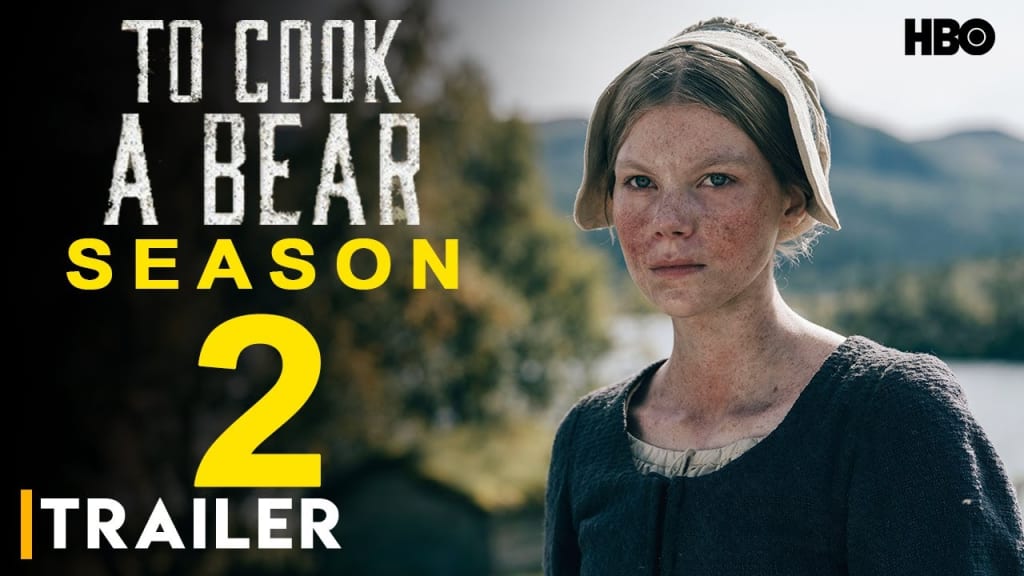
Some shows pull you in with spectacle. Others with shock. But every once in a while, a series comes along that captivates you through atmosphere, emotion, and quiet but unshakable tension. To Cook a Bear is one of those rare dramas. Set in the wild, unforgiving beauty of 19th-century Northern Sweden, the series blends crime, history, and spiritual reflection into a haunting Nordic noir unlike anything else on television.
A Story Born in the Frozen North
The series takes place in 1852, in a remote village deep in the northern wilderness—an environment as brutal as it is breathtaking. When a pastor and his family arrive to bring hope and reform to the struggling community, they quickly find themselves entangled in a chilling mystery.
A young shepherd girl has vanished. Villagers whisper that a bear is responsible. But the pastor and his Sámi foster son, Jussi, are not convinced. What begins as a search for truth soon reveals layers of corruption, prejudice, and fear rippling through the town.
The deeper they dig, the more obvious it becomes: the greatest danger is not the creature hiding in the forest, but the darkness hiding in the hearts of the people around them.
A Cast That Brings Emotional Weight
At the center of To Cook a Bear is the pastor—a man of fierce intellect and complicated faith. He arrives with ideals of justice and kindness, but the world he enters challenges those ideals at every turn. His performance is restrained yet deeply compelling, portraying a character torn between moral clarity and the harsh realities of the time.
Jussi, his Sámi foster son, provides the emotional spine of the story. As an Indigenous teenager navigating a society that questions his identity at every step, he embodies both vulnerability and strength. His relationship with the pastor—part mentorship, part partnership, part family—forms the heart of the series.
Supporting characters, from mill owners to town sheriffs to villagers clinging to superstition, add complexity and chaos.
A Slow-Burn Mystery with Real Depth
Unlike many modern crime dramas designed to shock from the very first minute, To Cook a Bear builds tension slowly and deliberately. The mystery unfolds one subtle clue at a time. Moments of silence matter. Small gestures matter. Landscape matters.
This is not a show to rush. It’s a show meant to be absorbed.
The pacing allows the story’s emotional and thematic layers to grow naturally. And when revelations do arrive, they hit much harder because of everything simmering beneath the surface.
Themes That Stay With You
What sets To Cook a Bear apart is its willingness to grapple with big, uncomfortable questions.
Faith vs. Reality
The pastor believes in justice, mercy, and the inherent goodness of people. But can those beliefs survive in a world shaped by violence, fear, and inequality?
Superstition vs. Truth
Villagers cling to the explanation of a killer bear because it’s easier than confronting human guilt. The series asks: why are people so willing to believe the unbelievable?
Prejudice and Power
Through Jussi’s experiences, the show reveals how prejudice becomes weaponized in communities built on hierarchy and ignorance.
The Nature of Evil
Is evil something born in the forest—or is it something cultivated in the human soul?
These themes elevate the series beyond entertainment, offering commentary on justice, identity, and morality that still resonates today.
The Setting as a Character
Few shows use nature as effectively as To Cook a Bear. The forests, rivers, fog, and long winters of the north aren’t just a backdrop—they’re living, breathing forces.
Nature isolates. Nature conceals. Nature reveals.
The vast wilderness becomes a mirror to the characters’ internal struggles. Coldness reflects emotional distance. Fog reflects uncertainty. The immensity of the landscape highlights how small—yet how dangerous—humans can be.
Final Thoughts: A Haunting, Beautiful Drama Worth Your Time
To Cook a Bear isn’t flashy. It isn’t fast. And that’s exactly why it stands out.
This is a show that trusts its audience. A show that builds its world with care. A show that lets silence tell the story as powerfully as dialogue. It is gothic and spiritual, chilling and tender, brutal and beautiful. It lingers long after the credits roll—not because of jump scares or plot twists, but because of what it says about human nature.
If you’re looking for a series that ignites your mind as much as it stirs your heart, To Cook a Bear belongs on your watchlist.
About the Creator
Keep reading
More stories from David Cook and writers in Geeks and other communities.
Sheriff Country: The Small-Town Crime Drama Making a Big Impact
There’s no shortage of crime dramas on television, but every so often, a series arrives that refuses to blend into the background. Sheriff Country is one of those rare shows—quietly intense, beautifully written, and grounded in the emotional weight of the people who live at its center. It’s a series that doesn’t rely on flashy action sequences or overly stylized characters. Instead, it gives viewers what they’ve been craving: authenticity.
By David Cook2 months ago in Geeks
The Rachels - 2025
Much to my surprise, I have kept a list of the films I‘ve seen this year. I daresay it isn’t complete. There will be films that snuck in on a late night in front of the TV that I would’ve forgotten to note. Or others, that I went to watch at the cinema, but then had a red wine and promptly forgotten about. But it’s not a bad approximation of the films I’ve seen this year. In total, there are 53 films listed, so an average of one a week and one for good luck.
By Rachel Robbins17 days ago in Geeks
Book Review: "The Descent of Man" by Grayson Perry
Well, I'm back to reading random books. The Descent of Man is one of those books I have never heard of at all, and I even refrained from looking at the blurb. I got it as my free book on a 'buy three get one free' deal and though it's quite short, it has a lot to say about the state of masculinity. This book has been read and reviewed by quite a lot of people so I'm kind of wondering how I missed it when it first came out in 2016. But, as always, Penguin Nonfiction never seems to disappoint - so let's take a look at where Grayson Perry stands on the state of modern masculinity and the ways in which men can improve their relation to their own gender and hopefully, the way in which they interact with the opposite gender.
By Annie Kapur2 days ago in Geeks


Comments
There are no comments for this story
Be the first to respond and start the conversation.