


Thomas Edison: genius inventor, American icon, and perhaps something far more sinister. History remembers him as the brilliant mind behind the light bulb and the phonograph, the so-called ‘Wizard of Menlo Park’. But what if his success wasn’t built on genius alone? What if it was built on deception, sabotage, and even murder?
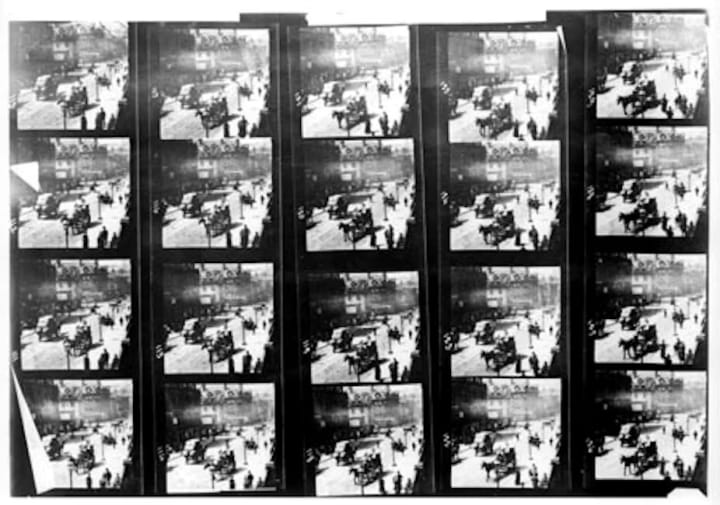
In the race to capture moving pictures, Edison had rivals. But none posed a greater threat than Louis Le Prince, the French inventor who, years before Edison’s famous work in film, successfully recorded the world’s first motion picture. Le Prince was on the cusp of unveiling his creation to the world, poised to revolutionise cinema as we know it. And then, in 1890, he vanished.
No body. No witnesses. No explanation. One moment he was boarding a train in France: then, gone. Officially, his disappearance remains a mystery. But some believe it was no accident. Edison, a man known for ruthless business tactics and legal battles, stood to gain everything from Le Prince’s absence. Could he have made sure his greatest rival never lived to claim his place in history?
Plot

It was the evening of 16 September 1890, and Louis Le Prince was on the brink of history. The French inventor had spent years perfecting his motion picture camera, capturing moving images years before Thomas Edison’s famous Kinetoscope. Now, he was preparing to travel to America to publicly unveil his creation, a moment that should have cemented his place as the true father of cinema. But he never made it.
That evening, Le Prince boarded a train in Dijon, France, bound for Paris. He had just spent time visiting his brother in Bourges, and the journey to Paris was the first step in his return to England before heading across the Atlantic. By all accounts, he was in good spirits. He had his luggage, his notes, and perhaps even a sense of triumph, he was about to take his life’s work to the world stage. But somewhere along that journey, something went terribly wrong.
When the train pulled into Paris, Le Prince was nowhere to be found. His belongings were missing. No passengers recalled seeing him leave the train, and there were no reports of disturbances or accidents on board. It was as if he had vanished into thin air. His family, frantic with worry, pressed for an investigation, but authorities found no clues. No body was recovered, no ransom demands were made, and no credible witnesses ever came forward.
Rumours swirled. Some speculated suicide, but those who knew him dismissed the idea; Le Prince was on the verge of success, not despair. Others whispered of foul play, pointing to rival inventors who had much to gain from his disappearance. And one name loomed larger than any other: Thomas Edison.
Edison was no stranger to ruthlessness. He had already waged a brutal campaign against Nikola Tesla in the so-called ‘War of the Currents’, using smear tactics, lawsuits, and even public electrocutions to discredit his rivals. Could he have gone even further to ensure that Le Prince never challenged his claim to the invention of cinema? Some believe Edison or his associates may have orchestrated Le Prince’s disappearance, eliminating a key rival before he could secure his patents.
Into the Theories

Murder:
One of the most widely speculated theories regarding Louis Le Prince's disappearance is that he was murdered to suppress his pioneering work in motion pictures. Le Prince was believed to have been close to perfecting a film camera before he vanished in 1890. Some argue that he may have been killed by Thomas Edison or his associates, who were embroiled in a bitter rivalry over the invention of the motion picture camera. Edison had been actively trying to undermine Le Prince’s patent claims, and the timing of Le Prince’s disappearance shortly before he could showcase his work to the world lends weight to this theory.
Suicide:
Another theory suggests that Louis Le Prince may have taken his own life due to financial stress. At the time of his disappearance, Le Prince was reportedly in debt and struggling to find investors for his motion picture project. He had been developing a motion picture camera and was hoping to demonstrate it to potential backers, but the pressure and lack of funds could have driven him to despair. The fact that he disappeared without a trace after boarding a train in France could be seen as an impulsive act of self-destruction brought on by overwhelming personal circumstances.
Accident:
Some believe that Louis Le Prince’s disappearance was the result of an accidental or involuntary event. He was last seen boarding a train in September 1890, but after that, no one saw him again. One theory suggests that he may have fallen victim to a mugging or an accident while travelling, leading to his death or incapacitation. The lack of evidence or a clear body could indicate that he simply wandered off, potentially suffering from amnesia or being in an unknown location where he couldn’t communicate his identity or whereabouts.
Why It's Shifty
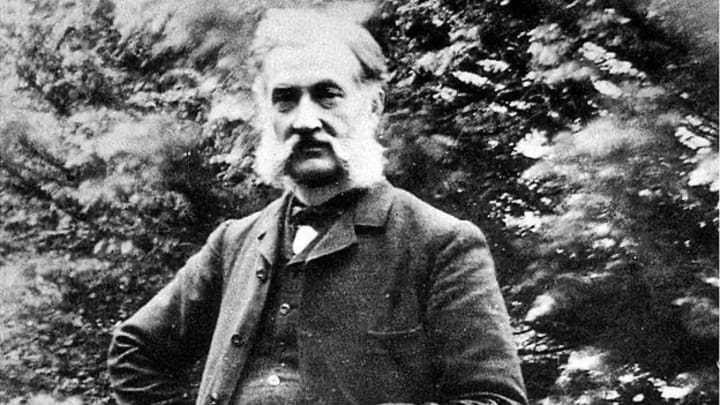
Louis Le Prince's disappearance remains controversial, partly because of Thomas Edison's reputation for undermining competitors. While Edison is often celebrated as a genius inventor, he was also known for his ruthless approach to business. Many admire him for his contributions to electric lighting and the invention of the phonograph, but a closer look reveals a much darker side.
Edison was infamous for using aggressive and unethical tactics to eliminate rivals, such as his public campaign against Nikola Tesla. His legal battles with George Westinghouse, who had a competing system for electrical power, are another example of his willingness to go to any lengths to maintain control. In the case of Le Prince, many believe that Edison saw his innovative work on motion pictures as a threat and may have played a role in Le Prince’s mysterious disappearance to suppress the competition.
Conclusion
The mystery of Louis Le Prince’s disappearance continues to puzzle historians, but the most likely explanation is less sinister than some might think. While theories involving Thomas Edison’s ruthless tactics against rivals are tempting, there is little concrete evidence to suggest that Edison had any direct involvement. It seems more plausible that Le Prince’s disappearance was the result of a personal crisis, perhaps an accidental death or even a deliberate act like suicide, driven by the financial strain he was under.
His struggle to secure funding for his work in motion pictures and the pressure he likely felt could have led him to a tragic end. Though the circumstances surrounding his vanishing remain unclear, the absence of a clear motive for murder suggests that a more ordinary fate, such as a misadventure or an emotional breakdown, may be the most likely scenario. The mystery of Le Prince’s fate thus remains a haunting, unanswered question in film history.
Next Week: Carnage on the Water - The Batavia
About the Creator
Annie Kapur
I am:
🙋🏽♀️ Annie
📚 Avid Reader
📝 Reviewer and Commentator
🎓 Post-Grad Millennial (M.A)
***
I have:
📖 280K+ reads on Vocal
🫶🏼 Love for reading & research
🦋/X @AnnieWithBooks
***
🏡 UK
Keep reading
More stories from Annie Kapur and writers in Geeks and other communities.
Book Review: "Black Days" by Jackson Ellis
I had never heard of this book, nor had I heard of the author. I simple just found it on my recommendations list on Amazon. I would have got it at the library but it was on Kindle Unlimited and they didn't have it in the library. I wanted something that was going to be edging on the psychological thriller routine but wasn't one of those 'married couple finds out one of them is a psycho' things. At the beginning, I thought it was going to be more like a horror novel, but as it goes on it turns almost into a Sci-Fi. I'm still not sure what to think about it. I will say that if you enjoy dark Sci-Fi films then this is for you. I liked it, it just wasn't what I thought it would be.
By Annie Kapur9 months ago in Geeks
Thank You, John Cena
When December 13, 2025 arrived, I welcomed it. I welcomed it with open arms. The reason was simple: I wanted to see how John Felix Anthony Cena, Jr, someone who I've been a fan of for over 20 years, would end his iconic and legendary career.
By Clyde E. Dawkins28 days ago in Geeks
Premier League in India: How to Watch
The 2025–26 Premier League season is underway, marking the 34th edition of the competition and the 127th year of top-flight English football. Liverpool start their title defense with confidence after lifting their second Premier League trophy last season, but the return of Leeds United, Burnley, and Sunderland ensures fresh rivalries – including the long-awaited Tyne–Wear derby, back for the first time since 2015–16.
By David Cookabout 16 hours ago in Geeks
A Failed Artist, A Disillusioned Poet, An Underpaid Game Show Host
I took my son and niece to Gori, a small town in Georgia where Joseph Stalin was born. They talked me into visiting the Stalin's Museum, the largest in the post-Soviet space. I had resisted going there because I just can't stand the monster and know enough about him, or so I thought.
By Lana V Lynx6 days ago in FYI




Comments
There are no comments for this story
Be the first to respond and start the conversation.