
The Worst Films of 2004 (according to the critics)
Poor adaptations, a series of comedy burials and a pair of career-altering roles...

2004 can be remembered as a year filled with unexpected events and groundbreaking new beginnings. George W. Bush won a second term as the President of the United States, while Saddam Hussein went on trial in Iraq for crimes against humanity. Greece would shock the world by winning the 2004 European Football Championships despite having never won a major international tournament match before this competition. Harvard student Mark Zuckerberg launched TheFacebook, a social networking site which fellow Harvard University students could use to connect with one another. NASA's unmanned Cassini-Huygens spacecraft would arrive at Saturn after a seven-year voyage. Armed robbers would steal several Edvard Munch paintings, including The Scream, from the Munch Museum in Oslo, Norway. . Finally, Taipei 101 would become the tallest building in the world when it opened in Taiwan.
The 'unexpected' theme continued onto the top of the worldwide box office. While the end-of-year top 10 was still dominated by sequels (5 out of 10), fewer big-money franchises were being represented. While Shrek 2, Harry Potter and the Prisoner of Azkaban and Spider-Man 2 took the podium placings for the year, Meet the Fockers and Ocean's Twelve, two comedy films sold on their all-star casts, would both make the list. The power of the movie star lives on. While the top 10 also had its usual dose of animation, with Dreamworks' Shrek 2 and Shark Tale and Pixar's The Incredibles all finding an audience, 2004 also felt like a step back in time. Closing out the end-of-year worldwide top 10, we had a biblical epic in Mel Gibson's Passion of the Christ, a sword-and-sandals epic in Wolfgang Petersen's Troy, and a big-budget disaster movie with Roland Emmerich's The Day After Tomorrow. Was this 2004 or 1954?
While audiences enjoyed those movies, movie critics enjoyed a trio that would dominate the awards circuit. Sideways, a comedy-drama about two middle-aged men who take a trip through California's wine country, The Aviator, a biopic about the life of Howard Hughes and Million Dollar Baby, a boxing drama about the relationship between a young women's boxer and her veteran trainer, would all dominate the end-of-year critical top 10 lists.
However, you are not here to read about the good movies of 2004. You want to learn about the cinematic dreck, the worst of 2004's filmic offerings. Once again, the depths of online review aggregators Rotten Tomatoes and Metacritic have been searched to find the worst of the worst. The ten movies on this list have the lowest average approval score based on the opinions of critics collated on both websites. Reading to see bad Christmas movies, bad film adaptations and roles that ruined careers forever? Then read on...
10. The Whole Ten Yards (Dir. Howard Deutch) 14%
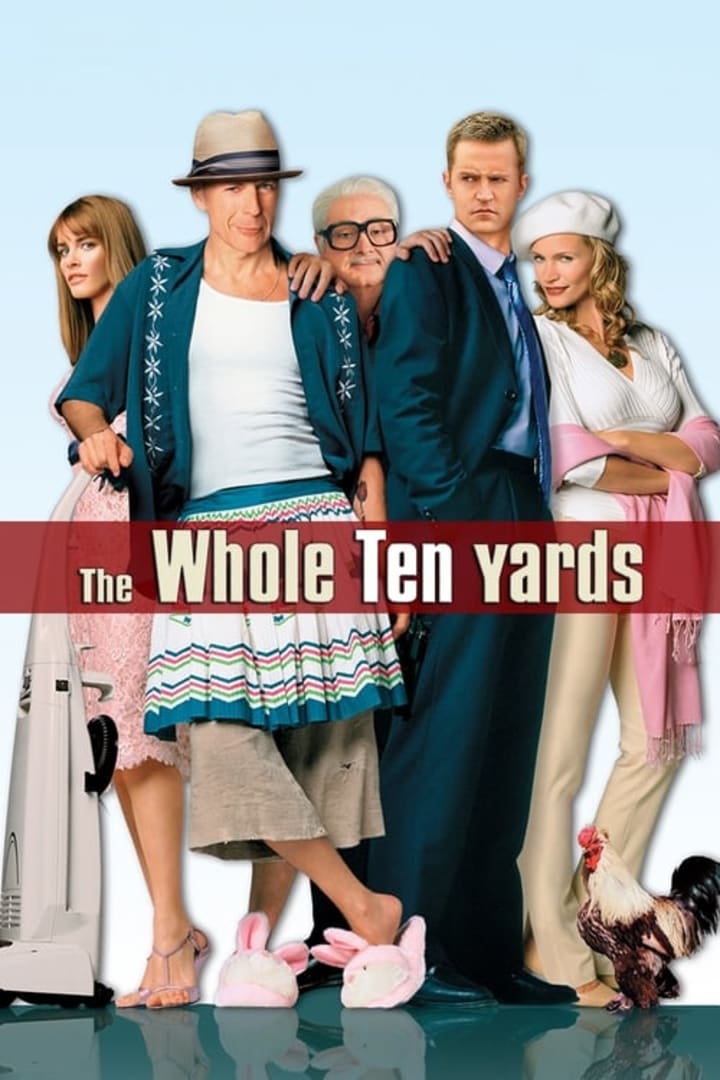
Another 'Worst Movies' list, another movie featuring a Friends cast member in the lead role. The No.10 spot on the 2003 list was occupied by the romantic comedy Marci X, starring Lisa Kudrow. Now in the year that Friends ended its 10-year run on television, it is the turn of a movie starring America's 'favourite Friend' Chandler Bing, Mr Matthew Perry. The film in question is the 2004 crime comedy sequel The Whole Ten Yards.
After making his film debut in 1988, Matthew Perry spent the years before Friends making minor appearances in She's Out Of Control, Fat Man & Little Boy and Getting In. However, once Friends took off, Perry was catapulted onto film posters with his name now featured above the title. The years 1997 to 2000 each featured a Matthew Perry comedy movie. He got off to a good start co-starring with Salma Hayek in the 1997 romantic comedy Fools Rush In. However, the period buddy comedy Almost Heroes (the final film featuring Chris Farley) and the love triangle buddy comedy Three to Tango had failed to find an audience or any critical approval. By 2000, Matthew Perry was yet to have that big hit movie that people could identify him with outside of his day job. He would soon get that with The Whole Nine Yards, a crime comedy featuring Perry in the lead role alongside Bruce Willis. Despite middling critical reviews, the film spent three weeks atop the US box office and eventually grossed $106 million worldwide from a $40 million budget. Warner Bros and Franchise Pictures were impressed enough with these numbers to order a sequel. Four years later, The Whole Ten Yards would be released in cinemas worldwide.
The plot of The Whole Nine Yards focused on dentist Nicholas 'Oz' Ozeransky (Matthew Perry), who receives a shock when he finds out his new neighbour is the infamous contract killer Jimmy 'The Tulip' Tudeski (Bruce Willis). Tudeski has a bounty on his head, and Oz considers revealing his whereabouts to mob boss Janni Gogolak (Kevin Pollak). However, after accidentally revealing his location to Gogolak, Oz eventually helps Jimmy deal with his problem, and the two become friends. Both men also find love along the way; Jimmy with Oz's assistant and secret contract killer Jill (Amanda Peet) and Oz with Jimmy's ex-wife Cynthia (Natasha Henstridge).
In The Whole Ten Yards, Jimmy (Willis) is now retired from his days as a contract killer, while Oz (Perry) now owns a dental practice and is expecting his first child with Cynthia (Henstridge). However, their lives of tranquillity are soon jeopardised by the arrival of Jimmy's former Mob boss László Gogolák (Kevin Pollak), the father of the mob boss killed by Tudeski in the previous film. Finding out that Jimmy faked his death to retire from contract work, László kidnaps Cynthia and threatens Oz to reveal Jimmy's location. Oz manages to enlist the help of Jimmy and Jill (Peet) to help recover his wife from Jimmy's old boss. However, tensions rise between friends and partners along the way.
While The Whole Ten Yards would see the original film's cast return for the sequel along with producers David Willis and Allan Kaufman, there would also be plenty of change behind the scenes. Howard Deutch (Pretty in Pink, Some Kind of Wonderful, The Great Outdoors) would replace Jonathan Lynn in the director's chair. Mitchell Kapner, who had made his screenwriting debut on The Whole Nine Yards, would be replaced by Midnight Run's George Gallo as the writer of the sequel's screenplay. Arnold Rifkin, who had collaborated with Bruce Willis on recent movies like The Kid and Tears of the Sun, would join the production team along with 'Worst Movies' list regular Elie Samaha, whose name you may associate with previously-discussed movies Battlefield Earth, FeardotCom and Ballistic: Ecks vs Sever. The fact that he was involved with The Whole Ten Yards and the film subsequently became a critical and commercial failure is no coincidence.
The Whole Nine Yards opened at No.1 at the US box office upon its release in 2000. Made with the same $40 million budget as its predecessor, The Whole Ten Yards would open 9th domestically after being released over the Easter weekend, grossing $7.4 million. The movie would drop out of the box office top 10 the following week after making half as much money and quickly fade away. The Whole Ten Yards would finish with a domestic gross of $16.3 million, barely half of the film's budget and a significant drop from its predecessor's $57.2 million gross. The same lack of success was also felt internationally, with numbers dropping from $49.1 million to $9.8 million. Only in Russia would The Whole Ten Yards gross more than $1m, with the movie even finishing No.1 in its opening week. However, these Eastern numbers were not enough to bolster the movie's comparatively meagre worldwide takings of $26.1 million, a significant downgrade from the $106 million made by The Whole Nine Yards four years earlier. This worldwide gross would also make The Whole Ten Yards a box office flop. I guess people weren't interested in seeing a sequel to The Whole Nine Yards.
While The Whole Nine Yards had received mediocre reviews, with critics writing that the film was charming but not especially funny, there would be no such reservations for its sequel. A 4% approval rating on Rotten Tomatoes underlines their overall sentiment. Critics found that The Whole Ten Yards was undoubtedly lacking in the humour department for a comedy. Arizona critic Bill Muller would write, "You'd have better luck locating the Lost Dutchman Mine than finding a chuckle in this film". BBC film critic Neil Smith would describe his viewing of The Whole Ten Yards as "98 minutes of mirth-free entertainment". Peter Howell of the Toronto Star would expand upon these opinions, writing that "So mirthless is this misbegotten enterprise, the sound of fake chucklers busting a gut would at least have given us valuable clues as to when we're supposed to laugh."
Part of the reason why critics found so little to laugh about in The Whole Ten Yards was that they considered the film unnecessary and the plot stale. Philadelphia critic Steven Rea would write, "Where the first pic breezed along with gags and gunplay, this forced follow-up is artificial to the hilt - fueled on a kind of trying-too-hard hilarity that makes even good actors look bad". Elvis Mitchell (New York Times would say that The Whole Ten Yards was "more afterthought than accomplishment, a cocktail made with orange juice and Champale instead of actual bubbly." Finally, Nathan Rabin of the AV Club would use the example of this movie to ask the question "Why do filmmakers persist in making sequels to movies nobody seems to have liked in the first place, let alone loved with the kind of passion that leaves them hungry for more?" With those box office number, he might have a point.
The Whole Ten Yards would be the last major studio movie headlined by Matthew Perry for several years. After appearing in TV movies and independent works, he would finally lead another comedy in 2009's body-swap comedy 17 Again, his last movie role to date.
9. Godsend (Dir. Nick Hamm) 14%
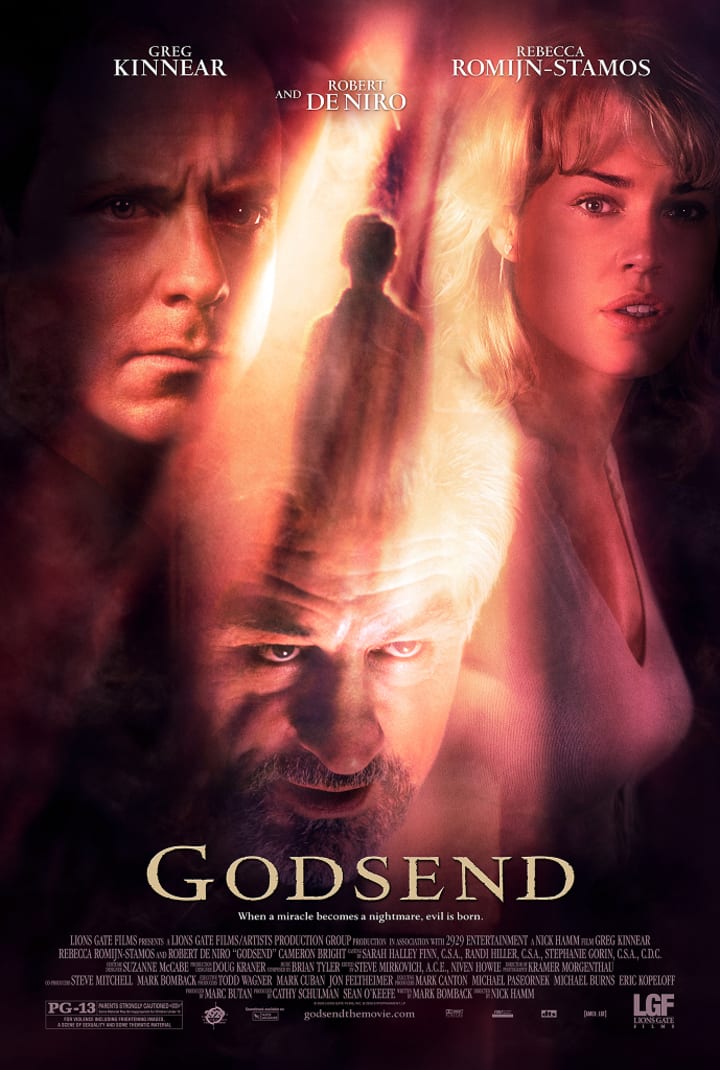
Robert De Niro would start in four movies in 2004. Two of these movies, Shark Tale and Meet the Fockers, would end up among the top 10 highest-grossing films of the year. The other two would become two of the most hated films of 2004. Robert De Niro would appear twice on this list if only the drama The Bridge of San Luis Rey had not received its widest release until 2005 and had received a score on Metacritic. The Bridge of San Luis Rey has a 4% approval rating on Rotten Tomatoes. Anyway, the fourth and final film made by Robert De Niro in 2004 does make this list, a psychological horror movie called Godsend.
In Godsend, the lives of married couple Paul and Jessie Duncan (Greg Kinnear and Rebecca Romijn) take a turn for the tragic when their eight-year-old son Adam (Cameron Bright) is hit by a car and killed when he wanders into the middle of the street to fetch his basketball. Soon afterwards, Paul and Jessie are approached by Dr Richard Wells (Robert De Niro), who offers to clone Adam, giving the couple another life for their son. The couple agrees to the cloning, and the procedure succeeds, giving Paul and Jessie a second Adam. Everything is fine with the couple and their cloned son until this new version of Adam reaches his eighth birthday, the age at which the original Adam died. As the life of this new Adam can no longer be predicted, the boy begins to have visions of a boy named Zachary. Soon, Adam II starts to exert more negative personality traits and begins to act in a way that concerns his parents. Soon, death starts to creep back into the lives of Paul and Jessie once more as they learn the truth about Adam II's visions.
Godsend was the fifth movie directed by Nick Hamm, who had previously helmed the 2001 psychological thriller The Hole. The movie's writer also had previous work in thrillers, as Mark Bomback's sole previous movie credit had come with 1998's The Night Caller. Godsend was produced by 2929 Entertainment (a company co-founded by Mark Cuban) and Atmosphere Pictures. The heads of both companies, Marc Butan and Mark Canton, would act as producers on Godsend, with Mark Cuban acting as an executive producer. They would be joined by first-timer Sean O'Keefe and Cathy Schulman, whose background came in comedies like Isn't She Great and Sidewalks of New York but had recently ventured into more serious territory with 2003's Tears of the Sun. Godsend would be made on a budget of $25 million and would be distributed by Lionsgate Pictures on 30th April 2004.
Godsend would open 5th at the US box office, grossing $6.9 million in its opening weekend to sit behind Man on Fire, 13 Going on 30 and fellow new releases Mean Girls ($24.4m) and Laws of Attraction ($7m). The following week, the movie would bring in $2.7m, a nearly two-thirds drop from which the film would not recover. Godsend would eventually finish with a domestic gross of $14.5 million, rendering the movie a box office bomb in its home country. Outside of America, Godsend would perform slightly better. The film would top the Spanish box office in its first week en route to a $2.7m gross, while showings in Italy ($2.2m) and the UK ($3m) would contribute to a total international gross of $15.7 million. Godsend would eventually finish with a total worldwide gross of $30 million, a box office failure when all costs are accounted for, but recouping more than the movie's original production budget.
While watching Godsend, critics found the film's plot only reminded them of older, better movies. Dale Edelstein (Slate) would describe Godsend as "A pea-brained hodgepodge of The Omen (1976), The Sixth Sense (1999), and about 30 Grade-Z Bela Lugosi mad-scientist movies." Mark Holcomb of The Village Voice would exclaim that Godsend's director Nick Hamm works "from the assumption that nobody remembers grade school science, let alone the last 30 years of horror movies...clumsily recast[ing] The Omen as a cautionary tale featuring a human incarnation of Dolly the sheep." Variety's Joe Leydon would praise the film's set-up as "promising" but complained that the movie unfortunately "devolves into a stale rehash of cliches and conventions left over from dozens of demon-child thrillers." Aside from the comparisons, Desson Thompson (Washington Post) would call Godsend "a thing of pain", while Marc Savlov would pin it as "an unresurrectable muddle".
8. Twisted (Dir. Philip Kaufman) 13.5%
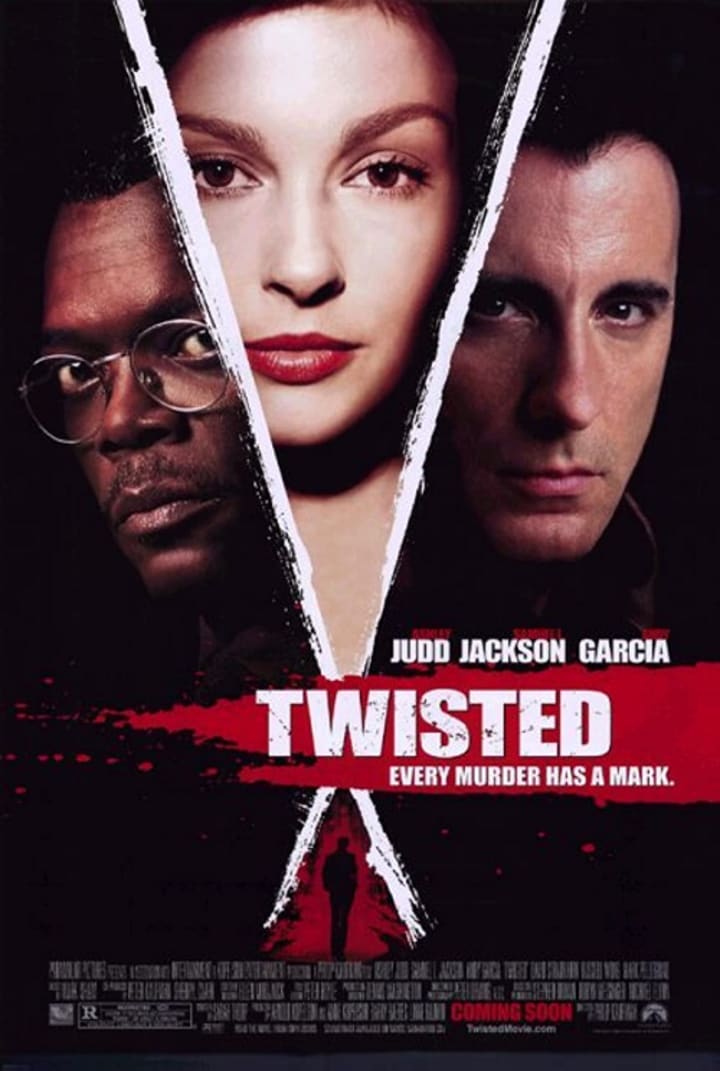
Remember when Ashley Judd was a major star in Hollywood? After making her name with the 1993 independent hit Ruby in Paradise, Judd received supporting roles in Heat and A Time To Kill before earning her first significant leading role with 1997's Kiss The Girls, top-lining alongside Morgan Freeman. After that film proved commercially successful, Ashley Judd was off to the races as a leading actress in Hollywood. Double Jeopardy, Simon Birch, Eye of the Beholder, Someone Like You and The Divine Secrets of the Ya-Ya Sisterhood would follow between 1998 and 2003. Critics disliked all these movies, and very few did exceptionally well money-wise. Still, Ashley Judd was seen as a trusted actor to lead or have a featured role in films of many different genres, from thrillers to romantic comedies. In 2004, Ashley Judd would headline the crime thriller Twisted with Samuel L. Jackson and Andy Garcia. This movie would kill Ashley Judd's career as a leading actress in one fell swoop.
In Twisted, Ashley Judd is Jessica Shephard, an alcoholic and nymphomaniac police inspector haunted by her father murdering her mother, her ex-lovers and himself when she was younger. Now looked after by her mentor and foster father, John Mills (Samuel L. Jackson), Jessica soon finds herself at the centre of her own investigation as several former one-night stands wind up dead. Aided by new partner Mike Delmarco (Andy Garcia), the pair must find out the truth behind these murders while the bodies pile up.
Twisted was directed by Philip Kaufman, whose previous work included Invasion of the Body Snatchers (the Donald Sutherland version), The Right Stuff and The Unbearable Lightness of Being. Arnold Kopelson, a veteran of thrillers like The Fugitive, Seven and Platoon, would serve as one of the film's producers along with his wife and regular producing partner Anne. Apart from these two, the crew behind Twisted was not particularly well-known. The film's writer Sarah Thorp's sole previous writing credit had been the 2001 independent thriller See Jane Run, starring Clea DuVall. Joining the Kopelsons as Twisted's production team would be Barry Baeres, Florina Massbaum (who had worked with Andy Garcia on The Unsaid) and Linne Radmin (producer of the Madonna movie The Next Best Thing). Outside of Ashley Judd, Samuel L. Jackson and Andy Garcia, Twisted had a decent supporting cast, including David Straithairn, Mark Pellegrino and Titus Welliver.
Twisted had the misfortune of being released domestically in the same week as Mel Gibson's biblical epic, The Passion of the Christ. While that movie grossed $83.8 million to take the top spot at the US box office from 50 First Dates, Twisted would finish below the Adam Sandler comedy with an $8.9 million opening weekend gross. While The Passion eventually spent five weeks at the top to become one of the year's highest-grossing films, Twisted would fail to recoup its budget in its home country. After three weeks in the US top 10, the film would finish with a domestic gross of $25 million, half its $50 million production budget. Internationally, half of the film's box office takings would come from Italy ($3.6m), Spain ($2.7m) and France ($1.9m). However, the film would underperform elsewhere, including the UK, where it would peak at #10 in its first week before quickly falling into obscurity. Eventually, Twisted would finish with a worldwide gross of $41 million, failing to recoup its budget, rendering it a box office failure.
To give you an idea of the critical reception for Twisted, Rotten Tomatoes ranked the movie as the 17th-worst movie released during the 2000s. Twisted currently holds a 2% approval rating on Rotten Tomatoes based on 135 critical reviews. With such a low score, the film is hard to search for on Rotten Tomatoes. To access the film's page, you have to search for Ashley Judd and scroll through her filmography to find the worst-reviewed film of her entire career. A kinder aggregate score of 25% on Metacritic stops this movie from being ranked higher on this list.
Critics would find Twisted cliched and predictable for a supposedly suspenseful thriller, leading to an unsatisfying product. Roger Ebert would say Twisted "walks like a thriller and talks like a thriller, but squawks like a turkey." His At The Movies co-presenter Richard Roeper would allude to Ebert in his review, saying that "this movie plays like they were reading [Roger Ebert's] little movie glossary, and they took every cliche in there." Michael O'Sullivan (Washington Post) would write that Twisted "gives a new meaning to the word obvious." Scott Brown of Entertainment Weekly would claim that the movie "would be offensive were it not safely neutered by its own stupidity." Sarah Thorp's script would come in for significant criticism, labelled as predictable, implausible, and full of plot holes with inconsistent characters. Many writers even questioned how the cast and director Philip Kaufman got attached to a script this bad.
Following the failure of Twisted, Philip Kaufman would not direct another feature film. Eight years would pass before he helmed his last project, Hemingway & Gellhorn, for HBO in 2012. After heading this film's cast, Ashley Judd would never lead another Hollywood picture. In the years following, Judd would take supporting roles in family movies like The Tooth Fairy and Dolphin Tale and franchises like Olympus Has Fallen and Divergent. Twisted would end Ashley Judd's status as a leading actor in Hollywood at 36 years old, and she has never recovered from this critical and commercial bomb.
7. Christmas With The Kranks (Dir. Joe Roth) 13.5%
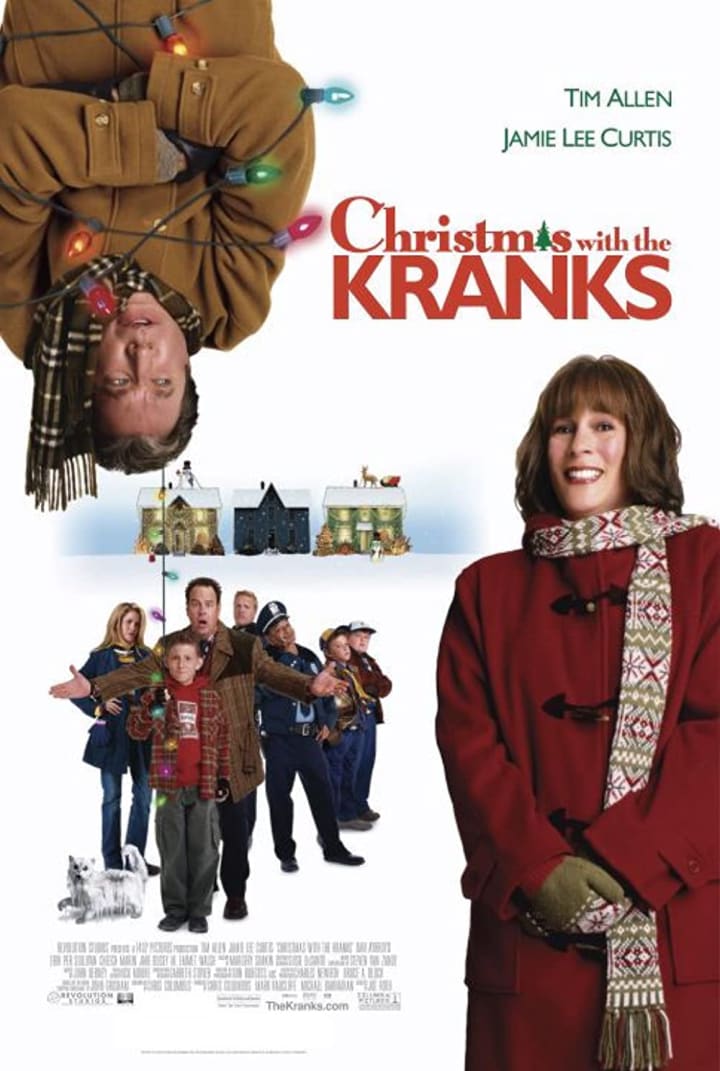
Christmas movies are now made by streaming services like Netflix or Disney+ or churned out as cookie-cutter TV movies by Hallmark or its ilk. We have now moved away from when there used to be one or even multiple big Christmas movies being made by the biggest studios each year. You will no longer see Hollywood take a chance on Home Alone, Elf or The Santa Clause. Why is this no longer the case? While Christmas movies were still making money in the 2000s, the decade also brought a series of high-profile critical bombs, including the film discussed here, Christmas With The Kranks.
In 2004, Christmas with the Kranks was a high-profile release for Columbia Pictures. Made on a budget of $60 million, the film was written and co-produced by family movie powerhouse Chris Columbus (coming off the Harry Potter movies) and based on a best-selling comedic novel written by John Grisham, of all people. The film soundtrack was produced by Steven Van Zandt of Bruce Springsteen's E Street Band and Sopranos fame. The lead roles were played by another family comedy powerhouse in Tim Allen and Jamie Lee Curtis, who had hit it big with the Freaky Friday remake the previous year. Even Dan Aykroyd had agreed to show up in a supporting role.
What was the plot of Christmas with the Kranks? Husband and wife Luther and Nora Krank (Tim Allen and Jamie Lee Curtis) find themselves with an empty nest following Thanksgiving, with their daughter Blair (Julie Gonzalo) heading off for a Peace Corps mission in Peru. Seeing how much money they spend on Christmas every year, Luther and Nora decide to do something different this year by spending their Christmas on a 10-day cruise around the Caribbean. However, news of their upcoming holiday filters around the neighbourhood and Luther and Nora soon find themselves as social pariahs. The holiday news soon extends further, with Luther and Nora continuing to prepare for their holiday while their neighbours begin a campaign to force the Kranks to conform to local Christmas traditions.
Christmas With The Kranks would release on Thanksgiving weekend in 2004. The film would have a good opening, posting $21.5 million to finish 3rd in the US box office standings behind the Disney two-punch of National Treasure ($32.1m) and The Incredibles ($23.5m). Elsewhere, the film would finish 3rd in the UK, 4th in Austria and Mexico, and 5th in Germany and Australia in its first week. Post-Thanksgiving, the film would rise to 2nd domestically and remain in the top 10 until Christmas. Christmas With The Kranks would finish with a domestic gross of $73.7 million, recouping its production budget, if not its marketing budget. However, Colubmia's profits would increase when the international gross of $22.7 million was added, with the film spending multiple weeks inside the top 10 of the countries listed above. The film was still being readily watched in Mexico until early January 2005. All in all, Christmas With The Kranks would finish with a worldwide gross of $96.5 million. Not the numbers that Columbia would have hoped for, especially with Tim Allen starring, but not terrible.
However, 'terrible' would be the perfect word afforded to the critical reception of Christmas with the Kranks. With a 5% approval rating, Christmas With The Kranks is the second worst-received Christmas movie on Rotten Tomatoes, only beaten by the 2010 version of The Nutcracker. The film also ranks 58th on the site's Worst Films of the 2000s. When people talk about bad Christmas movies, Christmas With The Kranks is never too far from their lips.
Garish, coarse, unfunny, mean-spirited. All words that can and have been used to describe Christmas With The Kranks. Many critics would point to the film's message (whether intentional or not) of conforming to the status quo and bowing to peer pressure. Ty Burr (Boston Globe) would write: "Here's a film that says Christmas is a sellout, that your neighbours are morons, and that suburbia is a playground of fascist conformity, and then it concludes that anyone who actually believes that is a heartless Scrooge." Stephen Holden (New York Times) would echo these thoughts: "Lockstep suburban conformism enforced with fascist severity is the joke driving Joe Roth's family comedy."
On top of that, Chris Columbus's script was criticised and viewed as stale and unfunny. Jan Stuart of Newsday would say that "A deadpan little satire by John Grisham has been reinterpreted as a shrill and mean-spirited orgy of banana-peel pranks", while John Monaghan (Detroit Free Press) would claim that "instead of a funny and relevant little bromide about capitalism, conformity and forced holiday cheer, the movie is about as fresh as a week-old mug of egg nog." Lou Lumenick would underline Christmas With The Kranks as "A loud, coarse and witless family comedy", while fellow New York critic Jami Bernard would state, "This movie reeks."
Christmas With The Kranks would be the final John Grisham book adapted into a feature film, with Hollywood now being burned from working with the master of the legal thriller. The film would also dent Tim Allen's reputation as a draw. The next couple of years would bring a series of commercial and critical flops for the former Home Improvement star, leading him to grasp the lifeboat of Toy Story to keep his career afloat. Jamie Lee Curtis has not appeared in a Christmas movie since.
However, Christmas With The Kranks would not be the worst-reviewed Christmas movie of 2004. That title would instead go to...
6. Surviving Christmas (Dir. Mike Mitchell) 13.5%
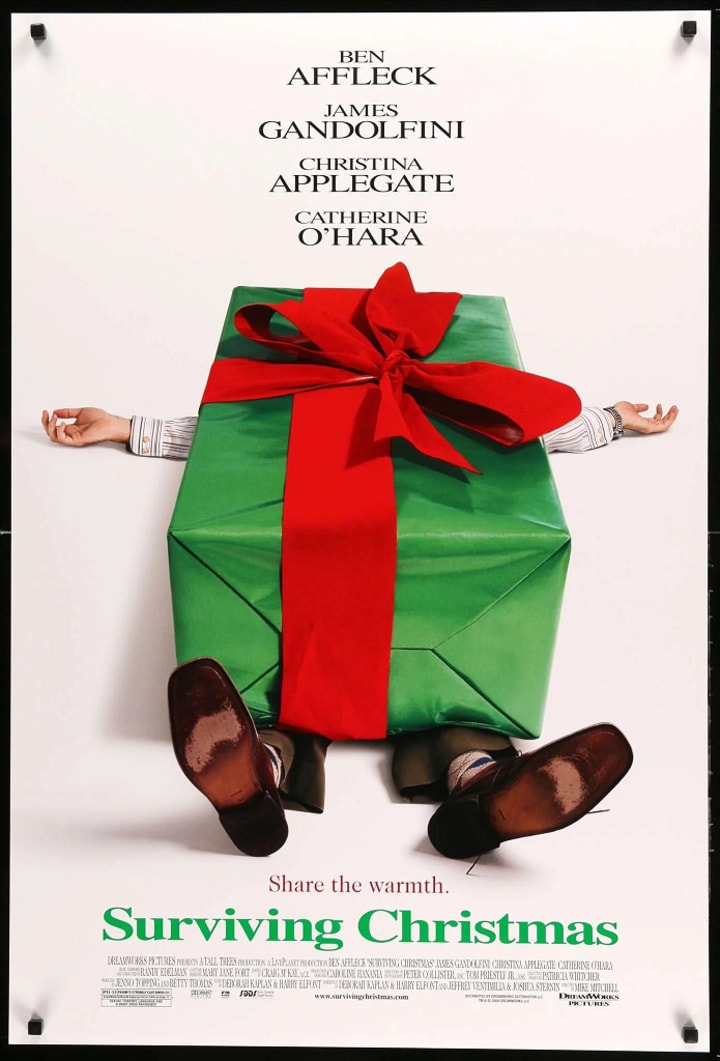
Coming to the end of 2004, Ben Affleck desperately needed a hit movie. 2003 had seen the leading man miss with all three of his releases: Marvel superhero movie Daredevil, romantic crime comedy Gigli (see Worst Films of 2003 for more info) and John Woo's sci-fi action movie Paycheck. Following these failures, Affleck would turn to an old friend in Kevin Smith, who had played a significant role in his early career by casting him in Mallrats and the lead role in Chasing Amy. In 2004, the pair's reunion for the comedy-drama Jersey Girl, about Affleck playing a single father raising his young daughter after his wife died in childbirth, would again fail to make bank at the box office and received the worst reviews of Kevin Smith's career to that point. To stop 2004 from turning into another year to forget, Ben Affleck would have to hope that Surviving Christmas, the romantic comedy he had filmed more than a year earlier, would finally be the one to end his rut.
In Surviving Christmas, Ben Affleck plays Drew Latham, a wealthy advertising executive who faces spending Christmas alone after his girlfriend Missy (Jennifer Morrison) dumps him. After meeting with his therapist, who tells him to write down all his grievances and burn the paper at his childhood home, Drew returns to said home to find it now occupied by a new family, the Valcos (James Gandolfini, Catherine O'Hara, Christina Applegate, Josh Zuckerman). Instead of leaving, Drew pays the family $250,000 to allow him to stay in the house with them and for the Valcos to pose as his family until Christmas is over. They accept. While this arrangement is going on, Drew falls for the daughter Alicia (Applegate), and the two grow closer together. However, things become complicated when Missy shows up with her parents wanting to get back together with Drew while also wanting to meet his 'family'. What is a boy to do?
Surviving Christmas was directed by Mike Mitchell, whose sole previous time in the director's chair had come with Deuce Bigalow: Male Gigolo. The story for Surviving Christmas came from Deborah Kaplan and Harry Elfont, who had previously written A Very Brady Sequel, Can't Hardly Wait, Josie and the Pussycats and worst of all, The Flintstones in Viva Rock Vegas. Yeah. As well as creating the story, Kaplan and Elfont would write the film's screenplay along with Jennifer Ventimilia and Joshua Sternin. Surviving Christmas would be the motion picture debut of Ventimilia and Sternin, whose previous credits had come exclusively on television for Murphy Brown, That 70's Show, 3rd Rock From The Sun and two episodes of The Simpsons ('Round Springfield' and 'Simpson Tide'). When four writers are penning your screenplay, the result had better be good.
With two writing partnerships working on the script, another set of creative partners would serve as the main producers of Surviving Christmas. Betty Thomas and Jenno Topping had brought The Brady Bunch Movie, Dr Dolittle, Charlie's Angles (2000), and I Spy to the big screen. Surviving Christmas would see Thomas and Topping reunite with Deborah Kaplan and Harry Elfont for the first time since Can't Hardly Wait.
Surprisingly for a Christmas movie, Surviving Christmas would open on 22nd October 2004, nine days before Halloween. The film was originally scheduled for a Christmas 2003 release. However, due to Paycheck opening on Christmas Day 2003, the decision was made by Dreamworks to delay the film's release to the following year. However, that still doesn't explain why Dreamworks released their Christmas movie in October. Despite a year's delay, Surviving Christmas would end up as one of the biggest box-office bombs of 2004. Opening in 2,750 cinemas domestically, the film would end up with a final gross of $15.1 million. Opening 7th at the US box office in its opening weekend, the film's gross of $4.44m was way below the $39.1m earned by The Grudge, a movie more people are likely to see in late October. After that awful start, Surviving Christmas would drop to 9th over Halloween weekend and fall out of the US top 10 the following week. Eventually, Dreamworks would have to pull the film from cinemas after five weeks of release, with the movie now sitting 33rd in the standings.
If Surviving Christmas failed to attract audiences in its own country, the film would fare no better elsewhere. Outside of Mexico and Russia, where the film would be somewhat of a hit and gross $1.2m and $1.05m, respectively, Surviving Christmas would tank internationally, registering little more than a blip. Even in the UK, the film would open at #16 before quickly disappearing.
As with the films that make these lists, the commercial failure of Surviving Christmas married well with the abysmal reviews it received from critics. Critics would find the movie unfunny and its story illogical. BBC critic Stella Papamichael would write: "All that's vaguely funny or Christmassy about [Surviving Christmas] are the sweaty beads of desperation which string together like fairy lights across Affleck's forehead as he hammers out one lame gag after another." Peter Howell (Toronto Star) said, "Surviving Christmas is about as funny as a rubber crutch for Tiny Tim." Newark critic Lisa Rose would write that Surviving Christmas carried the risk of "early onset holiday depression, a thought echoed by Jami Bernard, who wrote, "Not since Scrooge got a look at Christmas future have the holidays seemed so shudderingly depressing."
Multiple critics would even refer to the film's unusual Halloween release in their negative reviews. CNN's Paul Clinton would say that Surviving Christmas "is just in time for Halloween, and it is a scary movie. Unfortunately, it's supposed to be a comedy." Philip Wuntch (Dallas Morning News would also agree that the film's release date was apt, writing, "It's a real horror."
Finally, two critics would go all in on their views of Surviving Christmas. WesleyMorris (Boston Globe) would write that Surviving Christmas " is exactly what's wrong with Hollywood". Carrie Rickey (Philadelphia Enquirer) would summarise the movie as "from conception to execution, an unalloyed, unqualified, unmitigated disaster."
On top of all that, Surviving Christmas would earn three Razzie nominations for Worst Picture, Worst Actor (Ben Affleck) and Worst Screenplay). The movie would walk away empty-handed.
Ben Affleck would take 2005 off. He would finally end his cinematic rut in 2006 with Hollywoodland, where he would play Superman actor George Reeves to critical acclaim and several award nominations.
5. The Cookout (Dir. Lance Rivera) 10%
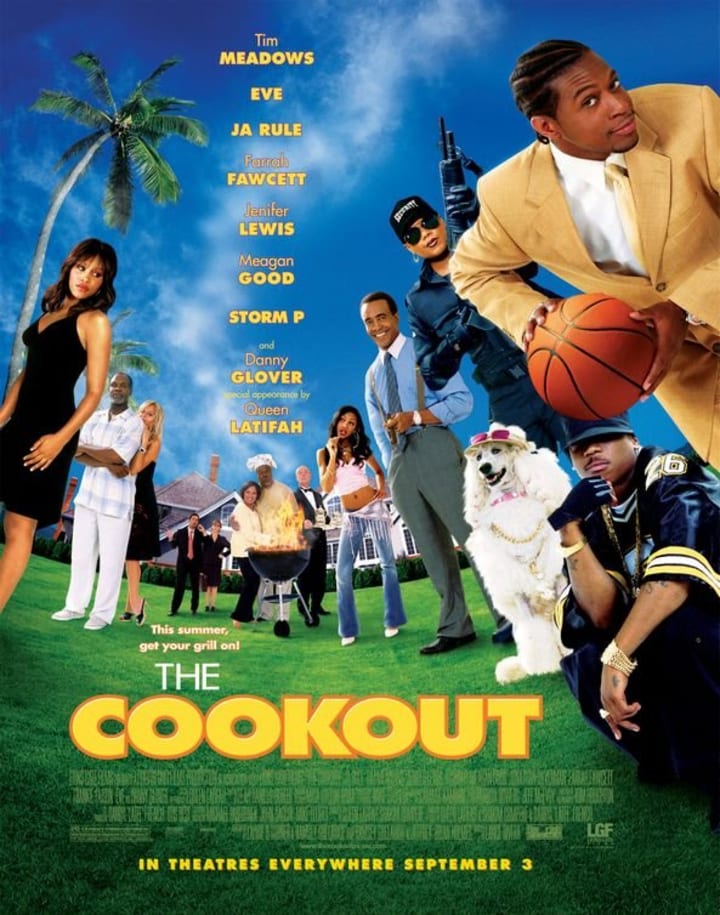
Sometimes you have to look at a film's cast list and wonder whether the casting director went through their Rolodex with their eyes closed before dropping their fingers of different names. The Cookout is a case like this. The film's cast features a mix of talented black actors and comedians, including Tim Meadows, Danny Glover, Meagan Good, Jenifer Lewis, Reg E Cathey and Frankie Faison, and rappers Ja Rule and Eve. However, other acting choices like The Sopranos' Vincent Pastore, Weekend at Bernie's Jonathan Silverman and Farrah Fawcett produce raised eyebrows. However, if the film works, these fears disappear. The fact that I'm pointing this out to you tells you that The Cookout was not a good movie.
The Cookout would release into cinemas on 3rd September 2004. The film was produced by Happy Madison Productions (owned by Adam Sandler and distributed worldwide by Lionsgate. The film focuses on Todd Andersen (Quran Pender), a working-class basketball player who has just signed a $30 million contract with his hometown NBA team, the New Jersey Nets. To celebrate, he buys a new house in a high-class neighbourhood and hosts a family cookout to celebrate his recent success. However, as the more eccentric characters of Todd's family begin to show up at the cookout, they start to clash with his new neighbours, including the neighbourhood security guard (Queen Latifah), a local judge (Danny Glover) and his wife (Farrah Fawcett). At the same time, the cookout clashes with a vital endorsement deal interview set up by Todd's agent (Jonathan Silverman) while former classmate and local hoodlum Bling Bling (Ja Rule) looks to make a quick buck off his former classmate's new success.
The Cookout was the feature film debut of Lance Rivera, a music video director best known for working with Lil' Kim. As well as appearing in the film, Queen Latifah would devise the film's story with Shakeem Compere and Darryl French and co-produce the project with Compere. The film's screenplay would be written by Laurie B. Turner , Ramsey Gbelawoe and Jeffrey Brian Holmes, all three making their feature writing debuts.
Made on a budget of $16 million, The Cookout would earn $5.6m back in its opening weekend, finishing 5th at the US box office. However, despite having such a reasonable budget to recoup, the film would fail to break even financially. The Cookout would plummet down the box office standings after its opening week, eventually finishing with a domestic gross of $11.8 million. Along with measly box office taking internationally, The Cookout would end up a box office bomb, with a worldwide gross of $12 million.
Critics would give The Cookout points for effort but would quickly take said points away for the film's execution. With aggregate scores of 5% on Rotten Tomatoes and 15% on Metacritic, reviewers would criticise The Cookout as a lame comedy featuring jokes that would not even make the final cut of a sitcom episode. Kevin Thomas (LA Times) would say the movie was "good-natured" but "a dud". New York Times critic Stephen Holden would equate The Cookout to Barbershop, another comedy with a big African-American cast which became a sleeper hit in 2002, stating that The Cokkout "lacked the honesty and pungency" of the former. Variety's Joe Leydon would identify a lack of direction in the story, writing that The Cookout "proceeds at a rambling pace without developing much in the way of comic momentum or scoring many laugh-out-loud high points."
On the subject of the jokes, certain critics would be more negative in their reviews. Akiva Gottlieb would write that The Cookout "lacked the wit and moral weight of an episode of Family Matters". At the same time, John Monaghan of the Detroit Free Press would describe the movie as "soggy leftovers served with cheap laughs and even cheaper sentiment." Liza Schwarzbaum would go further, writing that "Todd's payday apparently sends comedy backwards in time, and we're in the 1970s, ethno-sitcom style." Megan Lehmann (New York Post) would label The Cookout "a feeble mess" while JR Jones (Chicago Reader) would say, "This is one dull party."
Despite its failings, The Cookout would get a sequel. In 2011, The Cookout 2 would air on BET. Several cast members (Quaran Pender, Frankie Faison, Ja Rule) would return for the sequel, while Faizon Love, Big Boi, Michael K. Williams, Fat Joe, Jay Pharaoh, Vivica A Fox and Mike Tyson would add new characters to the mix.
4. Yu-Gi-Oh! The Movie: Pyramid of Light (Dir. Hatsuki Tsuji) 10%
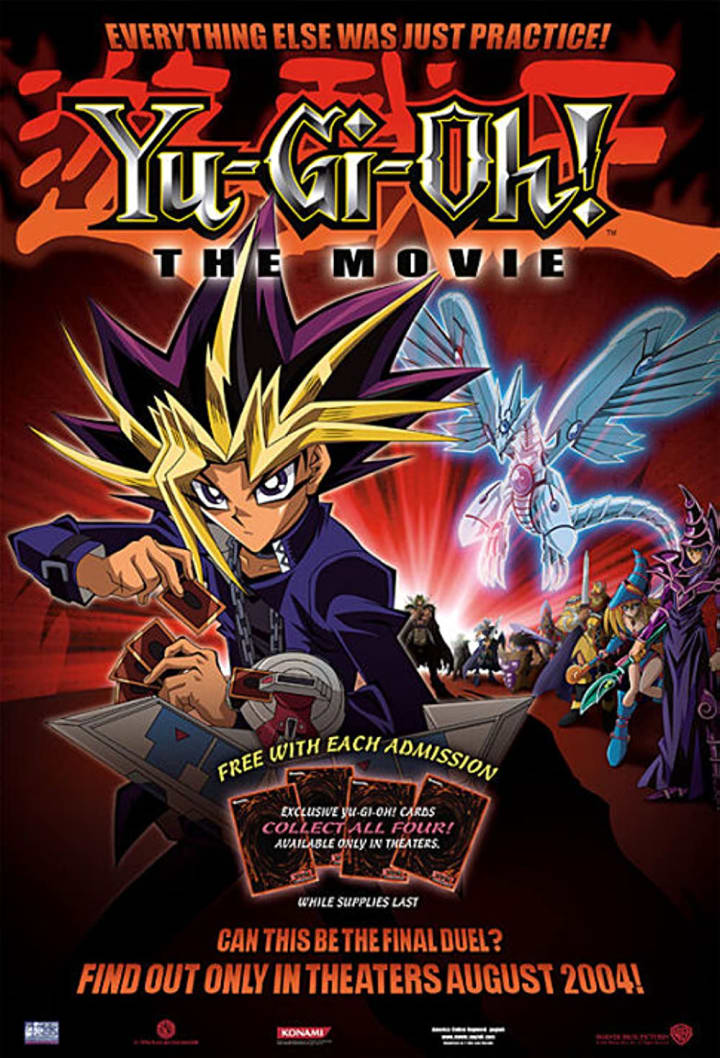
When motion pictures are made based on properties that exist to sell trading cards to kids, expectations should be kept low. While 1986's Transformers: The Movie has managed a cult following in recent years despite a sour initial response, other films from Care Bears and Digimon have failed to produce movies than are anything more than puddle-deep. Yu-Gi-Oh! The Movie, released in 2004, fits into that latter category.
Yu-Gi-Oh! originally began as a manga series by Kazuki Takahashi in 1996. The manga and the subsequent series tell the story of Yugi Mutou, a timid young boy who one day solves an ancient puzzle that causes his body to play host to the spirit of a mysterious gambler. From then on, whenever dark forces threaten Yugi or his friends, the gambler's spirit emerges, and challenges these foes to Shadow Games (card, dice or board games), with the loser being punished severely.
As Yu-Gi-Oh! became popular, a franchise was formed. Along with anime adaptations of the manga, this franchise included plenty of merchandise, primarily a series of collectable trading cards. This trading card game is based on Duel Monsters, a game within the series plotline. However, in 2004, eight years after the series' creation, it was decided that Yu-Gi-Oh! would receive its first big-screen adaptation. The film, entitled Yu-Gi-Oh! The Movie: Pyramid of Light, would also be an adaptation of Yu-Gi-Oh!, the franchise's current anime series. This new movie would bridge the gap between the third and fourth seasons of the show, a tactic that had previously been used by something like The X-Files and its 1998 movie.
Yu-Gi-Oh! The Movie: Pyramid of Light was produced by 4Kids Entertainment, the team behind the Yu-Gi-Oh! TV series and Pokemon, and Studio Gallop, who had experience in adapting manga and anime into feature-length movies. Toho would distribute the film in its native Japan, while Warner Bros. would distribute the film in the West, where the film would receive an English-language dub. To cut a long story short, for those who didn't watch the show (I didn't), Pyramid of Light follows Yugi as he battles the Ancient Egyptian god Anubis. Anubis plans to influence Yugi's rival Kaiba into using a special card known as the Pyramid of Light, which can allow Anubis to do bad things. Yugi has to battle Kaiba and Anubis to save the world.
For someone who didn't follow the show, that was a hard plot synopsis to write. For a show with such deep lore, asking a bunch of film critics to try n understand a movie set in between two seasons of a currently-running TV series that they do not watch based on a manga they haven't read is a difficult task indeed. It was unsurprising that Yu-Gi-Oh! The Movie: Pyramid of Light didn't receive positive reviews when it was released. Instead, the film received such negative critical notices that it landed on this list.
All the critics would have the same two complaints about Yu-Gi-Oh! The Movie: Pyramid of Light. One: the movie only works if you are a fan of Yu-Gi-Oh! and nobody else, and two: the film is pretty much a feature-length advert encouraging kids to buy trading cards. Dave Kehr (New York Times) would write, "the line between entertainment and advertising has been emphatically erased." Echoing these thoughts, Megan Lehmann (New York Post) would say that Yu-Gi-Oh! The Movie: Pyramid of Light "would be hilarious if it weren't so dreadfully cynical." The BBC's Jamie Russell would describe it as a "painful, ponderous experience that's not helped by being weighed down by lengthy explanations of the esoteric duelling rules."
After missing the mark with critics, Yu-Gi-Oh! The Movie: Pyramid of Light would also do the same with audiences. Made on a budget of $20 million and released on 13th August 2004, the film would have a decent opening weekend, finishing 4th at the US box office with $9.4 million raised. With such a start, hopes would be high that the movie would make a profit. However, the movie's takings would drop 65% in week two, bringing in $3.2 million. By Labour Day, the movie was bringing in $740,000 and sitting 24th at the box office despite still being shown in over 1,100 cinemas. Yu-Gi-Oh! The Movie: Pyramid of Light would finish with a US gross of $19.7 million, failing to recoup its budget. In the UK, the film failed to make the top 10, a repeated case worldwide. Eventually, Yu-Gi-Oh! The Movie: Pyramid of Light would finish with a gross of $29 million. Based on the production budget and money spent on merchandise, including exclusive trading cards handed out to filmgoers, the first Yu-Gi-Oh! movie was a box office failure.
The failure of Yu-Gi-Oh! The Movie: Pyramid of Light would not stop film adaptations of the Yu-Gi-Oh! series being produced. Yu-Gi-Oh! Bonds Beyond Time would release in Japan and selected 3D cinemas elsewhere in 2010 and Yu-Gi-Oh! The Dark Side of Dimensions would come out in 2016. Both subsequent films would produce the same critical and commercial reception of Pyramid of Light.
3. Darkness (Dir. Jaume Balagueró) 9.5%
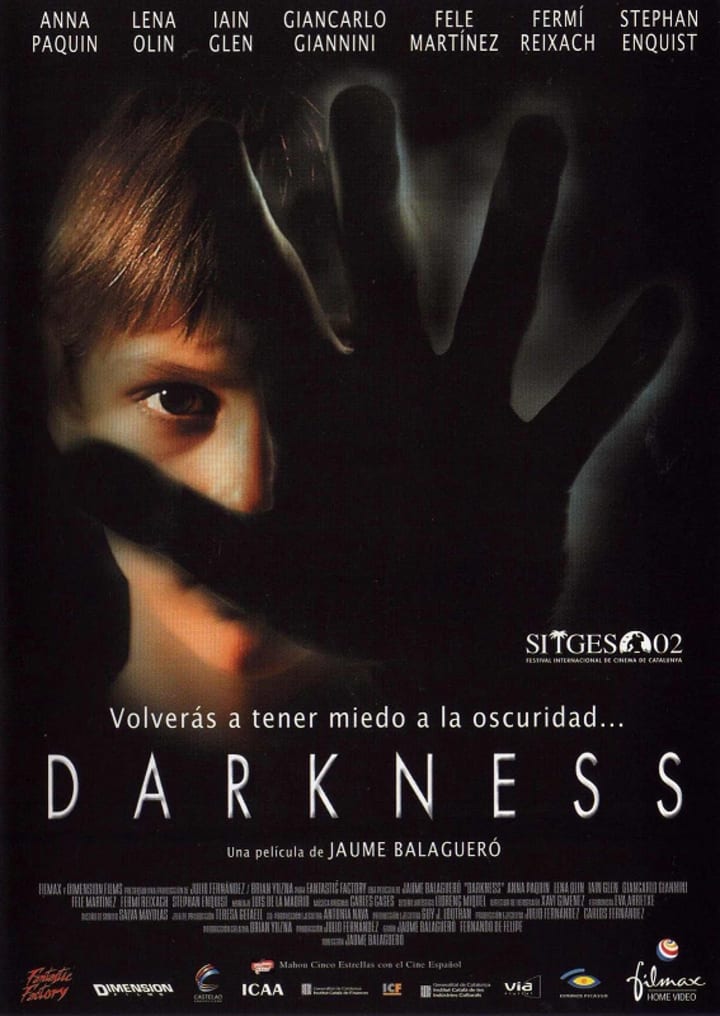
By the 2000s, haunted-house movies had been taken to so many places that adding anything new to this canon was difficult. However, in 2001, Spanish writer and director Alejandro Amenábar released The Others, a haunted-house horror movie starring that offered a subversive take on the genre, including its twist ending. The Others would receive a positive critical reception, including BAFTA and Golden Globe nominations for star Nicole Kidman and a BAFTA nomination for Best Screenplay for Amenábar. A horror movie getting publicly recognised for its writing was a rare occurrence at this time, and this was a testament to the quality of The Others, which also made $209.9m from a $17m budget.
While The Others was being enjoyed by critics and audiences alike, another Spanish director, Jaume Balagueró, was working on his own haunted-house horror called Darkness. Balagueró had earned critical favour with his 1999 debut The Nameless, a film about a mother who receives a phone call from her dead daughter five years after she was ritually murdered by an occult cult. The Nameless would play well at film festivals, earning Best Film awards in Belgium, Germany, Italy, Canada and Portugal. To follow up on this success, Balagueró would try to create his first English-language horror movie. For this movie, the Spaniard would get a cast of Oscar winner Anna Paquin, Oscar nominee Lena Olin, Oscar nominee Giancarlo Giannini and future Game of Thrones star Iain Glen. The movie would be called Darkness.
In Darkness, the Rua family move from the USA to start a new life in Spain. After moving into their brand new house in the Spanish countryside, weird things begin to happen to the Ruas, including the father Mark (Iain Glen) becoming increasingly mentally unstable due to complications of Huntington's disease and the young son Paul (Stephan Enquist) becoming afraid of the dark, fearing that there is something supernatural hidden under his bed. Noticing these strange events, the family's teenage daughter Regina (Anna Paquin) investigates the house's history. She discovers that an occult group had used the house for the ritual murder of six children to celebrate an eclipse 40 years earlier. With the next eclipse coming up soon, Regina discovers that the previous ritual requires one more child death to complete it. Fearing that her younger brother may be the final victim, she races to ensure that this does not come to pass.
As with The Nameless, Jaume Balagueró would write the screenplay for Darkness in addition to directing it. This time, he would share the writing credit with Fernando de Felipe, whose sole experience writing for the screen had come in the 1997 short film Oedipus. Julio Fernández would serve as one of the primary producers of Darkness through his production company Fantastic Factory after performing the the same role on The Nameless. The other co-founder of Fantastic Factory, Brian Yuzna, would join him this time. Yuzna was an American director, writer and producer who had produced 1980s horror movies Re-Animator and From Beyond and also co-wrote Honey, I Shrunk The Kids.
Darkness was first released in the director's native Spain on 10th October 2002. The film would open 2nd at the box office, grossing $1.4 million in its opening week, beaten only by Minority Report. The film would remain strong commercially, dropping to 3rd and 4th in its next two weeks of release. However, the film would nosedive in popularity following Halloween, and Darkness would eventually finish with $4 million when it exited cinemas in late November. The movie would then be released in multiple European countries and Japan in 2003, performing well in Italy ($2.5m) but nowhere else. However, during this run, Miramax (run by a particular set of brothers sharing the name Weinstein) would buy the film's distribution rights for release in major markets like the USA and UK. However, instead of releasing the movie in 2003, Miramax would let the film gather dust on the shelf for a year, finally releasing it randomly into American cinemas on Christmas Day 2004, which is why it is on this list. This version of Darkness was missing 14 minutes of footage, which had been cut to reduce the film's age rating to PG-13 (12 in the UK).
Darkness would open 7th at the US box office, grossing $6.4 million but losing most of its audience to Meet the Fockers, which entered the standings at #1 with $46.1m the same week. Despite being released into more cinemas the next week, Darkness would only gross $4.5m, dropping out of the US top 10 by week three. After this, many cinemas would cut their losses, with half of the film's 1,700 screens pulling the film. However, the film's first three weeks of release, although not the most impressive, were enough to see Darkness finish with an American gross of $22.7 million, more than twice the movie's original production budget of $10.8 million. The film's international gross would not be finalised until the end of a short run in Taiwan in 2006 but would eventually amount to $12.3 million. This meant that in a rarity for this list, Darkness would end up with a profit, grossing $34.4m worldwide against a $10.8m budget.
However, despite making money, Darkness would receive a rare 'F' grade from audiences surveyed by CinemaScore. In addition, the film currently holds approval ratings of 4% on Rotten Tomatoes and 15% on Metacritic. In short, critics found that Darkness added nothing new to the haunted-house horror subgenre. Ned Martel of the Ney York Times would say that the movie "offers no inventive takes on its characters, shows no fearsome new way of presenting a haunted house and elicits not one palpitation from audiences paying for a few good jolts." Variety's Jonathan Holland would say that while Darkness had atmosphere and decent visuals, "both psychology and plot are bargain-basement". Even Lisa Rose of the Newark Star-Ledger would call the movie "slipshod and second-hand". LA critic Kevin Thomas would say the film was "too mechanical to be either persuasive or scary".
Otherwise, the plot of Darkness was viewed as incoherent. The Hollywood Reporter's Frank Scheck describes the movie's screenplay as "a compendium of barely connected scenes that ultimately lapse into incoherence." Matt Weitz would say the story was so messy that "it's hard to tell if the actors are doing their jobs."
Following Darkness, director and writer Jaume Balagueró would manage to increase his profile in the horror genre, directing the classic found footage movie REC in 2007.
2. Superbabies: Baby Geniuses 2 (Dir. Bob Clark) 4.5%
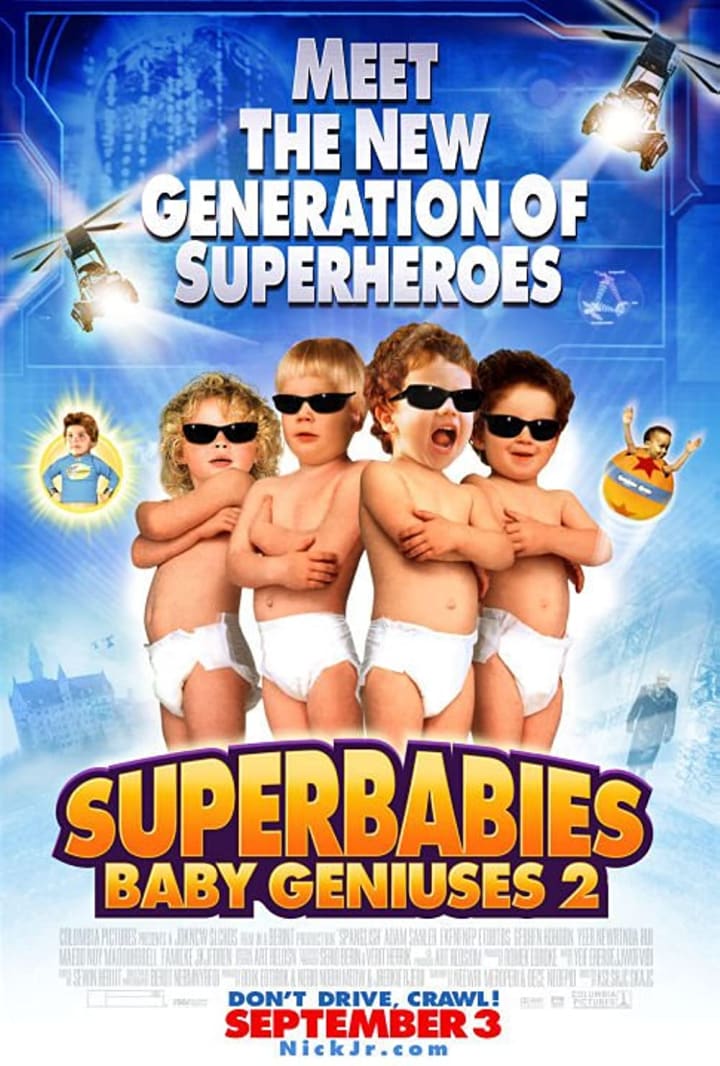
In the 1970s and early 1980s, director Bob Clark made many great movies. A Christmas Story, Black Christmas, Murder By Decree, Deathdream and Tribute are just a few of them. However, following a successful turn into teen sex comedies with Porky's (a smash hit in 1981 which has only been received worse over time), Bob Clark unwittingly became a marker for lousy comedy movies. Rhinestone, Loose Cannons, From The Hip and Turk 182 were all savaged by critics upon release, but Clark continued onwards, descending lower into the realms of cinematic stupidity with 1999's Baby Geniuses. The film, which Clark also co-wrote, posited a world where scientists (played by Kathleen Turner and Christopher Lloyd) discovered that before a certain age, babies that could not yet speak English were instead speaking in some babble that was hiding super-intelligence. A problem then arises when one of the 'baby geniuses' they hold captive swaps places with his normal twin. Baby Geniuses was overwhelmingly rebuked by critics and even won Bob Clark the Stinkers Bad Movie Award for Worst Director. However, Baby Geniuses was a box office success and even made bank on home video. Therefore, why not make a sequel?
Five years after Baby Geniuses came Superbabies: Baby Geniuses 2. Once again directed by Bob Clark (the last film he would helm before his death in 2007) and based upon a story by Steven Paul (who would also produce), the film's screenplay would this time be written by Gregory Poppen, whose most high-profile work before this movie was writing jokes for the ESPY Awards. Strong start. The first Baby Geniuses had been distributed by Sony and Tristar Pictures. However, this time the winged horse would not touch this sequel with a ten-foot pole, with distribution rights instead falling to Triumph Pictures, the independent movie arm of Sony Pictures Releasing. Despite this downgrade, the film's casting director still managed to get Jon Voight, Scott Baio, Justin Chatwin and Whoopi Goldberg to agree to be in Superbabies: Baby Geniuses 2, following in the unfortunate footsteps of Kathleen Turner, Kim Cattrall and Christopher Lloyd from the first movie. The sequel even got an improved budget from its predecessor, with $20 million spent to create Baby Geniuses 2.
What was the plot of Superbabies: Baby Geniuses 2? I see nobody asked. The sequel follows babies Archie, Finkelman, Alex and Rosita. These smart toddlers get wrapped in a scheme by a media mogul named Bill Biscane (Jon Voight), who plans to create a satellite system to brainwash the world's population into watching nothing but TV for the rest of their lives. To stop Biscane, the four main babies are helped by Kahuna, a 'super baby' who earned his powers after drinking a mysterious potion. With Kahuna's help, Archie, Finkelman, Alex, and Rosita also become 'super babies' as they bid to stop Bsicane's evil plans. If that premise doesn't sound as dumb as anything, I cannot help you.
Superbabies: Baby Geniuses 2 would release into cinemas on 27th August 2004. Despite an improved budget, this sequel would not manage the commercial success of its predecessor Baby Geniuses. The film would open 11th at the US box office on opening weekend with a gross of $3.2 million, less than the 6th week of The Bourne Supremacy. Baby Geniuses 2 would halve its takings in its next two weeks of release, dropping below $1 million in week three. After such a result, the movie was doomed. Adding international takings, Superbabies: Baby Geniuses 2 would finish with $9.4 million grossed worldwide, making it a box office failure.
If critics didn't like Baby Geniuses, they hated Superbabies: Baby Geniuses 2. The original movie had already received dismal aggregates of 2% on Rotten Tomatoes and 6% on Metacritic. The sequel would manage to underwrite, earning a perfect 0% approval rating on RT from 46 reviews. The website would later rank Superbabies: Baby Geniuses 2 as the 6th-worst movie of the 2000s as part of their 'Worst of the Worst' series of lists.
The Hollywood Reporter's Sheri Linden would write of Superbabies: Baby Geniuses 2: "If anyone was clamouring for a follow-up to 1999's Baby Geniuses, they'd be happy to know that the sequel retains not only the same gimmicky premise as the original but its preference for cliche-ridden dialogue and flat-footed comedy as well."
Joanne Kaufman (Wall Street Journal) would call the movie 'unspeakably ghastly, while JR Jones (Chicago Reader) found it "excruciating". Mike Clark of USA Today would proclaim Baby Geniuses 2 as "one of the worst comedies ever". Many writers would point out the film's dated attempts at humour, containing references to Popeye, The Three Stooges and Casablanca. Others would warn parents from taking their kids to see this movie, with Gregory Kirschling (Entertainment Weekly) telling kids to "turn off the TV and go outside and play!" You know a movie is bad enough when critics actively deliver public service announcements to warn people of its poor quality.
The 'bad movie' awards had a field day with Superbabies: Baby Geniuses 2. The film received nominations for Worst Picture, Worst Supporting Actor (Jon Voight), Worst Director and Worst Screenplay at the Golden Raspberry Awards but would lose most of these awards to Catwoman. Baby Geniuses 2 would also receive eight nominations at the Stinkers Bad Movie Awards but would again manage to escape the night unscathed, with most of these awards again going to Catwoman.
Despite the absolute bin fire that was Superbabies: Baby Geniuses 2, the series has continued on DVD with three sequels, all starring an enthusiastic Jon Voight, being released in the mid-2010s to little fanfare. Also, spare a thought for Bob Clark, with Superbabies: Baby Geniuses 2 being his final contribution to cinema.
1. National Lampoon's Gold Diggers (Dir. Gary Preisler) 3%
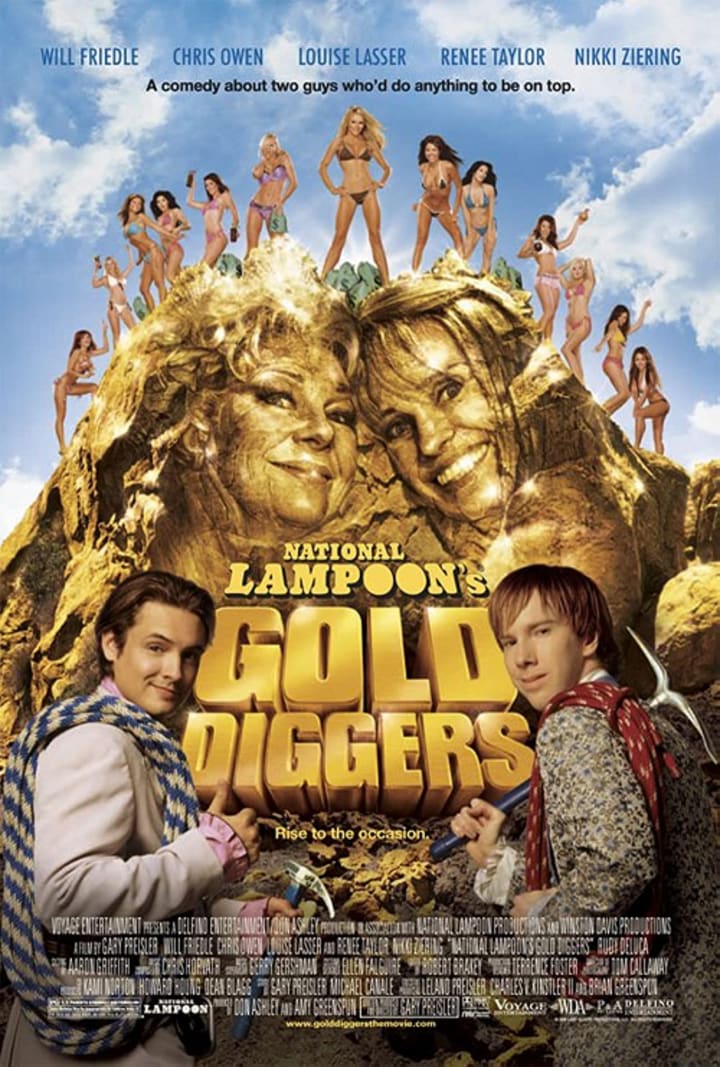
By 2004, the National Lampoon name was a shadow of what it once was. A brand name that used to come before such comedy classics as Animal House and Vacation was now being shoved in front of any lowbrow comedy that wanted to make a buck at the box office. Enter National Lampoon's Gold Diggers, a crap sex comedy about two young men who want to marry rich older women and take a share in their wealth.
The man behind National Lampoon's Gold Diggers was Gary Preisler, who would write, produce and direct the film. Preisler had previously made the independent movies Eight Days a Week (with Keri Russell) and Casualties (starring Mark Harmon). Gold Diggers would mark Preisler's sole directorial effort. Presiler's screenplay for the movie was based on a story devised by Michael Canale, who had also worked as a producer on Casualties.
After several failed get-rich-quick schemes, friends Calvin (Will Friedle) and Leonard (Chris 'The Sherminator' Owen) attempt to mug elderly sisters Doris (Louise Lasser) and Betty (Renee Taylor). The two boys are arrested for the failed mugging, but the women bail them out. The four then agree to get married, with each side having ulterior motives. Calvin and Leonard want to marry Doris and Betty, wait until they die and then live off the inheritance money. On the other hand, Doris and Betty plan to kill their new younger beaus and collect on two life insurance policies taken out in the boys' names.
National Lampoon's Gold Diggers would first be shown at the 2003 CineVegas Film Festival. However, the film would not be released to the public by distributors MGM until over a year later, on 17th September 2004. Given a surprisingly wide release into 1,062 American cinemas, Gold Diggers would finish a pathetic 22nd at the domestic office in its opening weekend after grossing $403,164, putting the film behind the 10th week of I Robot and the 4th week of Baby Geniuses 2. The film's critical reception would somehow be even worse, making it the worst-reviewed movie of 2004.
The film currently holds a shameful score of 0% on Rotten Tomatoes based on 44 critical reviews. The website would also rank Gold Diggers as the 5th-worst film of the 2000s on their 'Worst of the Worst' list, a list topped by 'Ballistic: Ecks vs Sever'. Even Metacritic's collected reviews would give this National Lampoon film a miserable score of 6%.
Critics who saw National Lampoon's Gold Diggers would describe it as mean-spirited, dull, inept, hideous, dumb, painful, and unfunny. Roger Moore (not that one) of the Orlando Sentinel would exclaim that "If National Lampoon's Gold Diggers ... had a single laugh in it, that laugh would die of loneliness." The Washington Post's Jen Chaney would call the movie "So stupefyingly hideous that after watching it, you'll need to bathe in 10 gallons of disinfectant, get a full-body scrub and shampoo with vinegar to remove the scummy residue that remains."
Some critics would write that Gold Diggers was so unfunny that it made other National Lampoon films look better by comparison. Robert Dominguez of the New York Daily News would note that it made "Nat Lamp's recent Van Wilder look like an instant classic". Luke Sader of the Hollywood Reporter would go even further to say that Gold Diggers, a "cheap-looking, broad and ultimately unnecessary comedy", made Animal House "look like [Ernst] Lubitsch". In the eyes of Sader, Gold Diggers was so bad that it made Animal House look like high art.
Finally, Erik Lundegaard of the Seattle Times would tell prospective watchers not to waste their money, begging them to "spare our culture some last semblance of dignity by ignoring National Lampoon's Gold Diggers altogether" in a zero-star review.
For being simultaneously a catastrophic failure in multiple metrics and a film so forgettable you'll forget you even seen it, National Lampoon's Gold Diggers succeeds in heaping more dirt onto the formerly fabled name by being the worst-reviewed movie of 2004.
About the Creator
Keep reading
More stories from Fergus Jeffs and writers in Geeks and other communities.
Actors You Didn't Know Appeared on Buffy The Vampire Slayer
Comprising 144 episodes over six seasons, Buffy The Vampire Slayer remains a staple of pop culture 20 years after it ended. One of the main strengths of Buffy was its casting, with the show eventually making stars out of Sarah Michelle Gellar, Alyson Hannigan, Anthony Head, David Boreanaz, Seth Green and Eliza Dushku, amongst others.
By Fergus Jeffs3 years ago in Geeks
A Knight of the Seven Kingdoms Series Review (Season 1)
As one of the biggest properties in fantasy, A Song of Ice and Fire remains immensely popular with audiences. After reaching far into the past with House of the Dragon, a second spin-off was on the cards. A Knight of the Seven Kingdoms serves up a bite-sized slice of action and drama, but it still claims a spot among the best small-screen titles.
By Robert Cain7 days ago in Geeks
Has Iran Developed a Nuclear Bomb Yet?
The question of whether Iran has developed a nuclear bomb is one of the most important — and most debated — issues in global politics today. For decades, Tehran’s nuclear programme has been at the center of international concern and diplomatic efforts. But despite the tension and speculation, Iran has not officially developed or tested a nuclear weapon as of early 2026.
By shaoor afridi2 days ago in Geeks



Comments
There are no comments for this story
Be the first to respond and start the conversation.