
The Visionaries of AI: Unpacking the Top 3 Models for Image Analysis
Discover the Powerful AI Models Teaching Computers to Understand the Visual World.


The ability of artificial intelligence to "see" and understand images has rapidly evolved from a futuristic concept to a cornerstone of modern technology. AI image analysis now powers everything from medical diagnostics and autonomous vehicles to content moderation and creative tools. As researchers push the boundaries of what machines can perceive, certain models and frameworks have emerged as particularly impactful or representative of the state-of-the-art.
Choosing the absolute "top 3" can be subjective, as the field is vast and models excel in different niches. However, we can highlight some of the most influential or widely utilized AI models (or families of models/frameworks) that demonstrate remarkable capabilities in analyzing visual information.
Let's delve into three key players shaping how AI understands images today.
1. Google's Ecosystem: Vision AI and Beyond
When we talk about practical, powerful image analysis readily available to developers and businesses, Google's suite of AI tools, particularly Google Cloud Vision AI, stands out. This isn't a single model but rather an accessible platform built upon cutting-edge research in computer vision.
Key Strengths in Image Analysis:
- Broad Spectrum: Vision AI offers a wide array of pre-trained APIs for common image analysis tasks. This includes highly accurate object detection and labeling (identifying what's in an image), optical character recognition (OCR) for extracting text, landmark detection (identifying popular places), explicit content detection (for moderation), and even understanding emotional attributes of faces.
- Scalability & Accessibility: As a cloud service, it's built for scale, allowing developers to analyze vast quantities of images without managing complex infrastructure. Its API makes powerful AI analysis accessible without requiring deep machine learning expertise from scratch.
- Continuous Improvement: Benefiting from Google's extensive research in AI, the underlying models are constantly being improved, enhancing accuracy and adding new capabilities over time.
Applications: Businesses use Vision AI for everything from cataloging products and moderating user-generated content to analyzing photos for insights in various industries.

2. OpenAI's Multimodal Powerhouses: Understanding Images Through Language
OpenAI's advancements in linking language and vision have been revolutionary, perhaps best exemplified by models that power systems like GPT-4 with Vision (GPT-4V) or foundational work like CLIP (Contrastive Language–Image Pre-training). While GPT-4V is a system integrating vision into a large language model, it demonstrates the power of underlying multimodal models. CLIP, on the other hand, is a foundational model that learns to connect images with text descriptions.
Key Strengths in Image Analysis:
- Deep Contextual Understanding: Models like GPT-4V can not only identify objects but understand complex scenes, reason about relationships between elements, and answer nuanced questions about an image based on textual prompts. This goes beyond simple labeling to actual comprehension.
- Text-Image Relationship: CLIP excels at understanding the conceptual relationship between text descriptions and images. This is crucial for tasks like image search using natural language queries ("find me a picture of a grumpy cat wearing a hat") or generating text descriptions for images.
- Versatility: These models are incredibly versatile, enabling applications from detailed image captioning and visual question answering to guiding image generation processes.
Applications: Used in advanced AI assistants, sophisticated image search engines, accessibility tools for describing images to visually impaired users, and as a core component in state-of-the-art image generation models.
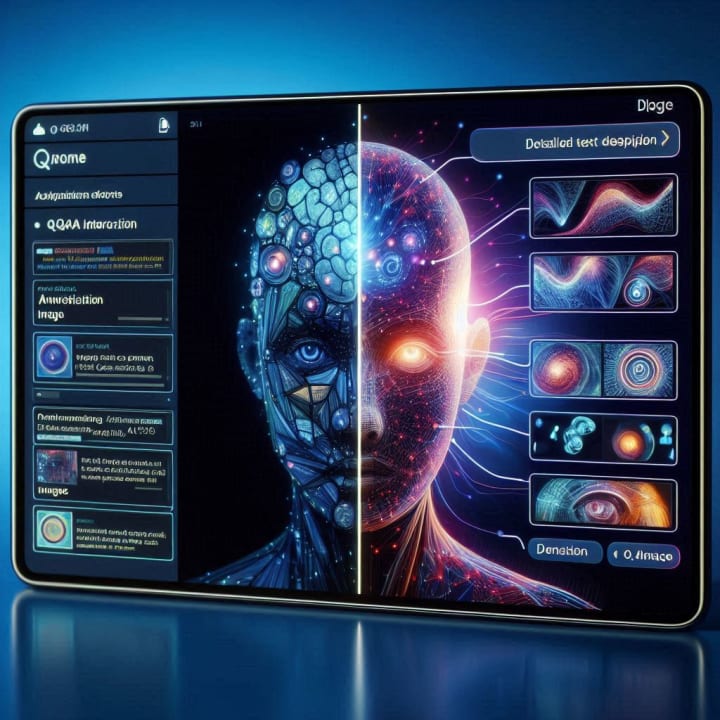
3. Foundational Models for Segmentation and Scene Understanding
Beyond identifying what objects are, understanding where they are and how they relate to each other spatially is key to true image analysis. Models focused on segmentation (dividing an image into meaningful segments, often objects) and spatial understanding form another critical category. Meta's Segment Anything Model (SAM) is a prominent recent example demonstrating remarkable zero-shot segmentation capabilities – it can segment objects it hasn't explicitly been trained to recognize, guided by simple prompts (like clicking on an object). DINOv2 is another example of a self-supervised learning models that provide powerful visual features useful for understanding scene structure without explicit labeling.
Key Strengths in Image Analysis:
- Granular Understanding: These models offer a detailed, pixel-level understanding of images, allowing for precise segmentation of objects, even in complex scenes.
- Spatial Awareness: They help AI systems understand the layout and structure of a scene, not just the individual components.
- Building Blocks: Models like SAM are often used as foundational components within larger computer vision systems for more complex tasks.
Applications: Critical for robotics (understanding the environment), medical image analysis (isolating organs or anomalies), photo editing (selecting specific objects easily), and creating datasets for training other vision models.
The Evolving Landscape
These three categories, represented by prominent examples like Google Vision AI, OpenAI's multimodal models/CLIP, and Meta's foundational segmentation models, showcase the diverse and rapidly advancing capabilities of AI in image analysis. From broad object recognition to deep contextual understanding and granular spatial awareness, these models are not only improving existing applications but also enabling entirely new ways for AI to interact with and interpret the visual world.
The future promises even more integrated models that combine these strengths, along with greater efficiency and accessibility, further blurring the lines between how humans and machines "see."
About the Creator
AI Lens
Exploring AI’s evolving universe—from tool reviews and comparisons to text-to-image, text-to-video, and the latest breakthroughs. Curated insights to keep you ahead in the age of artificial intelligence.
Russia Delivers 13 Tons of Medical Aid to Iran
Introduction As tensions continue to rise in the Middle East, humanitarian efforts have become increasingly important for civilians affected by the conflict. In a significant gesture of support, Russia has delivered more than 13 tons of humanitarian and medical aid to Iran. The aid shipment aims to assist hospitals and emergency services dealing with the consequences of the ongoing crisis in the region.
By shaoor afridiabout 5 hours ago in Geeks




Comments
There are no comments for this story
Be the first to respond and start the conversation.