
The Moral Dilemma of Wanda Maximoff's Grief
Analyzing WandaVision's Approach to Loss

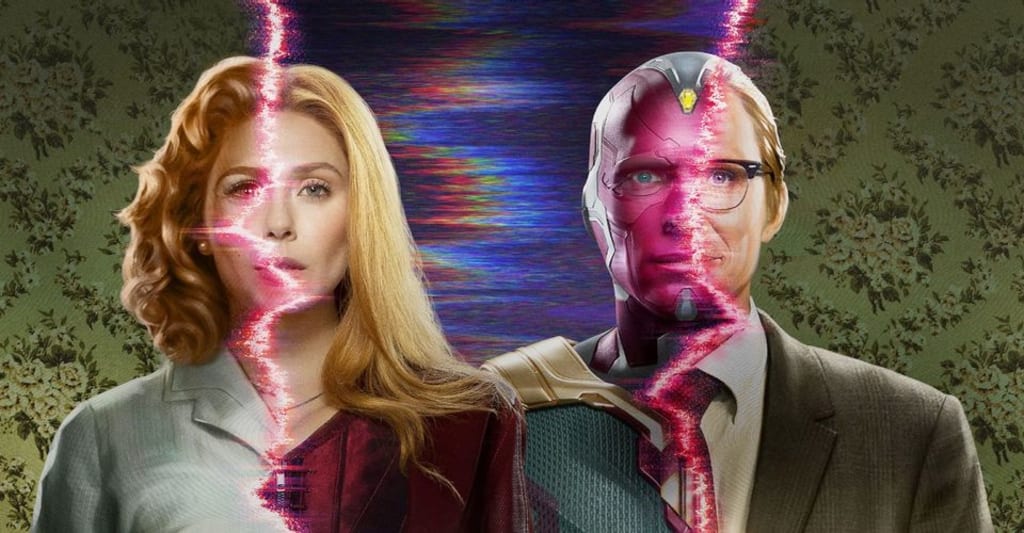
The insanely popular show WandaVision on Disney+ raised a whole new collection of questions and interests regarding Wanda being revealed as the chaos magic witch (also known as the Scarlet Witch) who was prophesied in the Darkhold . Everyone is interested in everything about the future of Wanda Maximoff now that she has become aware of her abilities and seeks to explore their range even further. We know she will play a huge role in the upcoming Doctor Strange sequel as well. However, what interests me is the ethical/moral dilemma of her grief and the surrounding repercussions of her magic creating a complex yet satisfying grieving journey for viewers. Was Wanda's Hex an act of evil? Was her avoidance of correcting the issue once being made aware of it inherently evil, or strong denial in grief? Was WandaVision careless in utilizing this plot for Wanda's grief?
To begin, I'd like to lay out a few definitions for reference.
Moral - adjective - concerned with the principles of right and wrong behavior and the goodness or badness of human character.
Grief - noun - deep sorrow, especially that caused by someone's death.
Repercussion - noun - an unintended consequence occurring some time after an event or action, especially an unwelcome one.
Evil - adjective - profoundly immoral and wicked.
Immoral - adjective - not conforming to accepted standards of morality.
(Source: Google definition searches)

Was Wanda's Hex an act of evil?
In the final episode of WandaVision, we discover that Wanda unintentionally created the "Hex" around what is known as the small town of Westview when she visited the property Vision had secured for them to live out the remainder of their lives together. We can logically surmise that Wanda's unintentional creation was not inherently evil. That is, if you are unaware of your capabilities in magic and your magic creates something that is harmful to others, it was not created with inherently negative intentions. What makes something evil is the knowledge of the pain caused and prioritizing it behind your personal needs in order to address your own comfort first, right? Wanda, as we've seen, has been morally flexible from her first appearance in the Marvel Cinematic Universe; she began as an experiment with the Tesseract, aligned with Hydra and those who made her who she was, but knowledge helped her change her position and become an Avenger. We know that Wanda is flexible enough to change a stance based on new information and processing that information through her moral filters.
When grief is involved, though, does the definition of evil change? Unfortunately, it does not, but it does define how powerful grief can change the core of our morals in its most emotionally charged moments. Definitions of words cannot change based on individual personalities and how we can justify their actions.
The definition of "evil" specifically states that the word can be applied when something drastically immoral occurs. Wanda created the Hex unintentionally, but an entire town was taken hostage to her pain being processed, and all were trapped in their own minds. All were imprisoned in their own bodies, desperately seeking ways to escape themselves and seek help. When one ponders that idea, it can actually be violently uncomfortable to imagine being a prisoner to someone else's grief process. Based on the vastness of discomfort and essentially recognizing that an entire town was held emotionally hostage, we can link the definition of the word "evil" to the outcome of Wanda's magical outburst, be it intentional or not.

Was Wanda's avoidance of correcting the issue once being made aware of it inherently evil, a strong denial in grief, or both?
Now that we can sufficiently declare the act as being evil or having an element of the definition, regardless of intentions, we can move onto Wanda's multiple moments of clarity in which she realized what her magic was doing to others. In the first handful of hints, such as the emergence of the beekeeper or the moment when Geraldine/Monica mentions Ultron and Pietro, she was only given enough of a hint that something was amiss but not enough information to realize the depth of the repercussions of her magical explosion. In Episode 5, entitled "On a Very Special Episode...", Vision discovers that everyone in Westview is likely being held under some sort of enchantment by his beloved, and he confronts her about it. From that specific point, Wanda is aware that her magic has caused pain, and we as viewers understand that this is a turning point. Wanda can change this for everyone else, or continue forward in order to cling to what she instinctively knows is not reality. The fact that Westview continues to exist in the Hex after this point is where we can begin to debate whether Wanda was purposefully harming others or if we can allow grief to be a valid reason for continuing to harm others in an effort to prioritize our own mental well-being.
Wanda clearly lived in denial of Vision's death, and she showcases that by essentially finding a way to resurrect his presence with the amount of pain she experienced that ended up empowering her natural witchcraft capabilities. Adding to the loss of Vision, Wanda has also experienced the loss of both parents and witnessing the death of her twin brother. There is a particularly notable pain about the loss of a twin sibling, as that bond is unable to be matched on any level, so it's fair to say that the level of pain Wanda has experienced is maddening enough to cloud her judgment on any situation. For the sake of the character being a human being, I find it understandable to allow some moral "wiggle room"; emotionally, she had clearly suffered so much loss that the power of her emotions found a way for her to grieve so that her own mental health could recover.
On the other hand, we know that one's mental health is no more important than another's, no matter what level of tragedy someone has gone through. For the sake of Wanda continuing her dream life and completing her grief journey, she placed the mental well-being of an entire town in jeopardy. There are unprecedented depths of trauma related to this, and Wanda's avoidance of the truth only exacerbated her pain into becoming the priority of thousands of innocent strangers.

Should we be a little annoyed that a show so popular would romanticize harming others for the sake of your personal growth and acceptance of loss?
To put this one very simply: no. I think the fact that we can discuss the moral dilemma of Wanda Maximoff at all helps us come to terms with what is and is not okay when grieving loss.

In Summary...
If we analyze the elements of Wanda's past traumas, uncontrolled magical reaction to surmounting grief, awareness of repercussions, and the element of immoral selfishness, we better understand what type of journey grief can be and how we can approach it as human beings. No, we cannot always control our grief harming others, but if we can become aware of pain we are inflicting then we have a moral obligation to see to it. As mentioned, no pain is greater than any other, and no one's status gives them any special permission to spread harmful emotions in the process of healing them for yourself. WandaVision presents moral dilemmas on a drastic fictional scale, but this is perhaps what draws viewers in so much. It's a show that addresses the complexity of grief, and that is something all humans can agree on.
Wanda acted immorally and could have saved an entire town from herself much sooner. We cannot excuse that because despite whatever argument can be used, there is no excuse for hurting others.
Then again, we wouldn't have had many episodes to enjoy either...
About the Creator
Dani Banani
I write through the passion I have for how much the world around me inspires me, and I create so the world inside me can be manifested.
Mom of 4, Birth Mom of 1, LGBTQIA+, I <3 Love.
Keep reading
More stories from Dani Banani and writers in Geeks and other communities.
Magic and Youth
Almost everyone is a fan of Harry Potter. I, myself, have a passion for the entire franchise that has run inside me deeply for most of my life. I have an entirely Harry Potter themed kitchen so I can be surrounded by my favorite things while I magically create large feasts for our family of six. We have one child in each Hogwarts House, which creates point competitions among the students.
By Dani Banani5 years ago in Geeks
A Knight of the Seven Kingdoms Series Review (Season 1)
As one of the biggest properties in fantasy, A Song of Ice and Fire remains immensely popular with audiences. After reaching far into the past with House of the Dragon, a second spin-off was on the cards. A Knight of the Seven Kingdoms serves up a bite-sized slice of action and drama, but it still claims a spot among the best small-screen titles.
By Robert Cain7 days ago in Geeks
Spongebob Review
The episode “Suds” opens with a sun‑drenched morning in Bikini Bottom, the camera gliding lazily over the coral‑lined streets before settling on SpongeBob’s pineapple house, where the familiar, squeaky door hinges announce his cheerful entrance. The scene is rendered in vivid, pastel‑hued animation that captures the playful absurdity of the series, while a jaunty ukulele riff underscores the buoyant atmosphere. As SpongeBob rummages through his kitchen, he absent‑mindedly leaves the refrigerator door ajar, a small but pivotal lapse that sets the entire plot in motion. Tiny bubbles begin to drift from the open fridge, slowly coalescing into a frothy, luminous cloud that the show cleverly dubs “the Suds,” a mischievous entity that flickers like a living soap‑bubble, hinting at the whimsical chaos soon to erupt.
By Forest Green7 days ago in Geeks


Comments
There are no comments for this story
Be the first to respond and start the conversation.