
The Legacy of Godzilla
A short piece of a genre I admire

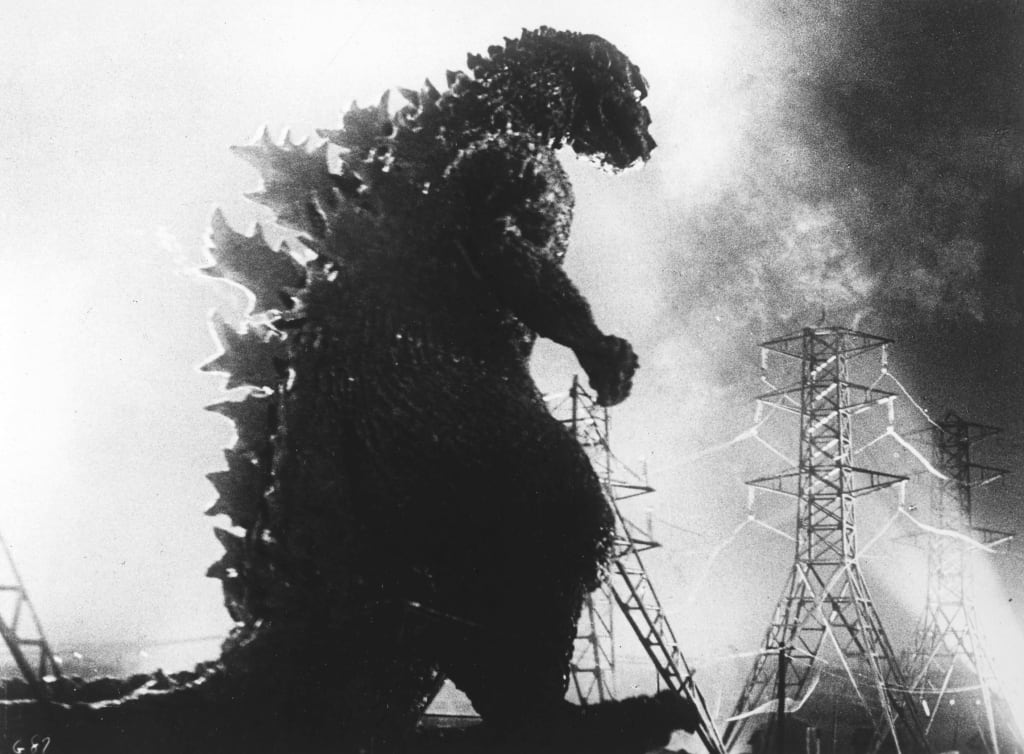
The concept of Godzilla, and all things kaiju (a Japanese film genre which incorporates giant monsters), has always fascinated me ever since I was in middle school. The very idea of giant monsters as tall as skyscrapers rampaging through the streets of Tokyo or other major cities, bringing mayhem and destruction has brought joy and entertainment upon my eyes. But there is more to these fictional beasts than just being a form of mindless entertainment. Something that I learned over the years is the backstory of some of these monster flicks and how they came into fruition and why.
Godzilla is one of the most well known giant monsters in the history of cinema to grace the screens of the world. Also, keep in mind that his first debut was in 1954 and has remained a pop culture icon till this day. That’s 67 years of being relevant and he is still going strong to this day. So how is it that he has remained well known till this day? Well, I think it's due to his history. When Godzilla was released in Japan in 1954, he was made as an allegory to the atomic bomb in response to atomic testing that was happening at the time. And keep in mind, this was the country that got bombed by the atom bomb, twice, only 9 years before. That is one of the reasons he is still well known these days. The other reason is the cheesy monster fights that spun off after the original movie from the 1960’s and into the 1990’s. But despite how cheesy the fights and the movies may be, the legacy of Godzilla ended up spinning off a number of other giant monster movies.
Following the debut of Godzilla, there were many creations that were inspired following the success of the film. Toho, the studio that filmed the first movie, started pumping out an array of other giant monsters such as Mothra, Rodan, Ghidorah, and Mechagodzilla. The first two were their own independent characters before being made a part of the same universe as Godzilla. Outside Toho, another known giant monster created following the success of Godzilla, is the giant flying space turtle Gamera made by Daiei Film. Though not as well known as the king of the monsters, Gamera and the series’ he stars in has a respectable place in popular culture as his own character. Then later in the future, along came the 2013 film “Pacific Rim”, which was heavily inspired by the genre. So, while the creation of other creatures is amazing enough, the making of Godzilla essentially created a new type of filming technique.
Fun fact, the original 1954 movie of “Gojira” (the original Japanese name) was originally supposed to be in stop motion, much like the 1933 “King Kong”. However, due to time and budget constraints in making the film, directors were not able to have enough time to make it all in stop motion and it was much more expensive to do it that way. Rather, the studio decided to put a man in a rubber suit and use miniature models. But even then, that was a challenge since this was still post-war Japan and rubber was difficult to come by. So instead, a concrete like mixture was used to make the suit, which made it really heavy and difficult to work with. But even with those factors at play, in the end, they made it work and the rest is history. This filming technique was a sort of breakthrough that came out as a result of Godzilla’s success, so much so that it was given the name of “suitmation”. In essence, this is a special effects technique that uses people in a rubber suit and miniature models, such as a city, ocean, landscape, or even space. Most of the time, those miniatures end up being blown up and obliterated especially if there is a sequence with the monsters. This is prevalent in many of the kaiju flicks that spawned after the 1954 Godzilla such as Gamera, Ultraman, Super Sentai, Power Rangers, and almost all of the Godzilla films.
The king of the monsters has been around ever since his debut in Japan in 1954. Since then, the radioactive behemoth has inspired a whole genre of film and influenced pop culture till this day. The history behind the cameras is something that I find fascinating as it is one that I have been passionate about learning. While many consider the genre to be nothing more than mindless entertainment, it is has done so successfully for over 50 years with many who admire it to this day and hopefully continues into the future.
About the Creator
Thomas Fathoms
Still finding my voice through writing.
Keep reading
More stories from Thomas Fathoms and writers in Geeks and other communities.
WWE: Unreal Season 2 Is the Most “Wait, Should I Be Watching This?” Wrestling Show Ever
When Netflix dropped WWE: Unreal, it didn’t just give wrestling fans extra content — it basically handed us the keys to the writer’s room and said, “Go ahead. Look around.” Season 2 (released Jan. 20, 2026) leans even harder into that vibe: fascinating, addictive… and occasionally weirdly intimate in a way wrestling hasn’t really done before.
By Lawrence Lease6 days ago in Geeks


Comments
There are no comments for this story
Be the first to respond and start the conversation.