
The Kid (1921) Charlie Chaplin Film Analysis
"A comedy with a smile - and perhaps a tear"
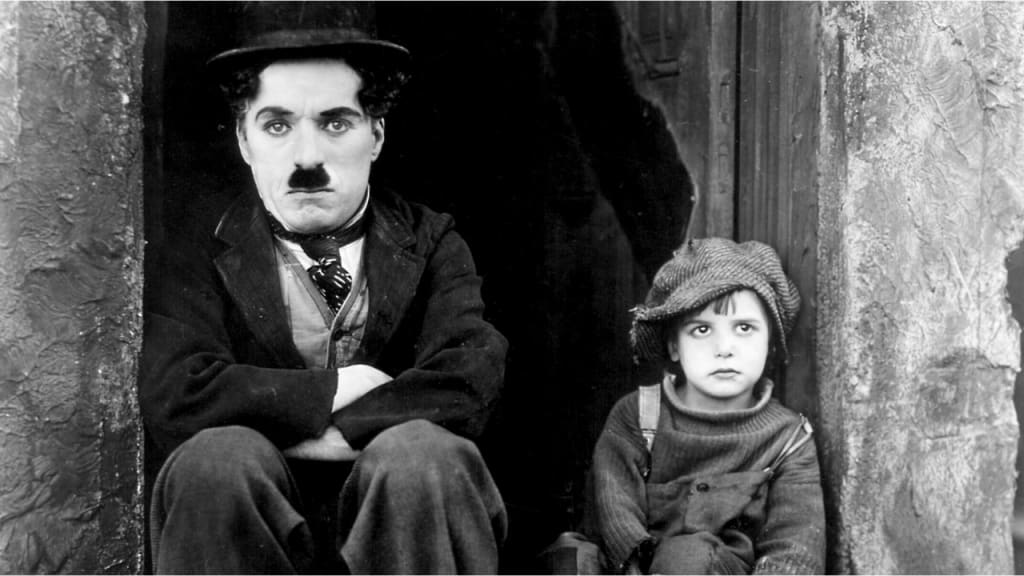
The Kid (1921) is a silent motion picture released during the early days of Hollywood, written and directed by the infamous Charlie Chaplin. Although only an hour long, this film packs a whole lot into a story that will leave the viewer emotionally invested, laughing, and wondering how the quality of a film made 100 years ago could surpass modern production standards.
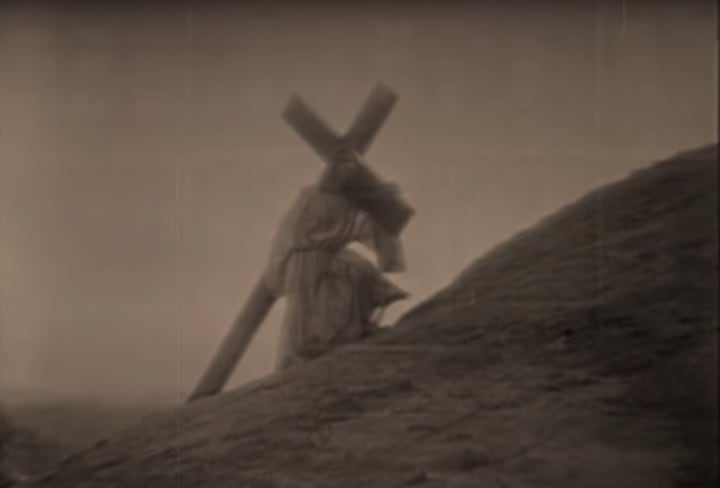
The Kid opens with a shot of a woman leaving a Charity Hospital with a baby in her arms, the text reads - "the woman - whose sin was motherhood". Immediately there is a frame of Jesus Christ bearing his cross walking up a mountain. Interestingly, Chaplin oscillated between identifying as an atheist and an agnostic yet the first images of the film prime the audience to think of the story's religious context.
We learn that the baby was born out of wedlock and the father of the child abandoned both the mother and child. In an act of desperation, the child's mother abandons her child by placing them inside of a car, hoping someone else can give them a better life. Shortly after, two robbers approach jump in the car and drive away, unknowingly carrying the orphan child in the backseat. When they hear the newborn crying out, the robbers dump the child on the side of the road next to a pile of garbage.
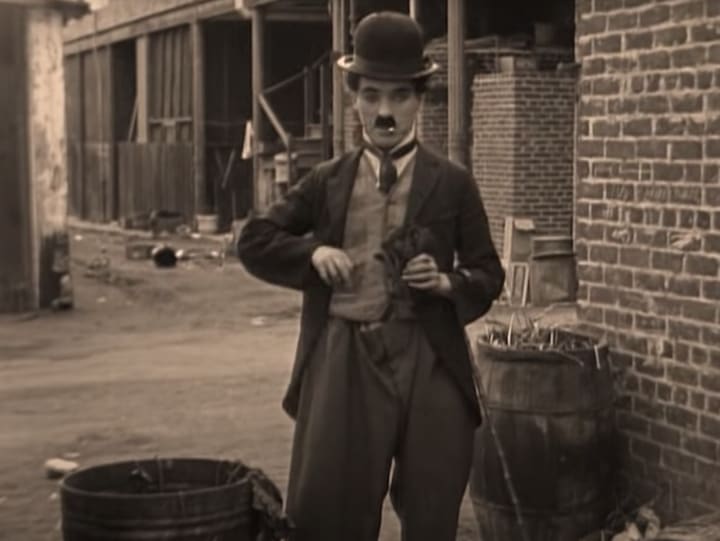
Charlie's character is aloof and initially comes across as cold, he picks up the child and attempts to also abandon him, even considering dropping him into the sewer drain. Eventually, he reads a note "please love and care for this orphan child" which changes his mind and Charlie decides to take on the responsibility of fatherhood.
He raises the boy, John, for five years. They make the best of their poverty and come up with a scheme. John throws rocks at his neighbor's windows and Charlie comes around as a window-repairman. Remember, this was released in 1921 - the start of the Great Depression where economic hardship reigned across the nation.
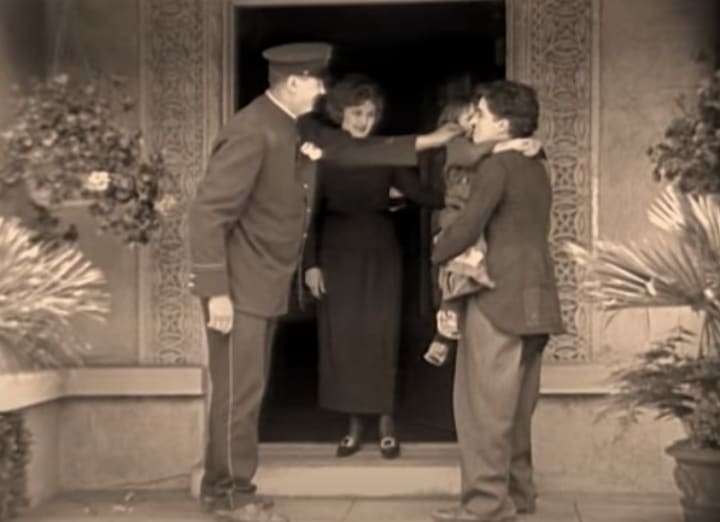
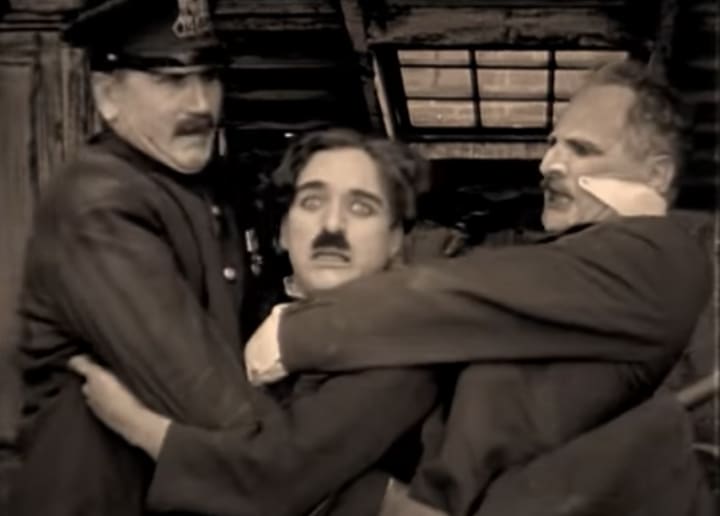
Suddenly the kid, John, falls ill. When a doctor is called to examine him, the doctor calls for the Orphan Child Asylum to come take him away from Charlie. Ultimately, the orphanage people aided by the police rip the kid away from Charlie's arms where he is returned to his biological mother. This separation leads Charlie to stumble into an apartment numbered "69" where he falls to the ground and slips into "Dreamland".
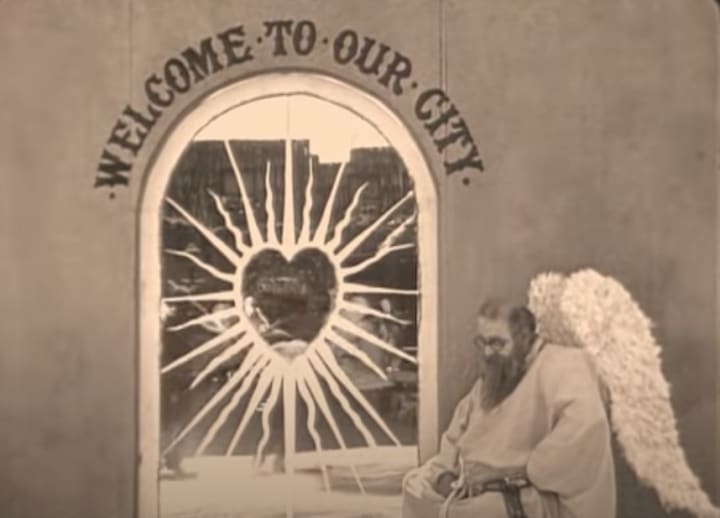
The audience sees Charlie's dream as it unfolds in real time, we see everyone has grown wings and the set of an urban 20th century city transforms into a primordial state of Heaven, or Eden. We see the angels live in harmony and can fly at will, there is even a scene of a dog flying. Shortly after, we seen "demons" who tempt the angels through sin, which is related through sexual desire and jealousy. Shortly after, Charlie is awakened by a police officer and is taken to the home of the kid's biological mother. The story is resolved in true comedic fashion, Charlie reunites with the child he cared after, the child now has two parents and the officer came around to aid in their reunion.
Analysis
The Kid is a provocative film that brings morality into the spotlight. From the beginning, it would be easy to judge the film's characters. The mother has a child without being married and abandons her child in some stranger's car! However, Charlie challenges this notion of passing judgement so easily and every time the mother is portrayed, she is actually depicted as divine.
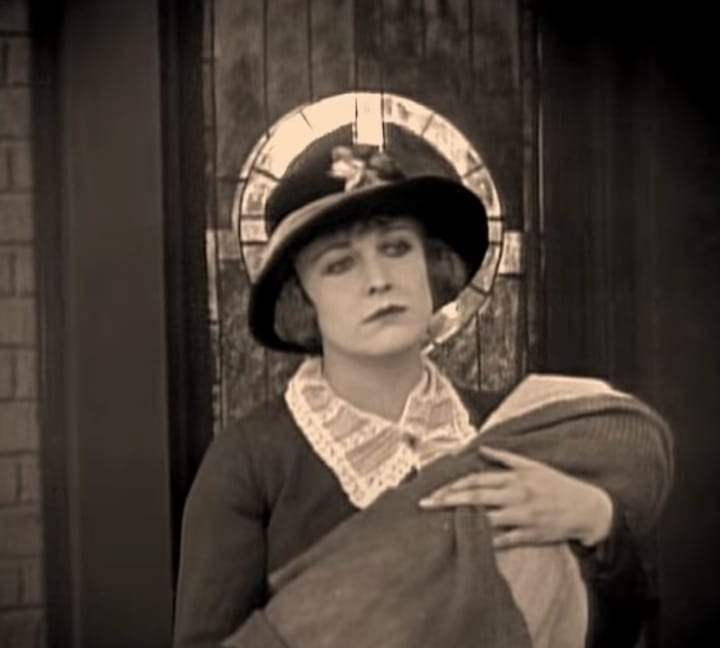
Remembering the Jesus symbolism, Chaplin draws parallels to this mother to Mother Mary, the ultimate Christian archetype of the mother/son relationship. Everyone in this film is an everyman, in other words archetypal representations. The Mother and Charlie's character do not have names, the only character who does have a name is The Kid, and it's a generic one at that - John. In the socially conservative society of the 1920s, the Mother would have been shunned, yet in the film she is depicted as becoming a successful actress and being very giving and righteous. When Charlie gets into a fight, The Mother blocks a punch and repeats the prophetic phrase " Remember - if he smites you on one cheek, offer him the other".
Second, society's traditional keepers of order and moral code - doctors, police, and charities are depicted as ripping a child from his father's arms. Chaplin positions these traditional social institutions in situations where their actions are not clearly right or wrong, questioning if they really are the arbiters of morality.
In the final scenes of a primordial heaven where every character plays an angel, Chaplin depicts a state before the Fall. In Catholic Theology, there exists a concept called Fortune of Fall, meaning God intended for humanity to sin in the Garden of Eden for our own evolution. But what caused the Fall? Eating from the Tree of Knowledge of Good and Evil. And what is knowledge of good and evil if not morality? Deciding what is right or wrong, is the Fall actually a projection of egoic subjective thought, is original sin actually projecting morality onto God's creation? These are some of the major questions that this film poses, and in typical masterful tactic, never answers. However, Chaplin is strategic with what he shares on the screen and the symbolic religious undertones beg us to think about the moral view we have on the world. Be careful about passing judgement, you never know what you would have done in someone's shoes.
About the Creator
Keep reading
More stories from Andres Rene Gomez and writers in Geeks and other communities.
Black Entrepreneurs - Abantu Audio
The Black entrepreneur who has most inspired me is Luc Cadet. Born in Haiti, Luc came to the United States when he was just a kid, and his earliest memories are of him and his mother being detained in Guantanamo Bay. Raised in Florida and moving to New Mexico and Texas for his schooling, Luc graduated from the University of Texas and bootstrapped his own business, Abantu Audio, with his two friends pictured above, Alejandro and Travis.
By Andres Rene Gomez5 years ago in Journal
A Knight of the Seven Kingdoms Series Review (Season 1)
As one of the biggest properties in fantasy, A Song of Ice and Fire remains immensely popular with audiences. After reaching far into the past with House of the Dragon, a second spin-off was on the cards. A Knight of the Seven Kingdoms serves up a bite-sized slice of action and drama, but it still claims a spot among the best small-screen titles.
By Robert Cain15 days ago in Geeks
Digital Dr. House: How ChatGPT Saved 4-Year-Old Alex 🤖🏥
I have written a few times about how AI unintentionally contributed to human tragedy; we’ve already covered the "Eliza Effect," so today, for contrast, it is necessary to mention a situation where AI truly helped. As an enthusiast, I am pleased to have the pleasure of sharing with you the story of a boy named Alex, whose diagnosis was helped by none other than "Dr. ChatGPT" – my first AI friend. Listen closely. 🎧
By Piotr Nowaka day ago in Geeks
Writing To Succeed
If you want to find something that will help readers find your writing, possibly expand your audience, and maybe even get you noticed for other things, then you’re not alone. But how can you get it done in a world full of want-to-be writers? Look less at what you’re writing now, and more at what other writers have used to boost their views and reads.
By Jason Ray Morton 7 days ago in Writers




Comments
There are no comments for this story
Be the first to respond and start the conversation.