
The Importance of "Ulysses" by James Joyce
Published: 2nd Feb, 1922

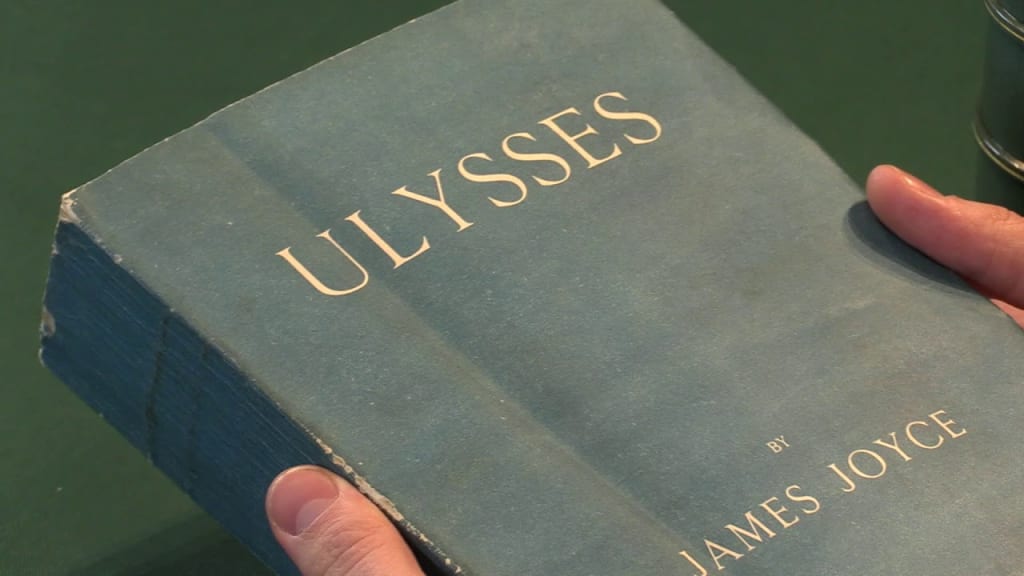
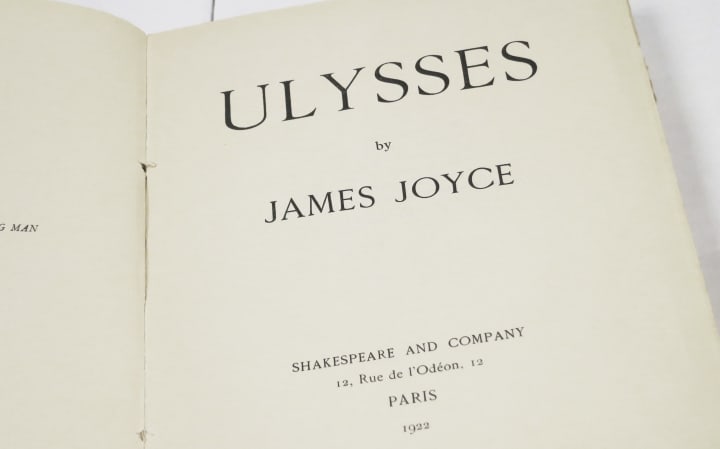
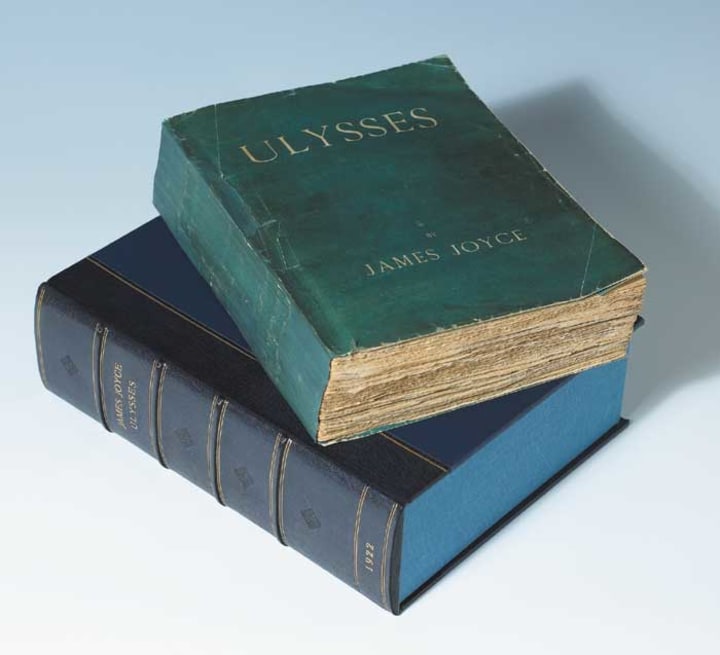
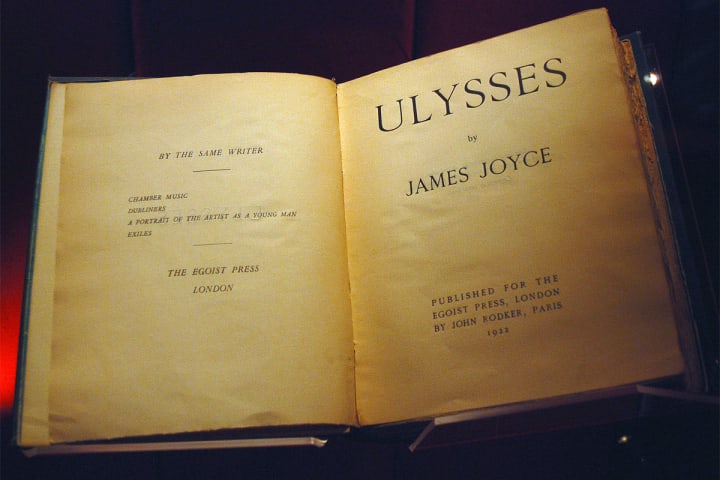
Published in Paris on the 2nd of February, 1922, James Joyce's giant novel 'Ulysess' would go on to receive public acclaim as one of the most difficult novels ever written and yet, also simultaneously one of the greatest of all time. The importance of this work is immessurable and honestly, I have only ever read it once. When I first read it I must have been around eighteen years' old and it took me an entire month to read because:
- It was so difficult
- I was in the middle of examinations for university
- I had to refer to notes and dictionaries when reading it to keep up with the style, language and references
Well, let us go on to discuss what is so important about this book and why people still read it to this day.
The Importance of "Ulysses" by James Joyce
What is the book about?
The first section of the book is about a character called Stephen - his mother has just passed away and he teaches a history class on a guy called Pyrrhus. He speaks to a man after class about how the Jews have never been persecuted in Ireland - which stands out to be one of the most famous passages from the whole book.
As Stephen goes somewhere else, he thinks upon his mother's death and there are a bunch of philosophical realisations and contemplations which can seem really difficult to get through (just keep pushing on, you can do this!). It is no wonder as to why that particular section is noted as one of the most difficult parts of the whole book - and trust me, it is.
The next section is about a man called Leopold Bloom reading a letter from his daughter after bringing the mail to his wife. I only realised later that him being part-Jewish is actually something important. This is where it gets a little complex - he has another name which is Henry and receives letters from another woman under this assumed name. He goes to a church and then to a chemist - musing on various pieces of philosophy and theology. I believe that it is the very next chapter where he attends a funeral, but don't quote me on that. He then goes to the office of something called "The Freeman's Journal" to place an advertisement. The next chapter is about the museum which is one I don't really want to talk about because the musings of philosophy are just plain weird.
The next part was probably my favourite chapter because it is where Bloom explains his reasonings on Shakespeare at the National Library. He does this biographical analysis of his life and explanation of "Hamlet" which I really quite enjoyed (even though the rest of the book is a push). This is also the chapter where Leopold Bloom and Stephen are in the same physical space without knowing it.
The very next chapter is difficult and proved difficult when I was reading it because at first, I could not understand how it fit into the story. It is nineteen short stories about people in Dublin, characters that fill the streets etc. It is a very strange chapter and to this day, I just really don't like where it is in the book because it cuts up the novel in a way that I think is annoying. The next chapter is about music I think and a dinner Bloom has with Stephen's uncle whilst the chapter following is the one where a narrator called "Citizen" insults Bloom in a pub.
I think everyone knows about the women looking after children on the rocks in the next chapter whilst it seems like Bloom is almost stalking them. This chapter too, seems misplaced to me - as if it should be at the end in a way. But there is also something else that makes reading it very uncomfortable. I will leave it to your imagination. Honestly, though, this book would've got itself banned if it were any clearer about it.
I believe the next chapter is the one where Bloom meets Stephen in the hospital where Mina is giving birth. This is the one where Joyce parodies other writers such as Charles Dickens and Edward Gibbon as well as writing his satirical notions on the King James' Bible. The very next chapter though is part of the main function of the storyline, I believe so all I am going to say is that Bloom has a hallucination that changes a lot of his beliefs at the end of the chapter. Again, another strangely placed event.
The last three chapters are dedicated to turning Bloom's marriage to Molly into something symbolic, almost an odd thing to do given the fact that she was never really a major character but this is James Joyce we are talking about.
Why is it important?
Carl Jung stated in 1953 about this book that:
What is so staggering about Ulysses is the fact that behind a thousand veils nothing lies hidden; that it turns neither toward the mind nor toward the world, but, as cold as the moon looking on from cosmic space, allows the drama of growth, being, and decay to pursue its course.
Personally, it took me a long time to understand what he was talking about because it also took me many years to appreciate the novel for being confusing in the best of ways. I feel like this quotation about the book sums up the entire career of James Joyce and if you read my favourite Joyce novel "A Portrait of the Artist as a Young Man" not only will you meet some of the characters again, you will also gain more insight into his writing.
As part of the argument of the 'everyman' the Routledge book on the history of Literature in English has often commended "Ulysses" as being one of the greatest novels written in English in our modern times:
"[He uses]metaphors, symbols, ambiguities, and overtones which gradually link themselves together so as to form a network of connections binding the whole work. This system of connections gives the novel a wide, more universal significance, as "Leopold Bloom becomes a modern Ulysses, an Everyman in a Dublin which becomes a microcosm of the world."
I would say that beyond most, this is an accurate statement because if you were to understand the novel this way before you were to read it then, I would think it would make the novel a lot easier to understand. Everything that can happen in humanity, will happen in this novel.
But I will always appreciate what Virginia Woolf said of the book, being possibly one of the greatest ways in which it has been remembered to this day:
"Ulysses was a memorable catastrophe—immense in daring, terrific in disaster."
About the Creator
Annie Kapur
I am:
🙋🏽♀️ Annie
📚 Avid Reader
📝 Reviewer and Commentator
🎓 Post-Grad Millennial (M.A)
***
I have:
📖 300K+ reads on Vocal
🫶🏼 Love for reading & research
🦋/X @AnnieWithBooks
***
🏡 UK
Keep reading
More stories from Annie Kapur and writers in Geeks and other communities.
A Filmmaker's Review: "Der Müde Tod" (1921)
Fritz Lang's name conjures up images of a cinematic overlord, a man with a plan, an artist, a deity of the early screen and yet, I have often seen people overlook the film "Der Müde Tod" (The Weary Death) in favour of more popular later films such as "M" (1931) with the incredible Peter Lorre, or even the famed and ever-popular series of "Dr. Mabuse". I am a massive Fritz Lang fan, I am a fan of all the early German directors - but especially Lang ("Dr. Mabuse"), Murnau ("Nosferatu") and Weine ("The Cabinet of Dr. Caligari"). One watch of a Fritz Lang movie normally puts me right in the mood to rewind the whole thing and watch it again just for the depth and analysis. I find that if a movie does that to me, then it is worth a solid five out of five. Let's take a look at what it is about first then, shall we?
By Annie Kapur5 years ago in Geeks
Meet the Director Nominated for Two Oscars for Two Different Films
In the highly competitive world of filmmaking, earning a nomination for the Academy Awards is considered one of the greatest recognitions of artistic achievement. For one director, however, the honor arrived twice in a single year — for two completely different films. The unusual milestone has drawn attention across the global film industry and highlighted the creative range of a filmmaker whose work continues to push boundaries. The nominations, announced by the Academy of Motion Picture Arts and Sciences, place the director in a rare category of artists who have managed to captivate audiences and critics simultaneously with multiple projects released within the same awards cycle. While it is common for filmmakers to spend several years developing a single project, this director oversaw two distinct productions, each with its own cast, theme, and visual language. Both films went on to gain widespread critical praise, eventually earning nominations at the prestigious Academy Awards. Industry observers say the achievement reflects not only technical skill but also a remarkable ability to navigate vastly different storytelling approaches. Two Films, Two Worlds The first nominated film is a sweeping historical drama that explores the complexities of identity, power, and personal sacrifice. Set against the backdrop of a turbulent political era, the film combines intimate character studies with large-scale cinematic spectacle. Critics praised the director’s ability to balance emotional storytelling with historical authenticity. Carefully constructed scenes, detailed production design, and powerful performances helped the film resonate with audiences around the world. The second nominated film stands in stark contrast. Rather than historical drama, it is a contemporary character-driven story focused on personal relationships and moral ambiguity. The narrative unfolds in a quieter setting, relying heavily on dialogue and subtle performances. Despite its smaller scale, the film has been described as equally powerful. Reviewers noted the director’s talent for extracting complex emotions from everyday situations, turning ordinary moments into compelling cinematic experiences. Together, the two films demonstrate a rare versatility that has impressed both critics and members of the film academy. A Career Built on Risk The director’s path to recognition was not immediate. Early in their career, they worked on independent productions that struggled to secure wide distribution. Many of those early films were praised in small film festivals but received limited commercial success. Those projects, however, helped shape a distinctive creative voice. Rather than following conventional industry formulas, the filmmaker developed a reputation for taking risks with narrative structure and visual style. Over time, those risks began attracting international attention. Film critics often compare the director’s approach to that of celebrated auteurs such as Christopher Nolan and Alejandro G. Iñárritu, both known for blending ambitious storytelling with strong artistic identity. Although the comparison is flattering, the director’s work remains distinctly their own. The Challenge of Creating Two Films Producing two award-caliber films within the same period is an enormous logistical challenge. Each production requires months — sometimes years — of planning, financing, casting, and post-production work. Film industry insiders say the director’s ability to manage both projects simultaneously speaks to an exceptional level of organization and creative discipline. Crew members involved in the productions describe a collaborative environment where ideas were encouraged and experimentation was welcomed. “Every scene felt carefully planned but also open to discovery,” one cinematographer who worked on the projects said in an interview. “The director had a clear vision, but they also trusted the creative team.” Recognition from the Film Community Since the nominations were announced, the director has received congratulations from filmmakers and actors around the world. Social media has been filled with tributes from colleagues who admire the achievement. Some analysts say the nominations reflect a broader shift within the film industry toward recognizing bold storytelling and diverse perspectives. In recent years, the Academy Awards has expanded its membership and voting body, bringing in a more international and diverse group of filmmakers. That change has allowed a wider range of films to gain recognition. For this director, the moment represents both validation and new expectations. Looking Ahead While awards season attention often focuses on trophies and ceremonies, many filmmakers emphasize that recognition is only part of the creative journey. The director has already hinted at several upcoming projects, including a potential collaboration with major international studios and a smaller experimental film expected to return to their independent roots. Whether or not the Oscar nominations lead to a win, the dual recognition has firmly established the filmmaker as one of the most exciting voices in modern cinema. For audiences, the achievement offers a reminder that great storytelling can take many forms — from sweeping historical epics to intimate human dramas. And for the director behind both films, the moment marks not an end point, but the beginning of an even more ambitious chapter in a rapidly evolving career.
By Fiaz Ahmed a day ago in Geeks
TUS NUA - ch 53
TUS NUA – ch 53 New Beginnings – Mia and Midnight (*)(*)(*) Finola knew Ali’s brother-in-law needed to put his mind at rest. She fed her arm through his and led him outside. “We’ll sit here. If you like, I can put a block around us so our conversation will be private.”
By Margaret Brennan7 days ago in Fiction


Comments
There are no comments for this story
Be the first to respond and start the conversation.