
The iconic Hollywood films transformed by test audiences
Many classic movies could have been so different, had they not been screened to select members of the public first. Nicholas Barber lifts the lid on a very secretive process.

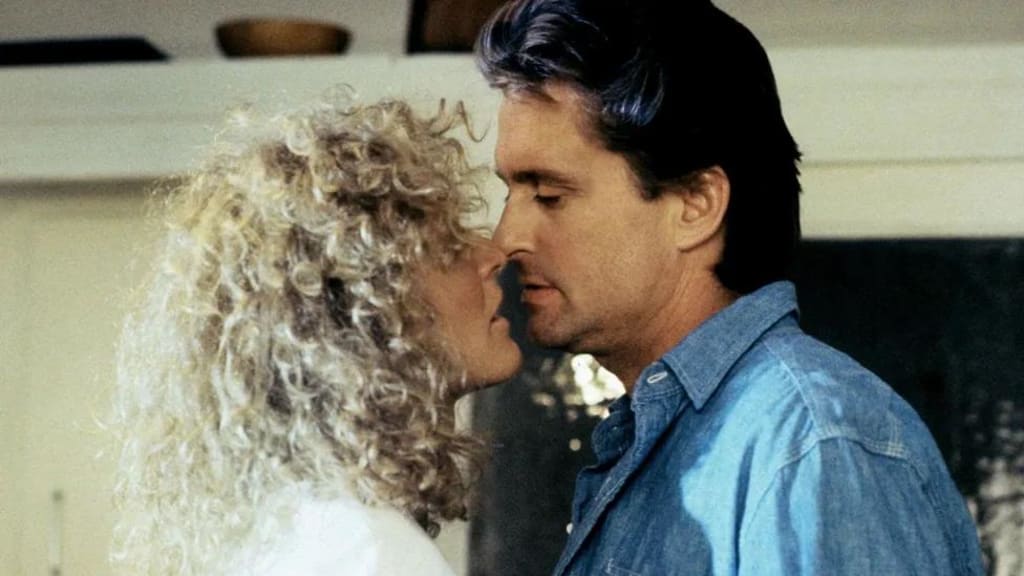
The joyous musical number on a traffic-jammed freeway in La La Land. The decomposing head popping out of a sunken boat in Jaws. Julia Roberts dancing with Rupert Everett at the end of My Best Friend's Wedding; Anne Archer shooting Glenn Close at the end of Fatal Attraction. They're all much-loved parts of much-loved films, and they all have something else in common: they made it into cinemas thanks to you – or somebody like you, anyway. The films' directors didn't put these sequences in their initial edits, but after audiences at test screenings had had their say, new scenes were shot, or old ones were rescued from the cutting-room floor.
In the case of La La Land, the freeway sequence had been shot and then edited out, but it was reinstated to let viewers know upfront that they were watching a musical. In the case of My Best Friend's Wedding, audiences felt that Roberts' character had been too cruel to be given a potential boyfriend, as she was in the film's original cut, so she was consoled by her gay buddy instead. Fatal Attraction was supposed to end with Close's character killing herself, but audiences wanted her to be punished by her ex-lover's vengeful wife. As for Jaws, Spielberg twigged that with a few extra seconds of footage – shot in a swimming pool at his own expense – he could make audiences jump several feet in the air.
Story continues below
Not every post-test screening revision is as significant as these, but most mainstream films have been affected by the process in one way or another. Now some of the mysteries of the process are being uncovered in Audience-ology, a new memoir by Kevin Goetz, the founder and CEO of Screen Engine/ASI, one of the industry's leading research and data analytics firms. "There's a handful of directors who don't test," he says to BBC Culture via video call from his home in Los Angeles, "but they are a rarity. Last year, there were 130 studio movies that got a wide release, and I'd say that 90 per cent of those went through a test screening, sometimes multiple times. The average movie will have three test screenings, and some will have as many as 10 or 15."
Edgar Wright, the director of Shaun of the Dead, Hot Fuzz and Last Night in Soho, has no qualms about testing his films. "It can be beneficial on a number of levels," he tells BBC Culture. "It's good to take the pulse of the room, to see whether something is playing well, if something is unclear, if the length is making people antsy. Also, you'll never have your first screening again, so that very first exposure to the public is always memorable, good or bad. I fondly remember the first test screening of Shaun of the Dead where it was clear a portion of the crowd didn't know it was a zombie film – despite the title – or have any idea what was coming. It did feel very exciting to spring the film on them completely cold."
This isn't something you hear about too often. A director promoting a film may rave about the actors, the stunt doubles, the production designers and the composers, but they tend to keep quiet about its very first viewers. As Goetz says in Audience-ology, a test screening in a suburban multiplex remains "one of the most secretive places in Hollywood – a place where famous directors are reduced to tears and multimillionaire actors are reduced to fits of rage". Not that he names any names, of course.
How the testing process began
However mysterious the practice may be, though, test screenings are almost as old as cinema itself. Goetz credits Harold Lloyd as their pioneer, citing evidence that Lloyd began trying out his one-reel silent comedies in cinemas around 1919 or 1920 when he sensed they weren't quite right. His contemporary, Buster Keaton, did the same. At the climax of Keaton's 1925 comedy, Seven Chances, the frantic hero sprints through the countryside, pursued by dozens of angry women in bridal dresses. Viewers were underwhelmed by the chase, but they cheered when Keaton dislodged some rocks from a hillside as he ran, so he slotted in a new segment in which he had to dodge an avalanche of tumbling boulders. This action sequence became one of the most celebrated of Keaton's career.
Beauty and the Beast got one of the highest scores of any movie we'd ever tested, and at the time it was just five per cent animated, and the rest was black-and-white sketches – Kevin Goetz
A century on, the basics of test screenings haven't changed. People are invited to a cinema, they aren't told in advance which film they are going to see, and afterwards they fill in cards to log their feelings. The key questions on a standard screening form are the first two, both of which have five possible answers. Question one is, "What was your reaction to the movie overall?", with answers ranging from "Excellent" down to "Poor". Question two is, "Would you recommend this movie to your friends?", with answers ranging from "Yes, definitely" to "No, definitely not". If there aren't enough ticks in each of the top boxes, the film is in trouble.
Having been involved in the testing of 7000 films, Goetz is one of the researchers who has refined the process. Viewers, rather than being invited in off the streets, are now selected in advance according to their demographic. Questionnaires have grown longer, focus group discussions afterwards have become more detailed, and different screenings are used to interrogate different aspects of a film. "You can't tackle everything at once," says Goetz. "The first screening might indicate how to truncate the film if it's woefully long. The next might be because the ending is not altogether satisfying, or the characters aren't likeable." The trickiest thing to ascertain without an audience is whether viewers will laugh. "There are certain comedians and comedy directors who'll do multiple screenings to see what works with an audience. Judd Apatow and Sacha Baron Cohen love to play with the rhythms of jokes."
Some tests are conducted early on in a film's production – because why spend millions of dollars on visual effects for a scene which isn't working? "I remember testing The Invisible Man without the invisible man," says Goetz. "I remember testing Rise of The Planet of the Apes when the ape was still just Andy Serkis. Beauty and the Beast got one of the highest scores of any movie we'd ever tested, and at the time it was just five per cent animated, and the rest was black-and-white sketches. The story and the music were already there, and if you've got a great story, everything else is icing on the cake.”
Test screenings can be a scalpel to cut out pretentiousness and self-indulgence. If the ultimate point of art is to connect with someone, it would be absurd to exclude audiences from the process – Francis Annan
But most films are tested when they are, in theory, pretty much finished. If the producers are lucky, all that's needed is one or two tweaks. Audiences who saw a certain 1980s baseball drama were put off by its title, Shoeless Joe, but a new one made all the difference: Field of Dreams. Some fixes aren't so easy. When Goetz was testing Tarsem Singh's Immortals, a swords-and-sandals epic starring Henry Cavill and Mickey Rourke, he went as far as stopping the film before the denouement and asking the audience how they would end it. The first cut of Frank Oz's Little Shop of Horrors ended, like the stage musical, with a man-eating plant from outer space chomping the hero (Rick Moranis) and heroine (Ellen Greene), and taking over the world. Test audiences had been so charmed by the central love story that they were appalled when it came to such a sticky end. "Everyone was applauding after every number," Oz later told The Hollywood Reporter. "They were absolutely loving it! And then when Rick and Ellen died – it became an icebox. I could just feel it. It was awful." The 23-minute finale was lopped off, and replaced with a happy ending.
A similar, if less drastic, alteration was made to A Fish Called Wanda, so as to confirm that Jamie Lee Curtis's thief genuinely loved John Cleese's lawyer, instead of suggesting that she was still scamming him. Curtis recently admitted to Vanity Fair that replacing the original "much darker, more sinister ending" felt like "wimping out", but, she added, "It's hard when a movie's that successful to say that it was wrong to do it."
Are test screenings good for cinema?
This sort of ambivalence comes up a lot in regard to test screenings. They're often seen as a means of putting commerce over art, of elevating the whims of the gum-chewing mob over the artistic ambitions of an auteur. "Some film-makers have either a complicated relationship with the test-screening process," says Wright, "or they just flat-out hate it".
In Audience-ology, Goetz recalls Ang Lee saying to him: "Picasso never audience-tested his paintings". But Goetz argues that if each of Picasso's paintings had taken years to create, at a cost of tens of millions of dollars, then maybe he would have tested them. "I've heard people say that the studio has an agenda," he says, “and that's true, but the agenda is that they want the film to get good word-of-mouth and to have real longevity. That's how they make money from it." Besides, he is a firm believer in the wisdom of crowds. "If someone honks at you on the highway, they're a jerk," he says. "But if three or four people honk at you, you're the jerk. It's the same with films. If 30 or 40 people tell you that something’s not working, you have to listen to that and think, 'Maybe I’m not conveying what I set out to convey'. I like to say that testing doesn't take away from a filmmaker's vision, it helps to actualise that vision."
That's certainly what happened when Francis Annan was fine-tuning his directorial debut, Escape From Pretoria, a prison-break docudrama starring Daniel Radcliffe as an anti-apartheid activist. "The producers were obsessed by the film being 90 minutes long," Annan tells BBC Culture, "so they kept cutting stuff until I felt that audiences wouldn't know what was going on. The test screenings gave me ammo to fight back because the four weak points that audiences identified were where four actual scenes had been cut. I could call the executive producer, and say, 'Look, you've overcut, they don't understand why this character's dying, they don't understand what that character's doing. Maybe if you put back that scene that I spent two days shooting with 100 extras, it might help.' Of the four scenes that he'd cut, he accepted the need to put back three."
Sometimes, Annan admits, a screening can work the other way around, and be used by a studio to overrule a director. Either way, he says, "It can be a scalpel to cut out pretentiousness and self-indulgence. If the ultimate point of art is to connect with someone, it would be absurd to exclude audiences from the process".
Whether or not Ang Lee would agree, the process is here to stay. Recently, Goetz's company developed a remote-screening system he describes as "Zoom on steroids" which allows hundreds of people to watch a film in their homes simultaneously, while the director and producers study their faces to see if they are laughing, crying or dozing off. "The stakes are higher than ever now that the theatrical window [when films are in cinemas] is so short. Why would you risk releasing something before it's ready to show to the world?"
About the Creator
Alessandro Algardi
"She was a girl who knew how to be happy even when she was sad” and that's important you know.
Keep reading
More stories from Alessandro Algardi and writers in Geeks and other communities.
The fairytale world of photographer Tim Walker
The exhibition is named after the phrase used by an awestruck archaeologist in 1922 on seeing for the first time the glittering contents of Tutankhamun’s tomb: “wonderful things”. And the trademark Walker-wonderland preoccupations are all here – the English countryside, fairy tales, male nudes, and his influences in art and photography, from Beaton and Lartigue to children’s book illustrator Arthur Rackham.
By Alessandro Algardi3 years ago in Geeks
The Politics of Playing Dress-Up
Well, to start off I'd like to say a happy world book day to all who celebrate. I know I haven't really posted anything on my socials about it but I'm not a jubilant kind of person. I lay low most of the time. Let's start off with a popular anecdote from the vaults...
By Annie Kapur4 days ago in Geeks
Guard Your Battery
Why are some people so attractive just by standing there? It’s not because they are "likable," but because they don’t need everyone to like them. I realized later that truly charismatic people allow themselves to be criticized, but they never criticize themselves. They never try to please the world; instead, the world stops to watch them.
By Emily Chan - Life and love sharing5 days ago in Poets



Comments
There are no comments for this story
Be the first to respond and start the conversation.