
The Doors - William Oliver Stone (1991)
Movie Review

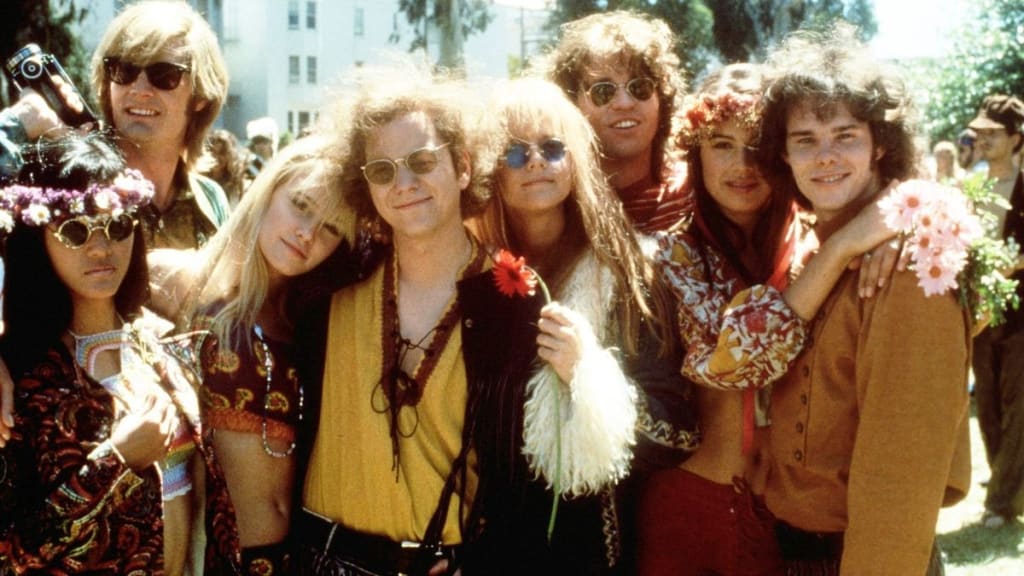
I make my films like you're going to die if you miss the next minute. You better not go get popcorn. – Oliver Stone
More than anything else, this is about Jim Morrison - the lead singer of The Doors, a poet, and a visual artist. Someone who influenced the entire pop/rock culture, deeply impacted a generation (the craziest one so far in history), lived in utmost freedom, and died exactly as he would have wanted, and at the right time to become an idol... Then he offered Oliver Stone the chance for a unique project, for which the director had to wait 20 years...
Jim Morrison is the archetypal iconoclastic image of the rebellious teenager who, like Che Guevara, carries the banner of a manifest of impossible aspirations in his charisma... At the same time, he is a character destined to remain controversial in all of his endeavors, including the one in which he had to leave the grand stage of life at only 27 years old (in the absence of an autopsy, the cause of death has given rise to numerous speculations). To write or tell the story of such a significant symbol is, was, and will always be a courageous and risky attempt alike.
In cinema, memorial evocations have taken the path of documentary films from the very beginning, leaving the tools of parody, romanticism, and/or introspective speculation converted for feature films. Very few productions have faithfully portrayed the events in the life of a personality, and among those that have taken the initiative, even fewer have succeeded... This is one of those films...
A student of Professor Martin Scorsese, William Oliver Stone fought in Vietnam... in fact, he interrupted his studies and volunteered, earning several decorations for the military actions he participated in (including a Purple Heart with an Oak Leaf Cluster), and accumulating even more wounds (an experience that would later serve him in the making of his three remarkable films dedicated to the war: Platoon, Born on the Fourth of July, and Heaven & Earth).
As a student, combatant, and graduate of an art-focused institution, Stone experienced his times at the highest levels of intensity, providing the optimal environment for the germination of Jim Morrison's revolutionary message, and this can be seen, but most importantly felt, in every frame of The Doors, a true cinematic poem declaimed in the rhythm of an era that turned its face towards nature and humanity, believed in the power of the flower, and chose "Make Love, Not War" as its imperative motto. Oliver Stone doesn't give the viewer a moment of rest, this is one of the distinctive features of his unmistakable style. Significant events are succinctly packed or merely suggested, in fast-paced and brisk editing, as if time exerts a continuous and suffocating pressure; as if the 140 minutes of projection need to compress narratives that would occupy ten times that duration... as if someone were waiting with a stopwatch for a precise time limit until silence. The film follows this treatment, even in moments of alcoholic or hallucinogenic reverie, where it benefits from an unnatural and strange crowding that produces an astonishing effect.
The opening of the film contains several highly interesting elements for the discerning audience, among which the moment at UCLA (University of California, Los Angeles) seems both profound and subtly nuanced, perhaps escaping the attention of critics, although the markers were evident. Morrison is presented to us as a student, watching with his colleagues the screening of the final images of his own film. The end of the screening is followed by comments, and Oliver Stone himself appears as the cinema professor leading the discussions... Moreover, the way the course is organized, the place where it is held, and the educational method used (OpenClass) were not part of UCLA's curriculum or practices at that time, but instead strikingly resemble the techniques used by the Sundance Institute of Film (a promoter of the indie genre, free from any school constraints) founded about 15 years after the events portrayed in the plot... Morrison's obsessions about death, redemption, and endings are presented in the most objective way possible and perfectly complement the character portrayed by Val Kilmer, who did not attempt to compose a character here but rather to transform into him. For two years prior to filming, Kilmer immersed himself in behaving exactly like Morrison, wearing the same clothes, memorizing his poems and songs, emulating his style, vocal inflections, and attitude... and the successful resemblance is so striking that the concert scenes did not even need to be dubbed, as the original members of The Doors themselves were stunned by the accuracy of the portrayal.
An idol rises, falls, finds himself again, and departs...
About the Creator
Andreea Sorm
Revolutionary spirit. AI contributor. Badass Engineer. Struggling millennial. Post-modern feminist.
YouTube - Chiarra AI
Keep reading
More stories from Andreea Sorm and writers in Geeks and other communities.
Romeo and Juliet - Franco Zeffirelli (1968)
A whole series of sensors are constantly tuned to frequencies, scanning the environment in search of a response. At the same time, stimuli that we do not fully understand yet constantly emit signals to the sensors of other people. Sometimes sensors and stimuli manage to communicate, following rules that are still unknown, and from here on, a whole hormonal process managed by three distinct areas of the brain is activated in stages, in this order: desire, attraction, and profound emotion. The segregation of estrogen and testosterone leads to the release of adrenaline responsible for major emotional sensations (desire); in the second phase (attraction), dopamine comes into play, and then everything is completed by the level of perception and education of each subject (profound emotion).
By Andreea Sorm3 years ago in Geeks
A Knight of the Seven Kingdoms Series Review (Season 1)
As one of the biggest properties in fantasy, A Song of Ice and Fire remains immensely popular with audiences. After reaching far into the past with House of the Dragon, a second spin-off was on the cards. A Knight of the Seven Kingdoms serves up a bite-sized slice of action and drama, but it still claims a spot among the best small-screen titles.
By Robert Cain16 days ago in Geeks
Russell Takes Dominant Chinese GP Sprint Pole
George Russell delivered a commanding performance to claim pole position for the Chinese Grand Prix sprint, showcasing his growing confidence with the Mercedes-AMG Petronas Formula One Team and setting the tone for an exciting weekend in Shanghai. The young Briton outpaced rivals in a session marked by intense battles, tricky track conditions, and strategic tire choices, further cementing his reputation as one of the standout drivers of the 2026 season. From the outset, Russell demonstrated his intent, immediately topping the timing sheets in free practice and carrying that momentum into qualifying. The Mercedes driver executed a near-perfect lap, combining precision braking with optimal cornering, ultimately securing the fastest time and guaranteeing him the sprint pole. His teammate, Lewis Hamilton, also impressed but could not match Russell’s blistering pace, leaving the team in a strong position for Saturday’s sprint race. The Chinese Grand Prix, held at the Shanghai International Circuit, presents unique challenges for drivers, including long straights, tight hairpins, and a notoriously tricky pit entry. Weather conditions further complicated matters, with light drizzle affecting grip and requiring teams to make split-second tire strategy decisions. Russell adapted flawlessly, demonstrating both skill and composure under pressure. In the sprint qualifying session, Russell’s performance was a masterclass in consistency. Each sector of the track saw him maintaining minimal time loss, and his lap times were enough to keep the chasing pack at bay. Red Bull’s Max Verstappen and Ferrari’s Charles Leclerc put in strong efforts but ultimately fell short, leaving Russell with a clear margin heading into the sprint race. Team principal Toto Wolff praised the young Briton’s execution. “George showed incredible control and focus today,” Wolff said. “Securing pole in these conditions is no easy feat, and it puts us in a great position for the sprint. Our engineers and pit crew also deserve credit for providing him with a competitive car.” Russell’s pole is also significant in the broader championship context. With the Formula One World Championship entering its crucial mid-season phase, every point and starting position matters. The sprint race offers a chance to score valuable points, and Russell’s dominant display enhances his prospects of climbing the standings and challenging for top honors alongside Verstappen and Leclerc. Fans at the Shanghai International Circuit witnessed a thrilling session, with overtakes and wheel-to-wheel battles in the mid-pack, but Russell’s commanding lead at the front underscored his skill and strategic awareness. Analysts noted that his smooth driving style, coupled with Mercedes’ upgraded power unit, was a decisive factor in securing pole in challenging conditions. The sprint race itself will test both drivers and teams, as they navigate tire management, track position, and potential safety car scenarios. Russell’s pole position ensures he starts at the front, giving him the best chance to control the race and capitalize on his qualifying advantage. Observers predict that the battle for second and third will be equally intense, with Red Bull and Ferrari drivers looking to reclaim ground. Looking ahead to the main race on Sunday, Russell’s strong starting position offers a tactical advantage. Mercedes has hinted at potential strategic flexibility, including tire selection and pit stop timing, which could prove critical if rain or track incidents influence the outcome. The team remains optimistic that a well-executed sprint race could set the stage for a podium finish and a significant points haul. For George Russell, claiming pole in the Chinese GP sprint is another demonstration of his growing maturity and ability to perform under pressure. As the season progresses, performances like these strengthen his credentials as a championship contender and signal that Mercedes remains a formidable force in the 2026 Formula One World Championship. Fans and rivals alike will be watching closely to see if he can convert this pole position into a race victory and continue his impressive run of form.
By Fiaz Ahmed a day ago in Geeks


Comments
There are no comments for this story
Be the first to respond and start the conversation.