
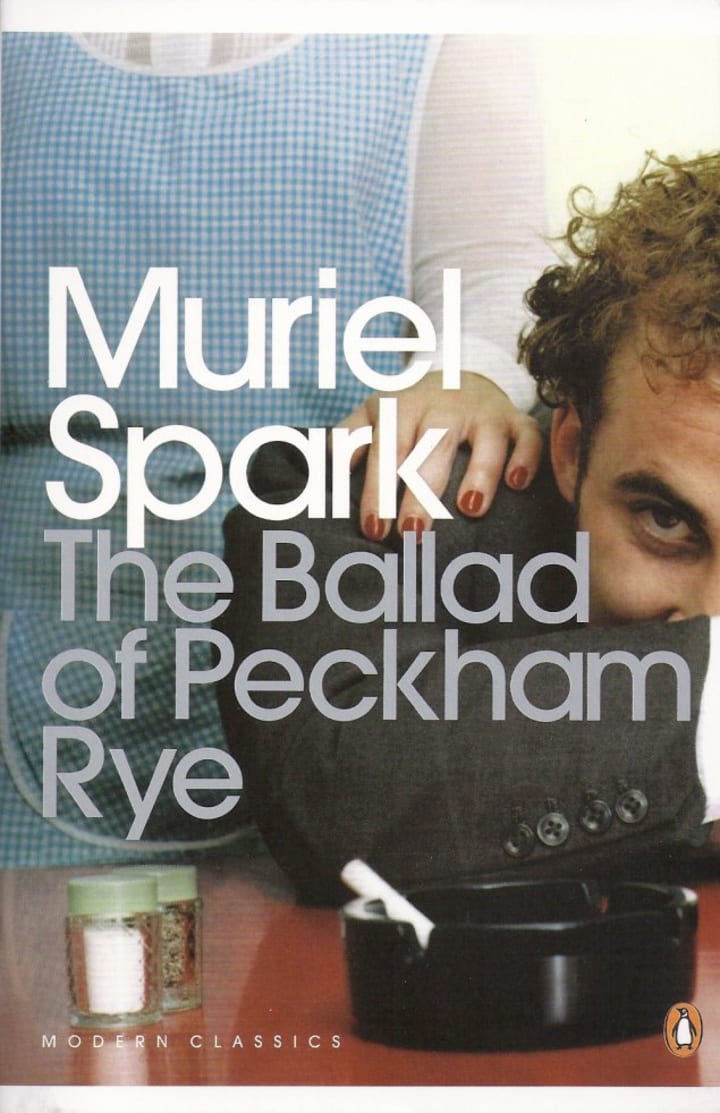
The Ballad of Peckham Rye by Muriel Spark
Why It's a Masterpiece (Week 102)

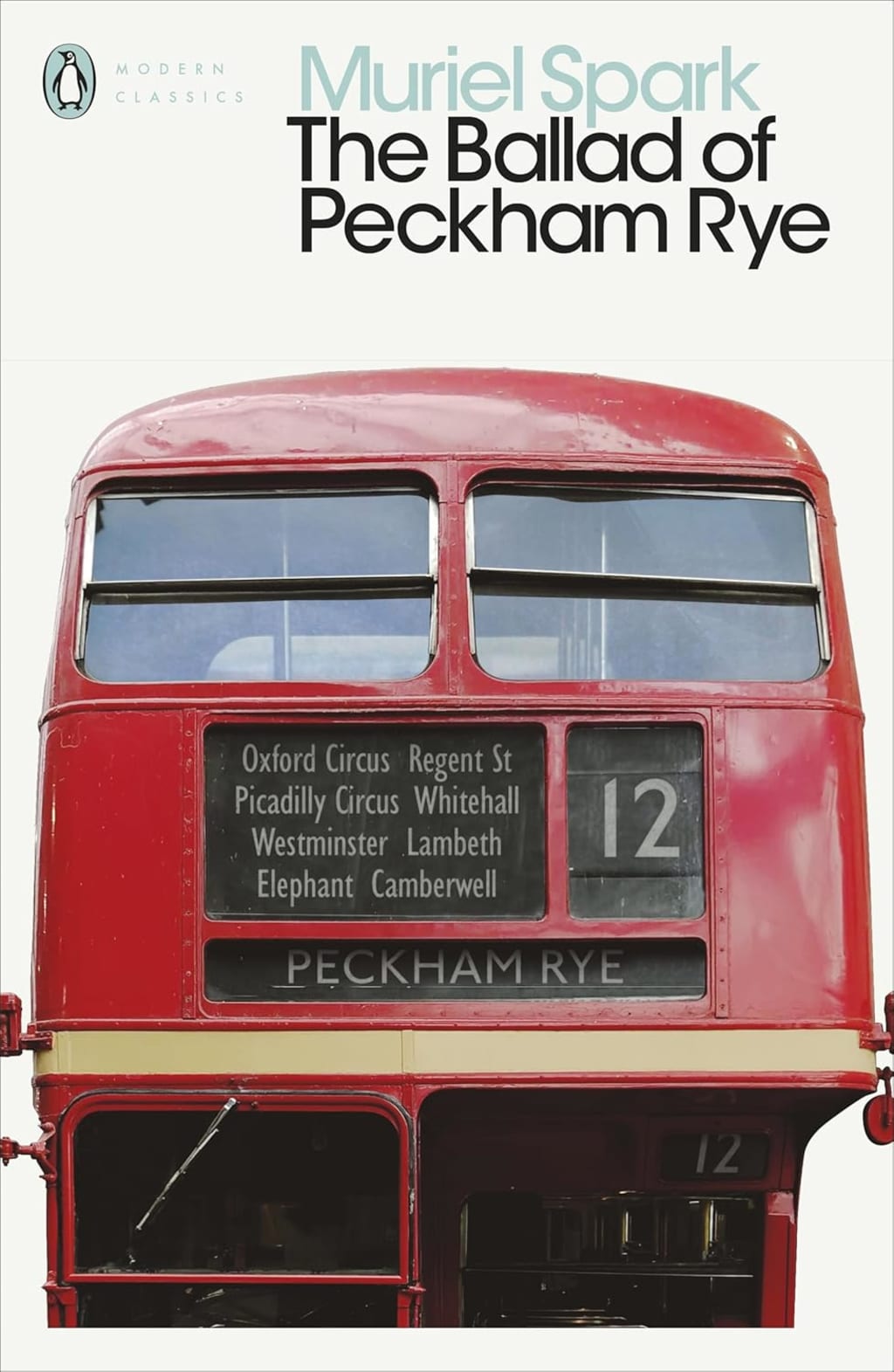
A dark-comic novel which is often regarded as 'sharp', The Ballad of Peckham Rye (1960) displays all of the notes regularly associated with the author Muriel Spark. Set in post-war London, the novel follows the arrival of Dougal Douglas, an enigmatic and manipulative Scottish outsider who disrupts the mundane lives of the working-class community in Peckham. The layered narrative, the explorations of human weakness and the wit are all part and parcel of what makes the novel what it is.
In the novel, she draws on the ballad tradition, looking at the morals, the supernatural and the weaving in of constant irony. A satirisation of the middle class and their aspirations, this book confronts the pretentiousness of the post-war social climbing broken Britain where chaos is punched into the lives of every regular, ordinary person around.
Plot
The book begins with a wedding that never takes place. Humphrey Place, a seemingly respectable man, abruptly jilts his fiancée, Dixie Morse, at the altar. The reason for this dramatic change of heart is linked to Dougal Douglas, a strange and charismatic newcomer who has inserted himself into the fabric of Peckham.
Dougal arrives in Peckham under the guise of an "arts man" hired by the firm Meadows, Meade & Grindley to improve industrial morale. Instead of fulfilling his vague corporate responsibilities, he begins conducting pseudo-anthropological research on the workers, encouraging rebellion, idleness, and personal crises. He also takes on a second position at another company while doing no real work for either.
Dougal is a trickster, an agent of disorder. He tells blatant lies, manipulates people into betrayals and breakdowns, and sows seeds of doubt and chaos. His odd physical appearance, his mismatched eyes and devilish grin, contribute to the suggestion that he is not entirely human. At times, he hints at supernatural knowledge, furthering the ambiguity of his nature.
Throughout the text, Dougal orchestrates a series of disturbances: he drives one man to a nervous breakdown, encourages infidelity, and provokes people to confront their hidden desires and suppressed fears. Humphrey Place, previously a dull and conventional man, is just one of many characters affected by Dougal’s influence. After breaking off his engagement, Humphrey becomes a symbolic figure of rebellion against the stifling normality of Peckham.
By the book's end, Dougal has done what he came to do: spread disorder and expose hypocrisy. Having wreaked havoc, he abruptly departs, leaving the people of Peckham forever altered, yet unable to fully understand what has happened to them.
Into the Book
The Trickster Figure:
Dougal Douglas is a quintessential trickster figure, a disruptor who challenges social conventions. Like the Devil in medieval morality plays, he tempts and corrupts those around him, exposing their weaknesses and secret desires. The novel is full of allusions to Dougal’s possible supernatural origins.
These “lumps” add to his devilish mystique, making him a figure of both mischief and menace. Unlike traditional representations of evil, however, Dougal is not entirely malevolent; he does not directly harm anyone, but he uncovers the hypocrisy and stagnation of their lives. In this sense, he is a force of revelation rather than destruction.
“I have got two lumps on my head. They are not horns, but they cause me to think.”
- The Ballad of Peckham Rye by Muriel Spark
The Criticism of Rigid Social Expectations:
The author uses The Ballad of Peckham Rye to critique the rigid social expectations of 1950s Britain. The people of Peckham are obsessed with propriety, respectability, and career ambition. The men are largely weak-willed, the women are trapped in conventional roles, and everyone is desperate to maintain an illusion of stability.
Dougal’s arrival exposes the cracks in this system. He easily manipulates the businessmen who hire him, showing how absurd and hollow corporate culture can be. His fake reports and ridiculous "morale-boosting" ideas go unchallenged, revealing the incompetence of those in power. Even his encouragement of workplace rebellion, persuading workers to take sick days and shirk their responsibilities, demonstrates the fragility of social order.
By the end of the novel, Peckham has not completely collapsed, but it has been unsettled. The author suggests that this small rebellion against social norms might not be entirely negative; rather, it reveals how close many people are to breaking away from lives they find unfulfilling.
“Saving and pinching to get married, you're losing the best time of your life.”
- The Ballad of Peckham Rye by Muriel Spark
Ambiguity and Motives Unclear:
Dougal Douglas is an ambiguous figure: his origins are unclear, his past is unreliable, and his motivations are never fully explained. His ability to transform situations and people at will raises questions about the nature of identity itself.
Within the text, the author plays with the idea that reality is not as fixed as it seems. Characters act out of impulse, abandon long-held beliefs, and become versions of themselves they never expected. Humphrey Place, for example, begins as a conventional man destined for marriage and stability, yet Dougal’s influence frees him to reject those expectations.
This theme is also reflected in Spark’s writing style, which is deliberately clipped and fragmented, moving between perspectives and moments without traditional transitions. This technique shows us the novel’s dreamlike, off-kilter quality, reinforcing the idea that stability is an illusion and that identity is constantly in flux.
"I have told you my name, but you will never know where I came from."
- The Ballad of Peckham Rye by Muriel Spark
Why It's a Masterpiece
A blending of sharp social commentary and absurdist humour gives this novel of a deep psychological quality on top of the supernatural wants. As in many of the other Muriel Spark novels, this is a short book, densely packed with double meanings and ideas crafted with a strange precision towards satire. There's a seemingly mundane narrative which is turned weirdly upside-down by a trickster. There's an explosive reveal of weakness and wit in which the book becomes funny, yet we still understand that the events are freakish. It leaves us with the sense that though the book is difficult to pin down in terms of genre and meaning, it is definitely a charming novel.
Conclusion
At its beating heart, the novel asks a question that remains relevant today: how much of our lives are dictated by social expectation, and what would happen if someone (or something) came along to disrupt it all? The author does not offer a neat answer, but instead leaves readers with a possibility that is as unsettling as it is brilliant.
Next Week: Aurora Floyd by Mary Elizabeth Braddon
About the Creator
Annie Kapur
I am:
🙋🏽♀️ Annie
📚 Avid Reader
📝 Reviewer and Commentator
🎓 Post-Grad Millennial (M.A)
***
I have:
📖 280K+ reads on Vocal
🫶🏼 Love for reading & research
🦋/X @AnnieWithBooks
***
🏡 UK
Keep reading
More stories from Annie Kapur and writers in Geeks and other communities.
Book Review: "A Voyage for Madmen" by Peter Nichols
"They were neither sportsmen nor yachtsmen. Only one of the nine crossed the finishing line after ten months at sea. The rest encountered despair, sublimity, madness and death". - "A Voyage for Madmen" by Peter Nichols
By Annie Kapur8 days ago in Geeks
No Other Choice (2025)
It is only February, so other films may well surpass “No Other Choice”, but I think this is the best film I’ve seen so far this year. And that surprises me, because, it is a subtitled film and while I am pretentious enough to choose to watch foreign-language films, I was also very tired and that was an extra commitment from me. But more importantly, let me warn you, this film is gruesome and violent. There were times I had to turn away from the screen to avoid the worst of it (including some self-inflicted dentistry).
By Rachel Robbins2 days ago in Geeks
Unguilty Pleasures Podcast
The Hollywood Reporter’s Daniel Fienberg, who was co-host with Lesley Goldberg of the cancelled TV’s Top 5 podcast, was the resident TV show reviewer. He taught me a key attribute of being a reviewer. Fienberg felt that even if the reviewer didn’t care for the genre, the true measure of the show’s value was whether it nailed its artistic commitment to its target audience.
By Frank Racioppi6 days ago in Geeks


Comments
There are no comments for this story
Be the first to respond and start the conversation.