
Smiling Friends Season 3: Why Adult Swim’s Weirdest Hit Still Matters
How Smiling Friends Redefines Modern Adult Animation

Few animated shows in recent memory have captured internet culture quite like Smiling Friends. What began as an absurdist experiment from creators Zach Hadel and Michael Cusack has grown into one of Adult Swim’s most talked-about modern hits. With its crude animation, dry voice acting, and surreal storytelling, Smiling Friends feels like a relic from the early days of internet animation—yet it somehow fits perfectly into today’s media landscape.
As fans look ahead to Smiling Friends Season 3, the anticipation isn’t just about new episodes. It’s about whether the show can continue to balance its chaotic humor with the oddly sincere heart that made it resonate in the first place.
A Show That Thrives on Simplicity
At its core, Smiling Friends has an almost laughably simple premise: two employees, Pim and Charlie, work for a company whose mission is to make people smile. Each episode sends them into bizarre situations involving depressed clients, unhinged villains, or surreal alternate realities. That simplicity is exactly what gives the show room to experiment.
Season 1 introduced audiences to the show’s tone—unpredictable, awkward, and unapologetically strange. Season 2 doubled down, expanding the world while keeping episodes short, punchy, and weirdly personal. By the time Season 3 entered the conversation, Smiling Friends had already proven it wasn’t just a meme factory. It was a fully formed creative vision.
What Makes Smiling Friends Different?
Unlike many adult animated comedies, Smiling Friends doesn’t rely heavily on topical jokes or pop culture references. Its humor is often uncomfortable, drawn from silence, bizarre facial expressions, or characters behaving just slightly “off.” Conversations feel improvised and awkward in a way that mirrors real life, which makes the absurd moments hit even harder.
This style sets Smiling Friends apart from shows like Rick and Morty or Family Guy. Instead of fast-paced punchlines, it leans into deadpan delivery and surreal escalation. A single awkward pause can be funnier than an entire monologue.
Season 3, by extension, doesn’t need to reinvent the formula. Fans aren’t asking for bigger stakes or dramatic arcs. They want more of that strange, uncomfortable magic that feels like scrolling through a cursed animation playlist at 2 a.m.
Character Dynamics Fans Want More Of
One of the strengths of Smiling Friends is how much personality it squeezes into its characters with minimal exposition.
- Charlie remains the show’s emotional anchor—cynical, exhausted, and painfully human.
- Pim is relentlessly optimistic without being annoying, acting as the moral counterweight.
- Alan has become a fan favorite, often stealing scenes with his quiet intensity.
- Glep, despite barely speaking, has achieved near-iconic status through body language alone.
Season 3 offers the opportunity to explore these dynamics even further, not through character arcs in the traditional sense, but through increasingly strange scenarios that reveal who these characters are under pressure.
The Beauty of Short Episodes
One of Smiling Friends’ smartest decisions is its runtime. Episodes are short, typically around 11 minutes, which prevents jokes from overstaying their welcome. There’s no filler, no need to pad storylines, and no obligation to explain everything.
This format also allows the show to take creative risks. If an episode ends abruptly or goes somewhere completely unexpected, it feels intentional rather than lazy. Season 3 benefits from this freedom, giving creators space to experiment without fear of burning out the audience.
Internet Animation Roots Still Showing
Hadel and Cusack’s backgrounds in internet animation are deeply embedded in the show’s DNA. From jarringly different animation styles to sudden shifts in tone, Smiling Friends often feels like a curated collection of online absurdity rather than a polished studio product.
That rawness is part of its charm. In an era where many animated shows are smoothed down by focus groups and algorithms, Smiling Friends feels handmade and unpredictable. Season 3 doesn’t need higher production value—it needs that same willingness to be strange.
Why Season 3 Matters for Adult Animation
Adult animation has become increasingly crowded, with streaming platforms pumping out new series at a rapid pace. Many of them blur together, following similar structures and comedic rhythms. Smiling Friends stands out because it refuses to follow those rules.
Season 3 represents more than just new episodes—it’s proof that audiences still crave experimentation. The show’s success signals that weird, uncomfortable, low-fi animation still has a place in mainstream media.
Fan Expectations vs. Creative Freedom
One of the biggest challenges for Smiling Friends Season 3 is managing expectations. As the fanbase grows, so does the pressure to deliver “iconic” moments. The danger lies in becoming self-aware or pandering to memes.
So far, the show has avoided this trap by staying true to its creators’ instincts. If Season 3 continues that approach—trusting silence, awkwardness, and absurdity over forced jokes—it will likely maintain its cult appeal.
A Show That Doesn’t Overstay Its Welcome
Perhaps the most refreshing thing about Smiling Friends is that it doesn’t try to be everything. It doesn’t aim to comment deeply on politics or offer grand philosophical statements. Instead, it focuses on small, bizarre moments of human interaction—sometimes sincere, sometimes horrifying, often hilarious.
Season 3 doesn’t need to raise the stakes. It just needs to keep making people smile, even if that smile comes from confusion or discomfort.
Final Thoughts
Smiling Friends Season 3 exists in a rare space where internet humor, adult animation, and genuine creativity overlap. It’s weird without being random, funny without trying too hard, and simple without being shallow.
As Adult Swim continues to evolve, Smiling Friends remains a reminder of what made the network special in the first place: creators with strange ideas, given the freedom to execute them without compromise.
If Season 3 continues on this path, Smiling Friends won’t just remain relevant—it will cement itself as one of the defining adult animated series of its era.
About the Creator
Keep reading
More stories from James S Pope and writers in Geeks and other communities.
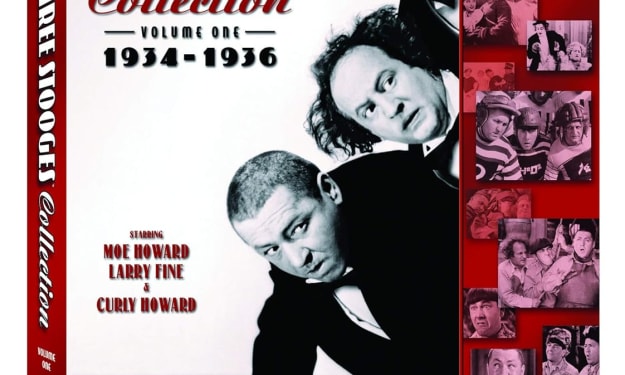
History of The Three Stooges (Part I: The Beginnings and Columbia Pictures - 1920s-1936)
I have been itching to write about The Three Stooges on Vocal for close to two years, but I couldn't figure out how to do it. I wanted to do it by third Stooge, but that's a bit complicated. I know this much. I was about eight or nine years old when I first saw The Three Stooges. I remember one of my local channels had the Stooges on for hours, and I tried my damnedest to be up for those shorts. I remember that the Family Channel actually had an hour of the Stooges on from 11PM to midnight, and it was the entire library on during that time.
By Clyde E. Dawkins5 days ago in Geeks
Meet the Director Nominated for Two Oscars for Two Different Films
In the highly competitive world of filmmaking, earning a nomination for the Academy Awards is considered one of the greatest recognitions of artistic achievement. For one director, however, the honor arrived twice in a single year — for two completely different films. The unusual milestone has drawn attention across the global film industry and highlighted the creative range of a filmmaker whose work continues to push boundaries. The nominations, announced by the Academy of Motion Picture Arts and Sciences, place the director in a rare category of artists who have managed to captivate audiences and critics simultaneously with multiple projects released within the same awards cycle. While it is common for filmmakers to spend several years developing a single project, this director oversaw two distinct productions, each with its own cast, theme, and visual language. Both films went on to gain widespread critical praise, eventually earning nominations at the prestigious Academy Awards. Industry observers say the achievement reflects not only technical skill but also a remarkable ability to navigate vastly different storytelling approaches. Two Films, Two Worlds The first nominated film is a sweeping historical drama that explores the complexities of identity, power, and personal sacrifice. Set against the backdrop of a turbulent political era, the film combines intimate character studies with large-scale cinematic spectacle. Critics praised the director’s ability to balance emotional storytelling with historical authenticity. Carefully constructed scenes, detailed production design, and powerful performances helped the film resonate with audiences around the world. The second nominated film stands in stark contrast. Rather than historical drama, it is a contemporary character-driven story focused on personal relationships and moral ambiguity. The narrative unfolds in a quieter setting, relying heavily on dialogue and subtle performances. Despite its smaller scale, the film has been described as equally powerful. Reviewers noted the director’s talent for extracting complex emotions from everyday situations, turning ordinary moments into compelling cinematic experiences. Together, the two films demonstrate a rare versatility that has impressed both critics and members of the film academy. A Career Built on Risk The director’s path to recognition was not immediate. Early in their career, they worked on independent productions that struggled to secure wide distribution. Many of those early films were praised in small film festivals but received limited commercial success. Those projects, however, helped shape a distinctive creative voice. Rather than following conventional industry formulas, the filmmaker developed a reputation for taking risks with narrative structure and visual style. Over time, those risks began attracting international attention. Film critics often compare the director’s approach to that of celebrated auteurs such as Christopher Nolan and Alejandro G. Iñárritu, both known for blending ambitious storytelling with strong artistic identity. Although the comparison is flattering, the director’s work remains distinctly their own. The Challenge of Creating Two Films Producing two award-caliber films within the same period is an enormous logistical challenge. Each production requires months — sometimes years — of planning, financing, casting, and post-production work. Film industry insiders say the director’s ability to manage both projects simultaneously speaks to an exceptional level of organization and creative discipline. Crew members involved in the productions describe a collaborative environment where ideas were encouraged and experimentation was welcomed. “Every scene felt carefully planned but also open to discovery,” one cinematographer who worked on the projects said in an interview. “The director had a clear vision, but they also trusted the creative team.” Recognition from the Film Community Since the nominations were announced, the director has received congratulations from filmmakers and actors around the world. Social media has been filled with tributes from colleagues who admire the achievement. Some analysts say the nominations reflect a broader shift within the film industry toward recognizing bold storytelling and diverse perspectives. In recent years, the Academy Awards has expanded its membership and voting body, bringing in a more international and diverse group of filmmakers. That change has allowed a wider range of films to gain recognition. For this director, the moment represents both validation and new expectations. Looking Ahead While awards season attention often focuses on trophies and ceremonies, many filmmakers emphasize that recognition is only part of the creative journey. The director has already hinted at several upcoming projects, including a potential collaboration with major international studios and a smaller experimental film expected to return to their independent roots. Whether or not the Oscar nominations lead to a win, the dual recognition has firmly established the filmmaker as one of the most exciting voices in modern cinema. For audiences, the achievement offers a reminder that great storytelling can take many forms — from sweeping historical epics to intimate human dramas. And for the director behind both films, the moment marks not an end point, but the beginning of an even more ambitious chapter in a rapidly evolving career.
By Fiaz Ahmed 3 days ago in Geeks


Comments
There are no comments for this story
Be the first to respond and start the conversation.